
J. B. Harley (1932–1991)
Author of The New Nature of Maps: Essays in the History of Cartography
About the Author
J. B. Harley lectured in historical geography at the Universities of Liverpool and Exeter before moving to the University of Wisconsin-Milwaukee. His ideas on the meaning of maps have influenced not just geographers and map historians but also students of art history and literature
Image credit: Alexeile
Works by J. B. Harley
The History of Cartography: Cartography in Prehistoric, Ancient and Medieval Europe and the Mediterranean, Vol. 1 (1987) — Editor — 73 copies
The History of Cartography, Volume 2, Book 1: Cartography in the Traditional Islamic and South Asian Societies (1992) — Editor — 38 copies
The History of Cartography, Volume 2, Book 2: Cartography in the Traditional East and Southeast Asian Societies (1994) — Editor — 36 copies
Mapping the American Revolutionary War (The Kenneth Nebenzahl, Jr., Lectures in the History of Cartography at the Newberry Library) (1978) 13 copies
The County of Kent in 1801 : a reproduction of the first published Ordnance Survey map of Great Britain (1990) 3 copies
Associated Works
Tagged
Common Knowledge
- Legal name
- Harley, John Brian
- Birthdate
- 1932-07-24
- Date of death
- 1991-12-20
- Gender
- male
- Education
- University of Birmingham (PhD)
University of Oxford (University College) - Nationality
- UK
- Birthplace
- Ashley, Gloucestershire, UK
- Place of death
- Milwaukee, Wisconsin, USA
- Burial location
- Newton Abbot, Devon, England, UK
- Associated Place (for map)
- UK
Members
Reviews

J. B. Harley is what you could really call a cartographic postmodernist. Like many po-mos, he makes some good points, but then preceeds to beat them to death and ram some Marxism or other unpalatable mush down your damned throat. Are maps just illustrations or are they texts that can be interpreted like any other document in history? Harley makes a great case for the latter, and I agree. Then. We are told to basically infer what we want as good postmodernists or infer via the damned Foucault show more (may he burn in Hades) and Derrida that we can imbue these map-texts with all sorts of power relationships and such. Thus, for example, a seventeenth-century plan of Paris shows the homes of all the well-to-do but none of the poor peasantry's homes. If I read it as a text, I could say that the poor are unimportant in society - yes this map has become another document in my evidence. But Harley would have us go one step further and say the map is full of power-knowledge and meant as a tool to keep the peasantry down. Crap. A poor person would never read it, can't, how could it keep him down? Still, he does show how to read (or, deconstruct) a map, and it is good. The last chapter, however, is crap. It is basically a "Cartographic Manifesto" metaphorically advocating that "cartographers of the world, unite" and stop helping those in power and being dupes to the Man. Again, crap. show less
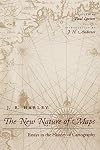
A collection of Harley's essays showing the range of his writings on maps. He consistently argues that maps convey much more that the geographical representation that meets the eye at first glance. He shows political and cultural subtexts are in all maps.
Maps and the Columbian Encounter:an interpretive guide to the travelling exhibition, American Geographical Society by J. B. Harley

This is Brian Harley's catalog of a map exhibit. The maps themselves are superb. One sees an array of images over time. Harley's commentary provides his particular insight into the subtext of maps. He contends that all maps are political in some degree.
Norwich : Reprint of the first edition of the one-inch Ordnance Survey of England and Wales - Sheet 46 [1838] by J. B. Harley

EPA Library SWS - Shelved at :(A3s)
Awards

You May Also Like


Associated Authors
Statistics
- Works
- 32
- Also by
- 3
- Members
- 379
- Popularity
- #63,708
- Rating
- 4.1
- Reviews
- 4
- ISBNs
- 25
- Languages
- 1