
Yi-Fu Tuan (1930–2022)
Author of Space and Place: The Perspective of Experience
About the Author
Yi-Fu Tuan is the J. K. Wright and Vilas Professor Emeritus of Geography at the University of Wisconsin, Madison.
Works by Yi-Fu Tuan
Associated Works
Designing Disney's Theme Parks: The Architecture of Reassurance (1997) — Contributor — 207 copies, 1 review
Tagged
Common Knowledge
- Birthdate
- 1930
- Date of death
- 2022-08-10
- Gender
- male
- Occupations
- geographer
- Short biography
- Yi-Fu Tuan was born in China in 1930 and was educated in Australia, the Philippines, England, and the United States. He holds degrees from the University of Oxford (B.A., 1951; M.A., 1955) and the University of Califor¬nia, Berkeley (Ph.D., 1957). He has held teaching positions at Indiana University, the University of New Mexico, the University of Toronto and the University of Minnesota. In 1984 he became Professor of Geography at the University of Wisconsin, Madison and since 1985 has been the J.K. Wright Professor and Vilas Research Professor. [from www.acls.org]
- Nationality
- China (birth)
USA - Birthplace
- China
- Associated Place (for map)
- China
Members
Reviews
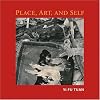
"What do place, art, and self have in common? To what extent do place and art define who we are?" In Place, Art, and Self, the renowned humanistic geographer Yi-Fu Tuan tackles this large question in a small, accessible, beautifully illustrated book. Through memoir and the insights gained from a peripatetic life as an international scholar, Tuan explores the idea of attachment through place and art and the role of attachment in shaping, defining, and expanding the self.
Inasmuch as a place show more contains sources of "nurture and identity," Tuan writes, so, too, does a painting, photograph, poem, novel, motion picture, dance, or piece of music. "The arts are likewise emblematic and revelatory. The ones I strongly like and dislike expose me, make me feel naked before the public eye, which is why I am guarded in my confessions."
Drawing from a lifetime spent thinking and writing about the connection between geography and our spiritual needs, Tuan presents a compelling and meditative foray into how place, home, and homelessness condition us as humans. Complementing his essay is a gallery of fine-art black-and-white and color plates by four emerging contemporary photographers, whose work accords with Tuan’s message. show less
Inasmuch as a place show more contains sources of "nurture and identity," Tuan writes, so, too, does a painting, photograph, poem, novel, motion picture, dance, or piece of music. "The arts are likewise emblematic and revelatory. The ones I strongly like and dislike expose me, make me feel naked before the public eye, which is why I am guarded in my confessions."
Drawing from a lifetime spent thinking and writing about the connection between geography and our spiritual needs, Tuan presents a compelling and meditative foray into how place, home, and homelessness condition us as humans. Complementing his essay is a gallery of fine-art black-and-white and color plates by four emerging contemporary photographers, whose work accords with Tuan’s message. show less
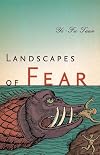
This was a fascinating book in many ways, but the most remarkable aspect of it was Tuan's grasp of a multitude of sources -- anthropological, historical, psychological, literary -- and all across the globe and across centuries and even millennia, as well as his ability to interweave information from all of them to tell his story.
What are landscapes of fear? As Tuan says in his introduction:
" Landscapes of fear? If we pause to reflect on what these are, surely swarms of images will come to show more mind: fear of the dark and abandonment in childhood; anxiety in strange settings or on social occasions; dread of corpses and the supernatural; uneasiness at the sight of hospitals and prisons; fear of muggers in desolate streets and neighborhoods; anxiety at the prospect of the breakdown of world order." p. 3
He goes on to explain that fears are felt by individuals and thus are subjective, but some are rooted in the environment (psychological as well as external), and that his exploration may shed light on "questions of perennial interest. What is it to be human? What is it like to live in the world?"
He continues by discussing fear in children before turning to a more or less chronological trip through human history, from "fearless" "primitive" societies to fear of nature among early hunters and farmers, natural calamities and famines, the medieval world, fear of disease, fear of human nature (looking at witches and ghosts), fear in the country and in the city, public humiliation and execution, and exile and confinement, concluding with an examination of the need for creating circles of security and a look at how we assess fears past and present.
This book was originally published in 1979 and was reissued in 2013. In his preface to the new edition, Tuan asks himself how he would write it differently if he were to write it today. After confessing that he simply could no longer retain as much diverse information as he could when he was young, he writes that he would perhaps organize the book thematically and would give more prominence to three broad ideas that recur in it. One of these ideas is what he calls the "dissonance between the ecologically sound and the sociopolitically sound." An example of this is the peacefulness and beauty of the 18th and 19th century English countryside which masked the very real dangers that resided there, including crime and violence, wild animals, oppression by landlords, famine, and poverty. He notes that a writer who praised the "ecological balance" of that landscape
"forgot to mention the gibbets on highways and at crossroads: the corpses of criminals on display there so upset the more delicate travelers that they made detours to avoid them. Yes, the landscape was comely and healthy, but it was also a landscape of fear. The ordinary people who lived on it could seem stunted and deformed by our standards, all too often missing an arm or a leg. Counterposed to the landscape, the people were uncomely and unhealthy." pp. vii-viii
The second theme he says he would have developed more fully is the idea of "fearless" societies, groups such as modern hunter-gatherers and the Amish, who are "content with the traditions of their group and to stay within the traditions of their world," which he contrasts to the yearnings of "civilized" societies. Finally he says he would have paid more attention to betrayal, as our deepest human fear.
I have focused on Tuan's comments on his work because this is such an idiosyncratic book that it is difficult for me for me to describe it. Tuan's juggling of time and place is unlike anything else I've read, and I am in awe of his ability to make connections across cultures and civilizations. He has great compassion for the people he discusses, and horror at the cruelties humans impose on each other. And the book, despite its scholarly weight, is eminently readable. Perhaps a few quotations will give a flavor of Tuan's style and focus.
"Medieval people lived close to nature and we tend to think of them as having intense joys and feelings that are largely lost to us. We may also think of them as dwelling in a calm and stable world in which the years and decades -- unlike our own -- succeeded one another with little change. To the father of a family living in the Middle Ages, this is not necessarily how the world would have appeared. Change and instability must have seemed at times the dominant features of his life: he experienced, if not the ravages of battle or epidemic, then the recurrent threat of bad weather, poor harvest, and the accidents of workplace and home. . . .
Still, we know that human beings are eminently adaptable. Despite the harshness of life, medieval men and women almost surely did not live in constant fear and trembling . . . .After the long siege of winter came the delightful spring. Between wars and epidemics were interludes of peace and contentment, all the more precious for their transiency." pp. 85-86
"So much of human fear is of other people who sustain our world but also threaten it. Destructive natural forces and diseases wear human masks, and in witches and ghosts the fear of human evil takes on a supernatural dimension. Where can one hide?" p. 129
As a side note, I bought this book partly because of its cover, which I love. show less
What are landscapes of fear? As Tuan says in his introduction:
" Landscapes of fear? If we pause to reflect on what these are, surely swarms of images will come to show more mind: fear of the dark and abandonment in childhood; anxiety in strange settings or on social occasions; dread of corpses and the supernatural; uneasiness at the sight of hospitals and prisons; fear of muggers in desolate streets and neighborhoods; anxiety at the prospect of the breakdown of world order." p. 3
He goes on to explain that fears are felt by individuals and thus are subjective, but some are rooted in the environment (psychological as well as external), and that his exploration may shed light on "questions of perennial interest. What is it to be human? What is it like to live in the world?"
He continues by discussing fear in children before turning to a more or less chronological trip through human history, from "fearless" "primitive" societies to fear of nature among early hunters and farmers, natural calamities and famines, the medieval world, fear of disease, fear of human nature (looking at witches and ghosts), fear in the country and in the city, public humiliation and execution, and exile and confinement, concluding with an examination of the need for creating circles of security and a look at how we assess fears past and present.
This book was originally published in 1979 and was reissued in 2013. In his preface to the new edition, Tuan asks himself how he would write it differently if he were to write it today. After confessing that he simply could no longer retain as much diverse information as he could when he was young, he writes that he would perhaps organize the book thematically and would give more prominence to three broad ideas that recur in it. One of these ideas is what he calls the "dissonance between the ecologically sound and the sociopolitically sound." An example of this is the peacefulness and beauty of the 18th and 19th century English countryside which masked the very real dangers that resided there, including crime and violence, wild animals, oppression by landlords, famine, and poverty. He notes that a writer who praised the "ecological balance" of that landscape
"forgot to mention the gibbets on highways and at crossroads: the corpses of criminals on display there so upset the more delicate travelers that they made detours to avoid them. Yes, the landscape was comely and healthy, but it was also a landscape of fear. The ordinary people who lived on it could seem stunted and deformed by our standards, all too often missing an arm or a leg. Counterposed to the landscape, the people were uncomely and unhealthy." pp. vii-viii
The second theme he says he would have developed more fully is the idea of "fearless" societies, groups such as modern hunter-gatherers and the Amish, who are "content with the traditions of their group and to stay within the traditions of their world," which he contrasts to the yearnings of "civilized" societies. Finally he says he would have paid more attention to betrayal, as our deepest human fear.
I have focused on Tuan's comments on his work because this is such an idiosyncratic book that it is difficult for me for me to describe it. Tuan's juggling of time and place is unlike anything else I've read, and I am in awe of his ability to make connections across cultures and civilizations. He has great compassion for the people he discusses, and horror at the cruelties humans impose on each other. And the book, despite its scholarly weight, is eminently readable. Perhaps a few quotations will give a flavor of Tuan's style and focus.
"Medieval people lived close to nature and we tend to think of them as having intense joys and feelings that are largely lost to us. We may also think of them as dwelling in a calm and stable world in which the years and decades -- unlike our own -- succeeded one another with little change. To the father of a family living in the Middle Ages, this is not necessarily how the world would have appeared. Change and instability must have seemed at times the dominant features of his life: he experienced, if not the ravages of battle or epidemic, then the recurrent threat of bad weather, poor harvest, and the accidents of workplace and home. . . .
Still, we know that human beings are eminently adaptable. Despite the harshness of life, medieval men and women almost surely did not live in constant fear and trembling . . . .After the long siege of winter came the delightful spring. Between wars and epidemics were interludes of peace and contentment, all the more precious for their transiency." pp. 85-86
"So much of human fear is of other people who sustain our world but also threaten it. Destructive natural forces and diseases wear human masks, and in witches and ghosts the fear of human evil takes on a supernatural dimension. Where can one hide?" p. 129
As a side note, I bought this book partly because of its cover, which I love. show less
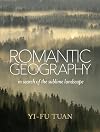
Big fan of Tuan's philosophy on humanistic geography, every book of his I've read is insightful and super interesting, granting a cool perspective on the way we interact with the natural world through mythology, story, societal beliefs, among a variety of other topics. This one is focused more around the idea of romanticism in geographic, largely around how this fueled human exploration in history but covering a bunch of other ideas as well
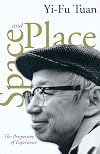
Brilliant analysis of place that was written in the early stages of postmodernism. A book of ideas that doesn't dictate, just tells. Great stuff.
Lists
You May Also Like


Associated Authors
Statistics
- Works
- 28
- Also by
- 2
- Members
- 1,278
- Popularity
- #20,059
- Rating
- 4.0
- Reviews
- 8
- ISBNs
- 78
- Languages
- 8
- Favorited
- 6