
Stuart Chase (1888–1985)
Author of The Tyranny of Words
About the Author
Image credit: Library of Congress Prints and Photographs Division, Harris & Ewing Collection (Reproduction Number: LC-DIG-hec-23667) (cropped)
Works by Stuart Chase
Where's the money coming from? Problems of postwar finance; guide lines to America's future as reported to the Twentieth Century Fund (1943) 8 copies
Goals for America; a budget of our needs and resources. Guide lines to America's future as reported to the Twentieth Cen (1942) 3 copies
Language in Thought and Action 2 copies
A generation of industrial peace; thirty years of labor relations at Standard Oil Company (N. J.) 2 copies
When the war ends 2 copies
Zoning comes to town 1 copy
The Satires of Juvenal 1 copy
Associated Works
Tagged
Common Knowledge
- Birthdate
- 1888-03-08
- Date of death
- 1985-11
- Gender
- male
- Education
- Harvard University
- Occupations
- accountant
- Organizations
- American Academy of Arts and Letters (Literature, 1938)
- Nationality
- USA
- Associated Place (for map)
- USA
Members
Reviews

Always some humor in reading mid-twentieth century predictions of the year 2000. Chase has a kind of charming naive faith that certain scientific advances will solve humanity's problems. E.g., fusion will not only solve the energy crisis, it will enable cheap desalinization of seawater thereby also solving any food or water crises. He thinks that moving to electronic money only would eliminate theft. I'm still trying to see how that follows.
The final chapter gives a snapshot of the life of a show more professor in the year 2000. The world he presents is peaceful but also creepily frightening, kind of like the Ned Flanders Big Brother world from the Treehouse of Horror.
The writing is painfully normative. Everything is through the lens of an entitled upper class white male. I wonder if the systems organization guys that were in the Kennedy administration were fans. show less
The final chapter gives a snapshot of the life of a show more professor in the year 2000. The world he presents is peaceful but also creepily frightening, kind of like the Ned Flanders Big Brother world from the Treehouse of Horror.
The writing is painfully normative. Everything is through the lens of an entitled upper class white male. I wonder if the systems organization guys that were in the Kennedy administration were fans. show less
A strong call for economical and political separation from the great wars of Europe, and pragmatic isolationism over idealism.
A lot of this does serve to highlight how we got *here*, with our overgrown military industrial economy. Definitely some food for thought.
Not as optimistic as some of his other works.
A lot of this does serve to highlight how we got *here*, with our overgrown military industrial economy. Definitely some food for thought.
Not as optimistic as some of his other works.
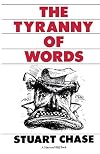
I don’t know if I love this book as much as its original owner. He carried it through Europe in WWII like a Bible. The copy I own is a replacement of the original that he lost, but it was thoroughly read and annotated when I bought it in an old book shop. The original owner’s annotations are almost as interesting as the text.
So now to that: Chase eloquently explains the foundations of semantics. This book helped me understand how much of meaning relies on shared experience, cultural show more assumptions, and so on. I do love this book. show less
So now to that: Chase eloquently explains the foundations of semantics. This book helped me understand how much of meaning relies on shared experience, cultural show more assumptions, and so on. I do love this book. show less

Really cool read, published same year as stock market crash of 1929. Must have in your economics library. The black & white woodblock art of WT Murch are really good too. The question of whether or not machines are enslaving man and many other such machine/man issues are discussed from remarkable perspective than anticipates much of the world today, but also holds quaint perspective of yesterday. Very well written and entertaining.
Lists
Awards


You May Also Like


Associated Authors
Statistics
- Works
- 38
- Also by
- 5
- Members
- 592
- Popularity
- #42,408
- Rating
- 3.8
- Reviews
- 7
- ISBNs
- 33