

Barbara Juster Esbensen (1925–1996)
Author of Baby Whales Drink Milk
About the Author
Image credit: The Barbara Juster Esbensen Memorial
Works by Barbara Juster Esbensen
A Celebration of Bees: Endless Opportunities for Inspiring Children to Write Poetry (1975) 34 copies
March Twenty-First 1 copy
A Celebration of Bees 1 copy
Associated Works
Tagged
Common Knowledge
- Birthdate
- 1925-04-28
- Date of death
- 1996-10-25
- Gender
- female
- Education
- University of Wisconsin (at Madison; BS in Art Education, 1947)
- Occupations
- teacher
writer
poet
author - Organizations
- LM Montgomery Literary Society
- Awards and honors
- Her award-winning nature books and retellings of Native American legends have been honored by the NSTA and the NCSS/CBC as outstanding trade books in science and social studies.
NCTE Award for Excellence in Poetry For Children (1994)
Lee Bennett Hopkins Poetry Award (1995)
Kerlan Award (posthumously) - Short biography
- Barbara began her career teaching art to grades K-12. She also taught art and creative writing methods to college of education students. As a third grade classroom teacher, she used trade books across the curriculum to teach her 39 "low-achiever" third graders to read. Her first book was a collection of her poetry, SWING AROUND THE SUN, published in 1965. There was a hiatus while she raised six children.
"By the age of ten, I began to think of myself as a writer. That is when I discovered I could not stand to be without a book to read.
Meanwhile, my teachers would praise my ability as a budding artist. This is what excited my parents. In their eyes I became Barbara Our Little Artist.
But words were at the center of my being.
My early reading of the L. M. Montgomery books gave me the courage to play with words. I named a special tree where I would read. I named a certain place down by Lake Monona where I would sit on the breakwater and think. I named my bedroom.
My bedroom faced west and I called it Castle Afterglow. I made a sign for the door. The sign had a sunset with dark words in crayon over the pink: "Welcome to Castle Afterglow - Keep Out."
In 1939, when I was in tenth grade, Russia invaded Finland. I heard about it over the radio on the morning news before I went to school. This was terribly upsetting to me. When I got to school, I looked at a map and saw how large Russia was compared to little Finland. It infuriated me. I didn't know anything about politics, but I wrote a poem to express my feelings. I composed it in my head as I rode home on the city bus that rainy November day. Dashing into my house, and standing dripping wet in the front hall, I grabbed a piece of paper from my notebook and wrote my poem.
The next day, I put it on the desk of my English teacher, Miss Eulalie Beffel, herself a journalist and published poet. Miss Beffel then said the words that changed my life. "Barbara," said Miss Beffel, "you are a writer."
In 1941, I read the poetry of Amy Lowell, Stephen Vincent Benet, and Sara Teasdale. The way these writers used words astonished me. Thomas Wolfe had me in a state of shock!
From that point on, I was off and running with language. The way words looked when placed next to each other was deeply important to me. When put together in fresh, unexpected ways, they could generate quiet explosions of delight for the reader. Whether it was poetry or prose, placing images in the minds of my readers became a central focus of everything I wrote. I wanted to find those word combinations that make sentences catch fire and shower down sparks!"
http://www.ttinet.com/bje/first.html - Nationality
- USA
- Places of residence
- Madison, Wisconsin, USA
Edina, Minnesota, USA - Associated Place (for map)
- USA
Members
Reviews

Taking the daina - a traditional form of poetry and song that incorporates figures and themes from pre-Christian Latvian folklore - as an inspiration, Barbara Juster Esbenson tells the story of the "Dream Mouse," who goes creaking through a rural village with his Dream Cart, sending all the children off the sleep with his beautiful visions. A beautiful white swan on a lake, the wedding of the sun's daughter to the moon, the sons and daughters of Father Thunder - all find their way into the show more dreams of the village's children, as the Dream Mouse passes by...
Although I the story here rather lacking, I still found The Dream Mouse immensely enjoyable. I've been hearing about the dainas from my Latvian brother-in-law and his family for some time now, and am very interested in this form of folk-poetry/music. Sadly, I know of only one or two anthologies in English, and all difficult to track down and prohibitively expensive! So this picture-book, with its series of dream-like images that are clearly taken out of Latvian folklore (the sun goddess and moon god, for instance), is particularly interesting to me! The narrative has a very peaceful tone, with its progression of dreams, making it a good bedtime book, particularly for fairy-tale fans, who will appreciate its themes. The artwork by Judith Mitchell is just lovely - I particularly liked the image of the father returning from the sea - and is well suited to the fantastic dream-like vistas evoked in the text.
All in all, a beautiful little book, one I would recommend to young folklore and fairy-tale lovers, and to anyone looking for children's books with a Latvian theme. Now, if only I could find an anthology of dainas in translation... show less
Although I the story here rather lacking, I still found The Dream Mouse immensely enjoyable. I've been hearing about the dainas from my Latvian brother-in-law and his family for some time now, and am very interested in this form of folk-poetry/music. Sadly, I know of only one or two anthologies in English, and all difficult to track down and prohibitively expensive! So this picture-book, with its series of dream-like images that are clearly taken out of Latvian folklore (the sun goddess and moon god, for instance), is particularly interesting to me! The narrative has a very peaceful tone, with its progression of dreams, making it a good bedtime book, particularly for fairy-tale fans, who will appreciate its themes. The artwork by Judith Mitchell is just lovely - I particularly liked the image of the father returning from the sea - and is well suited to the fantastic dream-like vistas evoked in the text.
All in all, a beautiful little book, one I would recommend to young folklore and fairy-tale lovers, and to anyone looking for children's books with a Latvian theme. Now, if only I could find an anthology of dainas in translation... show less
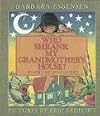
As a physical object, this is an attractive book. The illustrations by Eric Beddows are quite beautiful: they illuminate and extend Esbensen’s sometimes puzzling poems. A few of her verses are lovely. For example, there’s a little poem about a stray cat washed up on the deck (of a home) and rescued during a storm, and another in which a child examines the black and white photos of his grandfather as a child. However, I believe a number of the poems here would be inaccessible to children, show more as some of the imagery confuses. A lullaby poem mentions “the sound of rain/leaning into slick shadows/under the cars . . .” What? Sound “leaning”? Another piece focuses on a child waking up after a night of dreams:
Okay, I get the idea of the rising sun as nature’s ancient timepiece, but describing the silent star as “metal” and gonging? Perhaps “molten” might be better? And then the image of a “cage of black trees”? Again, I understand the author was pointing to the silhouette or fretwork of branches, but “cage”?
A little too often these poems didn’t work for me, and I doubt they’d work for the target audience either. show less
Now the sleepy clock downstairs
wakens—stretches its hands
to the metal sun
red half dome
gonging its way up
from the cage of black trees
Okay, I get the idea of the rising sun as nature’s ancient timepiece, but describing the silent star as “metal” and gonging? Perhaps “molten” might be better? And then the image of a “cage of black trees”? Again, I understand the author was pointing to the silhouette or fretwork of branches, but “cage”?
A little too often these poems didn’t work for me, and I doubt they’d work for the target audience either. show less

Dance With Me is a children’s book of poems. The poems are about activities people do and how each activity is a form of dance. The basketball player performs a ballet. The rain tap dances on the rooftop. The gardener waltzes with her hoe.
This book appealed to me because for as long as I can remember I have enjoyed poems and dancing. The way that the author put the two together made me aware of how all things we do involve dance.
I would read this book to the students in my class and have show more them pick an activity that they enjoy. I would ask them to pretend that they are doing the activity and turn it into a dance. I would then ask them to write a poem about what happened. I would also like to use this book in a lesson on rhyming. show less
This book appealed to me because for as long as I can remember I have enjoyed poems and dancing. The way that the author put the two together made me aware of how all things we do involve dance.
I would read this book to the students in my class and have show more them pick an activity that they enjoy. I would ask them to pretend that they are doing the activity and turn it into a dance. I would then ask them to write a poem about what happened. I would also like to use this book in a lesson on rhyming. show less
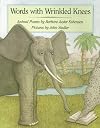
The poems in this book make me feel like I am actually using my 5 senses to read them. They make me feel like they are so true that I was shaking my head in agreement with the one about Frog. I thought that these were great descriptive poems that could help with descriptive writing - something that I struggle with myself. It might help a student start to think about descriptions better. I would keep this book in my classroom library fro student to refer to and read for enjoyment.
Lists
Awards


You May Also Like


Associated Authors
Statistics
- Works
- 23
- Also by
- 3
- Members
- 1,696
- Popularity
- #15,137
- Rating
- 3.8
- Reviews
- 41
- ISBNs
- 70
- Languages
- 2