
Gerard Manley Hopkins (1844–1889)
Author of Poems and Prose of Gerard Manley Hopkins - selected and edited by W. H. Gardner
About the Author
Gerard M. Hopkins was born on July 28, 1844 in England, into a large and talented family. He attended Oxford, and entered the Jesuits in 1868. He later studied theology and, after destroying much of his youthful poetry, took up writing. In 1877, Hopkins was ordained as a priest. He was assigned to show more several churches and continued to write poetry, none of which was published until after his death. Hopkins's poems are noted for their intricate rhythm, which he labeled sprung rhythm. The poems are exemplified by their clever puns, wordplay and imaginative phrasing. His works include several series of sonnets, such as Pied Beauty and The Windhover, as well as "terrible" sonnets that explore the conflict between his sexual longing and his devotion to God. Gerard M. Hopkins died of typhoid fever on June 8, 1889, in Ireland. (Bowker Author Biography) show less
Series
Works by Gerard Manley Hopkins
Poems and Prose of Gerard Manley Hopkins - selected and edited by W. H. Gardner (1953) 1,545 copies, 4 reviews
Mortal Beauty, God's Grace: Major Poems and Spiritual Writings of Gerard Manley Hopkins (2003) 116 copies, 1 review
The Gospel in Gerard Manley Hopkins: Selections from His Poems, Letters, Journals, and Spiritual Writings (The Gospel in Great Writers) (2017) 73 copies, 13 reviews
Delphi Complete Works of Gerard Manley Hopkins (Illustrated) (Delphi Poets Series Book 31) (2013) 19 copies
Further letters of Gerard Manley Hopkins: Including his correspondence with Coventry Patmore (1963) 13 copies
Selected Poems & Prose 11 copies
The Collected Works of Gerard Manley Hopkins: Volume III: Diaries, Journals, and Notebooks (2015) 10 copies
The Poems of Gerard Manley Hopkins 4 copies
Spring and Fall (included in The Norton Introduction to Literature - 5th Edition) 4 copies, 1 review
Some poems of Gerard Manley Hopkins 3 copies
Gerard Manley Hopkins. [Poems.] 2 copies
Harry Ploughman 2 copies
Poems of Gerard Manley Hopkins. Now first published, edited with Notes by Robert Bridges, Poet Laureate . 750 COPIES WERE PRINTED (1918) 2 copies, 1 review
Landscape and Inscape 2 copies
Poems of Gerard Manley Hopkins 2 copies
God's Grandeur 1 copy
Inversnaid 1 copy
La belleza mortal 1 copy
Poemoj 1 copy
Selected Poems of Gerard Manley Hopkins With Modern English Paraphrases (Studies in British Literature) (1995) 1 copy
Gerard Manley Hopkins: New Essays on His Life, Writing, and Place in English Literature (1989) 1 copy
Zánik Eurydiky 1 copy
Auf dem Rückflug zur Erde.: Gerard Manley Hopkins (1844-1889) Eine Einführung in seine poetische Welt (2009) 1 copy
Poèmes 1 copy
Hopkins : selections 1 copy
Bright Wings, Dappled Things: Poems of Gerard Manley Hopkins SJ & photographs by Fr Francis Browne SJ (2018) 1 copy
0011 - Poesie 1 copy
Associated Works
The Making of a Poem: A Norton Anthology of Poetic Forms (2000) — Contributor — 1,474 copies, 9 reviews
The Best Poems of the English Language: From Chaucer Through Robert Frost (2004) — Contributor — 1,250 copies, 3 reviews
Literature: An Introduction to Fiction, Poetry, and Drama (1995) — Contributor, some editions — 1,016 copies, 7 reviews
Watch for the Light: Readings for Advent and Christmas (2004) — Contributor — 902 copies, 10 reviews
The Assassin's Cloak: An Anthology of the World's Greatest Diarists (2000) — Contributor, some editions — 622 copies, 9 reviews
World Poetry: An Anthology of Verse from Antiquity to Our Time (1998) — Contributor — 499 copies, 2 reviews
The Norton Anthology of English Literature, 4th Edition, Volume 2 (1979) — Contributor — 271 copies, 1 review
Poems to See By: A Comic Artist Interprets Great Poetry (2020) — Contributor — 130 copies, 33 reviews
Answering Back: Living Poets Reply to the Poetry of the Past (2007) — Contributor — 119 copies, 1 review
Buzz Words: Poems About Insects (Everyman's Library Pocket Poets Series) (2021) — Contributor — 56 copies
Out of the Best Books: An Anthology of Literature, Vol. 1: The Individual and Human Values (1964) — Contributor — 40 copies
Out of the Best Books: An Anthology of Literature, Vol. 2: Love, Marriage, and the Family (1966) — Contributor — 36 copies
The Roads from Bethlehem: Christmas Literature from Writers Ancient and Modern (1993) — Contributor — 34 copies, 1 review
Out of the Best Books: An Anthology of Literature, Vol. 4: The World Around Us (1968) — Contributor — 28 copies
Edexcel Poetry Anthology for Advanced subsidiary and advanced GCE examinations in English Literature (2000) — Contributor, some editions — 6 copies
Die englische Literatur 08 in Text und Darstellung. 19. Jahrhundert 2 (1982) — Contributor — 5 copies
Tagged
Common Knowledge
- Birthdate
- 1844-07-28
- Date of death
- 1889-06-08
- Gender
- male
- Education
- Highgate School
University of Oxford (Balliol College) - Occupations
- Jesuit priest
poet
professor (Greek) - Organizations
- St Beuno's College
Society of Jesus
Oxford Movement
Roman Catholic Church - Relationships
- Hopkins, Arthur (brother)
Hopkins, Everard (brother) - Nationality
- UK
- Birthplace
- Stratford, Essex, England, UK
- Places of residence
- Oxford, Oxfordshire, England, UK
St Beuno's College, Tremeirchionnear, nr St Asaph, Denbighshire, North Wales, UK
London, England, UK - Place of death
- Dublin, Ireland
- Burial location
- Glasnevin Cemetery, Dublin, Ireland
- Map Location
- England, UK
Members
Discussions
*Oct 04 2025 | Spring and Fall in The Poetry Collective (April 2)
Reviews
The Gospel in Gerard Manley Hopkins: Selections from His Poems, Letters, Journals, and Spiritual Writings (The Gospel in Great Writers) by Gerard Manley Hopkins
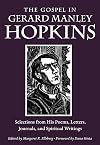
While I've read Hopkins' poetry previously, this book offers a fresh way of seeing and understanding both the genius and the brokenness of the brilliant, eccentric author.
By delicately interweaving letters and biographical background with the poetry, the book offers perspective and insights that are not easily forgotten. A must for those who appreciate Hopkins; highly recommended for those who don't know much about the man or his poetry and are looking for a readable and relatable introduction.
By delicately interweaving letters and biographical background with the poetry, the book offers perspective and insights that are not easily forgotten. A must for those who appreciate Hopkins; highly recommended for those who don't know much about the man or his poetry and are looking for a readable and relatable introduction.
 This review was written for LibraryThing Early Reviewers.
The Gospel in Gerard Manley Hopkins: Selections from His Poems, Letters, Journals, and Spiritual Writings (The Gospel in Great Writers) by Gerard Manley Hopkins
Summary: An exploration of the life and faith of Gerard Manley Hopkins through commentary and a selection of his poetry, letters, journal entries, and sermons.
The life of Gerard Manley Hopkins seems to me a life of startling contrasts. He writes wonderfully vibrant poetry using innovative rhythms--poems that often are celebration of the glory of God evident in the creation. At the same time, he is a devout Jesuit, whose submission to the order meant largely a life as priest and academic show more examiner in slums of Liverpool, Glasgow, London and Dublin. He died of typhoid contracted from antiquated plumbing. We follow the man who burnt his early poems when he converted to Catholicism and entered the Jesuits, whose life was shaped by the Exercises of St. Ignatius, whose passion was God's glory, and the incarnation of Christ, revealed afresh in every Eucharist. We also see a man deeply torn between his artistic sensibilities and the physically and psychically crushing routines of most of his life as a Jesuit, to which he seemed ill-suited, that comes through in the anguished "Terrible Sonnets."
Margaret Ellsberg weaves the narrative of Hopkins life and faith through a combination of commentary, and selections of poetry, letters, sermons, and journals throughout the course of his short life. Because there are only 49 of his poems extant, many of these are included in this selection, set in the context of his life. It is fascinating that Robert Bridges, who subsequently published his works, struggled to make sense of them and found at least one sufficiently difficult that (in Hopkins words) "you wd. not for any money read my poem again ("The Wreck of the Deutschland"). Ellsberg's work gives us clues, sometimes from Hopkins himself, to the understanding of his poetry, and that is what makes this work most attractive, along with the selections of his poetry.
As much as I love Hopkins poetry (my favorite is "As kingfishers catch fire, dragonflies draw flame"), the title of this work (part of a series sharing "The Gospel In...") mystifies me in some ways because the gospel may have evoked praise and wonder with regard to God's work in the world but mostly despair with regard to his own life. Wonder and devotion there is in great measure, but a sense of peace, of wholeness seems lacking. There is the dutiful fulfillment of assignments that seem poorly fitted to who he is, which makes one wonder why he chose the Jesuits and the priesthood. Compounding his struggle was physical weakness, and perhaps a melancholy character. But gospel also implies "good news", hope for us in our fragile humanity. Only on his deathbed does he find some peace, as he whispers over and over, "I'm so happy, I'm so happy."
Perhaps there is something of temperament in all of this, an artist not fully at home in his world, torn by the tension between "God's Grandeur" and the ugliness of much of what he endured around him. One wonders if different choices or different assignments might have made a difference. Or was it something "unreconciled" in his "gospel" that seemed to result in a life of great devotion but little contentment or peace?
Yet we have this great poetry, much of it an effervescing abundance captured in the fourteen lines of a sonnet. Hopkins life remains an enigma to me, but I can thank his Maker and mine for the gift of his writing. I leave you with "God's Grandeur"
The world is charged with the grandeur of God.
It will flame out, like shining from shook foil;
It gathers to a greatness, like the ooze of oil
Crushed. Why do men then now not reck his rod?
Generations have trod, have trod, have trod;
And all is seared with trade; bleared, smeared with toil;
And wears man’s smudge and shares man’s smell: the soil
Is bare now, nor can foot feel, being shod.
And for all this, nature is never spent;
There lives the dearest freshness deep down things;
And though the last lights off the black West went
Oh, morning, at the brown brink eastward, springs--
Because the Holy Ghost over the bent
World broods with warm breast and with ah! bright wings.
____________________________
Disclosure of Material Connection: I received this book free from the publisher through the LibraryThing Early Reviewer Program. I was not required to write a positive review. The opinions I have expressed are my own. show less
The life of Gerard Manley Hopkins seems to me a life of startling contrasts. He writes wonderfully vibrant poetry using innovative rhythms--poems that often are celebration of the glory of God evident in the creation. At the same time, he is a devout Jesuit, whose submission to the order meant largely a life as priest and academic show more examiner in slums of Liverpool, Glasgow, London and Dublin. He died of typhoid contracted from antiquated plumbing. We follow the man who burnt his early poems when he converted to Catholicism and entered the Jesuits, whose life was shaped by the Exercises of St. Ignatius, whose passion was God's glory, and the incarnation of Christ, revealed afresh in every Eucharist. We also see a man deeply torn between his artistic sensibilities and the physically and psychically crushing routines of most of his life as a Jesuit, to which he seemed ill-suited, that comes through in the anguished "Terrible Sonnets."
Margaret Ellsberg weaves the narrative of Hopkins life and faith through a combination of commentary, and selections of poetry, letters, sermons, and journals throughout the course of his short life. Because there are only 49 of his poems extant, many of these are included in this selection, set in the context of his life. It is fascinating that Robert Bridges, who subsequently published his works, struggled to make sense of them and found at least one sufficiently difficult that (in Hopkins words) "you wd. not for any money read my poem again ("The Wreck of the Deutschland"). Ellsberg's work gives us clues, sometimes from Hopkins himself, to the understanding of his poetry, and that is what makes this work most attractive, along with the selections of his poetry.
As much as I love Hopkins poetry (my favorite is "As kingfishers catch fire, dragonflies draw flame"), the title of this work (part of a series sharing "The Gospel In...") mystifies me in some ways because the gospel may have evoked praise and wonder with regard to God's work in the world but mostly despair with regard to his own life. Wonder and devotion there is in great measure, but a sense of peace, of wholeness seems lacking. There is the dutiful fulfillment of assignments that seem poorly fitted to who he is, which makes one wonder why he chose the Jesuits and the priesthood. Compounding his struggle was physical weakness, and perhaps a melancholy character. But gospel also implies "good news", hope for us in our fragile humanity. Only on his deathbed does he find some peace, as he whispers over and over, "I'm so happy, I'm so happy."
Perhaps there is something of temperament in all of this, an artist not fully at home in his world, torn by the tension between "God's Grandeur" and the ugliness of much of what he endured around him. One wonders if different choices or different assignments might have made a difference. Or was it something "unreconciled" in his "gospel" that seemed to result in a life of great devotion but little contentment or peace?
Yet we have this great poetry, much of it an effervescing abundance captured in the fourteen lines of a sonnet. Hopkins life remains an enigma to me, but I can thank his Maker and mine for the gift of his writing. I leave you with "God's Grandeur"
The world is charged with the grandeur of God.
It will flame out, like shining from shook foil;
It gathers to a greatness, like the ooze of oil
Crushed. Why do men then now not reck his rod?
Generations have trod, have trod, have trod;
And all is seared with trade; bleared, smeared with toil;
And wears man’s smudge and shares man’s smell: the soil
Is bare now, nor can foot feel, being shod.
And for all this, nature is never spent;
There lives the dearest freshness deep down things;
And though the last lights off the black West went
Oh, morning, at the brown brink eastward, springs--
Because the Holy Ghost over the bent
World broods with warm breast and with ah! bright wings.
____________________________
Disclosure of Material Connection: I received this book free from the publisher through the LibraryThing Early Reviewer Program. I was not required to write a positive review. The opinions I have expressed are my own. show less
This review was written for LibraryThing Early Reviewers.
You either love him or hate him. I love him, and recall being most indignant when Brigid Brophy included him in “Fifty Works of English Literature we could Do Without”. Who now reads Ms Brophy….? I love both the magical, dazzling, sometimes hard-to-follow words, and the thought behind them: that I am a jack, joke, poor potsherd, yet an immortal diamond, that each hung bell’s bow swung finds tongue to fling out broad its name, that I am soft sift, yet steady as water in a well. show more Hopkins was an early warning on eco-destruction: “the soil is bare now, nor can foot feel, being shod”; “O if we but knew what we do when we delve or hew – hack and rack the growing green”; “Long live the weeds and the wilderness yet”. His nature observations are precise and accurate. Priest and celibate he was, but the rhythm of his grimmer sonnets kept running through my head whilst I was in labour: “No worst, there is none”; “Patience, hard thing”. Favourites: “I am soft sift” and “I kiss my hand” (yes, let’s go OTT!) from “Wreck of the Deutschland”; “God’s Grandeur”; “The Starlight Night”; “Spring”; “The Windhover”; “Binsey Poplars”; “Inversnaid”; “As Kingfishers Catch Fire”; “That Nature is a Heraclitean Fire”, and “Ash-boughs”. show less
The Gospel in Gerard Manley Hopkins: Selections from His Poems, Letters, Journals, and Spiritual Writings (The Gospel in Great Writers) by Gerard Manley Hopkins
The poet Gerard Manley Hopkins was born to an affluent, Anglican English family in the 19th century. He was bright and talented and had the choice of any career he wanted. But he converted to Roman Catholicism which in 19th century England closed many doors. His family was saddened to see him apparently throw his life away as a Jesuit priest. As a priest, he also forbade himself the writing of poetry and burned all his early work.
Hopkins was not suited to the kinds of work the Jesuits gave show more him. Despite having done outstandingly at Oxford, he did poorly in seminary and was therefore given the lowliest of jobs. Miserable, he began to write poetry again, this time to recreate the way in which he encountered God in the world and in the Catholic Mass. For Hopkins, transubstantiation was a critical necessity for his faith-not only religious but in the finding of meaning in the world. The fact that the word could be sacramental, effecting real change was essential to his belief system. And his poetry reflects that passionate belief in the power of language.
Read only by a few friends (and then not liked or understood), Hopkins felt isolated as a poet as well as he was as a priest. He explained to one reader that even if the reader could not understand all the content, he should allow himself to enjoy the beauty of the words, the sensation of the poem. Hopkins said that often he allowed himself the pleasure of the beauty of poetry regardless of the meaning. But his "sprung rhythm," a two-foot stressed foot, was difficult for his contemporaries to follow and the strangeness of his language alienated them.
Hopkins died young, of typhoid carried in the plumbing of his antiquated church residence in Ireland. He was unknown and felt like a failure as a teacher and misunderstood as a poet.
Published by a friend nearly 30 years after his death, Hopkins became a huge sensation, profoundly influencing a generation of Modernist poets. Today, he continues to be considered one of the great poets.
The Gospel in Gerad Manley Hopkins combines his poetry, journals, letters, and sermons, along with some biographical notes, to create the sense of this remarkable poet's relationship to God and how it deeply influenced his poetry as well as his life. Like the Franciscan Duns Scotus (by whom Hopkins was influenced), Hopkins believed that God dwelt in the created world and that we encounter him everywhere but most especially in nature. While the letters cry out for understanding, the poems sing out a joy of God immanent in the world, even in its tragedies. In The Wreck of the Deutschland, an early masterpiece, Hopkins addresses the tragedy of the drowning of five German nuns in a ship disaster. Where Voltaire was shaken out of his faith by the Lisbon earthquake, Hopkins finds the consolation of God even in the seemingly meaningless disaster of a shipwreck.
Much as I enjoyed learning more about Hopkins through his letters and more about his faith through his sermons, I was most excited by the poetry itself. The editor, Margaret Ellsberg, has insightful commentary that I found helpful but the experience of the poetry was the greatest gift of this collection. The sheer beauty of the words, rich and, yes, strange, the rhythms and the images were all amazing. I could only read a few at a time and finished feeling word drunk and grateful.
As a Catholic, I especially appreciated how Hopkins found such joy in God as witnessed in the Catholic Mass. It revitalized my own appreciation of the Eucharist. But even aside from religion, Hopkins is a gift of the incredible beauty and power and potential of language to lift us up and bring us face to face with the world in all its richness, beautiful, life-giving and, yes, sometimes tragic.
I want to thank LibraryThing for giving me this wonderful volume in exchange for an honest review. I'm sure I'll reread the poems (of which I only was familiar with a few) many times and hopefully share them with others. Reading Hopkins is a powerful and exciting experience. I've already passed the volume along to my son. Hopefully many people will continue to discover the richness of Hopkins' work through Ellsberg's well-selected and annotated volume. show less
Hopkins was not suited to the kinds of work the Jesuits gave show more him. Despite having done outstandingly at Oxford, he did poorly in seminary and was therefore given the lowliest of jobs. Miserable, he began to write poetry again, this time to recreate the way in which he encountered God in the world and in the Catholic Mass. For Hopkins, transubstantiation was a critical necessity for his faith-not only religious but in the finding of meaning in the world. The fact that the word could be sacramental, effecting real change was essential to his belief system. And his poetry reflects that passionate belief in the power of language.
Read only by a few friends (and then not liked or understood), Hopkins felt isolated as a poet as well as he was as a priest. He explained to one reader that even if the reader could not understand all the content, he should allow himself to enjoy the beauty of the words, the sensation of the poem. Hopkins said that often he allowed himself the pleasure of the beauty of poetry regardless of the meaning. But his "sprung rhythm," a two-foot stressed foot, was difficult for his contemporaries to follow and the strangeness of his language alienated them.
Hopkins died young, of typhoid carried in the plumbing of his antiquated church residence in Ireland. He was unknown and felt like a failure as a teacher and misunderstood as a poet.
Published by a friend nearly 30 years after his death, Hopkins became a huge sensation, profoundly influencing a generation of Modernist poets. Today, he continues to be considered one of the great poets.
The Gospel in Gerad Manley Hopkins combines his poetry, journals, letters, and sermons, along with some biographical notes, to create the sense of this remarkable poet's relationship to God and how it deeply influenced his poetry as well as his life. Like the Franciscan Duns Scotus (by whom Hopkins was influenced), Hopkins believed that God dwelt in the created world and that we encounter him everywhere but most especially in nature. While the letters cry out for understanding, the poems sing out a joy of God immanent in the world, even in its tragedies. In The Wreck of the Deutschland, an early masterpiece, Hopkins addresses the tragedy of the drowning of five German nuns in a ship disaster. Where Voltaire was shaken out of his faith by the Lisbon earthquake, Hopkins finds the consolation of God even in the seemingly meaningless disaster of a shipwreck.
Much as I enjoyed learning more about Hopkins through his letters and more about his faith through his sermons, I was most excited by the poetry itself. The editor, Margaret Ellsberg, has insightful commentary that I found helpful but the experience of the poetry was the greatest gift of this collection. The sheer beauty of the words, rich and, yes, strange, the rhythms and the images were all amazing. I could only read a few at a time and finished feeling word drunk and grateful.
As a Catholic, I especially appreciated how Hopkins found such joy in God as witnessed in the Catholic Mass. It revitalized my own appreciation of the Eucharist. But even aside from religion, Hopkins is a gift of the incredible beauty and power and potential of language to lift us up and bring us face to face with the world in all its richness, beautiful, life-giving and, yes, sometimes tragic.
I want to thank LibraryThing for giving me this wonderful volume in exchange for an honest review. I'm sure I'll reread the poems (of which I only was familiar with a few) many times and hopefully share them with others. Reading Hopkins is a powerful and exciting experience. I've already passed the volume along to my son. Hopefully many people will continue to discover the richness of Hopkins' work through Ellsberg's well-selected and annotated volume. show less
This review was written for LibraryThing Early Reviewers.Lists
Poetry Corner (1)
Awards


You May Also Like


Associated Authors
Statistics
- Works
- 140
- Also by
- 45
- Members
- 5,001
- Popularity
- #5,012
- Rating
- 4.1
- Reviews
- 44
- ISBNs
- 158
- Languages
- 8
- Favorited
- 66
