
Jane Ziegelman
Author of 97 Orchard: An Edible History of Five Immigrant Families in One New York Tenement
About the Author
Image credit: Photo by Andrew Coe, found at HarperCollins website.
Works by Jane Ziegelman
97 Orchard: An Edible History of Five Immigrant Families in One New York Tenement (2010) 696 copies, 27 reviews
Tagged
Common Knowledge
- Gender
- female
- Nationality
- USA
- Birthplace
- Manhattan, New York, USA
- Associated Place (for map)
- New York, USA
Members
Reviews
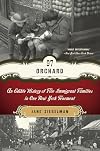
This was a very interesting, informative and yummy read. The author is the director of a culinary program at New York's Tenement Museum (located--you guessed it---at 97 Orchard St. on the Lower East Side). She explores the food cultures of 5 immigrant families--German, German Jewish, Irish, Italian and Lithuanian--who came to New York for various reasons between the 1860s and the 1930s. In doing so, she covers a lot of ground both inside and outside the kitchens, including general living show more conditions in the tenements, pushcart street vendors, the raising of poultry and pigs in courtyards and city streets, religious practices, food prejudices, Americanization of traditional European dishes and the adoption of ethnic foods by native born Americans. Every chapter made me crave something, from oysters to corned beef to strudel to pizza. It was a treat to read. show less
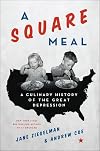
It felt like most of this book was about food relief during the Great Depression. I noticed that the arguments for and against food relief haven't really changed much over the years.
"People are starving, we should help them."
"If you give food to the hungry, they'll just become lazy moochers."
"People can't afford nutritious food. Malnutrition is becoming a problem."
"Hungry people are hungry because they're lazy. They don't deserve food relief."
"All these new Army recruits are unfit for show more service! We need to feed the next generations of soldiers so they'll be fit for service."
I was really struck by the descriptions of the hardships faced by families across the country who couldn't feed themselves and the constant reluctance of the government to help out in an effective way. I was appalled by the needless suffering that was allowed to go on. How many babies died? How many children suffered lasting harm?
There didn't seem to be a whole lot about how the "movement toward a homogenized national cuisine sparked a revival of American regional cooking." It seemed like the book had just turned toward this topic, when suddenly, it was over.
Not a bad book, but it is more about hunger and food relief during the Depression than a culinary history. The book also did not follow a linear timeline, so those annoyed by jumping around to different times will be annoyed.
Oh, and I loved that this audio book came on a single mp3 cd. Thankfully it worked perfectly in my car and eliminated need to change disks every hour or so. Much less dangerous. show less
"People are starving, we should help them."
"If you give food to the hungry, they'll just become lazy moochers."
"People can't afford nutritious food. Malnutrition is becoming a problem."
"Hungry people are hungry because they're lazy. They don't deserve food relief."
"All these new Army recruits are unfit for show more service! We need to feed the next generations of soldiers so they'll be fit for service."
I was really struck by the descriptions of the hardships faced by families across the country who couldn't feed themselves and the constant reluctance of the government to help out in an effective way. I was appalled by the needless suffering that was allowed to go on. How many babies died? How many children suffered lasting harm?
There didn't seem to be a whole lot about how the "movement toward a homogenized national cuisine sparked a revival of American regional cooking." It seemed like the book had just turned toward this topic, when suddenly, it was over.
Not a bad book, but it is more about hunger and food relief during the Depression than a culinary history. The book also did not follow a linear timeline, so those annoyed by jumping around to different times will be annoyed.
Oh, and I loved that this audio book came on a single mp3 cd. Thankfully it worked perfectly in my car and eliminated need to change disks every hour or so. Much less dangerous. show less
 This review was written for LibraryThing Early Reviewers.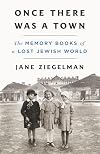
Yizkor books were created to ensure that Jews killed in the Holocaust would never suffer the loneliness of silence. from Once There Was a Town by Jane Ziegelman
Jane Ziegelman’s family came from Luboml, once one of the largest Jewish shtetls in Volhynia. As a girl, she was curious about her grandparents and parents’ unspoken past. Then, she found answers in a yizkor book in her family library. After WWII, thousands of people channeled their grief into documenting the history of lost show more towns, communities, and families.
Ziegelman’s book vividly recreates Luboml through history, its food and fashions, its religion and culture. Understanding this vital community, it is devastating to read of the Nazi mass murder of its citizens. As she notes, the Jews were killed by known German neighbors, a chilling realization of true horror.
Both an informative history and a personal discovery of family history, an affecting read.
Thanks to the publisher for a free book through NetGalley. show less
Jane Ziegelman’s family came from Luboml, once one of the largest Jewish shtetls in Volhynia. As a girl, she was curious about her grandparents and parents’ unspoken past. Then, she found answers in a yizkor book in her family library. After WWII, thousands of people channeled their grief into documenting the history of lost show more towns, communities, and families.
Ziegelman’s book vividly recreates Luboml through history, its food and fashions, its religion and culture. Understanding this vital community, it is devastating to read of the Nazi mass murder of its citizens. As she notes, the Jews were killed by known German neighbors, a chilling realization of true horror.
Both an informative history and a personal discovery of family history, an affecting read.
Thanks to the publisher for a free book through NetGalley. show less
As I stirred a pot of increasingly gluey tapioca pudding a couple days ago, I pondered how old-fashioned a dessert it seems -- a comforting, if mysterious, childhood dessert that is missing from my children's childhoods so far. But my parents knew of it, as did their parents, and possibly theirs. But the taste for it began somewhere, right? I mean, it's a bizarre confection that seems like just a vehicle for milk ingestion (although in my house it's almond milk), because that's precisely show more what it is -- a dish introduced to thousands of New York public schoolchildren during the lean hungry years of the Depression, when federal and state governments grappled with the problems of how to feed hungry, jobless Americans.
The book is a fascinating exploration of how America's food tastes changed in response to scarcity, and the roles played by government agencies, popular advertising, and lawmakers in shaping our food expectations for generations. I have added this title to my mental list of required reading to understand the Great Depression years, a list that includes Tobacco Road, The Worst Hard Time, The Cotton Tenants, and Let Us Now Praise Famous Men. show less
The book is a fascinating exploration of how America's food tastes changed in response to scarcity, and the roles played by government agencies, popular advertising, and lawmakers in shaping our food expectations for generations. I have added this title to my mental list of required reading to understand the Great Depression years, a list that includes Tobacco Road, The Worst Hard Time, The Cotton Tenants, and Let Us Now Praise Famous Men. show less
Lists
Awards


You May Also Like


Statistics
- Works
- 3
- Members
- 1,017
- Popularity
- #25,335
- Rating
- 3.7
- Reviews
- 45
- ISBNs
- 13
