

Murray Cromwell Morgan (1916–2000)
Author of Skid Road: An Informal Portrait of Seattle
About the Author
Image credit: Courtesy of the NYPL Digital Gallery (image use requires permission from the New York Public Library)
Works by Murray Cromwell Morgan
Confederate Raider in the North Pacific: The Saga of the C.S.S. Shenandoah, 1864-65 (Washington State University Press Reprint) (1995) 26 copies, 1 review
The Dam. The Thrilling Story of Grand Coulee, One of the Biggest Dams in the World, and of One Day When a Few Men Risked Their Lives to Save it. (1954) 6 copies
Associated Works
Tagged
Common Knowledge
- Other names
- Morgan, Murray Cromwell
- Birthdate
- 1916-02-02
- Date of death
- 2000-06-22
- Gender
- male
- Education
- University of Washington (AB|1937)
- Occupations
- historian of Puget Sound
college teacher
reporter
radio broadcaster - Organizations
- Hoquiam Daily Washingtonian
CBS Radio
Tacoma Community College - Birthplace
- Tacoma, Washington, USA
- Places of residence
- Tacoma, Washington, USA
Seattle, Washington, USA - Associated Place (for map)
- Washington, USA
Members
Reviews
2011, Feb.: #6
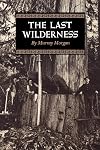
The second of Morgan's 3 major Pacific Northwest histories, this time zoning in on the Lower 48's literal last wilderness: The Olympic Peninsula. La fin du monde for us southern Amurrkans. Morgan gives another taste of pop. history after his '51 title, Skid Road, covering the days between the geologic beginnings to the early explorers and the creation of the area's 'modern' myths. Being written in 1955, not everything is entirely accurate; the beginning geologic history is show more about 10 years older than the theory of plate tectonics, and thus utterly useless to anyone except the curious, and the 'current events' that bleed into the latter chunk of the book are grossly out of date, but it's the pioneer curiosities that interest us, the days of Juan de Fuca's* pompous bullshit and George Vancouver, James Cook, and Robert Gray & co.'s travels up and down and inside the shorelines, the mostly friendly native interaction, the logging enterprises that dominated the region in the latter 19th century and its eventual transformation into the pulp and paper industry.**
It's an absolute must-read for any natives of the area and for those odd-few non-natives like myself--a Texan--with unhealthy Puget Sound obsessions. Highlights include(--I know all this looks a little excessive--it is, it's one long mess of a ramble--but I'm writing it for myself. Simply put, this is a condensed list of all the trivial, useless shit I want to remember about a land I love):
The Time Before Everything Changed
The mythology of the Cascade and Olympic range creations, both native and logger--Wolf's chase of Wren changing the once-flat fields of the Peninsula into the mighty sedimentary Olympics and Paul Bunyan's digging up of the Strait and Sound to save (and possibly bury) Babe, tossing the dirt east and the rock west.
Bad Lieutenant: Port of Townsend – Port Townshend
A favorite place of mine to visit, Port Townsend (previously Port Townshend as named by Vancouver), has had one of the more peculiar, troubling histories in the region; it's just hard to imagine having walked those streets many a time that the town was once a cutthroat precursor to Las Vegas, where the towners didn't take no shit from nobody (except Victor Smith and his entire family...assholes), murder a daily occurrence under the presence of the Forty Thieves--literally a union of villainy--and at least one saloon could be found on every block—a concept that has since given way to the plethora of shitty cafes that litter every street corner today.
The Duke of York, Chetzemoka (a name surviving today as Chetzemoka Park downtown), had an interesting hand in the city's expansion. While the Park today would have you believe he was a friendly man, a Clallam chief who saved Alfred Plummer's town from failure many a time, in real life he wasn't much more than a drunk who wouldn't further any relationship with settlers unless they provided gifts (read: whisky). The town also provides the possible origin of the term "bootlegger," although how likely that is, I don't know.
This reputation wouldn’t last forever, and it petered out some as the century closed. The town even came close to following the footsteps of Seattle:*** Desperate for a railroad, and having tried many times over just as many years to get the Port Townsend and Southern laid down, eventually--like Seattle--throwing up their arms and with a big ol' Fuck this! it was decided they'd have to lay down the rails on their own. The city was in the process of dying for the first time, and with the help of James Swan’s relentless, ultimately hopeless attempts to turn the city into the biggest hub in Sound country, was quickly left with the Shortest Railroad in the World and a poorer, angrier population. Businesses had briefly boomed, the population more than tripled within the year and property prices had shot through the roof (1890 real estate exchanges totaled precisely $4,594,695.93--ouch. I mean, ouch!). (I would love to know what became of the Shortest Railroad in the World, if its pieces are still there (or were they moved?), if it was ever connected. It still wasn't in 1955.)
The Mill on the Saw
The history and conflicts between the earliest sawmills, who, besides the milling, also sent their boats up and down the coasts charging suffering sailing vessels outrageous fees to save their patoots and haul them in away from the strong winds around Cape Flattery. One amusing encounter between captains "Old Man" Libby of the Puget Mill Co. and Williams of the Tacoma Mill Co. chased after the same lost sailors off of Tatoosh Isle and, reportedly, had an exchange that sounded something like this:
"I'll tow you in for three hundred dollars," shouted Captain Libby.
"I'll make it two hundred," boomed Captain Chris Williams of the Tacoma.
"Great balls of seagull sweat! I'll do it for one hundred."
"Fifty."
"By God, I'll tow you in for nothing and buy you a new hat to boot!" cried Libby.
And he did.
Barrel Roll #1
The name for sockeye salmon comes from the region (though more specifically from BC, Canada). The Clallams and Makahs and other tribes' name for 'red fish': suk-kegh. (Similarly, one Chinook named Glease had an interesting chantey he sang while working on the skid roads: “Chickamin, luckutchee, klootchman, lum!" or, “Money, clams, women, whisky!”)
Blood and Guts in High Sound
The earliest settling attempts in Neah Bay were massacred by the Makah people. A group of Clallam Indians snuck up on a tribal party from Vancouver Isle and gutted them all on Dungeness Spit. The blood history of the Peninsula is far wilder than I could have imagined, the most bizarre and brutal of which include a twisted bastard by the name of Billy Gohl, the cause of most, if not all, of what came to be known as the Floater Fleet in the beginning years of 20th century Grays Harbor. For ten years Billy Gohl casually murdered and freely admitted to murdering up to 124 found victims (how many were actually his doing was and still is a mystery, but he was accused in court of committing just over 40).
Story went he had a trapdoor in his home that dumped directly into the Wishkah River, and when word started to get around that he would dump his victims from here, he took a friend by the arm, shaking off the notion as crazy talk, all the while directing his attention out the window and saying "The other day some Swede came in and gave me some money to hold for him while he hit the cribhouses. I told him something was up…I told him to go out and sit on those pilings down there and keep a lookout for the boat. When he got out there I got my rifle and shot him from here, right through the head." His bragging was finally taken seriously when a man named Charley Hatberg was found "sleeping off Indian Creek with an anchor for a pillow," exactly where Gohl said he would be, after which a man named John Klingenberg was brought in trying to escape--likely Gohl rather than the law--to Mexico, and it was he that told a disturbing tale about Charley, including yet another murder victim named John Hoffman. (Sidenote: The trial of Gohl actually featured a neat--gross, but neat--early example of forensic science when the pickled, tattooed arm of Hatberg was used to identify the body.) Gohl lived the rest of his 17 years in a hospital for the criminally insane.
“Tell everybody none of them better come out to get me. I’ll kill anyone who comes after me. These are my woods.” Gohl wasn’t the only insane somunabitch to terrorize the people around Grays Harbor. In 1909 a large, powerfully-built man named John Turnow escaped a state institution in Oregon and started appearing in the woods off Grays Harbor, staring from the bushes at loggers and occasionally giving a paranoiac warning like above. He was a wild motherfucker, and a few hunters and lawmen who got a little too close found that out the hard way with a bullet to the head. In 1913, after searching had begun, 3 local deputy sheriffs found and approached his cabin and ultimately killed Turnow. Only one of the deputies made it out. Turnow, paranoid as he was, had used an Indian trick of tethering frogs near his cabin, turning them and their silence into a living alarm. His life was the inspiration for Tarzan.
More’s Anarchy
The western shores of Joe's Bay (named for resident Joe Kapolla) in inner Puget Sound was once home to a utopian anarchist-slash-early-hippie-peace-and-free-love community with the Google-unfriendly name of...Home. For a couple decades starting in the 1890s, anti-government anarchists, with mild country-wide support from the likes of Emma Goldman and the Lady of Mystery (whom I can't find anything about), were mailing out some of the time's biggest anarchist publications like Discontent and the Agitator.
Things actually worked out pretty well for these free-lovers; they worked together and won support from nearby towns and cities, albeit only after face-to-face convincing; they shared duties and lovers, solved all the town's problems from meetings at Liberty and later Harmony Halls. Excepting hiccups of arising outsider suspicions surrounding the anarchist assassination of President McKinley, the utopian ideals worked well within the community until 1908 when nudist Dukhobor Russkies moved in and their mass, hairy displays split the community's sympathies. The problems that were originally stirred in 1908 eventually snowballed into more issues that by 1911 virtually killed off the town's philosophical existence. Home still stands today, but the anarchist background has all but vanished.
The Iron Man of Hoh Valley
John Huelsdonk, nicknamed the Iron Man, just about replaced the loggers' Bunyan stories through sheer manliness. Hard to find anything on today, in 1955 he was so famous in the region you couldn't go to any bar on the Peninsula without hearing tales of the Iron Man, thought imaginary by most, he was indeed real, and at 79 was still hiking freely through what had recently become the Olympic National Park, still strapping hundreds of pounds onto his back and speeding through the thick woods. Huelsdonk was the sort of man to take on a cougar with his bare hands, to hold off an angry, confused bear with the butt end of his gun, the sort of man to devote his life to the hunting of the menace of the Olympics: he killed hundreds of cougars throughout his life, more than all the other hunters and pioneers in the area combined, including Big Foot, the largest, fiercest bitch of a cougar to stalk that wild frontier.
Barrel Roll #2
In the earliest sanctioned survey of the Olympic woods, years before the creation of the National Park, or, hell, even before it was a National Monument, a packer named Jack McGlone when told that no one had ever climbed Mount Olympus, shrugged and said "Never climbed? I guess I'll go up and look around." The cairn he left behind later drove a lot of attention-seeking hikers and surveyors bonkers. (Those later hiking parties formed some of the first trails of what would become the National Park, from the Elwah to the Low Divide, 2/3rds of the very course I took on my first time through the woods in 2009.)
Konk.
If I am to make any complaints about Morgan’s writing, it’s the somewhat drab, overlarge chunk devoted to the innerworkings of the reigning 19th century logging corporations, going into histories that blend together and repeat themselves. The last couple of short chapters end up a bit out of place, being more about the ultra modern 1950s state of the peninsula, and from a stronger, personal perspective.
Essential reading for nerds like me.
85%
[19]
*The only man to have a plate named after him--undeservedly if you ask me; guy was a dillweed Greek who pretended to be Spanish and/or Mexican for reasons I can't fathom other than to somehow increase his reputation, incl. the discovery (but not exploration) of the imaginary Strait of Anian--later found to be today's Strait of...Juan...de Fuca.
**Now long past being on its last legs, but thriving and beautiful and the savior of the region (especially Port Townsend) in 1955.
***The important role of Port Townsend (and to a lesser degree, Walla Walla) in the battle for the state's major railroad was later downplayed in Bill Speidel's (EDIT: Apparently I can't ever spell his name right) histories of Seattle, instead making Tacoma the only genuine threat to the city's livelihood. show less
The second of Morgan's 3 major Pacific Northwest histories, this time zoning in on the Lower 48's literal last wilderness: The Olympic Peninsula. La fin du monde for us southern Amurrkans. Morgan gives another taste of pop. history after his '51 title, Skid Road, covering the days between the geologic beginnings to the early explorers and the creation of the area's 'modern' myths. Being written in 1955, not everything is entirely accurate; the beginning geologic history is show more about 10 years older than the theory of plate tectonics, and thus utterly useless to anyone except the curious, and the 'current events' that bleed into the latter chunk of the book are grossly out of date, but it's the pioneer curiosities that interest us, the days of Juan de Fuca's* pompous bullshit and George Vancouver, James Cook, and Robert Gray & co.'s travels up and down and inside the shorelines, the mostly friendly native interaction, the logging enterprises that dominated the region in the latter 19th century and its eventual transformation into the pulp and paper industry.**
It's an absolute must-read for any natives of the area and for those odd-few non-natives like myself--a Texan--with unhealthy Puget Sound obsessions. Highlights include(--I know all this looks a little excessive--it is, it's one long mess of a ramble--but I'm writing it for myself. Simply put, this is a condensed list of all the trivial, useless shit I want to remember about a land I love):
The Time Before Everything Changed
The mythology of the Cascade and Olympic range creations, both native and logger--Wolf's chase of Wren changing the once-flat fields of the Peninsula into the mighty sedimentary Olympics and Paul Bunyan's digging up of the Strait and Sound to save (and possibly bury) Babe, tossing the dirt east and the rock west.
Bad Lieutenant: Port of Townsend – Port Townshend
A favorite place of mine to visit, Port Townsend (previously Port Townshend as named by Vancouver), has had one of the more peculiar, troubling histories in the region; it's just hard to imagine having walked those streets many a time that the town was once a cutthroat precursor to Las Vegas, where the towners didn't take no shit from nobody (except Victor Smith and his entire family...assholes), murder a daily occurrence under the presence of the Forty Thieves--literally a union of villainy--and at least one saloon could be found on every block—a concept that has since given way to the plethora of shitty cafes that litter every street corner today.
The Duke of York, Chetzemoka (a name surviving today as Chetzemoka Park downtown), had an interesting hand in the city's expansion. While the Park today would have you believe he was a friendly man, a Clallam chief who saved Alfred Plummer's town from failure many a time, in real life he wasn't much more than a drunk who wouldn't further any relationship with settlers unless they provided gifts (read: whisky). The town also provides the possible origin of the term "bootlegger," although how likely that is, I don't know.
This reputation wouldn’t last forever, and it petered out some as the century closed. The town even came close to following the footsteps of Seattle:*** Desperate for a railroad, and having tried many times over just as many years to get the Port Townsend and Southern laid down, eventually--like Seattle--throwing up their arms and with a big ol' Fuck this! it was decided they'd have to lay down the rails on their own. The city was in the process of dying for the first time, and with the help of James Swan’s relentless, ultimately hopeless attempts to turn the city into the biggest hub in Sound country, was quickly left with the Shortest Railroad in the World and a poorer, angrier population. Businesses had briefly boomed, the population more than tripled within the year and property prices had shot through the roof (1890 real estate exchanges totaled precisely $4,594,695.93--ouch. I mean, ouch!). (I would love to know what became of the Shortest Railroad in the World, if its pieces are still there (or were they moved?), if it was ever connected. It still wasn't in 1955.)
The Mill on the Saw
The history and conflicts between the earliest sawmills, who, besides the milling, also sent their boats up and down the coasts charging suffering sailing vessels outrageous fees to save their patoots and haul them in away from the strong winds around Cape Flattery. One amusing encounter between captains "Old Man" Libby of the Puget Mill Co. and Williams of the Tacoma Mill Co. chased after the same lost sailors off of Tatoosh Isle and, reportedly, had an exchange that sounded something like this:
"I'll tow you in for three hundred dollars," shouted Captain Libby.
"I'll make it two hundred," boomed Captain Chris Williams of the Tacoma.
"Great balls of seagull sweat! I'll do it for one hundred."
"Fifty."
"By God, I'll tow you in for nothing and buy you a new hat to boot!" cried Libby.
And he did.
Barrel Roll #1
The name for sockeye salmon comes from the region (though more specifically from BC, Canada). The Clallams and Makahs and other tribes' name for 'red fish': suk-kegh. (Similarly, one Chinook named Glease had an interesting chantey he sang while working on the skid roads: “Chickamin, luckutchee, klootchman, lum!" or, “Money, clams, women, whisky!”)
Blood and Guts in High Sound
The earliest settling attempts in Neah Bay were massacred by the Makah people. A group of Clallam Indians snuck up on a tribal party from Vancouver Isle and gutted them all on Dungeness Spit. The blood history of the Peninsula is far wilder than I could have imagined, the most bizarre and brutal of which include a twisted bastard by the name of Billy Gohl, the cause of most, if not all, of what came to be known as the Floater Fleet in the beginning years of 20th century Grays Harbor. For ten years Billy Gohl casually murdered and freely admitted to murdering up to 124 found victims (how many were actually his doing was and still is a mystery, but he was accused in court of committing just over 40).
Story went he had a trapdoor in his home that dumped directly into the Wishkah River, and when word started to get around that he would dump his victims from here, he took a friend by the arm, shaking off the notion as crazy talk, all the while directing his attention out the window and saying "The other day some Swede came in and gave me some money to hold for him while he hit the cribhouses. I told him something was up…I told him to go out and sit on those pilings down there and keep a lookout for the boat. When he got out there I got my rifle and shot him from here, right through the head." His bragging was finally taken seriously when a man named Charley Hatberg was found "sleeping off Indian Creek with an anchor for a pillow," exactly where Gohl said he would be, after which a man named John Klingenberg was brought in trying to escape--likely Gohl rather than the law--to Mexico, and it was he that told a disturbing tale about Charley, including yet another murder victim named John Hoffman. (Sidenote: The trial of Gohl actually featured a neat--gross, but neat--early example of forensic science when the pickled, tattooed arm of Hatberg was used to identify the body.) Gohl lived the rest of his 17 years in a hospital for the criminally insane.
“Tell everybody none of them better come out to get me. I’ll kill anyone who comes after me. These are my woods.” Gohl wasn’t the only insane somunabitch to terrorize the people around Grays Harbor. In 1909 a large, powerfully-built man named John Turnow escaped a state institution in Oregon and started appearing in the woods off Grays Harbor, staring from the bushes at loggers and occasionally giving a paranoiac warning like above. He was a wild motherfucker, and a few hunters and lawmen who got a little too close found that out the hard way with a bullet to the head. In 1913, after searching had begun, 3 local deputy sheriffs found and approached his cabin and ultimately killed Turnow. Only one of the deputies made it out. Turnow, paranoid as he was, had used an Indian trick of tethering frogs near his cabin, turning them and their silence into a living alarm. His life was the inspiration for Tarzan.
More’s Anarchy
The western shores of Joe's Bay (named for resident Joe Kapolla) in inner Puget Sound was once home to a utopian anarchist-slash-early-hippie-peace-and-free-love community with the Google-unfriendly name of...Home. For a couple decades starting in the 1890s, anti-government anarchists, with mild country-wide support from the likes of Emma Goldman and the Lady of Mystery (whom I can't find anything about), were mailing out some of the time's biggest anarchist publications like Discontent and the Agitator.
Things actually worked out pretty well for these free-lovers; they worked together and won support from nearby towns and cities, albeit only after face-to-face convincing; they shared duties and lovers, solved all the town's problems from meetings at Liberty and later Harmony Halls. Excepting hiccups of arising outsider suspicions surrounding the anarchist assassination of President McKinley, the utopian ideals worked well within the community until 1908 when nudist Dukhobor Russkies moved in and their mass, hairy displays split the community's sympathies. The problems that were originally stirred in 1908 eventually snowballed into more issues that by 1911 virtually killed off the town's philosophical existence. Home still stands today, but the anarchist background has all but vanished.
The Iron Man of Hoh Valley
John Huelsdonk, nicknamed the Iron Man, just about replaced the loggers' Bunyan stories through sheer manliness. Hard to find anything on today, in 1955 he was so famous in the region you couldn't go to any bar on the Peninsula without hearing tales of the Iron Man, thought imaginary by most, he was indeed real, and at 79 was still hiking freely through what had recently become the Olympic National Park, still strapping hundreds of pounds onto his back and speeding through the thick woods. Huelsdonk was the sort of man to take on a cougar with his bare hands, to hold off an angry, confused bear with the butt end of his gun, the sort of man to devote his life to the hunting of the menace of the Olympics: he killed hundreds of cougars throughout his life, more than all the other hunters and pioneers in the area combined, including Big Foot, the largest, fiercest bitch of a cougar to stalk that wild frontier.
Barrel Roll #2
In the earliest sanctioned survey of the Olympic woods, years before the creation of the National Park, or, hell, even before it was a National Monument, a packer named Jack McGlone when told that no one had ever climbed Mount Olympus, shrugged and said "Never climbed? I guess I'll go up and look around." The cairn he left behind later drove a lot of attention-seeking hikers and surveyors bonkers. (Those later hiking parties formed some of the first trails of what would become the National Park, from the Elwah to the Low Divide, 2/3rds of the very course I took on my first time through the woods in 2009.)
Konk.
If I am to make any complaints about Morgan’s writing, it’s the somewhat drab, overlarge chunk devoted to the innerworkings of the reigning 19th century logging corporations, going into histories that blend together and repeat themselves. The last couple of short chapters end up a bit out of place, being more about the ultra modern 1950s state of the peninsula, and from a stronger, personal perspective.
Essential reading for nerds like me.
85%
[19]
*The only man to have a plate named after him--undeservedly if you ask me; guy was a dillweed Greek who pretended to be Spanish and/or Mexican for reasons I can't fathom other than to somehow increase his reputation, incl. the discovery (but not exploration) of the imaginary Strait of Anian--later found to be today's Strait of...Juan...de Fuca.
**Now long past being on its last legs, but thriving and beautiful and the savior of the region (especially Port Townsend) in 1955.
***The important role of Port Townsend (and to a lesser degree, Walla Walla) in the battle for the state's major railroad was later downplayed in Bill Speidel's (EDIT: Apparently I can't ever spell his name right) histories of Seattle, instead making Tacoma the only genuine threat to the city's livelihood. show less
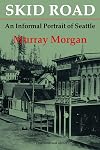
Histories are often "dry" but this one isn't. Each chapter is a story in itself and each focuses on one or two individuals key in the development of Seattle.I really enjoyed the early chapters--the latter ones dried out a little. It's a good, solid, history that covers the good and the bad, the sleazy and the churchy. The stories of Seattle's good ole' days.
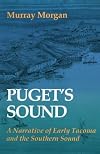
Puget's Sound tells the history of Tacoma, Washington and the surrounding area from first contact with George Vancouver's expedition in 1792 through the start of the 20th century.
In grade school, I lived just down the street from Morgan and once interviewed him for a school project. During the interview, me and my partner quickly forgot the questions we had and ended up just listening fascinated as Morgan wove a story of the early history of Puyallup, a nearby Tacoma suburb. I brought along show more my dad's copy of Puget's Sound for an autograph, but hadn't gotten around to reading it until now, more than twenty years later.
Morgan is a great story teller and his history of Tacoma is a series of interwoven stories of the people, both locally and from distant Railroad and Wall Street board rooms, who shaped the city from a marshy rival to Seattle for the terminus of the Northern Pacific Railroad to a thriving industrial city.
Much has changed in Pierce County in the thirty years since the book was written, but the stories of the early settlement are still fascinating and I'd recommend this for anyone who is interested in the early history of Tacoma. show less
In grade school, I lived just down the street from Morgan and once interviewed him for a school project. During the interview, me and my partner quickly forgot the questions we had and ended up just listening fascinated as Morgan wove a story of the early history of Puyallup, a nearby Tacoma suburb. I brought along show more my dad's copy of Puget's Sound for an autograph, but hadn't gotten around to reading it until now, more than twenty years later.
Morgan is a great story teller and his history of Tacoma is a series of interwoven stories of the people, both locally and from distant Railroad and Wall Street board rooms, who shaped the city from a marshy rival to Seattle for the terminus of the Northern Pacific Railroad to a thriving industrial city.
Much has changed in Pierce County in the thirty years since the book was written, but the stories of the early settlement are still fascinating and I'd recommend this for anyone who is interested in the early history of Tacoma. show less
This tasty little book, by the master storyteller of the Northwest is a great collection of vignettes of Seattle History. From Doc Maynard and the Mercer Girls, to Dave Beck and Big Labor, Morgan focused on important folks in Seattle history and the important issues surrounding them.
Lists
Awards


You May Also Like


Associated Authors
Statistics
- Works
- 22
- Also by
- 2
- Members
- 739
- Popularity
- #34,364
- Rating
- 4.1
- Reviews
- 11
- ISBNs
- 41