
Anthony Grey (1938–2025)
Author of Saigon
About the Author
Image credit: Anthony Grey - Founder, Tagman Press
Works by Anthony Grey
Tagged
Common Knowledge
- Birthdate
- 1938-07-05
- Date of death
- 2025-10-11
- Gender
- male
- Occupations
- publisher
- Short biography
- Anthony Grey, through no fault or merit of his own, became the focus of worldwide headlines in 1967 when he was seized as a hostage by Mao Tse-tungs's Red Guards. Held in solitary confinement in Beijing for two years at the height of the Cultural Revolution, he became arguably the most publicised prisoner of the Cold War era and the first international political hostage of modern times.Following the ordeal he went on to establish himself as an international historical novelist focussing particularly on the Far East. His books acclaimed for their meticulous attention to accurate historical detail, have to date been translated into 17 languages and he is perhaps best known for his outstanding epic novel Saigon, published in 1982. The novel won the author great critical acclaim across the USA and Canada as well as in Europe, Australia, South Africa and the Far East.
- Nationality
- England
UK - Places of residence
- Norfolk, UK
- Associated Place (for map)
- Norfolk, UK
Members
Reviews
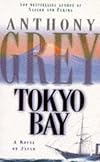
This is a tightly crafted historical novel depicting admiral Perry's arrival in feudal Japan to open western trade for the United States. The author barely misses turning the novel into a soap opera by inserting historical tidbits to help keep the scene in situ. Although I read it to the end the character portrayals just didn't seem to fall into place. n. Moreover I wondered how a naval sword would really play out in action with a finely honed Samurai sword. All in all it was too much of a show more westerner's stereotypic view of historical Japan. show less

This novel, seemingly dating from the 20th Century inter-war years, relates the erotic exploits of a middle-aged man who has experienced the first signs of the waning of his sexual powers. It is widely available in a number of editions, some anonymously authored, and also in collections. It begins with the old roué's infatuation with the young female consort of an older married woman, and relates sensitively her teasing behaviour toward him, which culminates in her subjecting him to a show more display of copulation with a well-endowed young man she picks up casually. This treatment triggers a change in him, in which he vigorously applies a cane to her rear quarters, and changes her attitude to complete subservience. She moves in, and assists him in his conquests. The tempo of the novel also changes here, into an accelerating sequence of erotic episodes, and eventually it peters out, a little inconsequentially, as many books seem to in this genre. An interesting work, but not exceptional, I found. show less

The question that remains when (or if) you get to the end of this work, is whether this is a work of fiction or fact. The author appears to ask this too in his postscript.
Why is this book alone in making the case that Harold Holt, former Prime Minister of Australia, was a Chinese spy, let alone that he was spirited away by a submarine off a Victorian beach? Why is the only rebuttal that "he did not like Chinese food anyway"? Is it because it's too embarrassing? Too unlikely? Merely the show more fantasy of a retired naval officer, and 'business man'?
The book is a biography of a young, well spoken man who rises in politics in Australia to the highest office. It tells a story of how writing informative articles about Australia for a Nationalist Chinese publication changes over time to supplying intelligence information to communist China, only to fail under pressure to opt for retirement in obscurity overseas?
Lots of detail is provided, somewhat tediously. And crucially there is no supporting information; only 'informants' are indicated to be the source of the information.
All in all, not a very satisfying book to read. show less
Why is this book alone in making the case that Harold Holt, former Prime Minister of Australia, was a Chinese spy, let alone that he was spirited away by a submarine off a Victorian beach? Why is the only rebuttal that "he did not like Chinese food anyway"? Is it because it's too embarrassing? Too unlikely? Merely the show more fantasy of a retired naval officer, and 'business man'?
The book is a biography of a young, well spoken man who rises in politics in Australia to the highest office. It tells a story of how writing informative articles about Australia for a Nationalist Chinese publication changes over time to supplying intelligence information to communist China, only to fail under pressure to opt for retirement in obscurity overseas?
Lots of detail is provided, somewhat tediously. And crucially there is no supporting information; only 'informants' are indicated to be the source of the information.
All in all, not a very satisfying book to read. show less
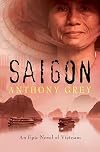
This was a compelling, informative piece of historical fiction, covering the history of Vietnam from 1925 through the conclusion of the Vietnam war. The story mention many interactions that occurred between the US and various Vietnam organizations, supporting my personal opinion that the US should never have entered that war.
Lists
Awards

You May Also Like


Associated Authors
Statistics
- Works
- 15
- Members
- 549
- Popularity
- #45,446
- Rating
- 3.6
- Reviews
- 16
- ISBNs
- 77
- Languages
- 6