
Hazrat Inayat Khan (1882–1927)
Author of The Mysticism of Sound and Music
About the Author
Hazrat Inayat Khan (1882-1927) came to Europe and America from his native India with a message of love, harmony and beauty that was a new approach to harmonizing Western and Eastern spirituality. He established a school of spiritual training based upon traditional Sufi teachings infused with the show more vision of the unity of religious ideals and the awakening of humanity to the divinity within. Inayat Khan died in India in 1927, leaving a significant body of recorded discourse and instruction on all things pertaining to spiritual ideals in the midst of life in the world. show less
Series
Works by Hazrat Inayat Khan
The Music of Life (Omega Uniform Edition of the Teachings of Hazrat Inayat Khan) (1983) 71 copies, 2 reviews
The Sufi Message of Hazrat Inayat Khan, Vol. 12: Vision of God and Man, Confessions, Four Plays (1982) 8 copies
Sufi Prayers: The Prayers and Remembrances of the Inayati Sufis (The Sufi Message Series) (2015) 6 copies
Personality: The art of being and becoming (The Collected works of Hazrat Inayat Khan) (1982) 5 copies
Complete Works of Pir-O-Murshid Hazrat Inayat Khan Originat Texts : Lectures on Sufism, 1923, II: July-December, Source (1988) 5 copies
complete works of pir-o-murshid hazrat inayat khan. original texts: lectures on sufism- 1923 1: january-june (1989) 4 copies
The Mind-World 4 copies
Vadan, de goddelijke symphonie 3 copies
Complete Works of Pir-o-Murshid Hazrat Inayat Khan: Lectures on Sufism 1924 II: June 10-End of December, Source Edition (2010) 2 copies
Education 2 copies
Big Tales: All the stories in the 12 volumes of The Sufi Message of Hazrat Inayat Khan (2015) 2 copies
Metafysica 2 copies
The Minqari-i musiqar Hazrat Inayat Khan's classic 1912 work on Indian musical theory and practice (2016) 1 copy
Smiling 1 copy
spiritual message 1 copy
Hazrat Inayat Khan Prayers 1 copy
Shah Jahan Nama 1 copy
Mastery 1 copy
Love, human and divine 1 copy
Authentic Versions of The Teachings of Pir-O-Murshid Inayat Khan on Sufism Sayings Part I: Sayings, Part 1 (1982) 1 copy
A Mensagem Sufi I 1 copy
Associated Works
God Makes the Rivers To Flow: Sacred Literature of the World (1982) — Contributor — 230 copies, 2 reviews
The way of the heart the life and legacy of Hazrat Inayat Khan, 1882-1927 (2010, Documentary) (2010) — Featured — 1 copy
Tagged
Common Knowledge
- Canonical name
- Khan, Hazrat Inayat
- Other names
- Khan, Hazrat Inayat
- Birthdate
- 1882-07-05
- Date of death
- 1927-02-05
- Gender
- male
- Occupations
- spiritual teacher
Indian classical musician - Organizations
- Sufi Order International
- Relationships
- Inayat Khan, Vilayat (son)
Inayat Khan, Hidayat (son)
Inayat Khan, Noor (daughter)
Inayat Khan, Fazal (grandson)
Khan, Zia Inayat (grandson) - Nationality
- India
- Birthplace
- Vadodara, Gujarat, India
- Places of residence
- Suresnes, France
Katwijk, Holland - Place of death
- India
- Burial location
- Nizamuddin Dargah Complex, Delhi, India
- Associated Place (for map)
- India
Members
Reviews
The Mysticism of Sound and Music: The Sufi Teaching of Hazrat Inayat Khan (Shambhala Dragon Editions) by Hazrat Inayat Khan
The teachings and thoughts of one of India's highly revered mystics in the Sufi tradition, specially dealing with the role of sound, the fine arts, and music. For the modern reader, some of it may seem pseudo-scientific and pedantic, but some of his insights into human relations, communication, influencing, and emotional growth, are quite enlightening. Especially inspiring are his breath of vision, and his glad acceptance of the spiritual traditions of all religions including Hinduism and show more Christianity. This represents the best in the tolerant Sufi tradition of India and South Asia, which may well be the key to reducing inter-faith tensions in the world today. show less

MASTERY THROUGH ACCOMPLISHMENT offers speeches directed to Sufi learners, with plenty of inspired devotion to all religious people.
How to attain the Spirit of Mastery:
1. Self Control/Self Discipline
2. Reject influences that pull you down.
3. Control conditions as you search for the Divine Spark in each person.
Words of Wisdom: "Is God pleased with it?"
(Does God care or want you to torture your body with fasting or kneeling for hours
or deprivations...?)
"Attainment is the aim of all show more Souls."
Personal concentration will help you to realize your own "divine potential."
Meditation in Action leads to "Mastery over yourself."
"...prepare mind and body by contemplation so as to make
one's being a shrine of God."
"...the Kingdom of God is within yourself."
When you plan something very new, 'do not tell your plan to others."
"It is better to do a small thing than nothing.because it thus gives mastery."
"It is not just a fable that the trees and plants and rocks spoke to the saints.
It is the truth.
When a person has developed that sympathy, he is sympathetic
to rock and plant and tree; everything in nature opens up before him."
"It is the law of gravitation, that yearning towards the Spirit, the Sun.
That is why in ancient times people worshipped the sun god
as a symbol of the sun within us, the sun which cannot be seen by our eyes,
but which is the source and goal of all beings,
from which we have come and to which we are drawn.
As iit is said in the Qur'an, 'From god we all come and to Him we have to return.'"
It would be welcome if All radical fundamentalists and the Taliban would follow his words.
((The chapters on Warfare are hard to read given Ukraine -
"...a Sufi must not hit back." within the speeches, subjects often jump around.
"The greatest fault of human nature is that every man thinks that he knows best."
For me, the greatest fault would be cruelty.)) show less
How to attain the Spirit of Mastery:
1. Self Control/Self Discipline
2. Reject influences that pull you down.
3. Control conditions as you search for the Divine Spark in each person.
Words of Wisdom: "Is God pleased with it?"
(Does God care or want you to torture your body with fasting or kneeling for hours
or deprivations...?)
"Attainment is the aim of all show more Souls."
Personal concentration will help you to realize your own "divine potential."
Meditation in Action leads to "Mastery over yourself."
"...prepare mind and body by contemplation so as to make
one's being a shrine of God."
"...the Kingdom of God is within yourself."
When you plan something very new, 'do not tell your plan to others."
"It is better to do a small thing than nothing.because it thus gives mastery."
"It is not just a fable that the trees and plants and rocks spoke to the saints.
It is the truth.
When a person has developed that sympathy, he is sympathetic
to rock and plant and tree; everything in nature opens up before him."
"It is the law of gravitation, that yearning towards the Spirit, the Sun.
That is why in ancient times people worshipped the sun god
as a symbol of the sun within us, the sun which cannot be seen by our eyes,
but which is the source and goal of all beings,
from which we have come and to which we are drawn.
As iit is said in the Qur'an, 'From god we all come and to Him we have to return.'"
It would be welcome if All radical fundamentalists and the Taliban would follow his words.
((The chapters on Warfare are hard to read given Ukraine -
"...a Sufi must not hit back." within the speeches, subjects often jump around.
"The greatest fault of human nature is that every man thinks that he knows best."
For me, the greatest fault would be cruelty.)) show less
This volume collects three classic essays by Sufi master Hazrat Inayat Khan (1882-1927), along with a short lecture-previously unpublished-on "The Path of the Mystic" and a small collection of aphorisms. Readers unfamiliar with Sufism will find this an excellent, accessible introduction. Those who are familiar with Sufism will appreciate the collection of the material into one volume. Inayat Khan's insistence on the unity of mysticism and the oneness of God, along with his openness to all show more spiritual paths, are important correctives to sectarianism-and to Western misperception of Islam as sectarian. The collection is full of memorable images, among them a picture of learning as tying a knot in the mind and unlearning-essential to spiritual development-as the difficult task of untying it. For a Western audience as often as not tied up in knots, this is essential reading. show less
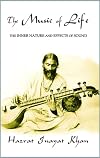
'The mystery of sound is mysticism; the harmony of life is religion. The knowledge of vibrations is metaphysics, the analysis of atoms is science, and their harmonious grouping is art. The rhythm of form is poetry, and the rhythm of sound is music. This shows that music is the art of arts and the science of all sciences; and it contains the fountian of all knowledge within itself.'
'Music should be healing; music should uplift the soul; music should inspire. There is no better way of getting show more closer to God, of rising higher towards the spirit, of attaining spiritual perfection than music, if only it is rightly understood.'
The Music of Life is the definitive collection of Hazrat Inayat Khan's teachings on sound, presenting the Sufi master's vision of the harmony which underlies and infuses every aspect of our lives. With deep insight and wisdom, he explores the science of breath, the law of rhythm, the creative process, and both the heaing power and psychological influence of music and sound.
'What makes us feel drawn to music is that our whlole being is music: our mind and our body, the nature in which we live, the nature that has made us, all that is beneath and around us, it is all music. We are close to all this music, and live and move and have our being in music.'
Contents
Foreword by Pir Vilayat Inayat Khan
Part I The mystery of sound
Chapter 1 'My sole origin is sound' (vibratins)
Chapter 2 The law of rhythm
Chapter 3 Atmosphere
Chapter 4 Capacity
Chapter 5 'Be, and all became' (the abstract sound)
Chapter 6 Sound, the Creator God (form)
Chapter 7 Sound and light: Two aspects of movement united by harmony
Chapter 8 Music: The mysticism of tone and pitch
Part II The harmony of life
Chapter 9 The word that was lost
Chapter 10 The music of the spheres
Chapter 11 Vibrations in man
Chapter 12 Harmony
Chapter 13 The voice
Chapter 14 Tuning oneself to a desired rhythm (relaxation)
Chapter The silent life
Chapter 16 music: The voice of beauty
Chapter 17 The alchemy of vibrations
Chapter 18 Spiritual development by the aid of music
Chapter 19 The psychological influence of music
Part III The knowledge of vibration
Insight
Chapter 20 Cosmic language
Chapter 21 Insight
Chapter 22 The legend of the past (impressions)
Chapter 23 The voice of thought (vibratory power)
Chapter 24 The life of thought and feeling (elementals)
Chapter 25 The influence of works of art
Chapter 26 The nature of the mind
Chapter 27 Memory
The science of breath
Chapter 28 The secret of breath
Chapter 29 Rhythmic breathing
Chapter 30 The power of breath (breath life)
The power of the word
Chapter 31 The word: The secret of life
Chapter 32 The sound within
Chapter 33 Psychological development by the word (mantrams)
Chapter 34 The echo of the whole universe
Chapter 35 Sound: The main principle in man's life
Chapter 36 Name
Part IV The analysis of atoms (healing)
Chapter 37 Health
Chapter 38 Healing with sound
Chapter 39 The effect of sound on the physical body
Chapter 40 The healing power of music
Part V The harmonious grouping of atoms (art)
The creative process
Chapter 41 the divinity of art
Chapter 42 Inspiration
Chapter 43 The action of God, the reaction of man
Poetry
Chapter 44 The dancing soul
Chapter 45 The poetic spirit
Chapter 46 The mission of poetry
Chapter 47 The Persian poets
Music
Chapter 48 The celestial art
Chapter 49 Music East and West
Chapter 50 Indian music show less
'Music should be healing; music should uplift the soul; music should inspire. There is no better way of getting show more closer to God, of rising higher towards the spirit, of attaining spiritual perfection than music, if only it is rightly understood.'
The Music of Life is the definitive collection of Hazrat Inayat Khan's teachings on sound, presenting the Sufi master's vision of the harmony which underlies and infuses every aspect of our lives. With deep insight and wisdom, he explores the science of breath, the law of rhythm, the creative process, and both the heaing power and psychological influence of music and sound.
'What makes us feel drawn to music is that our whlole being is music: our mind and our body, the nature in which we live, the nature that has made us, all that is beneath and around us, it is all music. We are close to all this music, and live and move and have our being in music.'
Contents
Foreword by Pir Vilayat Inayat Khan
Part I The mystery of sound
Chapter 1 'My sole origin is sound' (vibratins)
Chapter 2 The law of rhythm
Chapter 3 Atmosphere
Chapter 4 Capacity
Chapter 5 'Be, and all became' (the abstract sound)
Chapter 6 Sound, the Creator God (form)
Chapter 7 Sound and light: Two aspects of movement united by harmony
Chapter 8 Music: The mysticism of tone and pitch
Part II The harmony of life
Chapter 9 The word that was lost
Chapter 10 The music of the spheres
Chapter 11 Vibrations in man
Chapter 12 Harmony
Chapter 13 The voice
Chapter 14 Tuning oneself to a desired rhythm (relaxation)
Chapter The silent life
Chapter 16 music: The voice of beauty
Chapter 17 The alchemy of vibrations
Chapter 18 Spiritual development by the aid of music
Chapter 19 The psychological influence of music
Part III The knowledge of vibration
Insight
Chapter 20 Cosmic language
Chapter 21 Insight
Chapter 22 The legend of the past (impressions)
Chapter 23 The voice of thought (vibratory power)
Chapter 24 The life of thought and feeling (elementals)
Chapter 25 The influence of works of art
Chapter 26 The nature of the mind
Chapter 27 Memory
The science of breath
Chapter 28 The secret of breath
Chapter 29 Rhythmic breathing
Chapter 30 The power of breath (breath life)
The power of the word
Chapter 31 The word: The secret of life
Chapter 32 The sound within
Chapter 33 Psychological development by the word (mantrams)
Chapter 34 The echo of the whole universe
Chapter 35 Sound: The main principle in man's life
Chapter 36 Name
Part IV The analysis of atoms (healing)
Chapter 37 Health
Chapter 38 Healing with sound
Chapter 39 The effect of sound on the physical body
Chapter 40 The healing power of music
Part V The harmonious grouping of atoms (art)
The creative process
Chapter 41 the divinity of art
Chapter 42 Inspiration
Chapter 43 The action of God, the reaction of man
Poetry
Chapter 44 The dancing soul
Chapter 45 The poetic spirit
Chapter 46 The mission of poetry
Chapter 47 The Persian poets
Music
Chapter 48 The celestial art
Chapter 49 Music East and West
Chapter 50 Indian music show less
Lists
You May Also Like


Associated Authors
Statistics
- Works
- 118
- Also by
- 3
- Members
- 1,298
- Popularity
- #19,786
- Rating
- 4.4
- Reviews
- 13
- ISBNs
- 222
- Languages
- 8
- Favorited
- 3