
Bruce M. Hood
Author of SuperSense: Why We Believe in the Unbelievable
About the Author
Bruce M. Hood is currently the chair of the Cognitive Development Center in the Experimental Psychology Department at the University of Bristol. He was a research fellow at Cambridge and has been a visiting scientist and professor at MIT and at Harvard. He has received many awards for his work in show more child development and cognitive neuroscience. Visit the author online at www.brucemhood.com. show less
Works by Bruce M. Hood
Associated Works
Tagged
Common Knowledge
- Gender
- male
- Education
- University of Dundee (MA, MPhil)
Cambridge (PhD) - Occupations
- psychologist
university professor - Organizations
- University of Bristol
- Nationality
- UK
- Associated Place (for map)
- UK
Members
Reviews
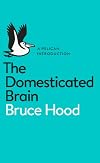
The mysterious case of the shrinking brain – Scientists have discovered that human brains have shrunk by about the size of a tennis ball over the last 20,000 years. The author hypothesises that this shrinkage is a result of self-domestication as our ancestors learnt how to live in larger communities at the end of the last Ice Age, through coordination, cooperation and cohabitation, and that it was this fact that made it possible for collective intelligence to thrive, not the other way show more round. Humans are social animals with feelings, who care about what others think of them. Communication plays a central role in this, and it has been argued that the long childhood enables parents to prepare their offspring to enact self-control and thereby become an accepted member of society, something scientist call social learning. The author proposes that the real quantum leap in the history of mankind that transformed our species was not initially language, but our ancestors' ability to mind read.
The chapter on group psychology, linking the perceived passivity of the German people during the persecution of the Jews in the Third Reich and mass shootings to feelings of belonging to a group and being excluded from it, respectively, is especially compelling, in my opinion.
In the epilogue, Bruce Hood analyses how the internet is shaping our behaviour, with as yet unforeseen consequences, with marketing companies trying to personalise their offerings to each of us, thereby shaping the choices we make and the groups we feel we belong to. Writing in 2013/14, the author recognised that this process is aided by large companies like Google and Facebook that collect personal information and sell it to these companies, something that is very relevant just at this moment, with Mark Zuckerberg being held to account for Facebook's practices.
Though the author doesn't explain what has caused the human brain to shrink – only relating that the brains of domesticated animals are smaller than those of their non-domesticated cousins – probably because scientists are still puzzling over that problem, and because I felt there was some repetition in terms of arguments both within a chapter and across the book, The Domesticated Brain doesn't get the full five stars; otherwise, this is an engagingly written and well-argued book on a fascinating subject. show less
The chapter on group psychology, linking the perceived passivity of the German people during the persecution of the Jews in the Third Reich and mass shootings to feelings of belonging to a group and being excluded from it, respectively, is especially compelling, in my opinion.
In the epilogue, Bruce Hood analyses how the internet is shaping our behaviour, with as yet unforeseen consequences, with marketing companies trying to personalise their offerings to each of us, thereby shaping the choices we make and the groups we feel we belong to. Writing in 2013/14, the author recognised that this process is aided by large companies like Google and Facebook that collect personal information and sell it to these companies, something that is very relevant just at this moment, with Mark Zuckerberg being held to account for Facebook's practices.
Though the author doesn't explain what has caused the human brain to shrink – only relating that the brains of domesticated animals are smaller than those of their non-domesticated cousins – probably because scientists are still puzzling over that problem, and because I felt there was some repetition in terms of arguments both within a chapter and across the book, The Domesticated Brain doesn't get the full five stars; otherwise, this is an engagingly written and well-argued book on a fascinating subject. show less
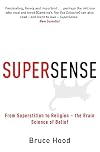
I heard Bruce Hood talking on Radio 4 and was sufficiently interested in what he had to say to buy his book - after all, a popular science writer engaging on the question of *why* we are impelled to believe in the supernatural, rather than intolerantly railing about how deluded people are that do, seemed like a healthy change. And Hood sets his book up nicely with some queasy dilemmas that will trouble not just the delusional among us: would *you* feel comfortable wearing Fred West's show more cardigan? I know I wouldn't.
Hood's thesis is that, through evolution or fiat, our brains are disposed - wired, if you like - to think this way, and along with the blindingly irrational proclivities that so exercise Richard Dawkins come many useful survival strategies. To throw out the bathwater risks losing the baby, Hood implies, and I think he would say the bath doesn't have a plug in any case: We couldn't change this aspect of our cognitive faculties even if we wanted to.
For all its intriguing premise it's a somewhat laboured book which sets its premise out early and then takes an inordinate amount of time to move beyond it, and in the mean time Hood allows himself to be sidetracked too easily, at one point indulging in a lengthy but granted interesting disquisition on the historical antecedents of the Dracula story, to no obvious point.
There is much to be mined in the observation that, for all our enlightened rationalist protestations, collectively and individually we still behave bizarrely most of the time - so perhaps there is something to be said for leavening the will to rationality that has been behind much modern economics, biology and sociology - and while this book glances in that direction it never really casts a longing stare there, and ultimately is of passing interest rather than genuine clout. show less
Hood's thesis is that, through evolution or fiat, our brains are disposed - wired, if you like - to think this way, and along with the blindingly irrational proclivities that so exercise Richard Dawkins come many useful survival strategies. To throw out the bathwater risks losing the baby, Hood implies, and I think he would say the bath doesn't have a plug in any case: We couldn't change this aspect of our cognitive faculties even if we wanted to.
For all its intriguing premise it's a somewhat laboured book which sets its premise out early and then takes an inordinate amount of time to move beyond it, and in the mean time Hood allows himself to be sidetracked too easily, at one point indulging in a lengthy but granted interesting disquisition on the historical antecedents of the Dracula story, to no obvious point.
There is much to be mined in the observation that, for all our enlightened rationalist protestations, collectively and individually we still behave bizarrely most of the time - so perhaps there is something to be said for leavening the will to rationality that has been behind much modern economics, biology and sociology - and while this book glances in that direction it never really casts a longing stare there, and ultimately is of passing interest rather than genuine clout. show less
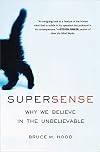
Why do people find it so easy to believe in supernatural things, from gods to ghosts to lucky socks to ESP? Some think that we're taught these things as children and simply fail to question them, but Bruce Hood contends that it has a lot more to do with the way our brains naturally experience and categorize the world, from the time we're very young. For instance, he argues that we have an intuitive sense that everything -- and particularly every living thing -- has a fundamental, invisible show more essence that defines it, and which can rub off on the world around it. This explains, among other things, why people are so keen to touch things that used to to belong to celebrities, and why we instinctively recoil from the thought of wearing a serial killer's sweater, no matter how thoroughly it may have been washed.
There are a lot of deeply interesting ideas in this book, many of which are bound to be quite eye-opening if you've never encountered them before, and are still fairly thought-provoking even if you have. Hood also provides lots of fascinating (if often quite disturbing) examples of this "SuperSense" at work. Unfortunately, though, the structure isn't quite as good as the content: there's a lot of rambling and repetition here, and Hood sometimes seems to circle around the points he wants to make for a long time, rather than getting at them directly. show less
There are a lot of deeply interesting ideas in this book, many of which are bound to be quite eye-opening if you've never encountered them before, and are still fairly thought-provoking even if you have. Hood also provides lots of fascinating (if often quite disturbing) examples of this "SuperSense" at work. Unfortunately, though, the structure isn't quite as good as the content: there's a lot of rambling and repetition here, and Hood sometimes seems to circle around the points he wants to make for a long time, rather than getting at them directly. show less

Many animals can copy but none do so for the pure joy of being sociable. Copying is not an automatic reflex. Babies do not slavishly duplicate every adult action they see. If the adult does not smile and get the babies’ attention from the start, then babies don’t copy. Also, babies only copy adults who seem to know what they are doing. Initially babies will copy the actions of an adult who is wearing a blindfold. The baby does not know that the adult cannot see. However, if you give the show more baby the blindfold to play with, then they don’t make the mistake of copying the blindfolded adult again. Babies know that they can’t possibly be looking at anything worth paying attention to. In other words, babies will only copy adults when they are led to think that something is worth doing.
The author's argument is that the self is an illusion created by your brain to make sense of all the processes that are involved in making sense of the world. He says that babies are born with a basic 'operating system' and develop a self as they grow, so I think a good analogy would be that the self is the user-friendly desktop that hides the complexity of the tasks that the computer is doing behind the scenes.
As people get different results on personality tests when they do them based on how they are at work and at home, and an on-line persona can be completely different from how someone is in real life, how can there be a single, unified self? There is a lot more to it than that of course, but you will have to read the book to find out
Interesting. show less
The author's argument is that the self is an illusion created by your brain to make sense of all the processes that are involved in making sense of the world. He says that babies are born with a basic 'operating system' and develop a self as they grow, so I think a good analogy would be that the self is the user-friendly desktop that hides the complexity of the tasks that the computer is doing behind the scenes.
As people get different results on personality tests when they do them based on how they are at work and at home, and an on-line persona can be completely different from how someone is in real life, how can there be a single, unified self? There is a lot more to it than that of course, but you will have to read the book to find out
Interesting. show less
Lists
Awards

You May Also Like


Associated Authors
Statistics
- Works
- 7
- Also by
- 1
- Members
- 847
- Popularity
- #30,189
- Rating
- 3.7
- Reviews
- 17
- ISBNs
- 53
- Languages
- 5


