
Bill Cosby
Author of Fatherhood
About the Author
Bill Cosby is one of America's most beloved comedic performers. He entered show business as a stand-up comedian in 1963 and has appeared in such historic television hits as I Spy, The Cosby Show, Cosby, and Kids Say the Darndest Things. He is also the author of numerous books
Series
Works by Bill Cosby
Best of the Cosby Show Volume 2 2 copies
The Adventures of Fat Albert and the Cosby Kids: Creativity / Moving / Playing Hockey (2002) 2 copies
As Crianças!... Oh Livro 1 1 copy
200 M.P.H. 1 copy
It's True! It's True! 1 copy
Bill 2 record set 1 copy
Bill Cosby on Prejudice 1 copy
Bill Cosby DVD 1 copy
The Adventures of Fat Albert and the Cosby Kids: The Newcomer: Suede Simpson: Smart Kid (2002) 1 copy
The Adventures of Fat Albert and the Cosby Kids: Tomboy: The Fuzz: Ounce of Prevention (2002) 1 copy
The Adventures of Fat Albert and the Cosby Kids: The Bully: Tv or Not Tv: The Shuttered Window (2002) 1 copy
Bill Cosby Complete 1 copy
Fat Albert #8 1 copy
Associated Works
The Personal Touch: What You Really Need to Succeed in Today's Fast Paced Business World (1994) — Foreword — 42 copies
Letters to the Next President: What We Can Do About the Real Crisis in Public Education (2004) — Prologue — 23 copies
Piece of the Action/Uptown Saturday Night — Actor — 2 copies
I Spy: A Cup of Kindness — Actor — 1 copy
I Spy Volume 4 (DVD) — Actor — 1 copy
Tagged
Common Knowledge
- Canonical name
- Cosby, Bill
- Legal name
- Cosby, William Henry, Jr.
- Birthdate
- 1937-07-12
- Gender
- male
- Education
- Temple University (BA|1971)
University of Massachusetts Amherst (MA|1972|Ed.D|1976) - Occupations
- comedian
actor
author - Organizations
- U.S. Navy
Academy of Motion Picture Arts and Sciences (expelled 2018) - Awards and honors
- Presidential Medal of Freedom (2002)
Bob Hope Humanitarian Award (2003)
Kennedy Center Honors (1998 | rescinded 2018)
Mark Twain Prize for American Humor (2009 | rescinded 2018) - Relationships
- Cosby, Camille (wife)
- Nationality
- USA
- Birthplace
- Philadelphia, Pennsylvania, USA
- Places of residence
- Philadelphia, Pennsylvania, USA
New York, New York, USA
Pennsylvania State Correctional Institute at Phoenix - Map Location
- Pennsylvania, USA
Members
Discussions
Cosby Effect in Pro and Con (February 2016)
I believe Mr. Cosby now qualifies for free eggrolls. in Pro and Con (December 2015)
Reviews
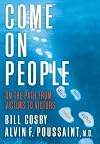
This book, although I believe it is well-intentioned, is one giant, self-contradictory condemnation of the poorer segments of the black community in this country.
I say it is contradictory, because although the book is clearly intended to be empowering and educational, Cosby and Poussaint undermine this goal every step of the way. They claim that telling black youths that they are "worthless" or "as bad as your father" has the psychological effect of a self-fulfilling prophecy. However, this show more entire book is written as if it were addressing an audience of stupid people. They condemn a culture that paints itself into a certain stereotype, but the writing in this book demonstrates that the authors themselves buy into that very same prejudice.
This self-contradictory attitude likewise shows up in Cosby & Poussaint's treatment of women. On the one hand, they berate the rap and television industries for their denigration of women and promotion of an unhealthy stereotype. But then they turn around and on the other hand demonstrate their own sexism with comments such as, "a woman's virtue needs protection" and their claims that women today should be "ashamed" of their sexuality. This isn't empowering - it's shoving women back into the kitchen!
It was very important to me to read this book in its entirety, because I had heard some of the reactions to it, and I wanted to be sure that I gave it a fair chance. Ultimately, while I do believe that Cosby and Poussaint have some things of value to say - most of it what I'd call common-sensical - the way they chose to say it undermines any value there to be found. This book is extremely condescending to its audience, and at the end of the day, I don't think the strong negative reactions to it were unwarranted. Not recommended. show less
I say it is contradictory, because although the book is clearly intended to be empowering and educational, Cosby and Poussaint undermine this goal every step of the way. They claim that telling black youths that they are "worthless" or "as bad as your father" has the psychological effect of a self-fulfilling prophecy. However, this show more entire book is written as if it were addressing an audience of stupid people. They condemn a culture that paints itself into a certain stereotype, but the writing in this book demonstrates that the authors themselves buy into that very same prejudice.
This self-contradictory attitude likewise shows up in Cosby & Poussaint's treatment of women. On the one hand, they berate the rap and television industries for their denigration of women and promotion of an unhealthy stereotype. But then they turn around and on the other hand demonstrate their own sexism with comments such as, "a woman's virtue needs protection" and their claims that women today should be "ashamed" of their sexuality. This isn't empowering - it's shoving women back into the kitchen!
It was very important to me to read this book in its entirety, because I had heard some of the reactions to it, and I wanted to be sure that I gave it a fair chance. Ultimately, while I do believe that Cosby and Poussaint have some things of value to say - most of it what I'd call common-sensical - the way they chose to say it undermines any value there to be found. This book is extremely condescending to its audience, and at the end of the day, I don't think the strong negative reactions to it were unwarranted. Not recommended. show less

3.5 stars
As one could probably guess, Fatherhood is about being a father. Bill Cosby shares stories, jokes and advice on the topic.
It was funny. I’ve always liked Bill Cosby. I don’t have kids (nor do I intend to), so there were parts I could have done without (in particular, the afterward by the doctor with serious advice), but often, his stories are laugh-out-loud funny. Of course, I have parents and a brother, and I was a child once, so I could still see the humour in the stories. show more Some of the stories were used in The Cosby Show, too, so I got a kick out of remembering that, too, while reading about it. show less
As one could probably guess, Fatherhood is about being a father. Bill Cosby shares stories, jokes and advice on the topic.
It was funny. I’ve always liked Bill Cosby. I don’t have kids (nor do I intend to), so there were parts I could have done without (in particular, the afterward by the doctor with serious advice), but often, his stories are laugh-out-loud funny. Of course, I have parents and a brother, and I was a child once, so I could still see the humour in the stories. show more Some of the stories were used in The Cosby Show, too, so I got a kick out of remembering that, too, while reading about it. show less
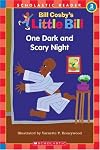
Letting your imagination get the best of you, is perhaps one of the main themes of this story. Bill is a young boy who cant seem to sleep alone in his room, because of the lights on his walls and the noise coming from his closet. His parents dont seem very sympathetic when Bill wakes them up several times during the night to tell them about what he has seen and heard. Bill decides to visit grandma's room, (a great commentary on keeping family together!), and after several attempts at helping show more Bill fall asleep, she decides to use a magic, protective spell on Bill's room. show less
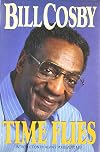
Light and humorous. This is how I would like to describe this book. When I bought this book, I knew nothing about the author. I thought this was a deep and kind of a self-help book. As I went along the chapters, I was hoping that the humorous mocking of the aging process would turn into some deep emotional thought. It didn’t. I was a little bit disappointed about that. But my disappointment was somehow compensated with the most satisfying last chapter. I most certainly love the the part show more where he declared his love for his wife. It was absolutely hilarious but I can feel the sincerity. This is a great book overall!
This is my most favorite takeaway from this book:
“The saving of the names in your telephone book, like the saving of the finger paintings and the booklets and the bear, is simply a refusal to let go of the past, an attempt to keep alive your sweet yesterdays. Most of us want to save yesterday because we think it was better than today, because memory has a sugarcoater and we never remember pain. (If women could remember pain, we would be a nation of single-child families).” show less
This is my most favorite takeaway from this book:
“The saving of the names in your telephone book, like the saving of the finger paintings and the booklets and the bear, is simply a refusal to let go of the past, an attempt to keep alive your sweet yesterdays. Most of us want to save yesterday because we think it was better than today, because memory has a sugarcoater and we never remember pain. (If women could remember pain, we would be a nation of single-child families).” show less
Lists
Awards


You May Also Like


Associated Authors
Statistics
- Works
- 110
- Also by
- 30
- Members
- 8,888
- Popularity
- #2,700
- Rating
- 3.5
- Reviews
- 93
- ISBNs
- 243
- Languages
- 13
- Favorited
- 2
