
Peter Sotos
Author of Index
Series
Works by Peter Sotos
Associated Works
Tagged
Common Knowledge
- Canonical name
- Sotos, Peter
- Other names
- Sotos, Peter Gus
- Birthdate
- 1960-04-17
- Gender
- male
- Education
- Art Institute of Chicago
- Occupations
- writer
musician - Short biography
- Peter Sotos (born 1960?) is a Chicago-born writer who has contributed an unprecedented examination of the peculiar motivations of sadistic sexual criminals. His works are often cited as conveying an uncanny understanding of myriad aspects of pornography. Most of his writings have focused on sexually violent pornography, particularly of that involving children. His writings are also considered by many to be social criticism often commenting on the hypocritical way media handles these issues.
In 1984, while attending The Art Institute of Chicago, Sotos began producing a self-published newsletter or “fanzine” named Pure, notable as the first zine dedicated to serial killer lore. Much of the text and pictures in Pure were photocopied images from major newspapers and other print media. Sotos also used a photocopy from a magazine of child pornography as the cover of issue#2 of Pure. In 1986 this cover led to his arrest and charges of obscenity and possession of child pornography. The charges of obscenity were dropped, but Sotos eventually pled guilty to the possession charge and received a suspended sentence. Sotos was the first person in the United States ever to be charged for owning child pornography.
Sotos’ writings explore sadistic and pedophilic sexual impulses in their many, often hidden, guises. Often using first person narratives, his prose takes on the point of view of the sexual predator. Despite his early legal troubles, and the seemingly fatal stigma of falsely being labeled a pedophile, Sotos continues to garner support for his ideas and literary output.
He was until 2003 a seminal member of the industrial noise band Whitehouse.
http://www.last.fm/music/Peter+Sotos/... - Nationality
- USA
- Birthplace
- Chicago, Illinois, USA
- Associated Place (for map)
- Illinois, USA
Members
Reviews
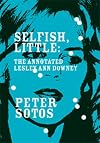
A book detailing sundry subjects of pedophilia and graphic violence, with particularly nuanced detail to the abduction and murder of Lesley Ann Downey. Much of Sotos' earlier work alternates between anecdotes of glory hole escapades and newspaper excerpts of child murder cases through the vehicle of a spiteful voice. Those elements are also found here, but there is a more particular structure with a large amount of focus on the titular subject that leads to a more reflective narrative voice, show more one might even say a compassionate voice. That same voice later wishes for opportunities to view increasingly graphic depictions of children being abused and murdered, and to rip apart large animals. A reader has a hard time reconciling the regret or remorse or transformation earlier in the book with these desires. It is even harder to comprehend in terms of a first person, potentially semi-autobiographical narrative.
We might want Sotos to come out and unwrite his own output, to counter it and cast everything previously written into some sort of inverse moralizing or cultural criticism. Is that fair? We don't ask repentance or transformation from the voice of Maldoror, or the narrator of Cooper's Frisk. Perhaps is it because we see some part of Sotos himself in the voice here. Which part? Even the most deranged and hateful voice can reflect or fluctuate, and even the average individual contains some form of violent desire. This is, if nothing else, a study in the abject position. It contains a great amount of ugliness, but there are surprising glimpses of beauty here too. show less
We might want Sotos to come out and unwrite his own output, to counter it and cast everything previously written into some sort of inverse moralizing or cultural criticism. Is that fair? We don't ask repentance or transformation from the voice of Maldoror, or the narrator of Cooper's Frisk. Perhaps is it because we see some part of Sotos himself in the voice here. Which part? Even the most deranged and hateful voice can reflect or fluctuate, and even the average individual contains some form of violent desire. This is, if nothing else, a study in the abject position. It contains a great amount of ugliness, but there are surprising glimpses of beauty here too. show less
Tool. by Peter Sotos
I finished reading this book at 3:00 in the morning and didn’t really sleep that night. I read it in one sitting and though it only took a few hours to read, when I was finished I felt hollowed out. Sick. Queasy. Not unlike how it feels when you crash after a speed bender. Jittery and empty yet all too aware that sleep is not coming. Parts of this book were like being flayed. I think anyone who was ever victimized finds Sotos a daunting read, but of all the books he has written that I have show more read thus far, this one was the most upsetting to me. And the reason I was so upset was because that which is wrong in this book is often wrong in me.
Of course we all know that I read upsetting books because I like being upset (or sickened or awakened or whatever happens to me when I read really difficult content). But even within that paradigm I take a beating when I read Sotos. Without engaging in too much self-analysis, I can only assume that at the end it was a beating I needed or truly wanted in some way. This is why I read Sotos. Because on some level we have similar thoughts – a book like this could only be devastating to a person who has already been down this road. To the unaffected reader, it might just come off as vulgarity or pointless obscenity. Despite being trained to analyze literature in an academic manner, I prefer to react in an emotional manner to the books I read. I don’t really care about the schools of thought and the tradition of transgression that many attempt to apply to Sotos’ work. When I read him I care only about my reaction, how he pokes at my own obsessions, how he knows so much more than anyone else about the will to harm and the will to survive harm.
I don’t know how this fact had not jumped out at me before, but in every book, keeping in mind every little bit of genuine autobiographical data he gives, Peter Sotos is playing different roles and channeling different people. He is exploring humanity by speculating about the worst things that go through the minds of the worst people. Because he is taking on the roles of other people, Sotos, in a very real sense, is engaging in psychodrama. And that is why I am so wrung out at the end of each book he writes. His psychodrama speaks to my own worries, neuroses, experiences and fears.
This is purely incidental. Peter Sotos is not writing for you or for me. Never forget that. Any meaning you take from Sotos’ words may have nothing to do with his intentions as he wrote the book. He’s not trying to relate to us. His psychodramas are his own. They are so deeply personal and unintended for purgation of others that it’s very interesting to me the extreme reactions his writing creates, especially in those who find themselves angry at what they consider Sotos’ wickedness.
That having been said, no matter how incidental any connection I have to this book may be, this book was a great emotional purge for me. Even in the extremity of another person’s psychodrama I found little pieces of my own experiences, most of them unpleasant. Clearly something in me is perverse enough to enjoy being poked psychically. It’s a useful pain, I think.
This is a very long discussion. You can read the rest of it here: http://ireadoddbooks.com/tool-by-peter-sotos/ show less
Of course we all know that I read upsetting books because I like being upset (or sickened or awakened or whatever happens to me when I read really difficult content). But even within that paradigm I take a beating when I read Sotos. Without engaging in too much self-analysis, I can only assume that at the end it was a beating I needed or truly wanted in some way. This is why I read Sotos. Because on some level we have similar thoughts – a book like this could only be devastating to a person who has already been down this road. To the unaffected reader, it might just come off as vulgarity or pointless obscenity. Despite being trained to analyze literature in an academic manner, I prefer to react in an emotional manner to the books I read. I don’t really care about the schools of thought and the tradition of transgression that many attempt to apply to Sotos’ work. When I read him I care only about my reaction, how he pokes at my own obsessions, how he knows so much more than anyone else about the will to harm and the will to survive harm.
I don’t know how this fact had not jumped out at me before, but in every book, keeping in mind every little bit of genuine autobiographical data he gives, Peter Sotos is playing different roles and channeling different people. He is exploring humanity by speculating about the worst things that go through the minds of the worst people. Because he is taking on the roles of other people, Sotos, in a very real sense, is engaging in psychodrama. And that is why I am so wrung out at the end of each book he writes. His psychodrama speaks to my own worries, neuroses, experiences and fears.
This is purely incidental. Peter Sotos is not writing for you or for me. Never forget that. Any meaning you take from Sotos’ words may have nothing to do with his intentions as he wrote the book. He’s not trying to relate to us. His psychodramas are his own. They are so deeply personal and unintended for purgation of others that it’s very interesting to me the extreme reactions his writing creates, especially in those who find themselves angry at what they consider Sotos’ wickedness.
That having been said, no matter how incidental any connection I have to this book may be, this book was a great emotional purge for me. Even in the extremity of another person’s psychodrama I found little pieces of my own experiences, most of them unpleasant. Clearly something in me is perverse enough to enjoy being poked psychically. It’s a useful pain, I think.
This is a very long discussion. You can read the rest of it here: http://ireadoddbooks.com/tool-by-peter-sotos/ show less
Mine by Peter Sotos
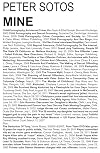
Sotos' use of collage gets more and more subtle, perhaps even more insidious or poignant depending on who you ask. Meaning that the line between weeping mother, dead girl, and Sotos himself blurs or disappears entirely because of how the words are folded. At the same time, the demarcations between the three are made ever more pronounced just because of how Sotos casts or reflects on each. In much of his work, Sotos will scorn the weeping mother and/or himself. SOmetimes he will show deep show more empathy for the dead and the hurt, sometimes jsut lurid fascination (or what masquerades as such). Here, he does all of these things to a degree, and that doesn't really happen in any of the other books.
The names he lingers on here, in relation to their images and stories, are particularly devastating and/or prurient (again, it's hard to pull apart here). Skyler Kauffmann being raped and buried alive, or the borderline urban legend of Thea Pumbroek. She only exists in a few grizzly details, and Sotos doesn't even give you those. You have to go hunt that context down. And you make it yours by doing so. By imbibing, in a way, these murdered and hurt lives, and Sotos forces us to do that in a way the news or a press release or muttered sympathy doesn't, a piece of that story becomes "ours."
I was talking with Anita Dalton as I read this book and she pointed out that the title of the book reflects this. It at once a descriptor of victim experience, parental clinging, perpetrator possessiveness, and the ownership Sotos creates for himself, whether it is mournful or caring or pornographic or lurid or something in between or wholly other. All the more, that "mine" is in the mouth of the reader now too. You are included. I am included. Maybe even in some more meaningful way than a hungry reporter or a lurid spectator we are mixed into the experience by reading about it and how it is interpreted. The "mine" lies in the mouth of the parent, the victim, the perpetrator, the writer, and at last the reader. show less
The names he lingers on here, in relation to their images and stories, are particularly devastating and/or prurient (again, it's hard to pull apart here). Skyler Kauffmann being raped and buried alive, or the borderline urban legend of Thea Pumbroek. She only exists in a few grizzly details, and Sotos doesn't even give you those. You have to go hunt that context down. And you make it yours by doing so. By imbibing, in a way, these murdered and hurt lives, and Sotos forces us to do that in a way the news or a press release or muttered sympathy doesn't, a piece of that story becomes "ours."
I was talking with Anita Dalton as I read this book and she pointed out that the title of the book reflects this. It at once a descriptor of victim experience, parental clinging, perpetrator possessiveness, and the ownership Sotos creates for himself, whether it is mournful or caring or pornographic or lurid or something in between or wholly other. All the more, that "mine" is in the mouth of the reader now too. You are included. I am included. Maybe even in some more meaningful way than a hungry reporter or a lurid spectator we are mixed into the experience by reading about it and how it is interpreted. The "mine" lies in the mouth of the parent, the victim, the perpetrator, the writer, and at last the reader. show less
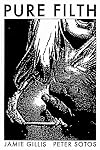
Sotos' printed transcriptions of the films of Jamie Gillis strip away image from word. Since the pornographic is formulated in terms of the visual, the jerk off material is pretty much non-existent here. What is left is the verbal exchange, and that exchange reveals as much about Gillis as it does about the women he's filming performing oral sex on random men in adult bookstores or eating their own puke be it for desperate need of money or for pleasure where pay off is almost secondary. In show more one of the transcripts, Jamie Gillis says that someone could find the tape in a hundred years and think he was the twentieth century Marquis de Sade, and The Humiliation of Heidi and the scene with Eve certainly make him a contender. On the other hand, the Africa interview wouldn't be out of place in a seminar alongside work by Dworkin and McKinnon, since its practically a case study in power dynamics, trauma, and the messiness of sexual need and desire. Sotos' introduction is among his more candid writing, in consideration of a wider audience, though it is no less provocative or unflinching for it. If you enjoy Jamie Gillis, Sotos, the theory of pornography, or, dare I say, feminist cultural theory, this is a valuable text. show less
Lists
Deranged Lit (1)
You May Also Like


Associated Authors
Statistics
- Works
- 25
- Also by
- 2
- Members
- 344
- Popularity
- #69,364
- Rating
- 3.7
- Reviews
- 10
- ISBNs
- 28
- Languages
- 3
- Favorited
- 5


