
Hana Volavkova (1904–1985)
Author of I Never Saw Another Butterfly
About the Author
Works by Hana Volavkova
Mikoláš Aleš 5 copies
The Old Jewish Cemetery of Prague: A Guide Through the Cemetery and a Selection of Its Most Important Memorials, from the XIVth-XIXth Century (1947) 2 copies
The Pinkas Synagogue: A Memorial of the Past and of Our Days. (Jewish Monuments in Bohemia and Moravia, Volume I, Part 2) (1955) 2 copies
The Jewish Museum of Prague 1 copy
Židovské museum v Praze 1 copy
Max Švabinský 1 copy
Pražské Židovské město 1 copy
Zmizelá Praha 1 copy
Zmizele prazske Ghetto 1 copy
Malíř Viktor Barvitius 1 copy
Tagged
Common Knowledge
- Other names
- VOLAVKOVÁ, Hana
VOLAVKOVA, Hana
וולקוב, חנה - Birthdate
- 1904-05-09
- Date of death
- 1985-03-29
- Gender
- female
- Education
- Charles University, Prague
- Occupations
- Curator, Central Jewish Museum, Prague
museum curator
art historian
Holocaust survivor - Organizations
- Central Jewish Museum, Prague
- Relationships
- Volavka. Vojtěch (husband)
Volavka, Jan (son) - Short biography
- Hana Volavková, née Frankensteinová, was born to a Jewish family in Jaroměř, Czechoslovakia. From 1924 to 1929, she studied history, art history, and classical archeology at Charles University in Prague. After graduating, she worked in the Prague Municipal Library and later as head of the library of the Museum of Applied Arts. In 1933, she married fellow art historian Vojtěch Volavka, with whom she had a son. At that time, she converted to the Roman Catholic faith. She was dismissed from her post at the Museum of Applied Arts in 1939, during the Second Czechoslovak Republic, because of her Jewish origins. In 1943, she was invited to join a small team that was building the Central Jewish Museum in Prague. She assisted in the mounting of an exhibition on the history of the Jews of Bohemia and Moravia and another exhibition about the Jews of Prague in 1944. In February 1945, Volavková was deported to the Nazi concentration camp at Terezín. She was the only curator at the Central Jewish Museum who survived World War II. Her parents and her brother died in Auschwitz. During the the post-war chaos, she helped save the Museum, and became its Director in 1950. It became a treasury of more than 200,000 objects, books, and archival material from Jewish communities all over Central Europe. She wrote several major books about art history and about the synagogues and Jewish cemeteries of Czechoslovakia. She also edited I Never Saw Another Butterfly: Children's Drawings and Poems from Terezin Concentration Camp, 1942-1944. The collection was selected from the archives of the Museum.
- Nationality
- Czechoslovakia
- Birthplace
- Jaroměř, Czechoslovakia
- Places of residence
- Prague, Czechoslovakia
- Place of death
- Prague, Czechoslovakia
- Associated Place (for map)
- Prague, Czechoslovakia
Members
Reviews

It is difficult to read and to feel the pain of the children housed temporarily in Terezin Concentration Camp who wrote poems and shared stories of their experiences before they were killed at the hands of the barbaric Nazi regime.
Almost all of the poems brought immediate tears. Most interesting is the fact that though this is primarily the horrific experiences of the children who were barbarically killed, it is also true that there were poems and stories of hope and optimism.
Almost all of the poems brought immediate tears. Most interesting is the fact that though this is primarily the horrific experiences of the children who were barbarically killed, it is also true that there were poems and stories of hope and optimism.
I never saw another butterfly : children's drawings and poems from Terezín Concentration Camp, 1942-1944 by Hana Volavková
For us book collectors, some books appeal to the eye and the hand, our sense of design and our admiration for the crafts of papermaking, printing, binding. Most books probably appeal to the mind and perhaps the heart through the message they communicate. But a few—how shall I say this? I would like to say they speak to our souls, lifting our spirits to new heights. But it might be more accurate to say they grab our guts and won’t let go.
And rarely, very rarely, a book does all three.
I show more never saw another butterfly (McGraw-Hill, 1976) is just such a book. The 1976 edition is beautifully designed. The fabric used in binding is a cross between burlap and linen, tactilely pleasing. The typography, the reproduction of children’s art work, the layout of the book and the page design are all examples of adept bookmaking. Each two-page spread stands as a work of art, carefully balancing white space with art work and text, no more than one passage per page.
The message is not overstated, and that makes it even more powerful. The subtitle alone tells the story: Children’s Drawings and Poems from Terezín Concentration Camp 1942-1944. The poems and the drawings bear the message eloquently from start to finish. In the back, in very small, unobtrusive type, there are catalogs of the art and writings, and an epilogue: “In Czechoslovakia, there is a strange place called Terezín, some 60 kilometers from Prague . . . . During the war years Terezín was a place of famine and of fear. Somewhere far away, in Berlin, men in uniforms had held meetings. . . .” A simple statistic on the last page of the text is repeated on the end paper: “A total of around 15,000 children under the age of 15 passed through Terezín. Of these, around 100 came back.”
The art on the dust jacket of the book is representative: a collage of paper cut-outs in bright colors, on tinted paper. It depicts a landscape, the Central Mountains of Czechoslovakia. The simple note in the catalog tells us that Eva Steinová was born in Prague on September 4, 1931, and deported to Terezín on December 14, 1941.” It ends, as most of the entries end, “She died at Oswiecim on October 23, 1944.”
The children’s art work, making use of bright colors and whatever materials were available to them, draws upon their experience in Terezín and their memories of home. There are barracks, with numbered bunk beds; the figure of an SS man; a queue for food; men with a stretcher and a figure with a bandage; a ghetto guard and a detail from a drawing called “Execution”; and a long, long freight train with people. But there are also a child’s hands, a house with a garden, iris, children dancing, many fantasies—and butterflies, butterflies, butterflies.
“The Flower Seller” is simply charming. A silhouette of the seller, her stand, trees, a house, and the vessel of flowers is cut out of bookkeeping papers, probably discarded from an office. It is pasted on a red background. Helena Mändlová was probably eleven or twelve. She died on December 18, 1943 in Oswiecim.
The poems have been translated into English, but the childlike images are vivid and meaningful. One is called simply “Birdsong.” It begins,
He doesn’t know the world at all
Who stays in his nest and doesn’t go out.
He doesn’t know what birds know best
Nor what I want to sing about,
That the world is full of loveliness.
There is an excerpt from the prose of 15-year-old Petr Fischl:
“. . . We got used to standing in line at 7 o’clock in the morning, at 12 noon and again at seven o’clock in the evening. We stood in a long queue with a plate in our hand, in which they ladled a little warmed-up water with a salty or a coffee flavor. Or else they gave us a few potatoes. We got used to sleeping without a bed, to saluting every uniform, not to walk on the sidewalks and then again to walk on the sidewalks. . . .”
Petr, we are told, perished in Oswiecim in 1944.
And then there is the poem by Pavel Friedmann, from which the title of the book is taken. It begins and ends,
The last, the very last,
So richly, brightly, dazzlingly yellow.
Perhaps if the sun’s tears would sing
against a white stone . . .
. . . . .
That butterfly was the last one.
Butterflies don’t live in here,
In the ghetto.
Yes, some books are more than mere books; their words speak more profoundly than mere words. show less
And rarely, very rarely, a book does all three.
I show more never saw another butterfly (McGraw-Hill, 1976) is just such a book. The 1976 edition is beautifully designed. The fabric used in binding is a cross between burlap and linen, tactilely pleasing. The typography, the reproduction of children’s art work, the layout of the book and the page design are all examples of adept bookmaking. Each two-page spread stands as a work of art, carefully balancing white space with art work and text, no more than one passage per page.
The message is not overstated, and that makes it even more powerful. The subtitle alone tells the story: Children’s Drawings and Poems from Terezín Concentration Camp 1942-1944. The poems and the drawings bear the message eloquently from start to finish. In the back, in very small, unobtrusive type, there are catalogs of the art and writings, and an epilogue: “In Czechoslovakia, there is a strange place called Terezín, some 60 kilometers from Prague . . . . During the war years Terezín was a place of famine and of fear. Somewhere far away, in Berlin, men in uniforms had held meetings. . . .” A simple statistic on the last page of the text is repeated on the end paper: “A total of around 15,000 children under the age of 15 passed through Terezín. Of these, around 100 came back.”
The art on the dust jacket of the book is representative: a collage of paper cut-outs in bright colors, on tinted paper. It depicts a landscape, the Central Mountains of Czechoslovakia. The simple note in the catalog tells us that Eva Steinová was born in Prague on September 4, 1931, and deported to Terezín on December 14, 1941.” It ends, as most of the entries end, “She died at Oswiecim on October 23, 1944.”
The children’s art work, making use of bright colors and whatever materials were available to them, draws upon their experience in Terezín and their memories of home. There are barracks, with numbered bunk beds; the figure of an SS man; a queue for food; men with a stretcher and a figure with a bandage; a ghetto guard and a detail from a drawing called “Execution”; and a long, long freight train with people. But there are also a child’s hands, a house with a garden, iris, children dancing, many fantasies—and butterflies, butterflies, butterflies.
“The Flower Seller” is simply charming. A silhouette of the seller, her stand, trees, a house, and the vessel of flowers is cut out of bookkeeping papers, probably discarded from an office. It is pasted on a red background. Helena Mändlová was probably eleven or twelve. She died on December 18, 1943 in Oswiecim.
The poems have been translated into English, but the childlike images are vivid and meaningful. One is called simply “Birdsong.” It begins,
He doesn’t know the world at all
Who stays in his nest and doesn’t go out.
He doesn’t know what birds know best
Nor what I want to sing about,
That the world is full of loveliness.
There is an excerpt from the prose of 15-year-old Petr Fischl:
“. . . We got used to standing in line at 7 o’clock in the morning, at 12 noon and again at seven o’clock in the evening. We stood in a long queue with a plate in our hand, in which they ladled a little warmed-up water with a salty or a coffee flavor. Or else they gave us a few potatoes. We got used to sleeping without a bed, to saluting every uniform, not to walk on the sidewalks and then again to walk on the sidewalks. . . .”
Petr, we are told, perished in Oswiecim in 1944.
And then there is the poem by Pavel Friedmann, from which the title of the book is taken. It begins and ends,
The last, the very last,
So richly, brightly, dazzlingly yellow.
Perhaps if the sun’s tears would sing
against a white stone . . .
. . . . .
That butterfly was the last one.
Butterflies don’t live in here,
In the ghetto.
Yes, some books are more than mere books; their words speak more profoundly than mere words. show less
I Never Saw Another Butterfly: Children's Drawings and Poems from the Terezin Concentration Camp, 1942-1944 by Hana Volavková
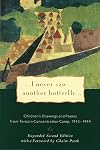
This is such a powerful book. It contains the drawings (full color illustrations) and poetry of children interred at the Terezin concentration camp. I had first come across it while researching materials to use for a history class I taught and this was used for The Butterfly Project, run by the Houston Holocaust Museum (I think it was out of Houston), and I ended up ordering a class set. It's a thin book, but it will absolutely tear your heart apart, knowing that most of these children would show more not survive their ordeal. I highly recommend this to everyone. show less
Beautiful, yet heartbreaking, this book contains the children’s drawings and poems from Terezin Concentration camp. Between 1942 and 1944 over fifteen thousand children passed through Terezin. Art became a way of therapy as the children found ways to express their hurt and frustration.
Lists
Awards

You May Also Like


Associated Authors
Statistics
- Works
- 30
- Members
- 1,021
- Popularity
- #25,225
- Rating
- 4.5
- Reviews
- 15
- ISBNs
- 18
- Languages
- 2
- Favorited
- 2