
Craig G. Bartholomew
Author of The Drama of Scripture: Finding Our Place in the Biblical Story
About the Author
Craig G. Bartholomew holds the H. Evan Runner Chair in Philosophy at Redeemer University College in Ontario.
Series
Works by Craig G. Bartholomew
Living at the Crossroads: An Introduction to Christian Worldview (2008) — Author — 286 copies, 1 review
Theological Interpretation of the Old Testament: A Book-by-Book Survey (2005) — Editor and Contributor — 279 copies
Out of Egypt: Biblical Theology and Biblical Interpretation (2004) — Editor; Contributor — 197 copies
A Royal Priesthood? The Use of the Bible Ethically and Politically: A Dialogue with Oliver O'Donovan (Scripture and Hermeneutics Series, V. 3) (2002) — Editor; Contributor — 145 copies
Introducing Biblical Hermeneutics: A Comprehensive Framework for Hearing God in Scripture (2015) 123 copies
Hearing the Old Testament: Listening for God's Address (2012) — Editor; Contributor — 104 copies, 2 reviews
The Scripture and Hermeneutics Seminar, 25th Anniversary: Retrospect and Prospect (The Scripture Collective Series) (2022) — Editor — 61 copies
Christ and Consumerism: A Critical Analysis of the Spirit of the Age (2000) — Editor; Contributor — 40 copies
Reading Ecclesiastes: Old testament Exegesis and Hermeneutical Theory (Analecta Biblica) (1998) 13 copies
O drama das Escrituras, 3ª ed.: Encontrando o nosso lugar na história bíblica (Portuguese Edition) 1 copy
Story and Biblical Theology 1 copy
Associated Works
New Dictionary of Biblical Theology: Exploring the Unity Diversity of Scripture (IVP Reference Collection) (2000) — Contributor, some editions — 1,018 copies, 3 reviews
The Trustworthiness of God: Perspectives on the Nature of Scripture (2002) — Contributor, some editions — 176 copies
The Bible in Pastoral Practice: Readings in the Place and Function of Scripture in the Church (Using the Bible in Pastoral Practice) (2005) — Contributor — 59 copies
Calvin, Barth, and Reformed Theology (Paternoster Theological Monographs) (2008) — Contributor — 31 copies
The Gospel and Globalization: Exploring the Religious Roots of a Globalized World (2009) — Contributor — 18 copies
The Words of the Wise Are Like Goads: Engaging Qoheleth in the 21st Century (2013) — Contributor — 16 copies
Old Testament Story and Christian Ethics: The Rape of Dinah as a Case Study (Paternoster Biblical Monographs) (2004) — Foreword — 13 copies
Venster op die kunste: Christelike perspektiewe = A window on the arts : Christian perspectives (Wetenskaplike bydraes van die PU vir CHO. Reeks F, ... F3, Versamelwerke)… (1994) — Contributor, some editions — 3 copies
Tagged
Common Knowledge
- Other names
- BARTHOLOMEW, Craig G.
- Birthdate
- 1961
- Gender
- male
- Organizations
- Paideia Centre for Public Theology
Members
Reviews
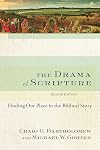
An excellent book that traces the grand narrative of Scripture and unites the Bible from Genesis to Revelation. Borrowing from N.T. Wright's framework, Bartholomew and Goheen move through the "six acts" of the Bible's Big Story: Creation ("God Establishes His Kingdom"), Fall ("Rebellion in the Kingdom"), Redemption Initiated ("The King Chooses Israel"), Redemption Accomplished ("The Coming of the King"), The Mission of the Church ("Spreading the News of the King") and Redemption Completed show more ("The Return of the King").
Already it is obvious that one of the authors' key objectives is to widen the horizons of Christians (especially American evangelicals) who are accustomed to thinking about themselves as the main point of Scripture. Even if it isn't intentional, many evangelicals assume the Gospel (the "good news" of the Bible) is that Jesus died to pay the penalty for their individual sins so they can spend eternity in heaven with him. And while that is certainly a feature of the story, it is by no means the central theme. In fact, as the authors demonstrate, the main character of the Bible is God who is both Creator and King and who established for himself a kingdom and made and appointed human beings to steward that kingdom as his vice-regents. When man rebelled against the King, they through that kingdom into chaos as rebellions often do. However, the good news of the Bible, evident as early as Genesis 3, is that God will also play the role of Redeemer, restoring his good creation--humans included. The Old Testament shows us God's plan to accomplish that redemptive mission which involves electing one family, Abraham being the head, through whom all the nations of the world will be blessed. Jesus, as both a member of that human lineage and also truly divine, exemplifies fully God's sovereign and gracious role to bring about redemption. That is the story of the Bible, and the church plays the part of inheritor and guardian of that story. We invoke and remember the story in order to shape and form our present and future actions, keeping the story alive as we fulfill the mission Christ has given us until his return.
Employing a narrative hermeneutic as Bartholomew and Goheen do (which I believe is exactly in line with how Scripture intends itself to be read) will go a long way in reinvigorating the evangelical imagination. It will take our eyes off of ourselves to see that Scripture is not about us, but it does concern us as members of a story and a community that is bigger than ourselves. Our culture attempts to "free" us from all associations and connections in the frenzied demand for self-actualization. In the end, we're more depressed, lonely, and dejected than ever. Into this void, the good news of the Gospel--the full Gospel--can be an incredibly attractive light. And the best part, it's all true. show less
Already it is obvious that one of the authors' key objectives is to widen the horizons of Christians (especially American evangelicals) who are accustomed to thinking about themselves as the main point of Scripture. Even if it isn't intentional, many evangelicals assume the Gospel (the "good news" of the Bible) is that Jesus died to pay the penalty for their individual sins so they can spend eternity in heaven with him. And while that is certainly a feature of the story, it is by no means the central theme. In fact, as the authors demonstrate, the main character of the Bible is God who is both Creator and King and who established for himself a kingdom and made and appointed human beings to steward that kingdom as his vice-regents. When man rebelled against the King, they through that kingdom into chaos as rebellions often do. However, the good news of the Bible, evident as early as Genesis 3, is that God will also play the role of Redeemer, restoring his good creation--humans included. The Old Testament shows us God's plan to accomplish that redemptive mission which involves electing one family, Abraham being the head, through whom all the nations of the world will be blessed. Jesus, as both a member of that human lineage and also truly divine, exemplifies fully God's sovereign and gracious role to bring about redemption. That is the story of the Bible, and the church plays the part of inheritor and guardian of that story. We invoke and remember the story in order to shape and form our present and future actions, keeping the story alive as we fulfill the mission Christ has given us until his return.
Employing a narrative hermeneutic as Bartholomew and Goheen do (which I believe is exactly in line with how Scripture intends itself to be read) will go a long way in reinvigorating the evangelical imagination. It will take our eyes off of ourselves to see that Scripture is not about us, but it does concern us as members of a story and a community that is bigger than ourselves. Our culture attempts to "free" us from all associations and connections in the frenzied demand for self-actualization. In the end, we're more depressed, lonely, and dejected than ever. Into this void, the good news of the Gospel--the full Gospel--can be an incredibly attractive light. And the best part, it's all true. show less
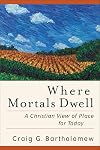
This is the first book I've read on a "theology of place." That is both a good and a bad thing. It is good in that it helped to coalesce many concepts that had been floating around in mind in new and helpful ways. It is a bad thing in that I have no real point of comparison to other "theologies of place," and therefore no real sense of scale other than my own enjoyment.
But I DID enjoy it. Bartholomew's surveys of the biblical text, philosophy, and theology are breath-taking in their sweep show more and command, though it seemed apparent to me that Bartholomew is most at home in the biblical text. There were also a few points where I felt his introductions of key thinkers were a bit too abbreviated...but, again, I was reading this as my introductory text; someone well-read in the "theology of place" would no doubt recognize many names and ideas that were mysterious to me.
I found this book valuable as an important piece of contextualization for many other current theological discussions. In particular, after reading Bartholomew, I would argue that the key "missing ingredient" in current Christian theology is NOT a "theology of creation-care," but this "theology of place." To say it plainly: if we can achieve a coherent "theology of place," the issues related to Christian responsibility for creation-care, urban life, political economy, globalization, digital culture, and about a half-dozen other "hot topics" would simply fall into place.
This is a tremendous book. But I will warn you that, in places, I found Bartholomew hard to follow. The overall structure of the book was clear, but sometimes he really got "into the weeds" on some theologian or philosophical idea. show less
But I DID enjoy it. Bartholomew's surveys of the biblical text, philosophy, and theology are breath-taking in their sweep show more and command, though it seemed apparent to me that Bartholomew is most at home in the biblical text. There were also a few points where I felt his introductions of key thinkers were a bit too abbreviated...but, again, I was reading this as my introductory text; someone well-read in the "theology of place" would no doubt recognize many names and ideas that were mysterious to me.
I found this book valuable as an important piece of contextualization for many other current theological discussions. In particular, after reading Bartholomew, I would argue that the key "missing ingredient" in current Christian theology is NOT a "theology of creation-care," but this "theology of place." To say it plainly: if we can achieve a coherent "theology of place," the issues related to Christian responsibility for creation-care, urban life, political economy, globalization, digital culture, and about a half-dozen other "hot topics" would simply fall into place.
This is a tremendous book. But I will warn you that, in places, I found Bartholomew hard to follow. The overall structure of the book was clear, but sometimes he really got "into the weeds" on some theologian or philosophical idea. show less

This book presents something toward a comprehensive statement of the biblical exegetical method known as theological interpretation. The authors suggest that this is moving away from both a “modern” emphasis on the historical backgrounds of the text(s) and its/their putative authors, as well as from a “postmodern” emphasis on perspective- and ideologically-driven conceptions of truth.
I generally align with the “postmodern” (a term which has, over the course of 50 years of use, show more admittedly become diffused in meaning). Because of this, I disagree with the suggestion that “reader-centered” approaches, or biblical interpretative methods which foreground the role of the reader in interpretation, must necessarily be relativistic. That is a kind of scarecrow argument. This being said, I resonate with the attack upon “author-centered,” or modernist/historical-critical/“scientifically-based” interpretation, because it proved generally to be bankrupt from the standpoint of religious belief, creating a wide gulf between religious and scholarly treatment of the Bible. This is ironic because historical criticism, again speaking generally, tried to bridge a wide historical gulf between the production of a text and its interpretation.
But I don’t think it is necessary to reach back, or to pretend to reach back, to “pre-modern” interpretation, or in my term “tradition-centered interpretation.” The toothpaste doesn’t go back in the tube. Rather, this is another aspect of “reader-centered” approaches: the readers, in this case, are theologically-minded Christians (and Jews, maybe).
Overall, this is a difficult read, and it is thoroughly contextualized for a (White) Western audience. This makes it a curious choice for my class of Korean pastors next month, but on the other hand it gives me a little more to talk about. show less
I generally align with the “postmodern” (a term which has, over the course of 50 years of use, show more admittedly become diffused in meaning). Because of this, I disagree with the suggestion that “reader-centered” approaches, or biblical interpretative methods which foreground the role of the reader in interpretation, must necessarily be relativistic. That is a kind of scarecrow argument. This being said, I resonate with the attack upon “author-centered,” or modernist/historical-critical/“scientifically-based” interpretation, because it proved generally to be bankrupt from the standpoint of religious belief, creating a wide gulf between religious and scholarly treatment of the Bible. This is ironic because historical criticism, again speaking generally, tried to bridge a wide historical gulf between the production of a text and its interpretation.
But I don’t think it is necessary to reach back, or to pretend to reach back, to “pre-modern” interpretation, or in my term “tradition-centered interpretation.” The toothpaste doesn’t go back in the tube. Rather, this is another aspect of “reader-centered” approaches: the readers, in this case, are theologically-minded Christians (and Jews, maybe).
Overall, this is a difficult read, and it is thoroughly contextualized for a (White) Western audience. This makes it a curious choice for my class of Korean pastors next month, but on the other hand it gives me a little more to talk about. show less
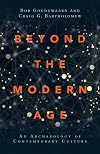
The authors of “Beyond the Modern Age” offer perspicuous critiques on the edifices and ashes of modernity. The treatises being put forward in the book, at the cultural and economic level, are at once ambitious, generous, and hope-filled. With the manifold societal crises facing the world today, one would long that their message is heeded by more, especially those who wield public power.
A drawback in the middle section (Part Two) mars the book’s eloquence, though. There, the authors show more include extensive quotations from works of Philip Rieff, René Girard, et al. These quotes are made at length but, given the philosophical nature, are still extracted from their own contexts. Meanwhile, the authors spend not adequate efforts interacting with what they have quoted and thus blurring the overall message they want to convey.
All in all, an important alternative vision to human future and a refreshing antidote to the profusion of monotonous economic discourses. show less
A drawback in the middle section (Part Two) mars the book’s eloquence, though. There, the authors show more include extensive quotations from works of Philip Rieff, René Girard, et al. These quotes are made at length but, given the philosophical nature, are still extracted from their own contexts. Meanwhile, the authors spend not adequate efforts interacting with what they have quoted and thus blurring the overall message they want to convey.
All in all, an important alternative vision to human future and a refreshing antidote to the profusion of monotonous economic discourses. show less
Lists
You May Also Like


Associated Authors
Statistics
- Works
- 45
- Also by
- 12
- Members
- 4,674
- Popularity
- #5,396
- Rating
- 4.1
- Reviews
- 20
- ISBNs
- 110
- Languages
- 3
- Favorited
- 2