
Laurie Bauer
Author of Language Myths
About the Author
Laurie Bauer is Emeritus Professor of Linguistics at Victoria University of Wellington, New Zealand. I.S.P. Nation is Emeritus Professor of Applied Linguistics at Victoria University of Wellington, New Zealand.
Works by Laurie Bauer
Watching English Change: An Introduction to the Study of Linguistic Change in Standard Englishes in Twentieth Century (L (1994) 9 copies
Questions About Language: What Everyone Should Know About Language in the 21st Century (2020) 3 copies
English Morphology for the Language Teaching Profession (ESL & Applied Linguistics Professional Series) (2020) 2 copies
Manual of Information to Accompany the Wellington Corpus of Written New Zealand English (1993) 1 copy
Associated Works
Morphology and its demarcations: Selected papers from the 11th Morphology meeting, Vienna, February 2004 (2005) — Contributor — 7 copies
Morphology 2000 : selected papers from the 9th Morphology Meeting, Vienna, 24-28 February 2000 (2002) — Contributor — 6 copies
Variation and Change in Morphology: Selected papers from the 13th International Morphology Meeting, Vienna, February 2008 (2010) — Contributor — 5 copies
Tagged
Common Knowledge
- Birthdate
- 1949-08-09
- Gender
- male
- Education
- University of Edinburgh (PhD)
- Occupations
- professor of linguistics
- Organizations
- Victoria University of Wellington
- Nationality
- New Zealand
- Places of residence
- New Zealand
- Associated Place (for map)
- New Zealand
Members
Reviews
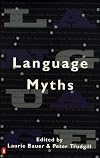
This book has a good heart, and a few really solid essays--Dennis Preston (funny guy, incidentally) on prestige ranking of American accents and JK Chambers on TV's non-effect on language change (the reason I bought it originally, and while a little offended that a certain nameless someone referred me to the shibboleths book to prove the point, I am also convinced). Some of the others are definitely kindergarten, and I don't mean for language scholars, but surely even the gen-pub doesn't show more needto be told that some languages aren't intrinsically "harder" or "more expressive" or "faster" or "more primitive" than others, and that language change isn't language decline? Then I think about how quickly I can come up with five people who have said just the opposite on one of these matters in the last six weeks, and how stubborn they were, and I'm like "oh yeah." So there is definitely a place for this book, even if I suspect most of the prescriptivists and cavilers will require more convincing than it provides. And it's a quick read. show less
Such a treat: 21 short essays addressing common linguistic misunderstandings, misapprehensions and misbeliefs. Everything you thought you knew about languages (yours and others) is wrong and now we know why. And so entertainingly presented! This book costs so little and is so filled with useful information in so few pages that there's no excuse for not learning what you shouldn't believe about words, and why.
Contrary to the back cover, I don't imagine this book would be a very valuable source for the "language professional," but for introductory purposes and the "lay person," it is very valuable. It's capable of giving non-professionals a whole new perspective on language, particularly a sociolinguisitic one. As one would hope from a book written by linguists, it is well written. The book's short length is a plus, not because we want to be done with it, but because it avoids bogging down a show more reader who's just trying to get a basic understanding of the concepts. show less
Collection of writings by the Writers' Group of the Rochester Genealogical Society. Each chapter was authored by a different member of the group and chronicles a part of their family's background. The book is divided into two parts: The Search and The Characters. Narrations have been researched using a variety of techniques, each author's account uses a slightly different approach. Authors have a range of experience in genealogy research and writing, from new investigator to very skilled. show more All chapters are beautifully constructed, insightful, and shed light on the genealogical research process. Families in New York, Pennsylvania, and Massachusetts are described. There is much to learn about uncovering genealogy, America's history, and family relationships from these thirteen chapters. Includes black and white photographs, drawings, documents, maps, and an index. The thirteen chapters provide the reader with useful fact-finding strategies and enjoyable reading. show less
Lists
Awards

You May Also Like


Associated Authors
Statistics
- Works
- 26
- Also by
- 4
- Members
- 880
- Popularity
- #29,100
- Rating
- 3.4
- Reviews
- 11
- ISBNs
- 77
- Languages
- 1
- Favorited
- 1