
Steven Biel
Author of Down with the Old Canoe: A Cultural History of the Titanic Disaster
About the Author
Steven Biel is the executive director of the Mahindra Humanities Center and a senior lecturer on history and literature at Harvard University.
Works by Steven Biel
Down with the Old Canoe: A Cultural History of the Titanic Disaster (1996) — Author — 246 copies, 6 reviews
Associated Works
Tagged
Common Knowledge
- Birthdate
- 1960-10
- Gender
- male
- Education
- Harvard University (Ph.D.)
- Occupations
- academic
- Organizations
- Harvard University
- Nationality
- USA
- Associated Place (for map)
- USA
Members
Reviews
Down with the old canoe : a cultural history of the Titanic disaster, with a new afterword by Steven Biel
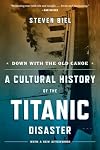
I am not a Titanic fanatic or in any way participant in Titanic mania of any sort, but I was drawn to the cultural history revealed by the title of Biel's work. In light of many recent discussions related to revaluating the function of monuments to the confederacy and Robert E. Lee, and controversial nonsense about "critical race theory," and even recent commemorations of the 9/11 tragedy, Biel's work provides much to consider regarding how myth-making can shape the historical memory of a show more disaster. Biel rightly stays within the broad events surrounding 1912 and later commemorations of the sinking, but there seem to be many opportunities for a dialog with other historical events.
Overall, this was fascinating and excellent study, covering attitudes relating to immigration, religion, race, economic status, the suffrage movement, and much more, even for a non-academic reader, like myself. show less
Overall, this was fascinating and excellent study, covering attitudes relating to immigration, religion, race, economic status, the suffrage movement, and much more, even for a non-academic reader, like myself. show less
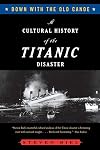
As the subtitle mentions, Down with the Old Canoe is a cultural history of the Titanic; it does not describe the sinking of the ship. Biel divides the book into two sections: "Meanings" and "Memories." In "Meanings" he places the Titanic in the history of its time -- 1912 -- and discusses the sinking in relation to the social issues of that time period including the suffrage and labor movements and the ideas of class and problem of immigration. In this discussion the proper place of women in show more society (thought by many to be in the home) and the emphasis placed on the upper class passengers in accounts of the disaster are featured. Biel explains how both suffragists and anti-suffragists used the Titanic to bolster their arguments for and against the vote for women.
In the "Memories" section, Biel discusses the importance of the Titanic in history from the 1950s through 1990s (when the book was published). He describes the impact of Walter Lord's "A Night to Remember" on the culture in the 1950s, and to a much lesser extent other writings about the Titanic; the Titanic Historical Society; and efforts to discover the Titanic including its discovery and salvage operations in the 1980s.
Highly recommended to people who know something about the Titanic. show less
In the "Memories" section, Biel discusses the importance of the Titanic in history from the 1950s through 1990s (when the book was published). He describes the impact of Walter Lord's "A Night to Remember" on the culture in the 1950s, and to a much lesser extent other writings about the Titanic; the Titanic Historical Society; and efforts to discover the Titanic including its discovery and salvage operations in the 1980s.
Highly recommended to people who know something about the Titanic. show less
Well, this book is nothing if not well-researched. Still, there wasn't really a lot of "new" here. Anyone who knows the history of the eras, and has studied the history of the Titanic, will already have come to many of Biel's conclusions on her own. On the other hand, I can't imagine this particular book being very interesting to someone who is brand new to Titanic history and mythology. Much backstory is needed to understand most of the references and most all popular beliefs about what show more happened during the Titanic tragedy are dispelled here anyway.
The poem about "Votes for Women/Boats for Women" is one of my favorite bits (see page 30). As one who is very much against most of the philosophies behind the suffragist movement, as well as the more modern feminist movements, I found the irony hilarious. I was also surprised at the number of black folk songs that were written about the disaster. I consider myself a pretty knowledgeable Titanic historian, but I'd never considered how the event affected the black community who were treated as lower class citizens of the time.
At the very beginning of the book, I was reminded about my feelings after the 9/11 terrorist attack on the US. I wrote, "I wonder how many people felt the same way about the Titanic as I felt about 9/11---how could this happen to us?" I felt like an attack on America was not possible---like it was not allowed. Later, on page 153, Second Officer Lightoller echoed my thoughts: "I know what the sea can do. But this is different...because we were so sure. Because even though it's happened, it's still unbelievable. I don't think I'll ever feel sure again. About anything."
I can't say that I'm glad I read this...but I don't think it was a waste of time either. My feelings on it are mostly indifferent. I think there was just a bit *too* much research---too much quoting---for my tastes. But, then again, it was expected coming in. show less
The poem about "Votes for Women/Boats for Women" is one of my favorite bits (see page 30). As one who is very much against most of the philosophies behind the suffragist movement, as well as the more modern feminist movements, I found the irony hilarious. I was also surprised at the number of black folk songs that were written about the disaster. I consider myself a pretty knowledgeable Titanic historian, but I'd never considered how the event affected the black community who were treated as lower class citizens of the time.
At the very beginning of the book, I was reminded about my feelings after the 9/11 terrorist attack on the US. I wrote, "I wonder how many people felt the same way about the Titanic as I felt about 9/11---how could this happen to us?" I felt like an attack on America was not possible---like it was not allowed. Later, on page 153, Second Officer Lightoller echoed my thoughts: "I know what the sea can do. But this is different...because we were so sure. Because even though it's happened, it's still unbelievable. I don't think I'll ever feel sure again. About anything."
I can't say that I'm glad I read this...but I don't think it was a waste of time either. My feelings on it are mostly indifferent. I think there was just a bit *too* much research---too much quoting---for my tastes. But, then again, it was expected coming in. show less
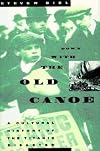
This book isn't so much about the Titanic itself, as about the effect the sinking of the ship had on culture after the disaster. It looked at such things as gender, class and race; also, songs and poems written about the Titanic; also, the books, tv, and movies that came about (this was published before James Cameron's movie, however).
I wish I would have noticed the subtitle before requesting it from the library (or even before putting it on my tbr... did I? It was too long ago). It just show more wasn't what I was interested in. I skimmed though a lot of it. Probably the most interesting chapter to me was the one that mainly focused on William Lord's book (written in the 1950s), A Night to Remember. Overall, though, it just wasn't interesting to me. show less
I wish I would have noticed the subtitle before requesting it from the library (or even before putting it on my tbr... did I? It was too long ago). It just show more wasn't what I was interested in. I skimmed though a lot of it. Probably the most interesting chapter to me was the one that mainly focused on William Lord's book (written in the 1950s), A Night to Remember. Overall, though, it just wasn't interesting to me. show less
Lists
Awards

You May Also Like


Associated Authors
Statistics
- Works
- 5
- Also by
- 1
- Members
- 405
- Popularity
- #60,013
- Rating
- 3.5
- Reviews
- 6
- ISBNs
- 13