
Ian Hodder
Author of Reading the Past: Current Approaches to Interpretation in Archaeology
About the Author
Ian Hodder is the Dunlevie Family Professor in the Department of Anthropology at Stanford University. His previous books include Entangled: An Archaeology of the Relationships between Humans and 'Things and The Leopard's Tale: Revealing the Mysteries of atalhyk.
Works by Ian Hodder
Symbols in Action: Ethnoarchaeological Studies of Material Culture (New Studies in Archaeology) (1982) 15 copies
Towards Reflexive Method in Archaeology: The Example of Catalhoyuk (British Institute of Archaeology at Ankara, Biaa Monograph, No 28) (2000) 5 copies
Violence and the Sacred in the Ancient Near East: Girardian Conversations at Çatalhöyük (2019) 4 copies
Catalhoyuk Perspectives: Themes from the 1995-99 Seasons (McDonald Institute Monographs) (2006) 1 copy
Çatalhöyük Excavations: The 2000-2008 Seasons: Çatalhöyük Research Project Volume 7 (Monumenta Archaeologica) (2014) 1 copy
Inhabiting Catalhoyuk: Reports from the 1995-99 Seasons (Catalhoyuk Research Project 4) (2005) 1 copy
Archaeology in 1984 1 copy
Çatalhöyük Leoparın Öyküsü 1 copy
Associated Works
Archaeology Under Fire: Nationalism, Politics and Heritage in the Eastern Mediterranean and Middle East (1998) — Contributor — 40 copies
Museums in the Material World (Leicester Readers in Museum Studies) (2007) — Contributor — 14 copies
Unwrapping the Sacred Bundle: Reflections on the Disciplining of Anthropology (2005) — Contributor — 14 copies
Tagged
Common Knowledge
- Canonical name
- Hodder, Ian
- Birthdate
- 1948
- Gender
- male
- Education
- University of London (BA)
University of Cambridge (Ph.D.) - Nationality
- UK
- Associated Place (for map)
- UK
Members
Reviews
Where Are We Heading?: The Evolution of Humans and Things (Foundational Questions in Science) by Ian Hodder
Is Human Evolution Directional? by Ian Hodder is the study of man and his relationship with what he creates. Hodder is an archaeologist and professor of anthropology at Stanford University. His most recent books are Entangled: An Archaeology of the Relationships Between Humans and Studies in Human-Thing Entanglement.
This is a book not about the biological evolution of man, although some of that is included in why we have small teeth and weak jaws, but of man as a species. Comparisons are show more made between man and other animals such as beaver dams and manmade dams. This is not only discussed in purpose but also in reaction and the effects of the completed project. Most of the discussion concerns man and his dependence on things and things that are dependant on man. As Hodder digs deeper, he shows that there is an entanglement between man and things. The connection of Christmas tree lights in America and car production in China is one example used in the book.
There are also interesting discussions of wheat and cotton, and they have evolved from in production and the effects of technology. Other items are less organic like the QWERTY keyboard design. Its design was created so that the arms would not jam when typing letters that are physically too close to each other. There are more efficient designs and not many people still use manual typewriters, but QWERTY stayed because it became the standard -- taught in high schools, taught in secretarial schools, standardized all makes and models of typewriters. It may not be the best design but it would be nearly impossible to change it today.
Hodder makes a compelling case for the entanglement of man and things. I can see this in everyday America. We make cars for transportation. We design cities to be car friendly. We widen roads to allow more cars. We raise speed limits so vehicles can move more quickly. However, in the process, we find ourselves dependant on cars. Suburbs, urban sprawl, housing communities isolated from businesses are byproducts. If we don't have a car, we become stuck. Many areas do not have sidewalks, public transportation, or bike lanes. We created a system that system that ties our success to the success of the flow of automobiles. That flow also creates environmental concerns. Our solutions are not effective. We build hybrid and electric cars to ease our dependence on fossil fuels, but many areas electricity is produced by burning coal. So an electric vehicle is essentially a coal-burning vehicle. This simple analogy runs far deeper when we include petroleum production, automobile production (which includes steel, plastics, and rare earth elements), changing the landscape/environment by building new roads, and removing the habitat for other animal life. Although it may seem to most that we control our destiny as a species by building, manufacturing, and changing the environment, we have become dependant on the things we make, and they may guide our future more directly than we thought possible. The deeper we go the more we see our future entangled with and directed by the things we make. show less
This is a book not about the biological evolution of man, although some of that is included in why we have small teeth and weak jaws, but of man as a species. Comparisons are show more made between man and other animals such as beaver dams and manmade dams. This is not only discussed in purpose but also in reaction and the effects of the completed project. Most of the discussion concerns man and his dependence on things and things that are dependant on man. As Hodder digs deeper, he shows that there is an entanglement between man and things. The connection of Christmas tree lights in America and car production in China is one example used in the book.
There are also interesting discussions of wheat and cotton, and they have evolved from in production and the effects of technology. Other items are less organic like the QWERTY keyboard design. Its design was created so that the arms would not jam when typing letters that are physically too close to each other. There are more efficient designs and not many people still use manual typewriters, but QWERTY stayed because it became the standard -- taught in high schools, taught in secretarial schools, standardized all makes and models of typewriters. It may not be the best design but it would be nearly impossible to change it today.
Hodder makes a compelling case for the entanglement of man and things. I can see this in everyday America. We make cars for transportation. We design cities to be car friendly. We widen roads to allow more cars. We raise speed limits so vehicles can move more quickly. However, in the process, we find ourselves dependant on cars. Suburbs, urban sprawl, housing communities isolated from businesses are byproducts. If we don't have a car, we become stuck. Many areas do not have sidewalks, public transportation, or bike lanes. We created a system that system that ties our success to the success of the flow of automobiles. That flow also creates environmental concerns. Our solutions are not effective. We build hybrid and electric cars to ease our dependence on fossil fuels, but many areas electricity is produced by burning coal. So an electric vehicle is essentially a coal-burning vehicle. This simple analogy runs far deeper when we include petroleum production, automobile production (which includes steel, plastics, and rare earth elements), changing the landscape/environment by building new roads, and removing the habitat for other animal life. Although it may seem to most that we control our destiny as a species by building, manufacturing, and changing the environment, we have become dependant on the things we make, and they may guide our future more directly than we thought possible. The deeper we go the more we see our future entangled with and directed by the things we make. show less
I obviously didn’t read this book carefully enough; I say that because the bibliography references Proust (Swann’s Way) and Woolf (A Room of One’s Own) and I don’t remember seeing either of those in the text. I also find there’s a whole lot more archaeology theory than I thought, and a lot of it is over my head intellectually. Still, I got some insights. Ian Hodder is an archaeologist working at the interesting Neolithic site of Çatalhöyük, and uses it to illustrate his theme of show more entanglements – how humans and things connect. Most of the discussion is too deep for me; I’ll have to reread the book. But there were a couple of things that stood out. One was the observation that the invention of wire-drawing machinery made possible (1) barbed wire; (2) telegraph wire; and (3) piano wire, affecting things as diverse as WWI trench warfare and the Moonlight Sonata. Another was a comment on the common complaint that we have “too much stuff” and our live would be so much better if we were entangled with fewer “things”. Hodder notes, though, that “things” are often how we fulfil our obligations to other humans. It's all well to admire Diogenes and his barrel, but what good did he do others? show less
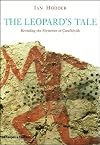
Catalhoyuk is an archaeological site in Anatolia in Turkey, where the remains of a “town” densely occupied from the Neolithic age (about 7500 BCE) though the Chalcolithic (early use of Copper, about 6000 BCE) have been excavated. What is remarkable about this site is the symbolic art that has been found there: Skulls of wild bulls and parts of other wild animals are plastered on to the walls of the houses, which are also decorated with many paintings of wild animal hunts; the human show more participants of these scenes often wear what look like leopard skins, and illustrations of leopards – usually in pairs - abound throughout the site. The book - written by the Director of Research at Catalhoyuk - is subtitled, perhaps ironically, “The Leopard’s Tale”, as hardly a trace of a leopard was found among the faunal remains at the site through many seasons of excavation.
This contrast is one of many; the domestic animal remains found at the site were mainly sheep and goats, but no parts of these animals were ever plastered to the walls, nor do they find their way into the wall painting. Activities within the house were evidently carefully regulated and differentiated: People were buried under the floors of the houses; these burials were almost invariably close to the north and east walls of the house. Domestic activities – food preparation and cooking – were always carried out in the south part of the house, where the walls were undecorated. The floor areas within the house clearly demarcated these different areas – often with slightly different levels or raised edges, and with the use of different types and colors of flooring material.
The author uses these and other recurrent patterns in the material remains at Catalhoyuk to develop a picture of the worldview of these ancient inhabitants – their social and economic life, the roles of men and women, and their spiritual concepts. This process – extrapolating from the material culture of prehistoric sites to the sociology, psychology and religion of the inhabitants - is known as Cognitive Archaeology. It is of course far more speculative than when dealing with more recent cultures, where written sources are available to supplement and provide context for the archaeological finds. However, as more and more prehistoric sites – from different parts of the world – are examined in this way, certain broad common themes are starting to emerge, enabling the field of cognitive archaeology to develop principles and disciplines of interpretation.
A theme that the author returns to throughout the book is that of the relationship between the activities motivated by symbolic/ritualistic needs - like using a particular type of lime to plaster a floor of the house after a burial – and the social or domestic activities needed to support them – for example, cooperative arrangements with other households to locate the limestone and burn it. He calls this process “entanglement”, and describes how one type of entanglement would catalyse another in a progressively more complex set of interactions between material, social and symbolic needs. Thus for example, the need to obtain the cooperation of others required some kind of reciprocal framework for regulating social relationships; this framework might be based on hunting symbolically important animals (like wild bulls) and sharing them in a feast. The bull skulls plastered to the walls of the house might well be the way of creating a historical record of the hunts and feasts, and determining the rank or prestige of the person or the family ancestor involved. (That both bull’s skulls and human skulls were often dug up from a lower, i.e. earlier, level of occupation and relocated in the current house is evidence of their importance in family histories).
In the final chapter, the author broadens the scope beyond the specifics of Catalhoyuk, and speculates how many of the progressive stages of early human civilization might have been driven by processes of entanglement - on a much broader scale and longer time horizon. Conventionally, it is presumed that the domestication of wild crops and animals in the early Neolithic caused people to settle down and live in one place in order to enjoy the benefits of domestication. Hodder believes that the domestication of crops was more likely to have been the inadvertent consequence of nomadic groups getting together for joint ritual and symbolic activities. (They harvested wild grasses as materials for making baskets, mats, shelters etc; this selected for varieties of grain which tended to keep their seed heads during harvesting, grains which do not automatically propagate in the wild). Hodder points to sites from much earlier than the Neolithic – like Ohalo II south of the Sea of Galilee in Israel, which was occupied in the Paleolithic 20,000 years ago – which show clear signs of repeated if not continuous occupation, as evidence of the fact that early humans gathered together in fixed locations for reasons other than settling down to an agricultural lifestyle.
Even if you don’t go all the way with Hodder, the journey itself is very worthwhile. The descriptions and illustrations of the excavations at Catalhoyuk are superb, and the range of different disciplines and techniques involved – archaeobotanical analysis, radio carbon dating, micromorphological analysis of soils, isotopic analysis of bone, to name but a few – leave one in no doubt that every deduction about the lifestyles and culture of the inhabitants is based only on the most thorough and minute analysis of the material remains. show less
This contrast is one of many; the domestic animal remains found at the site were mainly sheep and goats, but no parts of these animals were ever plastered to the walls, nor do they find their way into the wall painting. Activities within the house were evidently carefully regulated and differentiated: People were buried under the floors of the houses; these burials were almost invariably close to the north and east walls of the house. Domestic activities – food preparation and cooking – were always carried out in the south part of the house, where the walls were undecorated. The floor areas within the house clearly demarcated these different areas – often with slightly different levels or raised edges, and with the use of different types and colors of flooring material.
The author uses these and other recurrent patterns in the material remains at Catalhoyuk to develop a picture of the worldview of these ancient inhabitants – their social and economic life, the roles of men and women, and their spiritual concepts. This process – extrapolating from the material culture of prehistoric sites to the sociology, psychology and religion of the inhabitants - is known as Cognitive Archaeology. It is of course far more speculative than when dealing with more recent cultures, where written sources are available to supplement and provide context for the archaeological finds. However, as more and more prehistoric sites – from different parts of the world – are examined in this way, certain broad common themes are starting to emerge, enabling the field of cognitive archaeology to develop principles and disciplines of interpretation.
A theme that the author returns to throughout the book is that of the relationship between the activities motivated by symbolic/ritualistic needs - like using a particular type of lime to plaster a floor of the house after a burial – and the social or domestic activities needed to support them – for example, cooperative arrangements with other households to locate the limestone and burn it. He calls this process “entanglement”, and describes how one type of entanglement would catalyse another in a progressively more complex set of interactions between material, social and symbolic needs. Thus for example, the need to obtain the cooperation of others required some kind of reciprocal framework for regulating social relationships; this framework might be based on hunting symbolically important animals (like wild bulls) and sharing them in a feast. The bull skulls plastered to the walls of the house might well be the way of creating a historical record of the hunts and feasts, and determining the rank or prestige of the person or the family ancestor involved. (That both bull’s skulls and human skulls were often dug up from a lower, i.e. earlier, level of occupation and relocated in the current house is evidence of their importance in family histories).
In the final chapter, the author broadens the scope beyond the specifics of Catalhoyuk, and speculates how many of the progressive stages of early human civilization might have been driven by processes of entanglement - on a much broader scale and longer time horizon. Conventionally, it is presumed that the domestication of wild crops and animals in the early Neolithic caused people to settle down and live in one place in order to enjoy the benefits of domestication. Hodder believes that the domestication of crops was more likely to have been the inadvertent consequence of nomadic groups getting together for joint ritual and symbolic activities. (They harvested wild grasses as materials for making baskets, mats, shelters etc; this selected for varieties of grain which tended to keep their seed heads during harvesting, grains which do not automatically propagate in the wild). Hodder points to sites from much earlier than the Neolithic – like Ohalo II south of the Sea of Galilee in Israel, which was occupied in the Paleolithic 20,000 years ago – which show clear signs of repeated if not continuous occupation, as evidence of the fact that early humans gathered together in fixed locations for reasons other than settling down to an agricultural lifestyle.
Even if you don’t go all the way with Hodder, the journey itself is very worthwhile. The descriptions and illustrations of the excavations at Catalhoyuk are superb, and the range of different disciplines and techniques involved – archaeobotanical analysis, radio carbon dating, micromorphological analysis of soils, isotopic analysis of bone, to name but a few – leave one in no doubt that every deduction about the lifestyles and culture of the inhabitants is based only on the most thorough and minute analysis of the material remains. show less
The book was interesting. I was continuously annoyed when the author uses the term "humans" to describe the behavior limited to only the humans of civilization of empire. Of course humans living in empire continually need more stuff. That is a premise of empire and capitalism itself. This doesn't mean acquiring more stuff is a human trait. It is a trait of a specific culture that has now spread to most of the planet. I was expecting a book on the evolution of humans, not the evolution of show more empire and civilizations. show less
Lists
You May Also Like


Associated Authors
Statistics
- Works
- 41
- Also by
- 6
- Members
- 890
- Popularity
- #28,790
- Rating
- 3.9
- Reviews
- 8
- ISBNs
- 125
- Languages
- 4