
Guus Kuijer
Author of The Book of Everything
About the Author
Image credit: Guus Kuijer
Series
Works by Guus Kuijer
De bijbel voor ongelovigen 2 De uittocht en de intocht : Exodus, Jozua, Rechters (2013) 34 copies, 1 review
Ti perdi e trovi una nonna 2 copies
Saul, David, samuel en Ruth 1 copy
In één adem uit 1 copy
Maison au fond du jardin 1 copy
Niet storen a.u.b. 1 copy
Associated Works
Tagged
Common Knowledge
- Legal name
- Kuijer, Guus
- Birthdate
- 1942-08-01
- Gender
- male
- Occupations
- writer
- Awards and honors
- Staatsprijs voor kinder- en jeugdliteratuur (1979)
E. du Perron-prijs (2007)
Astrid Lindgren Memorial Award (2012) - Nationality
- Netherlands
- Places of residence
- Amsterdam, Netherlands
- Associated Place (for map)
- Amsterdam, The Netherlands
Members
Reviews

http://nwhyte.livejournal.com/1869271.html
It's quite a fascinating package, and very short at only 100 pages; Kuijer gives a very strong sense of a repressed Dutch society of the early 1950s, still coming to terms with the recent war and occupation (Thomas, the central character, is 9 so would have been born in 1942), combined with some startling magical realism as Thomas and the slightly sorcerous neighbour call down the plagues of Egypt on his wife-beating father. The line that sticks with show more me is from quite near the beginning (repeated again at the end) when Thomas first talks with the witch next door:
“Wat wil je later worden eigenlijk?” vroeg ze.
“Gelukkig”, zei Thomas. “Ik word later gelukkig.”
(“What do you want to be when you are older?” she asked.
“Happy”, said Thomas. “I want to be happy.”)
Anyway, definitely impressive enough for me to look out for more of Kuijer's work. show less
It's quite a fascinating package, and very short at only 100 pages; Kuijer gives a very strong sense of a repressed Dutch society of the early 1950s, still coming to terms with the recent war and occupation (Thomas, the central character, is 9 so would have been born in 1942), combined with some startling magical realism as Thomas and the slightly sorcerous neighbour call down the plagues of Egypt on his wife-beating father. The line that sticks with show more me is from quite near the beginning (repeated again at the end) when Thomas first talks with the witch next door:
“Wat wil je later worden eigenlijk?” vroeg ze.
“Gelukkig”, zei Thomas. “Ik word later gelukkig.”
(“What do you want to be when you are older?” she asked.
“Happy”, said Thomas. “I want to be happy.”)
Anyway, definitely impressive enough for me to look out for more of Kuijer's work. show less
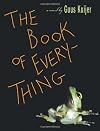
This short book is a brutally honest work of young adult literature set in Amsterdam a few years after the liberation and end of World War II. Thomas only wishes to be happy but has to deal with his fundamentalist and abusive father. The book is colored by magical realism and a touch of surrealism as Thomas is aided by witches, calls down the plagues of Egypt, and converses with a lonely Jesus. A powerful and touching book that touches on a lot of issues: childhood, family, religion, show more community, and kindness. show less

From http://shawjonathan.wordpress.com/2009/10/31/childrens-literature-is-not-a-genre...
A lonely boy, helped by apparitions of Jesus and by an old woman who is almost certainly a witch, finds a way to free himself and his family from the dominion of his harsh, violent, religiously extreme father. The book speaks in particular to literate children. The hero,Thomas, finds inspiration in [Emil and the Detectives], Joanna Spyri's [All Alone in the World] and the Book of Genesis, and the show more narrative assumes familiarity with literary conventions about witches. I found my adult-reader self wanting explanations of Thomas's visions: 'Is the poor child hallucinating from terror, or is this a world where such things really happen?' Such questions are just plain irrelevant to the book's imagined reader, and once I moved over to occupy that position the book opened up to me – or I opened up to it.
It occurred to me that just as Pixar animations, among other children's movies, tend to wink knowingly over the heads of the children in their audience, this book is winking at the children – 'Don't tell the adults.' show less
A lonely boy, helped by apparitions of Jesus and by an old woman who is almost certainly a witch, finds a way to free himself and his family from the dominion of his harsh, violent, religiously extreme father. The book speaks in particular to literate children. The hero,Thomas, finds inspiration in [Emil and the Detectives], Joanna Spyri's [All Alone in the World] and the Book of Genesis, and the show more narrative assumes familiarity with literary conventions about witches. I found my adult-reader self wanting explanations of Thomas's visions: 'Is the poor child hallucinating from terror, or is this a world where such things really happen?' Such questions are just plain irrelevant to the book's imagined reader, and once I moved over to occupy that position the book opened up to me – or I opened up to it.
It occurred to me that just as Pixar animations, among other children's movies, tend to wink knowingly over the heads of the children in their audience, this book is winking at the children – 'Don't tell the adults.' show less
This is a gorgeous book, but I can't imagine who the kid audience would be. It's like A Monster Calls, if A Monster Calls were written from the perspective of an adult looking back on his childhood, without that authentic kid voice. I think it is a book for adults to read, particularly those who might still be processing childhood abuse.
Lists
Awards


You May Also Like


Associated Authors
Statistics
- Works
- 72
- Also by
- 2
- Members
- 1,549
- Popularity
- #16,623
- Rating
- 3.8
- Reviews
- 25
- ISBNs
- 236
- Languages
- 11
- Favorited
- 3
