
Thea Beckman (1923–2004)
Author of Crusade in Jeans
About the Author
Series
Works by Thea Beckman
Mickey en de Fiebeldewiebels 3 copies
Een schip vol verhalen 2 copies
Tim en Holderdebolder 1 copy
Křižák v džínách 1 copy
Bertus en het wonderkrijtje 1 copy
Lees je knetter 1 copy
Associated Works
Tagged
Common Knowledge
- Canonical name
- Beckman, Thea
- Legal name
- Beckmann-Petie, Theodora
- Birthdate
- 1923-07-23
- Date of death
- 2004-05-05
- Gender
- female
- Education
- Utrecht University
- Occupations
- children's book author
- Cause of death
- old age
- Nationality
- Netherlands
- Birthplace
- Rotterdam, Netherlands
- Places of residence
- Rotterdam, Netherlands
Bunnik, Netherlands - Place of death
- Bunnik, Netherlands
- Burial location
- Daelwijk Cemetery, Floridadreef 7, 3565 AM, Utrecht, The Netherlands
- Map Location
- Netherlands
Members
Reviews

Originally published in 1973, as Kruistocht in spijkerbroek, this classic Dutch children's novel follows the story of Rudolph Hefting, a twentieth-century boy who finds himself transported back in time to the year 1212, and caught up in the events of the fabled Children's Crusade. Not sure that he can ever return to his own time, Dolf, together with Leonardo Fibonacci of Pisa - the young mathematics student he meets upon the road - decides to accompany the poorly organized crusade, hoping to show more help the children survive. So begins a monumental journey south, across the Karwendel range of the Alps, toward Genoa, and the sea.
The children believe that their nominal leader, Nicholas the shepherd boy, has had a vision from God, and (when they come to Genoa) will divide the sea, and lead them to the White City of Jerusalem, there to put to flight the Saracens. Dolf, with his twentieth-century skepticism, believes otherwise, but finds that he must accommodate himself - in public, anyway - to the customs and beliefs of the times. When treachery is revealed, and the true purpose of the crusade becomes clear, will Dolf, Leonardo, and their group of dedicated friends, be able to save the children from a terrible fate? And even if they do... what then?
Crusade in Jeans is not a book without flaw. To begin with, I sometimes found the language a little awkward, although I understand, from reading reviews by Dutch-speakers, that this is owing to the poor translation. It irked me, moreover, to see that the translator is not listed anywhere on (or in) the book! I also found some of the "history" questionable. Leonardo Fibonacci, for instance, would have been forty-two years old, in 1212, rather than a young student, and would already have published his famous Liber Abaci (in 1202), which did so much to bring Arabic numerals (to which Dolph supposedly exposes him, in the novel) to Europe. Then, of course, there is the question of the Children's Crusade itself - an apocryphal event (events?), now largely discredited by historians.
Still, Beckman's theory of how reports of such an event may have been started, made for fascinating reading. More importantly, her general grasp for the times - the importance attached to social class and position, the omnipresence of faith, both in internal decision-making, and overt practice, the appalling ignorance of geography, but surprisingly good hygiene (Dolf had always been taught that all people in the Middle Ages were dirty) - was top notch, and I came away from the story with the feeling that, like Dolf, I had truly stepped back in time. I also came away with a true attachment to the characters, and a desire to know more. I wanted to know what happened with Leonardo and Maria, later on - did they ever figure out where Dolf came from? I wanted to learn more about the boy who took Dolph's place, in the (then) present, and what happened to both of them, when they returned to their "correct" times.
This attachment points to another great strength, in Beckman's narrative: her character-building, and engaging storytelling style. This wasn't just historical fiction, or time-slip novel, but an exciting adventure, peopled with characters I had come to love. I had no idea how it would all be resolved - or if it would be resolved, in terms of Dolf returning to his own time - but was completely engrossed in the here and now: how would the children get across the Alps? How would Dolph rescue the fifty little crusaders kidnapped by the knights of Count Romhild of Scharnitz? What would happen, once the sea refused to part?
I was riveted! It's a shame that this is the only one of Thea Beckman's many children's books to be translated, thus far! I would definitely read more, if I had the chance! show less
The children believe that their nominal leader, Nicholas the shepherd boy, has had a vision from God, and (when they come to Genoa) will divide the sea, and lead them to the White City of Jerusalem, there to put to flight the Saracens. Dolf, with his twentieth-century skepticism, believes otherwise, but finds that he must accommodate himself - in public, anyway - to the customs and beliefs of the times. When treachery is revealed, and the true purpose of the crusade becomes clear, will Dolf, Leonardo, and their group of dedicated friends, be able to save the children from a terrible fate? And even if they do... what then?
Crusade in Jeans is not a book without flaw. To begin with, I sometimes found the language a little awkward, although I understand, from reading reviews by Dutch-speakers, that this is owing to the poor translation. It irked me, moreover, to see that the translator is not listed anywhere on (or in) the book! I also found some of the "history" questionable. Leonardo Fibonacci, for instance, would have been forty-two years old, in 1212, rather than a young student, and would already have published his famous Liber Abaci (in 1202), which did so much to bring Arabic numerals (to which Dolph supposedly exposes him, in the novel) to Europe. Then, of course, there is the question of the Children's Crusade itself - an apocryphal event (events?), now largely discredited by historians.
Still, Beckman's theory of how reports of such an event may have been started, made for fascinating reading. More importantly, her general grasp for the times - the importance attached to social class and position, the omnipresence of faith, both in internal decision-making, and overt practice, the appalling ignorance of geography, but surprisingly good hygiene (Dolf had always been taught that all people in the Middle Ages were dirty) - was top notch, and I came away from the story with the feeling that, like Dolf, I had truly stepped back in time. I also came away with a true attachment to the characters, and a desire to know more. I wanted to know what happened with Leonardo and Maria, later on - did they ever figure out where Dolf came from? I wanted to learn more about the boy who took Dolph's place, in the (then) present, and what happened to both of them, when they returned to their "correct" times.
This attachment points to another great strength, in Beckman's narrative: her character-building, and engaging storytelling style. This wasn't just historical fiction, or time-slip novel, but an exciting adventure, peopled with characters I had come to love. I had no idea how it would all be resolved - or if it would be resolved, in terms of Dolf returning to his own time - but was completely engrossed in the here and now: how would the children get across the Alps? How would Dolph rescue the fifty little crusaders kidnapped by the knights of Count Romhild of Scharnitz? What would happen, once the sea refused to part?
I was riveted! It's a shame that this is the only one of Thea Beckman's many children's books to be translated, thus far! I would definitely read more, if I had the chance! show less
Crusade in Jeans: Written by Beckman, 2011 Edition, (Reprint) Publisher: Overseas Editions New [Paperback] by Thea Beckman
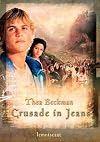
I knew nothing about this book other than it was award-winning, and never having come across a historical children’s book before, I couldn’t resist having a look. I’ve seen some say the book suffers because of the translation, and I can easily believe this is true, as some stories don’t translate terribly well. Still, this based on fact fiction — an event in history I had only a vague concept of — is extremely readable and adventurous enough to entertain many children and some show more adults alike. It’s certainly memorable, and it’s an interesting concept — a fifteen-year-old stuck in the wrong time viewing the events with a modern mindset. In reality, early on, people would likely have killed such a visitor, but Dolf’s persistence in trying to save almost ten thousand children will capture the imagination of many. Having read this, I was ready to give up my copy, but I see it’s rare and selling for exorbitant sums. show less

READ IN DUTCH
Mijn favoriete deel uit de Thule reeks. Normaal gesproken hebben tweede delen in trilogieën nogal vaak de twijfelachtige eer de minste uit de reeks te zijn. Hier vond ik dat absoluut niet het geval. In Kinderen van Moeder Aarde werd alvast de wereld mooi geschept, en Het Gulden Vlies van Thule vond ik persoonlijk een minder deel, maar Het Helse Paradijs vond ik werkelijk een heel goed boek.
Een van mijn favoriete jeugdboeken.
Waarom? Ik vond het met name heel erg origineel, dat show more er een keer niet vanuit de goeden werd gekeken, maar dat het standpunt bij de slechteriken ligt. Het was heel verfrissend. Een absolute aanrader van mij! show less
Mijn favoriete deel uit de Thule reeks. Normaal gesproken hebben tweede delen in trilogieën nogal vaak de twijfelachtige eer de minste uit de reeks te zijn. Hier vond ik dat absoluut niet het geval. In Kinderen van Moeder Aarde werd alvast de wereld mooi geschept, en Het Gulden Vlies van Thule vond ik persoonlijk een minder deel, maar Het Helse Paradijs vond ik werkelijk een heel goed boek.
Een van mijn favoriete jeugdboeken.
Waarom? Ik vond het met name heel erg origineel, dat show more er een keer niet vanuit de goeden werd gekeken, maar dat het standpunt bij de slechteriken ligt. Het was heel verfrissend. Een absolute aanrader van mij! show less

A Dutch classic (by one of The Netherlands' favorite writers, Thea Beckman), this is the story of Thule. Thule is the land founded on the island of Greenland, after World War 3 has pretty much destroyed the world and caused the poles to shift. Greenland's ice has melted, and Thule is a very nice place to live. Thule is ruled by women, men have no right to power or weapons, because they have caused the war and destruction by not respecting nature and each other. Nature, Mother Earth is show more extremely important, and they make sure they destroy nothing. But as the son of the Konega (the supreme ruler of Thule, but in an extremely democratic and open way) is not very happy, he wants to be something more than a breeder for future Konega's. And then a ship appears, from (former) Europe. The land Baden is founded there, by men, who have rediscovered steam power, electricity, and weapons. They rule their country in an authoritarian way, exploiting and destroying it. They 'discover' Thule and decide to take it, because what can unarmed women do about it. Christian, Thura (his common girlfriend) and the people of Thule must decide what to do, and how to preserve their beautiful land. And maybe get some equality for the men while they are at it.
When I started this book (because it was such a classic) I was afraid that it would be very feministic, and man-bashing. I was afraid Beckman would show us how good the pacifistic women of Thule are, and how bad the violent men of Baden. But it wasn't that bad. The women realize they need the men, the Badeners aren't all that bad, and it wasn't as idealistic as expected. I really enjoyed the read. show less
When I started this book (because it was such a classic) I was afraid that it would be very feministic, and man-bashing. I was afraid Beckman would show us how good the pacifistic women of Thule are, and how bad the violent men of Baden. But it wasn't that bad. The women realize they need the men, the Badeners aren't all that bad, and it wasn't as idealistic as expected. I really enjoyed the read. show less
Lists
Awards


You May Also Like


Associated Authors
Statistics
- Works
- 46
- Also by
- 3
- Members
- 4,119
- Popularity
- #6,107
- Rating
- 3.9
- Reviews
- 105
- ISBNs
- 154
- Languages
- 10
- Favorited
- 17

