
Edmonde Charles-Roux (1920–2016)
Author of Chanel and Her World: Friends, Fashion, and Fame
About the Author
Edmonde Charles-Roux was born in Neuilly-sur-Seine, France on April 17, 1920. Soon after the fall of France in World War II, she received a nursing diploma and volunteered to serve in an ambulance corps of the French Foreign Legion. At Verdun, she was wounded during an aerial bombardment of the show more field hospital where she was working but stayed at her post. After serving with the Resistance in Provence, she was wounded again when the First French Army advanced into Austria. She was awarded the Croix de Guerre and the Legion of Honor. In 1946, she worked as a writer for Elle. Two years later, she began writing for the French edition of Vogue. She was the editor in chief there from 1954 to 1966. Her first novel, To Forget Palermo, was published in 1966 and won the Prix Goncourt, France's biggest literary prize. Her other works include Chanel: Her Life, Her World - and the Woman Behind the Legend She Herself Created; Chanel and Her World; She, Adrienne; and a two-volume biography of the Swiss explorer and writer Isabelle Eberhardt. She died on January 20, 2016 at the age of 95. (Bowker Author Biography) show less
Works by Edmonde Charles-Roux
Associated Works
Tagged
Common Knowledge
- Canonical name
- Charles-Roux, Edmonde
- Legal name
- Charlez-Roux, Edmonde
- Birthdate
- 1920-04-17
- Date of death
- 2016-01-20
- Gender
- female
- Education
- Lycée Chateaubriand, Rome
- Occupations
- magazine editor
novelist
biographer
journalist
nurse
French Resistance (show all 7)
librettist - Organizations
- Académie Goncourt (President ∙ 2002 -2014)
- Awards and honors
- Légion d'Honneur (1945)
Croix de Guerre
Ordre du Corps d'armée - Short biography
- Edmonde Charles-Roux, née Marie-Charlotte Élisabeth Edmonde Charles-Roux, was born in Neuilly-sur-Seine, an exclusive suburb of Paris, and grew up in Marseille and Rome. Her parents were François Charles-Roux, an historian and French ambassador to Prague and the Vatican, and his wife Sabine Gounelle. She was given the name Edmonde in homage to Edmond Rostand, a friend of her grandmother. At the outbreak of World War II, at age 20, she served as an ambulance driver and nurse in a unit of the Foreign Legion and was wounded. Then she joined the French Resistance as a nurse in a clandestine clinic. In August 1944, as the Allies invaded southern France and fought up to the Rhine, she was summoned back to the army by General Jean de Lattre de Tassigny and served on his staff. She was then attached to the French 5th Armored Division as a nurse and social worker, and was wounded again in Austria.
She was decorated with the Croix de Guerre and the Légion d'honneur in 1945 and made an honorary corporal by the Foreign Legion. After the war,
she earned her baccalauréat and began her journalism career at the newly-created magazine Elle. In 1948, she went to work for French Vogue, becoming editor-in-chief in 1954. She left Vogue in May 1966, and three months later, published the novel Oublier Palerme (Forget Palermo), which won the Prix Goncourt, the most prestigious literary award in France. It was later adapted into a film with the same name. Also in 1966, she met Gaston Defferre, the mayor of Marseille, later Minister of the Interior, and married him in 1973. She wrote three more novels and biographies of Coco Chanel and Isabelle Eberhardt. She also wrote the libretti for several ballets by Roland Petit, including Le Guépard and Nana.
A member of the Académie Goncourt from 1983, she served as its president in 2002-2014. - Nationality
- France
- Birthplace
- Neuilly-sur-Seine, Hauts-de-Seine, Île-de-France, France
- Places of residence
- Neuilly-sur-Seine, Hauts-de-Seine, Île-de-France, France
Prague, Czechoslovakia
Marseille, Bouches-du-Rhône, Provence-Alpes-Côte d'Azur, France
Rome, Italy - Place of death
- Marseille, Bouches-du-Rhône, Provence-Alpes-Côte d'Azur, France
- Burial location
- Cimetière Saint-Pierre, Marseille, France
- Associated Place (for map)
- France
Members
Reviews
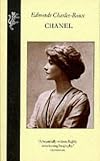
I don't believe I have ever been quite so disillusioned after reading a book. As an aspiring designer, Chanel is my hero because of what she did for fashion and for women in general. She is the reason women look like they do today and, at least in my opinion, can be credited for liberating women in a sense. It was technically Poiret who freed women from the corset, but Chanel freed women from the choking frivolity imposed on feminine fashion by men, not once but twice in her long life. Every show more time anyone wears a little black dress, buys their thousandth piece of costume jewelry, or pulls an article of jersey, they should be thanking Coco.
If only she had been as admirable a person as she was a designer. Charles-Roux's biography portrays Chanel as an insecure peasant who labored all her life to keep everyone from finding out about her humble origins. Furthermore, her life unfolds as merely a series of disappointing romances in which Coco, the fearless courtier, depends completely on her lovers. Indeed, the Chanel empire was financed by a rich boyfriend. The worst of it are Chanel's Nazi connections during the Occupation. Coco not only had an affair with an SS agent but was involved in a Nazi-backed mission in which she was meant to convince Churchill to offer Germany a peace that didn’t involve unconditional surrender. This episode is thrilling but completely changed what I thought about Chanel. Her life was exciting but in the end rather sad and not in any way heroic, as I had hoped it would be.
As biographies go, this one isn't the best. The translation is either very bad or Charles-Roux is just not that good of a writer. Also, I had hoped she would have spent a lot more time discussing how Chanel built her empire and why she developed the clothing and unique style that she did. Charles-Roux only gives the reader Chanel's personal life when I was looking for at least as much information on her professional life. On the other hand, Charles-Roux ties Chanel's life together nicely, pointing out themes that popped up from time to time in Coco's work and personal relationships. If you can get past the writing, it is a pretty good read. Skip it if you have only a passing interest in fashion or perhaps if you are too interested in fashion and in Chanel's work; it's difficult to go on regarding her as a hero after reading it. show less
If only she had been as admirable a person as she was a designer. Charles-Roux's biography portrays Chanel as an insecure peasant who labored all her life to keep everyone from finding out about her humble origins. Furthermore, her life unfolds as merely a series of disappointing romances in which Coco, the fearless courtier, depends completely on her lovers. Indeed, the Chanel empire was financed by a rich boyfriend. The worst of it are Chanel's Nazi connections during the Occupation. Coco not only had an affair with an SS agent but was involved in a Nazi-backed mission in which she was meant to convince Churchill to offer Germany a peace that didn’t involve unconditional surrender. This episode is thrilling but completely changed what I thought about Chanel. Her life was exciting but in the end rather sad and not in any way heroic, as I had hoped it would be.
As biographies go, this one isn't the best. The translation is either very bad or Charles-Roux is just not that good of a writer. Also, I had hoped she would have spent a lot more time discussing how Chanel built her empire and why she developed the clothing and unique style that she did. Charles-Roux only gives the reader Chanel's personal life when I was looking for at least as much information on her professional life. On the other hand, Charles-Roux ties Chanel's life together nicely, pointing out themes that popped up from time to time in Coco's work and personal relationships. If you can get past the writing, it is a pretty good read. Skip it if you have only a passing interest in fashion or perhaps if you are too interested in fashion and in Chanel's work; it's difficult to go on regarding her as a hero after reading it. show less

The catalogue from the most enjoyable traveling museum exhibit I ever attended. The theatricality of exhibits are not fully captured by the photographic illustrations but the dresses are. This collection lives in the U.S. in the Maryhill Museum of Art. It is worth hours of driving for a visit.

Autant que je me souvienne, celà ne m'a pas emballé. Mais j'étais curieuse de cette G. Chanel.
A lire pour se documenter, tout en sachant que les bios sont souvent romancées et flatteuses pour leur modèle. Celle ci ne fait pas exception.
A lire pour se documenter, tout en sachant que les bios sont souvent romancées et flatteuses pour leur modèle. Celle ci ne fait pas exception.

Without the exhaustive work of Madame de Charles-Roux, we would know little about Isabelle Eberhardt, who possibly might have been a daughter of Arthur Rimbaud. Their restlessness, brilliancy and short life culminating in their interest for the Islam and the Arabic world would go well with consanguinity. The biography’s second part was published in 1995 under the title “Nomade”.
Awards

You May Also Like


Associated Authors
Statistics
- Works
- 23
- Also by
- 2
- Members
- 602
- Popularity
- #41,740
- Rating
- 4.0
- Reviews
- 11
- ISBNs
- 68
- Languages
- 8