

Jean Giono (1895–1970)
Author of The Man Who Planted Trees
About the Author
Jean Giono was born in France on March 30, 1985. He was an author about whom Germaine Bree and M. Guiton have written, "When Giono's first novel, Colline (Hill of Destiny) appeared in 1929, it struck a fresh, new note. . . . After Proust and Gide, Duhamel and Romains, Cocteau and Giraudoux, what show more could be more restful than a world of wind and sun and simple men who apparently had never heard of psychological analysis, never confronted any social problems, never read any books. . ." (An Age of Fiction). Raised by his shoemaker father in a small town in the south of France, Giono's fiction has its roots in the peasant life of Provence. Horrified by his experiences in World War I, Giono returned to the world of his youth, which became the world of his imagination. After the shock of World War II, his novels seemed to gain in stature. One of his best is Horseman on the Roof (1951), his chronicle of the great cholera epidemic of 1838. Giono was honoured with the Prince Rainier of Monaco literary prize in 1953, awarded for his lifetime achievements, was elected to the Académie Goncourt in 1954, and became a member of the Conseil Littéraire of Monaco in 1963. Giono died of a heart attack in 1970. (Bowker Author Biography) show less
Image credit: Jean Giono en 1932
Series
Works by Jean Giono
Homenaje a Melville / Tribute to Melville (El Arco De Ulises / the Arch of Ulysses) (Spanish Edition) (2009) 7 copies
Külajutud 3 copies
Albín 2 copies
Revue Giono N° 15 - 2023 2 copies
Les récits de la demi-brigade - Edition originale - Nouvelles (Noël, Une histoire d'amour, Le bal, La mission, La belle hôtesse, L'écossais ou la fin des héros) (1972) 2 copies, 1 review
Le bal - l'écossais - angelo - le hussard sur le toit. Avec 20 illustrations de Roland Oudot, Yves Brayer. Maquette Paul Bonet (1965) 2 copies
JEAN LE BLEU SUIVI DE MORT D'UN PERSONNAGE.ILLUSTRATIONS DE GASTON BARRET ET BARBARA TARTAKOWA. (1969) 2 copies
Regain - Serpent d'étoiles 1 copy
BÜYÜK SÜRÜ 1 copy
Viaje por Italia 1 copy
Un de Baumugnes précédé de Présentation de Pan et suivi de Deux Fragments (Collection : "Vox") (1947) 1 copy, 1 review
Người Trồng Rừng 1 copy
VIVRE LIBRE 2.PRECISIONS. 1 copy
RETOÑO 1 copy
NOTAS SOBRE EL CASO DOMINICI 1 copy
De man die bomen plantte 1 copy
Jean Giono. Chroniques. Noé 1 copy
Revue Jean Giono N° 16-2024 1 copy
Les immortels chefs-d'oeuvre - Jean le bleu suivi de mort d' un personnage - Tome 5 (1968) — Author — 1 copy
Tepe 1 copy
Les immortels chefs-d'oeuvre - Regain, suivi de Le Serpent d'étoiles. Précédé de Hommage à Jean Giono, par Marcel Achard - Tome 1 (1972) — Author — 1 copy
Les immortels chefs-d'oeuvre - Un de Baumugnes, suivi de Les vraies Richesses - Tome 4 (1973) — Author — 1 copy
Revue Giono nº 11 - 2018 1 copy
Turma 1 copy
Retoño 1 copy
A la poursuite du livre rêvé par Jean Giono et Maximilien Vox: Dialogues typographiques (2021) 1 copy
Bitva v horách 1 copy
Země zpívá 1 copy
Genvundet jord 1 copy
Selections 1 copy
La mission 1 copy
Un roi sans divertisement 1 copy
From Little Acorns 1 copy
Člověk z hor 1 copy
Viaggio in Italia 1 copy
Le bonheur fou, Tome I 1 copy
Taube Blüten 1 copy
Fiche de lecture L'Homme qui plantait des arbres de Jean Giono (Analyse littéraire de référence et résumé complet) (2019) 1 copy
L'OISEAU BAGUE 1 copy
Associated Works
Lebensgut — Ein deutsches Lesebuch für Mädchen — 5. Teil (9. Schuljahr) — Contributor — 1 copy
Tagged
Common Knowledge
- Birthdate
- 1895-03-30
- Date of death
- 1970-10-08
- Gender
- male
- Education
- Autodidacte
Collège de Manosque - Occupations
- novelist
poet
essayist
writer (short stories)
playwright - Organizations
- Member of the jury at the Cannes Film Festival (1966)
Académie Goncourt
Conseil Littéraire of Monaco
French Army (WWI) - Awards and honors
- Prince Rainier of Monaco literary prize (1953 ∙ for lifetime achievement)
- Relationships
- Fioro, Serge (Cousin)
- Short biography
- He was born and lived for many years in Manosque, Haute Provence. After finishing his studies at the local high school, he worked as a bank employee until World War I, during which he served as a soldier. In 1919, he returned to the bank and a year later, married a childhood friend with whom he had two children. He left the bank in 1930 to dedicate himself to writing on a full-time basis, after the success of his first novel, Colline.
- Cause of death
- Naturelle (Crise cardiaque)
- Nationality
- France
- Birthplace
- Manosque, France
- Places of residence
- Manosque, France (birth|death)
- Place of death
- Manosque, France
- Burial location
- Manosque, France
- Map Location
- France
Members
Reviews

A marvelous work; the writing is some of Giono’s best. This is not the gentle pre-war Giono of Second Harvest (Regain) or Joy of Man’s Desiring but the embittered postwar man, a man with good reason to have changed his view of the world. Unique image follows unique image, indelible lines in a paragraph. Giono’s delineation of his characters seems to me exceptional, in part for how he strikingly does it through conversation and in particular the words not said. As is often the case, show more Giono pays great attention to the natural world, partly for its own sake and partly for the way in which doing so illuminates the characters and the story. But Giono is also a master at drawing characters through their interactions with others.
The story takes place in the high plains of Provence, deep in the mountains. Villages are small and insular, personalities large and quirky and distinct, and the environment is inseparable from the daily life of its inhabitants. Strangers are viewed with distrust or suspicion. Appetites and behaviors of all kinds are outsized. Marceau Jason and his much-younger brother Ange are inseparable and Giono goes out of his way in the beginning to emphasize just how much Marceau worships his younger brother. A long early chapter defines the women around them—their mother, their wives, and an old widow in their village. The women are drawn almost exclusively through their interminable conversation, one that captures the nuances and idiosyncrasies of each woman. There is little overarching plot; the novel is mostly vignettes of the brothers’ lives. Ange has grown up watching Marceau perform feats of superhuman strength and he finally demands of him “recognition with honor.” Although Ange is a large and powerful man, Marceau is an enormous, almost unreal, giant of a man. Ange is still young and places too little value on the unmistakable love that Marceau has for him. His gauge of recognition—a wrestling match, a test of strength—is not a fight at all. It is, instead, the tale of an impatient young man and younger brother eager to test himself, to prove himself against his much older, stronger, brother…his idol. Tragically, neither Ange nor Marceau knows how to do anything except completely, with all their heart, and without any constraint. And so the wrestling match that Ange has demanded as his measure of his recognition becomes not a friendly contest but a life-and-death struggle of sickening violence. The match ends predictably but novel continue, with an ending which I leave to those who will read this remarkable book. The end is not quite predictable, not quite understandable, an ending not of jealousy or even of hatred but of a deep and abiding love. show less
The story takes place in the high plains of Provence, deep in the mountains. Villages are small and insular, personalities large and quirky and distinct, and the environment is inseparable from the daily life of its inhabitants. Strangers are viewed with distrust or suspicion. Appetites and behaviors of all kinds are outsized. Marceau Jason and his much-younger brother Ange are inseparable and Giono goes out of his way in the beginning to emphasize just how much Marceau worships his younger brother. A long early chapter defines the women around them—their mother, their wives, and an old widow in their village. The women are drawn almost exclusively through their interminable conversation, one that captures the nuances and idiosyncrasies of each woman. There is little overarching plot; the novel is mostly vignettes of the brothers’ lives. Ange has grown up watching Marceau perform feats of superhuman strength and he finally demands of him “recognition with honor.” Although Ange is a large and powerful man, Marceau is an enormous, almost unreal, giant of a man. Ange is still young and places too little value on the unmistakable love that Marceau has for him. His gauge of recognition—a wrestling match, a test of strength—is not a fight at all. It is, instead, the tale of an impatient young man and younger brother eager to test himself, to prove himself against his much older, stronger, brother…his idol. Tragically, neither Ange nor Marceau knows how to do anything except completely, with all their heart, and without any constraint. And so the wrestling match that Ange has demanded as his measure of his recognition becomes not a friendly contest but a life-and-death struggle of sickening violence. The match ends predictably but novel continue, with an ending which I leave to those who will read this remarkable book. The end is not quite predictable, not quite understandable, an ending not of jealousy or even of hatred but of a deep and abiding love. show less
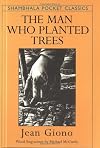
This book literally fell off of the bookshelf and landed at my feet, cover up, beckoning me to read it. The cover art, featuring a beautifully detailed hand planting an acorn into the soil, further locked my attention.
When our narrator first encounters him, while wandering in a barren, rural landscape, Elézard Bouffier is a shepherd who had given himself the duty of planting oak trees, a bucket of acorns at a time, every day. No motive is given except one of pure care for the world and show more perhaps an implied sense of humble duty.
Over the years and across two world wars that hardly occupy more than a few sentences, Bouffier's efforts continue and expand to birch and other trees. The effects are transformative. The land springs back to life. Streams are restored, the air is purified, other flora and fauna return. There are lessons in these efforts about ecology and naturalism but also about simple care and duty and their restorative effects on not just some of nature but all of it.
I might fancifully liken the book, in falling from the top of my bookshelf, to be an acorn planted into my awareness. In giving the book some quiet attention it returned to me a feeling of peaceful contemplation and a respect for the humble duty of caring. This is not a gripping story, necessarily, but it is arresting in the enticing worldview it offers. show less
When our narrator first encounters him, while wandering in a barren, rural landscape, Elézard Bouffier is a shepherd who had given himself the duty of planting oak trees, a bucket of acorns at a time, every day. No motive is given except one of pure care for the world and show more perhaps an implied sense of humble duty.
Over the years and across two world wars that hardly occupy more than a few sentences, Bouffier's efforts continue and expand to birch and other trees. The effects are transformative. The land springs back to life. Streams are restored, the air is purified, other flora and fauna return. There are lessons in these efforts about ecology and naturalism but also about simple care and duty and their restorative effects on not just some of nature but all of it.
I might fancifully liken the book, in falling from the top of my bookshelf, to be an acorn planted into my awareness. In giving the book some quiet attention it returned to me a feeling of peaceful contemplation and a respect for the humble duty of caring. This is not a gripping story, necessarily, but it is arresting in the enticing worldview it offers. show less

So far the most attractive book of Giono's I've read, with the charm typical for childhood memoirs. The period spanned is from the turn of the century up to 1914, the year young Jean was conscripted to wage war, the place the hinterland of Provence. His father (of Italian, Piemontese extraction) was a shoemaker in a small town with many aspects of a village and at a certain age Jean was also sent to live an even more rural life with a shepherding family, to "man up". The book's chapters are show more composed of many vignettes describing the region and the characters, embedded or drifting through, especially men looking for work. It was a difficult time and poverty was omnipresent. One harsh winter decimates the population of the town through starvation and disease.
Giono, like his father, was very sympathetic to anarchism and this is still very much in evidence at the time the book was published, in particular in this segment, addressed to one of his friends killed in the war:
What would you have me do with this France which, it seems, you like me helped preserve? What would you have us do with it, we who have lost all our friends? Ah! If it were necessary to defend rivers, hills, mountains, skies, winds, rains, I'd say: "All right, that's our job. Let's fight, all our life's joy is here." No, we defended the false name of all that. Me, when I see a river I say "river", when I see a tree, I say "tree"; I never say "France". That doesn't exist.
Ah! How I'd give away all of that false name just so that one of those who died could live, the most simple, the most humble. Nothing can counterbalance the heart of a man. They are always there talking about God! It's God who flicked his finger against the scales of blood at the moment the child fell from his mother's opening. They are always there talking about God, and yet the only good thing God worked, the only thing God made, the life he himself, despite your imbecile sciences with spectacles, alone made, that life you crush at will in abominable mortars of mud and snot, with the blessings of all your churches. Lovely logic!
There is no glory in being French. There is only one glory: being alive. show less
Giono, like his father, was very sympathetic to anarchism and this is still very much in evidence at the time the book was published, in particular in this segment, addressed to one of his friends killed in the war:
What would you have me do with this France which, it seems, you like me helped preserve? What would you have us do with it, we who have lost all our friends? Ah! If it were necessary to defend rivers, hills, mountains, skies, winds, rains, I'd say: "All right, that's our job. Let's fight, all our life's joy is here." No, we defended the false name of all that. Me, when I see a river I say "river", when I see a tree, I say "tree"; I never say "France". That doesn't exist.
Ah! How I'd give away all of that false name just so that one of those who died could live, the most simple, the most humble. Nothing can counterbalance the heart of a man. They are always there talking about God! It's God who flicked his finger against the scales of blood at the moment the child fell from his mother's opening. They are always there talking about God, and yet the only good thing God worked, the only thing God made, the life he himself, despite your imbecile sciences with spectacles, alone made, that life you crush at will in abominable mortars of mud and snot, with the blessings of all your churches. Lovely logic!
There is no glory in being French. There is only one glory: being alive. show less
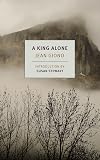
In telling this story involving a serial killer, a hunt for a marauding wolf, and at least two deaths, perhaps accidental, Jean Giono creates an unsettling air early. “The light turns the color of hare innards, then an extraordinary black that, black as it is, has shadows of deep purple.”
And: “All the farm can do is hide in the ground and it’s plain to see that it’s doing just that with all it’s might.” That’s before we know what the story even is.
In 1843 Langlois, who is show more said to possess “a deep knowledge of human things,” arrives at a remote French alpine village. He tracks and shoots, possibly by accident, a serial killer. Some years later he returns for good as the resident wolf hunter. He befriends a former prostitute and a Captain’s wife, “beautiful and languid like a lake afternoon in June,” but remains removed from, but respected by, most other residents. Things turn when he takes a younger wife from Grenoble and the end of the story is sharp and brutal. show less
And: “All the farm can do is hide in the ground and it’s plain to see that it’s doing just that with all it’s might.” That’s before we know what the story even is.
In 1843 Langlois, who is show more said to possess “a deep knowledge of human things,” arrives at a remote French alpine village. He tracks and shoots, possibly by accident, a serial killer. Some years later he returns for good as the resident wolf hunter. He befriends a former prostitute and a Captain’s wife, “beautiful and languid like a lake afternoon in June,” but remains removed from, but respected by, most other residents. Things turn when he takes a younger wife from Grenoble and the end of the story is sharp and brutal. show less
Lists
Awards


You May Also Like


Associated Authors
Statistics
- Works
- 200
- Also by
- 7
- Members
- 6,939
- Popularity
- #3,523
- Rating
- 3.9
- Reviews
- 138
- ISBNs
- 578
- Languages
- 21
- Favorited
- 21


