
Cory Daniells
Author of The King's Bastard
About the Author
Cory Daniells was born in 1958. She is based in Queensland, Australia. She also writes under two pseudonyms. Her titles under the name Cory Daniells include Broken Vows, Dark Dreams, Desperate Alliances, and The Mystery at Devon House. She also writes under the name Rowena Cory Daniells. Her books show more include the series Kin Rolen's Kin (The King's Bastard, The Uncrowned King, The Usurper, King Breaker) and the series The Outcast Chronicles (Besieged, Exile, Sanctuary) and the series The Chronicles of King Rolen's Kin (The King's Man). She also wrote the novel The Fall of the Fair Isle. Under the name Rowena Cory Lindquist her books and stories include Tales from Beyond, Boys Don't Dance, The Fine Line, The Intruder (After Dark series), Fantastic Worlds, The Taste of Power. Her short stories have appeared in magazines and anthologies including 'Dreaming DownUnder' which won World Best Fantasy and 'Dreaming Again'. Her short story, The Giant's Lady, won the 2015 Aurealis Awards Best Fantasy Short Story. She was also awarded the Peter McNamara Achievement Award, for her contributions to SF fandom. (Bowker Author Biography) show less
Series
Works by Cory Daniells
Suffer the Little Children 3 copies
Prelude to a Nocturne 2 copies
Magda's Career Choice 2 copies
Soulshaper 2 copies
Purgatory 2 copies
The Taste of Power 1 copy
Lady Bountiful's Lies 1 copy
The Scape-grace 1 copy
Capped 1 copy
Associated Works
Dreaming Again: Thirty-five New Stories Celebrating the Wild Side of Australian Fiction (2008) — Contributor — 101 copies, 6 reviews
Tagged
Common Knowledge
- Canonical name
- Daniells, Cory
- Legal name
- Daniells, Rowena Cory
- Birthdate
- 20th century
- Gender
- female
- Agent
- John Jarrold
- Nationality
- Australia
- Places of residence
- Brisbane, Queensland, Australia
- Associated Place (for map)
- Queensland, Australia
Members
Reviews
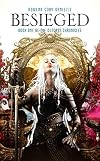
I wanted to like this book so much more than I actually did. It promised a rich world, magic, strong women, political intrigue - all the things I love in a good fantasy novel. Unfortunately, I was underwhelmed by all these aspects and ultimately, pretty bored.
My biggest issue was that I had no one to root for. I didn’t really like a single character. I don’t actually require likable characters (I’ve loved plenty of books with strong antiheroes, and books like Gone Girl, with no likable show more protagonists at all) but I just didn’t give a damn about any of the characters in BESIEGED.
I think a big part of the problem is that the first hundred or so pages would have been better summed up as backstory. Very little actually happens, and what does only serves to set up what comes later; it never quite feels like part of the book’s plot. Then we meander through three decades of political machinations, backstabbing, and scheming only to end up at a cliffhanger ending. Sure, I get that this book is clearly the first in a series, and meant to sell more books, but I invested a lot of time and energy into this particular book for it to go absolutely nowhere. So, yeah... I will not be continuing with this series. show less
My biggest issue was that I had no one to root for. I didn’t really like a single character. I don’t actually require likable characters (I’ve loved plenty of books with strong antiheroes, and books like Gone Girl, with no likable show more protagonists at all) but I just didn’t give a damn about any of the characters in BESIEGED.
I think a big part of the problem is that the first hundred or so pages would have been better summed up as backstory. Very little actually happens, and what does only serves to set up what comes later; it never quite feels like part of the book’s plot. Then we meander through three decades of political machinations, backstabbing, and scheming only to end up at a cliffhanger ending. Sure, I get that this book is clearly the first in a series, and meant to sell more books, but I invested a lot of time and energy into this particular book for it to go absolutely nowhere. So, yeah... I will not be continuing with this series. show less

King Breaker by Rowena Cory Daniells is the conclusion to the King Rolen's Kin series. The first three books came out in 2010, so it was a bit of a wait until the last one. Especially since, although the third book in the series could almost be taken as a conclusion to a trilogy sort of, oh my goodness there were a lot of things left entirely unresolved! So of course, I was very eager to read this last instalment, particularly after the tantalising novella released last December, The King's show more Man.
Speaking of, this is a book four in a four book fantasy series. The series is excellent, but I expect that someone picking up King Breaker without having read the earlier books will be a bit lost (and would not have the same investment in the characters, of course). Start with book one, The King's Bastard. On the other hand, someone picking this book up three years after having read the previous one — as I did — should have no trouble getting back into the story. Maybe it's that the earlier books burned into my brain through sheer excellence, but I think the deft way in which Daniells included reminders about past events definitely contributed.
Although this book picks up shortly after book three, The Usurper, left off, it also follows Gazrik, the main character of The King's Man novella, alongside the three children of old King Rolen and Florin the Mountain girl of the earlier books. I would suggest that Gazrik's storyline is a completion of the arc begun in The King's Man and those not reading the novella first would be missing out. It's not strictly necessary, unlike the earlier books, but I would recommend it. If you disagree, you could always read it afterwards to fill in his back-story. (And another reason to read it is because it's good. If you enjoy Daniells' work, why wouldn't you?)
Daniells is particularly good at writing characters that behave in irritating, yet entirely plausible ways. The group of point of view characters and their friends are all intelligent and well-educated (which makes sense since most of them are royalty) but their minor antagonists (as opposed to Cobalt the usurper) tend to be frustratingly short-sighted, ignorant or just horrible people. The utterly believable way in which Daniells wrote them had me heckling the page on several occasions and cheering when they were defeated — and a satisfying number of annoying characters got punched in the face, so that was also quite gratifying. I have said many times before that a mark of a good writer is the level of emotional investment they can get the reader to place in their characters, and Daniells has proved herself, once again, to be more than adept at doing so.
Readers worried about being left in the lurch again, as with the ending of The Usurper, need not worry. Although Daniells leaves the world open for a possible revisiting, the ending is quite settled. I won't reveal any spoilers, but I will say that it was ultimately satisfying, and some characters even got happy endings. (gasp!)
The King Rolen's Kin series is an excellent read. I highly recommend it to all fans of Big Fat Fantasy, especially the grittier kind. It's probably fair to say that Daniells' books generally are not for the faint of heart (there is violence and rape). But they are excellent. To readers who have read the earlier three books and didn't hate them, I can think of no reason not to go on to read King Breaker.
5 / 5 stars
You can read more of my reviews on my blog. show less
Speaking of, this is a book four in a four book fantasy series. The series is excellent, but I expect that someone picking up King Breaker without having read the earlier books will be a bit lost (and would not have the same investment in the characters, of course). Start with book one, The King's Bastard. On the other hand, someone picking this book up three years after having read the previous one — as I did — should have no trouble getting back into the story. Maybe it's that the earlier books burned into my brain through sheer excellence, but I think the deft way in which Daniells included reminders about past events definitely contributed.
Although this book picks up shortly after book three, The Usurper, left off, it also follows Gazrik, the main character of The King's Man novella, alongside the three children of old King Rolen and Florin the Mountain girl of the earlier books. I would suggest that Gazrik's storyline is a completion of the arc begun in The King's Man and those not reading the novella first would be missing out. It's not strictly necessary, unlike the earlier books, but I would recommend it. If you disagree, you could always read it afterwards to fill in his back-story. (And another reason to read it is because it's good. If you enjoy Daniells' work, why wouldn't you?)
Daniells is particularly good at writing characters that behave in irritating, yet entirely plausible ways. The group of point of view characters and their friends are all intelligent and well-educated (which makes sense since most of them are royalty) but their minor antagonists (as opposed to Cobalt the usurper) tend to be frustratingly short-sighted, ignorant or just horrible people. The utterly believable way in which Daniells wrote them had me heckling the page on several occasions and cheering when they were defeated — and a satisfying number of annoying characters got punched in the face, so that was also quite gratifying. I have said many times before that a mark of a good writer is the level of emotional investment they can get the reader to place in their characters, and Daniells has proved herself, once again, to be more than adept at doing so.
Readers worried about being left in the lurch again, as with the ending of The Usurper, need not worry. Although Daniells leaves the world open for a possible revisiting, the ending is quite settled. I won't reveal any spoilers, but I will say that it was ultimately satisfying, and some characters even got happy endings. (gasp!)
The King Rolen's Kin series is an excellent read. I highly recommend it to all fans of Big Fat Fantasy, especially the grittier kind. It's probably fair to say that Daniells' books generally are not for the faint of heart (there is violence and rape). But they are excellent. To readers who have read the earlier three books and didn't hate them, I can think of no reason not to go on to read King Breaker.
5 / 5 stars
You can read more of my reviews on my blog. show less

The Price of Fame by RC Daniells is epic fantasy writer Rowena Cory Daniells’ first foray into paranormal crime. Just as her fantasy books are intense and difficult to put down, so was The Price of Fame.
The Price of Fame is the story of Antonia, a film school graduate who moves from Queensland to Melbourne to make a documentary about the Tough Romantics, an 80s punk band whose singer was murdered just before they made it big. Accompanied by former classmate and hunk, Monty, as her camera show more and effects man, she begins to dig into the band’s past. Her initial plan is to focus on their early creative dynamic and steer clear of the sensationalist murder angle. She even rents the house in St Kilda where the band lived before they were famous. Of course, the more she digs into the past, the more it becomes apparent there’s more to the singer’s murder than generally known.
As Antonia and Monty learn more, their present-day story is interspersed with a story of events in the 80s centred about, O’Toole, the taxi driver who was accused of the murder. Through his eyes we see the visceral reality of life on the Street (Fitzroy St) for the fringes of society in St Kilda. As you might expect (especially if you know anything about Melbourne and St Kilda’s history), that world is full of drugs and casual violence.
Daniells has O’Toole not originate in that world but move there after his divorce. In some ways, he’s not so different to the people around him, but he’s different enough that he’s still a bit of a tourist. This is a clever move on the author’s part as it gives the reader a more easily relateable character who can report on Street conditions without being entirely a part of the scene (and neatly sidesteps any issues of authenticity compared with writing from the point of view of a Street personality).
I have a soft spot for stories set in Melbourne, my home city. I might not have spent all that much time in St Kilda, but I’ve walked down Acland Street and bought pastires, and been to Luna Park and ridden the same roller coaster the band rides in the book (a few safety-induced renovations later). The language Daniells uses is distinctly Australian, particularly in the slang all the characters use, which I also enjoyed.
Overall, I enjoyed The Price of Fame and read it in two sittings, finding it difficult to put down, especially once the 80s story started to unfold. It has minor paranormal elements, but they don’t really become pivotal until the end and could almost be dismissed as magical realism (if paranormal elements aren’t your sort of thing). This easily one of the most realistic novels (as opposed to speculative fiction) I’ve read this year. (Shift by Em Bailey is the only other one that competes.)
I strongly recommend The Price of Fame to anyone who enjoys mystery/crime novels, paranormal fiction and/or historical Melbourne.
5 / 5 stars
A copy of the book was provided by the author for review.
You can read more of my reviews on my blog, Tsana's Reads. show less
The Price of Fame is the story of Antonia, a film school graduate who moves from Queensland to Melbourne to make a documentary about the Tough Romantics, an 80s punk band whose singer was murdered just before they made it big. Accompanied by former classmate and hunk, Monty, as her camera show more and effects man, she begins to dig into the band’s past. Her initial plan is to focus on their early creative dynamic and steer clear of the sensationalist murder angle. She even rents the house in St Kilda where the band lived before they were famous. Of course, the more she digs into the past, the more it becomes apparent there’s more to the singer’s murder than generally known.
As Antonia and Monty learn more, their present-day story is interspersed with a story of events in the 80s centred about, O’Toole, the taxi driver who was accused of the murder. Through his eyes we see the visceral reality of life on the Street (Fitzroy St) for the fringes of society in St Kilda. As you might expect (especially if you know anything about Melbourne and St Kilda’s history), that world is full of drugs and casual violence.
Daniells has O’Toole not originate in that world but move there after his divorce. In some ways, he’s not so different to the people around him, but he’s different enough that he’s still a bit of a tourist. This is a clever move on the author’s part as it gives the reader a more easily relateable character who can report on Street conditions without being entirely a part of the scene (and neatly sidesteps any issues of authenticity compared with writing from the point of view of a Street personality).
I have a soft spot for stories set in Melbourne, my home city. I might not have spent all that much time in St Kilda, but I’ve walked down Acland Street and bought pastires, and been to Luna Park and ridden the same roller coaster the band rides in the book (a few safety-induced renovations later). The language Daniells uses is distinctly Australian, particularly in the slang all the characters use, which I also enjoyed.
Overall, I enjoyed The Price of Fame and read it in two sittings, finding it difficult to put down, especially once the 80s story started to unfold. It has minor paranormal elements, but they don’t really become pivotal until the end and could almost be dismissed as magical realism (if paranormal elements aren’t your sort of thing). This easily one of the most realistic novels (as opposed to speculative fiction) I’ve read this year. (Shift by Em Bailey is the only other one that competes.)
I strongly recommend The Price of Fame to anyone who enjoys mystery/crime novels, paranormal fiction and/or historical Melbourne.
5 / 5 stars
A copy of the book was provided by the author for review.
You can read more of my reviews on my blog, Tsana's Reads. show less
Besieged by Rowena Cory Daniells is the first book in the Outcast Chronicles, which is being published around now (Solaris likes to release trilogies over three months). It’s set in the same universe as her Last T’en trilogy (which is out of print and difficult to find) but in that world’s distant past. You definitely don’t need to have read The Last T’en first (I certainly haven’t, what with being unable to get a hold of it). A copy of Besieged was given to me by the author for show more review.
I absolutely loved Daniells’s previous (and completely unrelated) trilogy, King Rolen’s Kin. The Outcast Chronicles (judging by the first book, anyway) is quite different in the way the story is told. Where KRK followed a few characters closely over a relatively short period of time, Besieged has a much larger cast of point of view characters and spans a much longer period of time — about 25 years. I felt it was as much the story of kingdoms/their equivalents and ideas as it was the story of the individual characters. They all play important parts, but the real story is in the overall tapestry, not each thread.
Of course, spanning 25 years means there need to be some time jumps and I was fascinated by the way Daniells managed them. Among other things (such as just jumping forward a handful of years when nothing happened), all the literal journeys are skipped. Given how much the travelling from A to B journey is a staple of fantasy, it was interesting to see them skipped. Of course, there was no reason not to skip them (the interesting things all happened after people got wherever they were going), but I found it unusual enough to warrant a mention.
The societies in this world were fascinating. There are the T’en who have magic powers and who live in a very structured society. Female T’en have stronger magic than males do and so their society is mostly controlled by women and men and women live segregated lives. Men are forced to give up their pure blood children (which might result from a couple consisting of a half T’en half human and a full T’en) to the women, who raise them and then return the boy-children when they come of age. Many of the men fear and resent the women for the power the wield over their lives.
Half-breeds, if they’re lucky, live with full-blooded T’en. They have no magic of their own but can sense it. They also look different (like T’en they have six fingers or toes on each limb) and copper-coloured hair. They are accepted as sort of servants in T’en society.
Then there are the ordinary humans who are old fashioned in their attitudes towards women and fear anything to do with magic. Occasionally a genetic throwback causes a half-breed to be born to two human parents and then the child is lucky if it’s given to the T’en and the mother is lucky if she isn’t killed.
The different power dynamics, especially the gendered ones, are in stark contrast between humans and T’en. But at the same time, there’s not that much difference in how the male T’en view women to the humans, they just can’t express it properly. Honestly, it’s an interesting read for the gender politics alone, but there is much more to the story than just that.
Like the characters! Although there was a large cast, I didn’t have any trouble keeping them straight in my mind. Even the few longish “fantasy” names used were distinct enough to avoid confusing. Each character was well drawn and realistic. Because there were time jumps, we got to see very clearly how the characters changed over several years, which added to their depth. In real life people do change, sometimes unpredictably, sometimes only to become more who they were always going to be.
My favourite at the very start was Vittoryxe but that quickly changed as her intended path unfolded. Not that I now hate her as a character, but she’s not a very nice person. Very few of the characters are particularly “nice” people, really, thanks to the societies they’re born into.
My favourite character was Sorn. Born the king’s unacknowledged half-breed son, he is taken away by the former high priest, Oskane, to be raised by the church in the hopes of one day using him as a spy against the T’en. I liked Sorn because he does what he needs to to survive even as his perception of what surviving means, and what price is too high, changes as he matures. I’d say he’s the character that grows the most from teenager to man (although he book starts with his birth) by the end of book and I really enjoyed his journey and his ability to make the best of things.
I also enjoyed Oskane’s character, partly because we have his as a viewpoint character and as seen through Sorn’s eyes. What I found particularly amusing is there’s one scene where Oskane and someone else are talking about how half-breeds always end up turning on their human masters, no matter now well they are treated, and siding with the T’en. They’re completely oblivious to the fact that not killing or maiming them is a) different to treating them well and b) doesn’t make up for the rest of society hating them. So there’s a bit of racial commentary thrown into Besieged also.
And then there’s Imoshen, who is a T’en born to a male brotherhood and kept secret from the sisterhood she was supposed to be surrendered to. The brotherhood’s plans were to use her to gain power. Unsurprisingly (because nothing is easy) it backfires. Imoshen is practically impossible to dislike as a character. There was many a moment when I thought she was going to do something silly, but every time she manages to make the sensible choice based on what she knows. It seems like she’ll be quite prominent in the next book, Exile, and I definitely look forward to reading more about her, especially since she only came into her own in the second half of Besieged.
I said before I started reading that I suspected this would be a book that would leave me pining for the sequel and I was right. While it doesn’t exactly end on a cliffhanger, it definitely leaves much to be resolved.
I highly recommend this book to lovers of high/epic fantasy. If you like vast scales, lots of characters and intrigue, pick up Besieged.
4.5 / 5 stars
You can read more of my reviews on my blog, Tsana's Reads. show less
I absolutely loved Daniells’s previous (and completely unrelated) trilogy, King Rolen’s Kin. The Outcast Chronicles (judging by the first book, anyway) is quite different in the way the story is told. Where KRK followed a few characters closely over a relatively short period of time, Besieged has a much larger cast of point of view characters and spans a much longer period of time — about 25 years. I felt it was as much the story of kingdoms/their equivalents and ideas as it was the story of the individual characters. They all play important parts, but the real story is in the overall tapestry, not each thread.
Of course, spanning 25 years means there need to be some time jumps and I was fascinated by the way Daniells managed them. Among other things (such as just jumping forward a handful of years when nothing happened), all the literal journeys are skipped. Given how much the travelling from A to B journey is a staple of fantasy, it was interesting to see them skipped. Of course, there was no reason not to skip them (the interesting things all happened after people got wherever they were going), but I found it unusual enough to warrant a mention.
The societies in this world were fascinating. There are the T’en who have magic powers and who live in a very structured society. Female T’en have stronger magic than males do and so their society is mostly controlled by women and men and women live segregated lives. Men are forced to give up their pure blood children (which might result from a couple consisting of a half T’en half human and a full T’en) to the women, who raise them and then return the boy-children when they come of age. Many of the men fear and resent the women for the power the wield over their lives.
Half-breeds, if they’re lucky, live with full-blooded T’en. They have no magic of their own but can sense it. They also look different (like T’en they have six fingers or toes on each limb) and copper-coloured hair. They are accepted as sort of servants in T’en society.
Then there are the ordinary humans who are old fashioned in their attitudes towards women and fear anything to do with magic. Occasionally a genetic throwback causes a half-breed to be born to two human parents and then the child is lucky if it’s given to the T’en and the mother is lucky if she isn’t killed.
The different power dynamics, especially the gendered ones, are in stark contrast between humans and T’en. But at the same time, there’s not that much difference in how the male T’en view women to the humans, they just can’t express it properly. Honestly, it’s an interesting read for the gender politics alone, but there is much more to the story than just that.
Like the characters! Although there was a large cast, I didn’t have any trouble keeping them straight in my mind. Even the few longish “fantasy” names used were distinct enough to avoid confusing. Each character was well drawn and realistic. Because there were time jumps, we got to see very clearly how the characters changed over several years, which added to their depth. In real life people do change, sometimes unpredictably, sometimes only to become more who they were always going to be.
My favourite at the very start was Vittoryxe but that quickly changed as her intended path unfolded. Not that I now hate her as a character, but she’s not a very nice person. Very few of the characters are particularly “nice” people, really, thanks to the societies they’re born into.
My favourite character was Sorn. Born the king’s unacknowledged half-breed son, he is taken away by the former high priest, Oskane, to be raised by the church in the hopes of one day using him as a spy against the T’en. I liked Sorn because he does what he needs to to survive even as his perception of what surviving means, and what price is too high, changes as he matures. I’d say he’s the character that grows the most from teenager to man (although he book starts with his birth) by the end of book and I really enjoyed his journey and his ability to make the best of things.
I also enjoyed Oskane’s character, partly because we have his as a viewpoint character and as seen through Sorn’s eyes. What I found particularly amusing is there’s one scene where Oskane and someone else are talking about how half-breeds always end up turning on their human masters, no matter now well they are treated, and siding with the T’en. They’re completely oblivious to the fact that not killing or maiming them is a) different to treating them well and b) doesn’t make up for the rest of society hating them. So there’s a bit of racial commentary thrown into Besieged also.
And then there’s Imoshen, who is a T’en born to a male brotherhood and kept secret from the sisterhood she was supposed to be surrendered to. The brotherhood’s plans were to use her to gain power. Unsurprisingly (because nothing is easy) it backfires. Imoshen is practically impossible to dislike as a character. There was many a moment when I thought she was going to do something silly, but every time she manages to make the sensible choice based on what she knows. It seems like she’ll be quite prominent in the next book, Exile, and I definitely look forward to reading more about her, especially since she only came into her own in the second half of Besieged.
I said before I started reading that I suspected this would be a book that would leave me pining for the sequel and I was right. While it doesn’t exactly end on a cliffhanger, it definitely leaves much to be resolved.
I highly recommend this book to lovers of high/epic fantasy. If you like vast scales, lots of characters and intrigue, pick up Besieged.
4.5 / 5 stars
You can read more of my reviews on my blog, Tsana's Reads. show less
Awards


You May Also Like


Associated Authors
Statistics
- Works
- 37
- Also by
- 16
- Members
- 1,479
- Popularity
- #17,373
- Rating
- 3.6
- Reviews
- 58
- ISBNs
- 72
- Languages
- 1
- Favorited
- 2