
Penelope Gilliatt (1932–1993)
Author of Sunday Bloody Sunday [screenplay]
About the Author
Works by Penelope Gilliatt
to wit 1 copy
Associated Works
Tagged
Common Knowledge
- Canonical name
- Gilliatt, Penelope
- Legal name
- Gilliatt, Penelope Ann Douglass
- Birthdate
- 1932-03-25
- Date of death
- 1993-05-09
- Gender
- female
- Education
- Bennington College
- Occupations
- film critic
novelist
short story writer
screenwriter
magazine editor - Organizations
- The New Yorker
- Awards and honors
- American Academy of Arts and Letters Academy Award (Literature, 1972)
- Relationships
- Osborne, John (husband | divorced)
- Short biography
- Penelope Gilliatt, née Conner, was born in London. Her father Cyril Conner, originally a lawyer, became a director of the BBC in in the North East, and she spent her early childhood in Northumberland. After attending Queen's College in England, she won a scholarship to Bennington College in Vermont. She dropped out during her first year and worked briefly for the Institute of Pacific Relations in New York City. She won a short story contest sponsored by British Vogue and returned to London to join the magazine's staff, rising to become features editor. She also contributed articles to The Spectator and New Statesman. In 1954, she married Roger Gilliatt, a neurosurgeon. She made her debut as a novelist in 1965 with One by One, later adapted into the screenplay for the award-winning 1971 film Sunday, Bloody Sunday. From 1961 to 1967, she served as film critic and drama critic of The Observer in London. In 1968, she joined the staff of The New Yorker as film critic, alternating columns at six-month intervals with Pauline Kael, a position she held until 1979. After a divorce from her first husband, she was married to playwright John Osborne from 1963 to 1968. During her career, she wrote five novels but was best known for her short stories, collected in Come Back if It Doesn't Get Better (1969), Nobody's Business (1972), Splendid Lives (1978), Quotations From Other Lives (1982), and They Sleep Without Dreaming (1985).
- Nationality
- England
UK - Birthplace
- London, England, UK
- Places of residence
- London, England
New York, New York, USA - Place of death
- London, England, UK
- Map Location
- England, UK
Members
Reviews
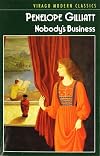
I'm reading one Virago book per month this year (2012)-- either a reread or a new read. The Gilliatt is new to me. To say her style is crisp or taut or pithy or witty is accurate, but what I liked the most about these stories are two things: one, I was constantly surprised by the characters, what they say to each other, how they interact, their hopes and fears, and I was tremendously moved by their predicaments. If I had to state a theme that runs through the stories it is of being lonely in show more the midst of belonging. These are characters who do much of what they say and do, perverse as it may appear to be, because they love their families or friends. Gilliatt understands how complicated motives and behaviours are, how a person can be compassionate enough to allow a behavior they dislike in a beloved friend or mate (but not without blowing of steam now and then). Occasionally the mood darkens when it is apparent that the character may not have a choice, not really. It is the prose that I liked the best, simply the way the sentences are strung together. Some quotes:
During a tour of a 'new' office building the manager blathers on about the effect of the new arrangements: There's a new vigor," said the office head.
"You'd have got the same effect if you'd cleaned up the old cloak rooms," the distinguished European woman muttered. Ed heard her; he generally caught remarks that went by other people. A sort of fatuous cheerfulness seemed to him to govern most talkers, and he had an ear for the softly mutinous."
Softly mutinous -- brilliant!
In another story an older man, a scholar in a slump, is thinking: " His mind seemed to be acting like mercury. He saw it slipping around in a pool and then dividing into drops that ran apart."
My favorite story is perhaps the first one about the robotic engineer, an Englishman (probably at Princeton or the like on a fellowship) who has a robot named FRANK, that he has programmed to do small things. His wife is in Rome on business, the housekeeper came with them to New Jersey but is homesick and he sends her back to England for a holiday from which she might or might not return, he misses his wife, he's a mess, but he's trying to keep it all together for himself and their child. In some ways FRANK is the only one he can talk to and interact with. Prescient - written in the late 60's or very early 70's.
****1/2 show less
During a tour of a 'new' office building the manager blathers on about the effect of the new arrangements: There's a new vigor," said the office head.
"You'd have got the same effect if you'd cleaned up the old cloak rooms," the distinguished European woman muttered. Ed heard her; he generally caught remarks that went by other people. A sort of fatuous cheerfulness seemed to him to govern most talkers, and he had an ear for the softly mutinous."
Softly mutinous -- brilliant!
In another story an older man, a scholar in a slump, is thinking: " His mind seemed to be acting like mercury. He saw it slipping around in a pool and then dividing into drops that ran apart."
My favorite story is perhaps the first one about the robotic engineer, an Englishman (probably at Princeton or the like on a fellowship) who has a robot named FRANK, that he has programmed to do small things. His wife is in Rome on business, the housekeeper came with them to New Jersey but is homesick and he sends her back to England for a holiday from which she might or might not return, he misses his wife, he's a mess, but he's trying to keep it all together for himself and their child. In some ways FRANK is the only one he can talk to and interact with. Prescient - written in the late 60's or very early 70's.
****1/2 show less

I have to admit first thing that when I read this class of contemporary(ish) English novel I often have to fight off a sense of intellectual inadequacy. It's not an easy to matter to write convincingly about people who are brilliant but Gilliatt succeeds. And she does more than that. The novel is an exercise in crisp economy, in not one wasted word or detail. I didn't want to like either the novel or to care one bit about the two brothers, Benedick, musician and composer, and Peregrine show more Corbett, a well-known conservative literary/political writer of a type we don't have any more in the U.S.A. but who might be epitomized by the late William F. Buckley. The one quibble for me is that the woman, Joanna, whom they both love never really came to life as did the brothers and there is, as often happens, that slightly kinky British thing (I'm thinking of Mary Wesley, Iris Murdoch and so on) of complicated love tangles that Americans just can't pull off or tolerate. It's short and intense and smart, and to do it justice I expect I should read it again aloud and slowly, although that is not likely to happen, I admit. I would listen to it though if I came across it.
**** show less
**** show less
Sunday Bloody Sunday: the Script of the John Schlesinger Film Produced By Joseph Janni for United a by Penelope Gilliatt

I still remember when the film version directed by John Schlesinger came out. I was in my Senior year at the University of Wisconsin and I purchased and read the screenplay immediately. The unique approach of Gilliatt made this story more than just an atypical menage a trois. Each of the main characters were developed with details that made their stories interesting and relevant to the reader ( and the viewer of the film). A Jewish doctor, Daniel Hirsh and a young woman, Alex Greville are show more both involved in a love triangle with contemporary sculptor Bob Elkin. Not only are Hirsh and Greville aware that Elkin is seeing the other but they know one another through mutual friends. Despite this, they are willing to put up with the situation through fear of losing Elkin, who switches freely between them.
The result is an example of great drama, directing and acting all coming together to make a classic film. The screenplay is worth reading and rereading. show less
The result is an example of great drama, directing and acting all coming together to make a classic film. The screenplay is worth reading and rereading. show less

There is now widespread agreement that 'literary fiction' may be regarded as a particular genre, rather than a quality distinction, and it seems that main stream literary fiction shares a narrow band of characteristics, one of which must be readability and a certain mainstream cultural preference. If editors select manuscripts out of thousands, as they claim, then they must have a specific frame or muster that publishable work falls into. The recent unrest around the Man Booker prize may show more reflect some uneasiness about that muster, what it allows for and how it flattens or smoothens out uniqueness or literary expression.
The work of Penelope Gilliatt is characterized by a kind of quirkiness, freshness, and originality one does not find in (current) mainstream fiction. Nobody's business is a collection of nine short stories, first published in 1972. What all stories have in common is a quirky way of dealing with dialogue, thoughts, interior monologue, etc, which often shows how clumsy a tool language really is, as in the following example (p.1):
"Your mother sends you her love," he said.
"Where is it?" said Ashton.
Most of the characters are unusual people, writers, a musician, an inventor, an impresario, etc who move in an exclusive environment or upper-class, intellectual and international circles. The honesty in the dialogues is often a source for a great deal of humour. The disconnectedness in language finds a parallel in loneliness, where spouses have died or are away. Then, the language takes the form a wry, often ironic comment on situations, which are not always equally clear to all characters.
A very enjoyable read, probably not everybody's cuppa. show less
The work of Penelope Gilliatt is characterized by a kind of quirkiness, freshness, and originality one does not find in (current) mainstream fiction. Nobody's business is a collection of nine short stories, first published in 1972. What all stories have in common is a quirky way of dealing with dialogue, thoughts, interior monologue, etc, which often shows how clumsy a tool language really is, as in the following example (p.1):
"Your mother sends you her love," he said.
"Where is it?" said Ashton.
Most of the characters are unusual people, writers, a musician, an inventor, an impresario, etc who move in an exclusive environment or upper-class, intellectual and international circles. The honesty in the dialogues is often a source for a great deal of humour. The disconnectedness in language finds a parallel in loneliness, where spouses have died or are away. Then, the language takes the form a wry, often ironic comment on situations, which are not always equally clear to all characters.
A very enjoyable read, probably not everybody's cuppa. show less
You May Also Like


Associated Authors
Statistics
- Works
- 26
- Also by
- 2
- Members
- 366
- Popularity
- #65,729
- Rating
- 4.0
- Reviews
- 8
- ISBNs
- 48