

F. Tennyson Jesse (1888–1958)
Author of A Pin to See the Peepshow
About the Author
Disambiguation Notice:
The author's full name was Fryniwyd Tennyson Jesse (1888-1958). She also wrote under the name Wynifred Margaret Tennyson.
Note that she was, however, christened Wynifried [sic] Margaret Tennyson Jesse; the name 'Fryniwyd' was coined as a playful usage during her teens and adopted by the author for the rest of her life.
Works by F. Tennyson Jesse
Comments on Cain 3 copies
Tom Fool: A Romance 3 copies
Sabi Pas, or I Don't Know 1 copy
De Quérangals 1 copy
Associated Works
101 Years' Entertainment: The Great Detective Stories 1841-1941 (1941) — Contributor — 111 copies, 1 review
The Baffle Book: Fifteen Fiendishly Challenging Detective Puzzles (1928) — Editor, some editions — 74 copies, 3 reviews
The Edge of the Chair: A Superlative Collection, Some Fact, Some Fiction, All Suspense (1967) — Contributor — 50 copies, 1 review
Alfred Hitchcock Presents : A Baker's Dozen of Suspense Stories (1963) — Contributor — 36 copies, 2 reviews
Nieuwe verhalen die Hitchcock koos — Contributor — 6 copies
Hånden i sandet og andre virkelige kriminalsager skildret af berømte kriminalforfattere (1974) 1 copy, 1 review
Tagged
Common Knowledge
- Legal name
- Jesse, Fryniwyd Tennyson
- Other names
- Tennyson, Wynifried Margaret
Tinker, Beamish - Birthdate
- 1888-03-01
- Date of death
- 1958-08-06
- Gender
- female
- Occupations
- novelist
journalist
war correspondent
dramatist
criminologist - Relationships
- Harwood, Harold Marsh (husband)
Tennyson, Alfred, Lord (great uncle) - Short biography
- Grandniece of Alfred, Lord Tennyson
- Nationality
- UK
- Birthplace
- Chislehurst, Kent, England, UK
- Places of residence
- Chislehurst, Kent, England, UK
Guernsey, Bailiwick of Guernsey
Newlyn, Cornwall, UK
St John's Wood, London, England, UK
Surrey, England, UK - Place of death
- London, England
- Disambiguation notice
- The author's full name was Fryniwyd Tennyson Jesse (1888-1958). She also wrote under the name Wynifred Margaret Tennyson.
Note that she was, however, christened Wynifried [sic] Margaret Tennyson Jesse; the name 'Fryniwyd' was coined as a playful usage during her teens and adopted by the author for the rest of her life. - Associated Place (for map)
- UK
Members
Reviews

My advice is to go into this book knowing as little as possible, so if you’re ever going to read this book, you may want to skip this review. It was actually somewhat difficult to locate in new or used bookstores over the years, but I was happy to find it finally on a recent trip to Powell’s in Portland. It’s unfortunate that it’s not more widely read, because it’s quite good, and works as feminist literature, as well as a story of coming of age, the passion and difficulties of show more relationships, and crime and punishment. Jesse was the great-niece of the poet Alfred, Lord Tennyson, and does him proud, with very nice writing and deep insight into the psychology of her characters.
What made the book for me was how it touched on so many women’s issues, and so matter-of-factly, without preaching. It’s telling that the protagonist, Julia Almond, often simply wants to have privacy in a room of her own, and interesting that the book was written five years after Woolf’s essays were published. It was a time when women had great difficulty gaining economic independence, marriage meant subordinating oneself, getting a divorce was sometimes impossible, and abortion was a crime. On a day to day basis, there was (and still is) casual harassment while at work, and an underlying bias against women in so many situations, resulting in unfair perception and treatment. Because of the stigma of a woman who wears glasses, Julia often doesn’t wear hers, and sees things with only fuzzy perception.
Jesse was not afraid to write openly of Julia’s crush on a female teacher when young (“Oh, if only Julia were a little girl at a Council School and Miss Tracey could take the cane to her, how thrilling that would be…”), or her sexual desire as an adult (“Nothing is as voracious as a woman who, for the first time in her life, has had physical satisfaction”). Julia’s lack of understanding of sex is shocking, but that’s how the world was then. We identify and find ourselves rooting for her, but on the other hand, she’s far from perfect, marrying naively, taking advantage of her husband’s wealth while denying him sex, and then casually wishing he was dead. It’s a very balanced and honest account.
My only quibble is the last part dragged on for too long without any real suspense, and probably should have been shortened a bit, but even with that said, I considered a slightly higher rating.
Quotes:
On people in public:
“One looked at people in buses and trains, when their bodies were quiescent and their minds somewhere else, in a book or a newspaper, or behind them at the place they had left, or before them at the place they were going to, and they seemed harmless enough, and so they were while you were looking at them – but what hadn’t those apparently tranquil bodies harboured? Souls that had been jealous and angry and afraid and envious, even murderous, and the bodies themselves had been passionate, intemperate, greedy, agonised. People you saw in buses and trains weren’t really themselves at all, only the quiescent ghosts of what they had been, and what they might still be again.”
On perceptions of others:
“A man may meet another, admire his operating, or his painting, or his sculpture or whatever it is he does, and at once the other man will feel a softening of the heart, a sudden little glow, a sense that here is a nice person. Just as two men may meet, and one be offended at the some heartless remark of the other, and quite a different moment will spring to life between them. Yet both moments are true, and both untrue. They are true because the contact is real, untrue because it covers such an infinitesimal point in the soul of each man.”
On relationships that are long distance:
“Julia entered upon a new phase of relationship, a phase of building up the most dangerous relationship in the world – that spun of words, and, worse still, of words put on paper. As the weeks went by she lived more and more for her letters to Leo and his answers to them. They were getting to know each other, she felt, in a far more real and true way than they would have had they been together. This, she felt convinced, was the right way to begin a relationship.”
On sex education, or lack thereof:
“It seemed to her sometimes that no one could ever have felt the sharp ecstasies that Alfie had taught her. How could the secret fumblings, the half-ashamed realisations of her forebears be weighed against them, or else, whey should she have been kept in ignorance, as though there had been a conspiracy to shut off from her the knowledge that there was such a lovely sensation?” show less
What made the book for me was how it touched on so many women’s issues, and so matter-of-factly, without preaching. It’s telling that the protagonist, Julia Almond, often simply wants to have privacy in a room of her own, and interesting that the book was written five years after Woolf’s essays were published. It was a time when women had great difficulty gaining economic independence, marriage meant subordinating oneself, getting a divorce was sometimes impossible, and abortion was a crime. On a day to day basis, there was (and still is) casual harassment while at work, and an underlying bias against women in so many situations, resulting in unfair perception and treatment. Because of the stigma of a woman who wears glasses, Julia often doesn’t wear hers, and sees things with only fuzzy perception.
Jesse was not afraid to write openly of Julia’s crush on a female teacher when young (“Oh, if only Julia were a little girl at a Council School and Miss Tracey could take the cane to her, how thrilling that would be…”), or her sexual desire as an adult (“Nothing is as voracious as a woman who, for the first time in her life, has had physical satisfaction”). Julia’s lack of understanding of sex is shocking, but that’s how the world was then. We identify and find ourselves rooting for her, but on the other hand, she’s far from perfect, marrying naively, taking advantage of her husband’s wealth while denying him sex, and then casually wishing he was dead. It’s a very balanced and honest account.
My only quibble is the last part dragged on for too long without any real suspense, and probably should have been shortened a bit, but even with that said, I considered a slightly higher rating.
Quotes:
On people in public:
“One looked at people in buses and trains, when their bodies were quiescent and their minds somewhere else, in a book or a newspaper, or behind them at the place they had left, or before them at the place they were going to, and they seemed harmless enough, and so they were while you were looking at them – but what hadn’t those apparently tranquil bodies harboured? Souls that had been jealous and angry and afraid and envious, even murderous, and the bodies themselves had been passionate, intemperate, greedy, agonised. People you saw in buses and trains weren’t really themselves at all, only the quiescent ghosts of what they had been, and what they might still be again.”
On perceptions of others:
“A man may meet another, admire his operating, or his painting, or his sculpture or whatever it is he does, and at once the other man will feel a softening of the heart, a sudden little glow, a sense that here is a nice person. Just as two men may meet, and one be offended at the some heartless remark of the other, and quite a different moment will spring to life between them. Yet both moments are true, and both untrue. They are true because the contact is real, untrue because it covers such an infinitesimal point in the soul of each man.”
On relationships that are long distance:
“Julia entered upon a new phase of relationship, a phase of building up the most dangerous relationship in the world – that spun of words, and, worse still, of words put on paper. As the weeks went by she lived more and more for her letters to Leo and his answers to them. They were getting to know each other, she felt, in a far more real and true way than they would have had they been together. This, she felt convinced, was the right way to begin a relationship.”
On sex education, or lack thereof:
“It seemed to her sometimes that no one could ever have felt the sharp ecstasies that Alfie had taught her. How could the secret fumblings, the half-ashamed realisations of her forebears be weighed against them, or else, whey should she have been kept in ignorance, as though there had been a conspiracy to shut off from her the knowledge that there was such a lovely sensation?” show less

Two young women leave their Brighton boarding school to rejoin their relatives in Burma; Fanny Moroni- part Italian and part Anglo-Burmese- hopes to get access to the royal city on the strength of her father's trade connections. Agatha, meanwhile, is to join her missionary father...
But when King Mindoon breathes his last, one of his wives manipulates events to get her daughter - and the easily led Prince she has married- on the throne. In a series of huge massacres, all the rival royals are show more despatched...
Knowing nothing of Burmese history when I began, this was quite fascinating. As the French, Italians and Brits squabbled over the country, desperate messages to the British government from an imperilled diplomatic staff are largely ignored, as problems in other colonies take precedence.
The author really brings 19th century Mandalay to life. The characters- shallow, exuberant Fanny and the vaguely disatisfied High Church Agatha- are so vividly drawn. Excellent read. show less
But when King Mindoon breathes his last, one of his wives manipulates events to get her daughter - and the easily led Prince she has married- on the throne. In a series of huge massacres, all the rival royals are show more despatched...
Knowing nothing of Burmese history when I began, this was quite fascinating. As the French, Italians and Brits squabbled over the country, desperate messages to the British government from an imperilled diplomatic staff are largely ignored, as problems in other colonies take precedence.
The author really brings 19th century Mandalay to life. The characters- shallow, exuberant Fanny and the vaguely disatisfied High Church Agatha- are so vividly drawn. Excellent read. show less

Before I read this book, I knew that it had been based on a murder case from the 1920s (the Thompson/Bywaters case) and I was initially confused that the first three-quarters of this book seem to show a life that has as little to do with murder as you can imagine. A modern book would probably start with the murder then tell the story of the events leading up to the murder through flashbacks, but Jesse starts back in her main character's childhood in 1913 and we follow her as she leaves show more school, begins an apprenticeship and then marries. The main character, Julia, has always lived in the world inside her head. As a young girl, she dreams that someone rich and devastatingly handsome will sweep her off her feet and marry her.
"It was just that something that Julia always wanted - even when we were at school. She lived on - I don't quite know how to put it - that romantic assumption that there was something wonderful and golden, something complete and round; that was what she wanted."
As she gets older it becomes more and more obvious to her that things like that just don't happen to girls like her but rather than being able to face the reality of the world she's confined to, Julia continues to live inside her head and to believe that she is someone truly special who will one day escape the humdrum life she lives.
Ultimately Julia's story ends in tragedy, and even knowing the ending it still feels unexpected and sudden - I think this would have been lost if Jesse had told the story through flashbacks. The writing is wonderful and I could often feel the how trapped Julia must have felt in her life - so much so that I had to stop reading for about a month because I was finding it too depressing.
"He saw how completely at the mercy of her imagination and her body such a girl must have been; a girl whose mind had never been trained to look for truth, had never learned any thrift of thought. What guide could such a one have had but her own desires, which were not, after all, ignoble? Her desire for beauty, fro something finer than the ugliness which was all that lay within her grasp? Her desire for physical pleasure, the only ecstasy that could be hers?"
As the back cover says she is truly 'a woman trapped by her sex, her class and the times she lived in'. show less
"It was just that something that Julia always wanted - even when we were at school. She lived on - I don't quite know how to put it - that romantic assumption that there was something wonderful and golden, something complete and round; that was what she wanted."
As she gets older it becomes more and more obvious to her that things like that just don't happen to girls like her but rather than being able to face the reality of the world she's confined to, Julia continues to live inside her head and to believe that she is someone truly special who will one day escape the humdrum life she lives.
Ultimately Julia's story ends in tragedy, and even knowing the ending it still feels unexpected and sudden - I think this would have been lost if Jesse had told the story through flashbacks. The writing is wonderful and I could often feel the how trapped Julia must have felt in her life - so much so that I had to stop reading for about a month because I was finding it too depressing.
"He saw how completely at the mercy of her imagination and her body such a girl must have been; a girl whose mind had never been trained to look for truth, had never learned any thrift of thought. What guide could such a one have had but her own desires, which were not, after all, ignoble? Her desire for beauty, fro something finer than the ugliness which was all that lay within her grasp? Her desire for physical pleasure, the only ecstasy that could be hers?"
As the back cover says she is truly 'a woman trapped by her sex, her class and the times she lived in'. show less
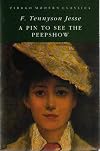
This is a riveting novel about a young woman caught in a web of destructive circumstances. Beginning in 1913 and ending in 1927 it covers the life of Julia Almond. The reader first encounters Julia at age fifteen when she is a pretty, bright and charming student at a London girls' school. Even though she has ability and personality, Julia's future is not promising. Her parents are lower middle class. Her father works as a clerk for a real estate agency and makes just enough money to support show more his family in a modest home and her mother keeps the house. There was never quite enough money to put something aside for a rainy day or for Julia's continued education. After school Julia is apprenticed to a boutique dress shop where she learns the ins and out of dress design and finds she has a talent for business management. She is sent to Paris as a buyer for the boutique, makes friends with a young actress who gives her an in with the theater crowd. Life is good and getting better.
Then a calamity occurs when Julia's father dies and leaves his family almost destitute. In short order Julia's home is invaded by her uncle, aunt and young cousin to help meet expenses. She must share a room with a ten year old and her mother is reduced to almost servant status in her own home. To escape, Julia marries her father's friend, a 35 year old widower who offers her a lovely house and expects a dutiful, grateful wife. As the years pass, Julia struggles to maintain her individuality. She refuses to give up her career, does not want children, and longs for Prince Charming to come and sweep her away to a life of passion and adventure. He shows up when Julia is 26, a young sailor engaged to her 17 year old cousin. He is handsome, not dull, and, even though only 20, he gives off the air of a man of the world. She and Leo fall passionately in love. As they become involved with each other Julia becomes more and more disgusted with her husband. He is becoming fat, has a dull brain, and insists on a husband's rights which he executes with no care or skill. In letters to her young lover, Julia begins to fantasize about being free to marry Leo. If she cannot get a divorce, maybe her husband will oblige by dying.
And so the novel becomes something more than a look at a pretty, imaginative, selfish and sometimes silly woman who, only twenty years later, would have been able to have a successful and independent life. Julia was so ordinary, but since she took a few missteps in society's eyes, she was punished. Had she been richer or poorer, no one would have cared, yet middle class women in in the first half of the twentieth could not commit adultery without suffering consequences. Fiction becomes thinly disguised fact as Julia Almond's life mirrors the life of Edith Thompson who was tried for the the murder of her husband. show less
Then a calamity occurs when Julia's father dies and leaves his family almost destitute. In short order Julia's home is invaded by her uncle, aunt and young cousin to help meet expenses. She must share a room with a ten year old and her mother is reduced to almost servant status in her own home. To escape, Julia marries her father's friend, a 35 year old widower who offers her a lovely house and expects a dutiful, grateful wife. As the years pass, Julia struggles to maintain her individuality. She refuses to give up her career, does not want children, and longs for Prince Charming to come and sweep her away to a life of passion and adventure. He shows up when Julia is 26, a young sailor engaged to her 17 year old cousin. He is handsome, not dull, and, even though only 20, he gives off the air of a man of the world. She and Leo fall passionately in love. As they become involved with each other Julia becomes more and more disgusted with her husband. He is becoming fat, has a dull brain, and insists on a husband's rights which he executes with no care or skill. In letters to her young lover, Julia begins to fantasize about being free to marry Leo. If she cannot get a divorce, maybe her husband will oblige by dying.
And so the novel becomes something more than a look at a pretty, imaginative, selfish and sometimes silly woman who, only twenty years later, would have been able to have a successful and independent life. Julia was so ordinary, but since she took a few missteps in society's eyes, she was punished. Had she been richer or poorer, no one would have cared, yet middle class women in in the first half of the twentieth could not commit adultery without suffering consequences. Fiction becomes thinly disguised fact as Julia Almond's life mirrors the life of Edith Thompson who was tried for the the murder of her husband. show less
Lists
Awards


You May Also Like


Associated Authors
Statistics
- Works
- 28
- Also by
- 34
- Members
- 639
- Popularity
- #39,444
- Rating
- 3.7
- Reviews
- 14
- ISBNs
- 42
- Languages
- 2
- Favorited
- 2
