
Keith Donohue
Author of The Stolen Child
About the Author
Image credit: Cade Martin
Works by Keith Donohue
Y SI FUERA UN ÁNGEL 1 copy
Associated Works
Tagged
Common Knowledge
- Birthdate
- 1960
- Gender
- male
- Education
- Duquesne University (BA)
Duquesne University (MA)
The Catholic University of America (PhD | English) - Occupations
- novelist
speech writer
civil servant - Organizations
- National Endowment for the Arts
U. S. National Archives - Nationality
- USA
- Birthplace
- Pittsburgh, Pennsylvania, USA
- Associated Place (for map)
- Pennsylvania, USA
Members
Reviews
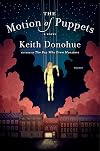
On the surface, The Motion of Puppets has everything that would make it a great story – puppets that come alive at night, a mysterious disappearance, two lovers torn apart and their desperate search for each other. Yet, something is missing. It is a story where the only driving force of the narrative is Theo’s ongoing search, and there is nothing surprising about the fact that he will eventually find her. There is no urgency. There is no fear. There is no mystery.
Then there is the novel show more Theo is translating. Eadweard Muybridge is the man who gave us the first stop-motion images of a horse galloping and solved the question of whether a horse always kept one hoof on the ground at a time. Much of Theo’s section of the novel is spent thinking about Muybridge, his life in the abstract, and his life-long scientific study of capturing objects in motion through photography. While the irony is not lost on readers, the true purpose of the focus on Muybridge may be. The key to the lessons such parallels provide is to feel a connection to the characters. Theo is not a character with whom most readers will connect, however, rendering any lesson or major point to be gleaned by his research of Muybridge to be moot, or at the very least not worth the effort necessary to discern it.
At the same time, the language within The Motion of Puppets is a bit too pragmatic for the subject matter. With puppets who used to be human beings, one expects a certain level of flowery prose to add to the fantasy. There should be adequate mood setting and a hint of mystery within each sentence to set the right tone. Mr. Donohue uses none of that. While his descriptions of nature are indeed picturesque, his descriptions of the people and puppets are less so. There is a matter-of-factness to these scenes which strips away the mysticism and renders the entire thing more depressing than creepy.
Have you ever finished reading a book knowing that you are missing some great point the author is trying to make but not interested enough in the story to want to sit and figure it out? Such is my experience with The Motion of Puppets. There is an obvious connection between Theo’s research and Kay’s transformation, but I have no desire to take the time to think about it. At the same time, there is a connection between Kay’s profession and Theo’s research; I know it is there, but it does not interest me in the least. Part of the problem is that what I wanted – a spooky story about puppets that are alive – is not what what I got. The Motion of Puppets may be about puppets who are alive, but it is anything but unsettling and a lot less interesting that one might think. Kay’s experiences are too narrowly confined, and Theo spends almost as much time thinking about Muybridge as he does searching for his wife. The characters are flat with little backstory and no development. The resulting story has a plodding feel to it, as the pacing limps along until such a time as Theo is ready and able to make a move. By the time that happens, it is almost too late for readers to actually care what happens. show less
Then there is the novel show more Theo is translating. Eadweard Muybridge is the man who gave us the first stop-motion images of a horse galloping and solved the question of whether a horse always kept one hoof on the ground at a time. Much of Theo’s section of the novel is spent thinking about Muybridge, his life in the abstract, and his life-long scientific study of capturing objects in motion through photography. While the irony is not lost on readers, the true purpose of the focus on Muybridge may be. The key to the lessons such parallels provide is to feel a connection to the characters. Theo is not a character with whom most readers will connect, however, rendering any lesson or major point to be gleaned by his research of Muybridge to be moot, or at the very least not worth the effort necessary to discern it.
At the same time, the language within The Motion of Puppets is a bit too pragmatic for the subject matter. With puppets who used to be human beings, one expects a certain level of flowery prose to add to the fantasy. There should be adequate mood setting and a hint of mystery within each sentence to set the right tone. Mr. Donohue uses none of that. While his descriptions of nature are indeed picturesque, his descriptions of the people and puppets are less so. There is a matter-of-factness to these scenes which strips away the mysticism and renders the entire thing more depressing than creepy.
Have you ever finished reading a book knowing that you are missing some great point the author is trying to make but not interested enough in the story to want to sit and figure it out? Such is my experience with The Motion of Puppets. There is an obvious connection between Theo’s research and Kay’s transformation, but I have no desire to take the time to think about it. At the same time, there is a connection between Kay’s profession and Theo’s research; I know it is there, but it does not interest me in the least. Part of the problem is that what I wanted – a spooky story about puppets that are alive – is not what what I got. The Motion of Puppets may be about puppets who are alive, but it is anything but unsettling and a lot less interesting that one might think. Kay’s experiences are too narrowly confined, and Theo spends almost as much time thinking about Muybridge as he does searching for his wife. The characters are flat with little backstory and no development. The resulting story has a plodding feel to it, as the pacing limps along until such a time as Theo is ready and able to make a move. By the time that happens, it is almost too late for readers to actually care what happens. show less
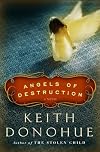
This mysterious and mesmerizing triptych of a novel opens with widowed Margaret Quinn opening her door and finding a child, half-frozen, shivering on her doorstep. She takes this orphaned waif in, dubbing her Norah assuming that the tattered and torn piece of paper pinned to her coat is the start of her name. As Margaret makes this orphaned child comfortable and warm, she is thrown back into her memories of her own daughter, Erica, as a child. Erica had run away from home ten years before to show more join a radical group called the Angels of Destruction. Norah's presence, which Margaret explains away by saying that the child is her granddaughter come to live with her while her parents work out their difficulties, starts to heal the wounds in Margaret's heart. Norah also befriends an emotionally hurt, young, local boy named Sean, whose father has abandonned his mother and him. Sean knows the secret that Norah is not really Margaret's granddaughter but conspires with Margaret to keep this hidden from the rest of the town, and even from Margaret's own sister. What neither Margaret or Sean know is what Norah really is or from where she's arrived. Sean sees her perform small miracles or impossibilities and starts to believe Norah's assertion that she is an angel, and assertion that will cause the unravelling of everything.
The second portion of the book moves back into the past, into Erica's adolescence. Margaret's husband Paul and Erica butt heads in more ways than just as typical father and teenaged daughter, growing more and more estranged and contemptuous of each other as Erica falls even harder for the boyfriend her father so disdains. Boyfriend Wiley is very obviously a loose cannon, even before he convinces Erica to run away with him and travel cross-country to join the revolutionary group Angels of Destruction. But Erica takes off anyway, escaping the father she thinks completely hypocritical and the mother she barely considers but whose heart she breaks. Much of the second part of the book details Erica and Wiley's flight to the West, including a long and unplanned stopover in the Tennessee mountains when Erica is ill and they are taken in by a grandmother and her otherwordly granddaughter Una, who bears a remarkable resemblence to the Norah who will appear 10 years later at Margaret's door.
The third part of the book moves back to Margaret and Norah together, beautifully tying the threads of the first two narratives together as the novel's inevitable denouement plays out. There is an elegaic feel to the writing in this novel and Donohue skillfully keeps from answering the reader's questions about Norah and her reality. Is she an angel sent to thaw Margaret's frozen heart and help heal Sean or is she a mentally unbalanced little girl or is she exactly who she claimed at the start of the novel, an orphaned child who appeared out of nowhere and beckoned by the light in the Quinn house? In this novel of damaged characters and rejected love, there are no easy and simple answers. The ending is both a surprise and not a surprise, striking in its inevitability. Despite knowing there will be no answers, there is almost a compulsion to keep reading, to come to the end, to know the little that we will be granted. This is quite simply an obsessive and ensnaring novel. show less
The second portion of the book moves back into the past, into Erica's adolescence. Margaret's husband Paul and Erica butt heads in more ways than just as typical father and teenaged daughter, growing more and more estranged and contemptuous of each other as Erica falls even harder for the boyfriend her father so disdains. Boyfriend Wiley is very obviously a loose cannon, even before he convinces Erica to run away with him and travel cross-country to join the revolutionary group Angels of Destruction. But Erica takes off anyway, escaping the father she thinks completely hypocritical and the mother she barely considers but whose heart she breaks. Much of the second part of the book details Erica and Wiley's flight to the West, including a long and unplanned stopover in the Tennessee mountains when Erica is ill and they are taken in by a grandmother and her otherwordly granddaughter Una, who bears a remarkable resemblence to the Norah who will appear 10 years later at Margaret's door.
The third part of the book moves back to Margaret and Norah together, beautifully tying the threads of the first two narratives together as the novel's inevitable denouement plays out. There is an elegaic feel to the writing in this novel and Donohue skillfully keeps from answering the reader's questions about Norah and her reality. Is she an angel sent to thaw Margaret's frozen heart and help heal Sean or is she a mentally unbalanced little girl or is she exactly who she claimed at the start of the novel, an orphaned child who appeared out of nowhere and beckoned by the light in the Quinn house? In this novel of damaged characters and rejected love, there are no easy and simple answers. The ending is both a surprise and not a surprise, striking in its inevitability. Despite knowing there will be no answers, there is almost a compulsion to keep reading, to come to the end, to know the little that we will be granted. This is quite simply an obsessive and ensnaring novel. show less
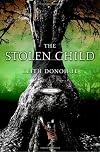
Recommended, but not for everyone. The Stolen Child is made up of alternating first-person narrations from both a changeling who has replaced Henry Day and the original Henry Day, trapped as an eternal child. This is a fine fantasy story idea, and the adventures that both have as they try to "find themselves", or grow up, is often poignant and enjoyable... interspersed with stark, tragic and lonely moments. What the author is doing under-the-covers is exploring the way in which growing up show more steals all of our childhoods... there are several distinct hints that the entire fantasy element may be occurring within the mind of Henry Day, and it reminds any reader of how we believe we have secrets, sins committed in childhood, that we can never tell anyone, even our deepest loves. As the changeling shapes himself, we shaped ourselves in order to grow up. We did not fit in, but we pretended we did so we would be accepted. Some part of us has resisted this, deep inside, all the way through. The lesson is something about confronting and reconciling the adult you with the child that still rages and wanders inside of you... or, in this case, the multiple children, each representing aspects of a soul that never grows up and gets a job and pays taxes. Our soul still wanders the woods, watching every sunset and sunrise. The riskiest thing Donoghue does is leave it vague for the reader... he leaves just enough hints that our subconscious might begin to suspect that Henry Day is just one, slightly insane person. But he tells the story in a straightforward means, from both Henry Days' point of view. It almost doesn't occur to us that the narrators may be unreliable, even when they come out and state that they've gotten plenty of facts and details wrong as they took down their story. Plenty of readers will never suspect, but part of them, under the skin, will know. show less
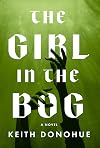
An enjoyable fantasy novel about bantering Irish people that has some great gabbing - some marvelous turns of phrase. Deep affection on display for the rhythms and movements of rural Ireland, and the folklore of the island itself. The novel's greatest strength and weakness is that it has convinced me to read the Táin Bó Cúailnge, which is always lovely when I become motivated to read something, particularly something unusual, but at the same time, I found myself wondering if I would just show more be better off reading that instead.
Folklore has always been a special interest of mine - the stories of ancient bygotten Ireland are fascinating, very much worthy of deeper study. In some ways, I am grateful for the frustrations this book left me as I know this new curiosity is a boon, rather than a burden.
Keith Donohue is a gifted author, and I have wonderful memories of [The Stolen Child], which I thought was much more obscure than it apparently is, and after reading this, I think I might revisit that, as well as check out his other work. show less
Folklore has always been a special interest of mine - the stories of ancient bygotten Ireland are fascinating, very much worthy of deeper study. In some ways, I am grateful for the frustrations this book left me as I know this new curiosity is a boon, rather than a burden.
Keith Donohue is a gifted author, and I have wonderful memories of [The Stolen Child], which I thought was much more obscure than it apparently is, and after reading this, I think I might revisit that, as well as check out his other work. show less
Lists
Awards


You May Also Like


Associated Authors
Statistics
- Works
- 12
- Also by
- 1
- Members
- 3,773
- Popularity
- #6,717
- Rating
- 3.7
- Reviews
- 211
- ISBNs
- 72
- Languages
- 9
- Favorited
- 6