
Eriko Sato
Author of Japanese for Dummies
About the Author
Eriko Sato is Associate Professor of Japanese and Japanese linguistics and the director of the Pre-College Japanese Program and the Teacher Certification Program for Japanese at the State University of New York at Stony Brook. She is the author of many Japanese language texts including the Learning show more Japanese Kanji Practice Book series, Essential Japanese Grammar and Japanese Stories for Language Learners, all published by Tuttle. She lives in Stony Brook, New York. show less
Series
Works by Eriko Sato
Japanese Folktales for Language Learners: Bilingual Legends and Fables in Japanese and English (Free online Audio Recording) (Stories for Language Learners) (2022) 56 copies, 1 review
Reading & Writing Japanese: A Workbook for Self-Study: A Beginner's Guide to Hiragana, Katakana and Kanji (Free Online Audio and Printable Flash Cards) (2022) 10 copies
The Second 100 Japanese Kanji: The quick and easy way to learn the basic Japanese kanji (2009) 8 copies
Contemporary Japanese: An Introductory Textbook For College Students Teacher's Guide (2005) 3 copies
Japan Now! A Japanese Language Reader: Bilingual Stories and Essays about Contemporary Japan (With Free Online Audio Recordings) (2025) 2 copies
Contemporary Japanese Workbook Volume 2: (Audio CD Included) (Tuttle Language Library) (2016) 2 copies
Carved: The Slit-Mouthed Woman (DVD) 2 copies
Contemporary Japanese Textbook Volume 2: An Introductory Language Course (Includes Online Audio) (2023) 1 copy
Associated Works
Tagged
Common Knowledge
- Gender
- female
Members
Reviews
Japanese Folktales for Language Learners: Bilingual Legends and Fables in Japanese and English (Free online Audio Recording) (Stories for Language Learners) by Eriko Sato
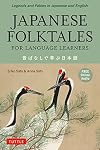
It can be difficult to find good resources for intermediate Japanese learners. I think this book is a great option! Through these stories you can not only practice reading skills, but also learn foundational folklore that is a part of Japanese culture.
Separating each tale into "parts" makes it easy to not get overwhelmed with a large passage all at once, and it makes it easier to locate unknown words in the glossary included after every chapter. The usage of furigana over the kanji makes it show more easy to keep reading the story even if you don't recognize the character, but only including them on the first instance of the kanji allows for the reader to practice their recognition of new vocabulary. I thought the glossaries were very thorough, even explaining when certain forms of a verb are used. Having the English text next to the Japanese also allows for quick reference without having to turn to the glossary.
The book also includes a useful "how to use this book" introduction, as well as verb conjugation charts in the back.
One thing to keep in mind is that the English versions of the stories are translated to sound entertaining and natural in English, so they're not always a 1:1 translation. Readers with sufficient knowledge of Japanese will be able to realize when changes are being made in exact sentence structure/vocabulary, and why. But those who are just beginning might be thrown off by the differences. Therefore I think this book is best for intermediate learners. show less
Separating each tale into "parts" makes it easy to not get overwhelmed with a large passage all at once, and it makes it easier to locate unknown words in the glossary included after every chapter. The usage of furigana over the kanji makes it show more easy to keep reading the story even if you don't recognize the character, but only including them on the first instance of the kanji allows for the reader to practice their recognition of new vocabulary. I thought the glossaries were very thorough, even explaining when certain forms of a verb are used. Having the English text next to the Japanese also allows for quick reference without having to turn to the glossary.
The book also includes a useful "how to use this book" introduction, as well as verb conjugation charts in the back.
One thing to keep in mind is that the English versions of the stories are translated to sound entertaining and natural in English, so they're not always a 1:1 translation. Readers with sufficient knowledge of Japanese will be able to realize when changes are being made in exact sentence structure/vocabulary, and why. But those who are just beginning might be thrown off by the differences. Therefore I think this book is best for intermediate learners. show less
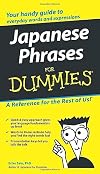
This book makes a number of grand claims on the front cover about enabling the dummy reader to master the basics of Japanese grammar in just a couple of hours. Not that I believed it would be so for a moment, but I can verify that it wasn't so. It was good to have the book when visiting Japan all the same, and it did give us the phrases itadakimasu and gochisosama, which a gracious Japanese friend-of-a-friend explained were essentials of good manners at Japanese meals, and which unfailingly show more brought a smile to the faces of people in cafes and restaurants who had been kind to us. I now have a number of general concepts straight: ka at the end of a sentence indicates that it's a question; the words for numbers vary depending on what you're counting; the verb comes at the end of the sentence. But I'm a long away from being able to say much more than hello (ohayo gozaimasu or konnichowa), thank you (domo, or in shops much more commonly, arigato gozaimasu) and excuse me (sumimasen). My one complaint about the book, as opposed to my own dumminess, is that it spent a lot of the chapter on food telling me how to say things like hamburger, bagel and cream cheese in Japanese, rather than giving me names for the many new edibles that turned up on my plate. show less
You May Also Like


Statistics
- Works
- 31
- Also by
- 1
- Members
- 699
- Popularity
- #36,216
- Rating
- 3.7
- Reviews
- 2
- ISBNs
- 75
- Languages
- 4