
Joan Reardon
Author of As Always, Julia: The Letters of Julia Child and Avis DeVoto
About the Author
Joan Reardon, culinary historian, cookbook author, and biographer, has a doctorate in English Literature and an accredited culinary certificate from the School of Culinary Arts at Kendall College, Evanston, Illinois, where she is now a member of the board of trustees.
Works by Joan Reardon
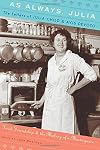
As Always, Julia: The Letters of Julia Child and Avis DeVoto (2010) — Editor — 688 copies, 16 reviews
M.F.K. Fisher, Julia Child, and Alice Waters: Celebrating the Pleasures of the Table (1994) 74 copies, 1 review
Associated Works
A Delicious Obsession: Collecting the Works of MFK Fisher, A Centenary Show of Books, Periodicals, and Ephemera from the Collection of Randall Tarpey-Schwed (2008) — Contributor — 11 copies, 4 reviews
Tagged
Common Knowledge
- Birthdate
- 1930
- Gender
- female
- Nationality
- USA
- Places of residence
- Lake Forest, Illinois, USA
- Associated Place (for map)
- Illinois, USA
Members
Reviews
Really worthwhile but not a fast read. Through their correspondence, Julia Child and Avis DeVoto became not only the best of friends but also wildly successful publishing collaborators (in bringing to fruition arguably the most famous and influential cookbook of the mid-twenteth century). Reading these letters, which can feel uncomfortably intrusive at times, is a fascinating glimpse into their lives. Joan Reardon does an admirable job of filling in the background and including discreet show more footnotes identifying the many people who are mentioned in passing. The subject matter occasionally gets repetitive and tedious (particularly the political observations, which after a while tend to fall into the category of "more of the same"); personally, I would have been much more heavy handed about winnowing the letters. Nevertheless, the book is a real treat, a rare opportunity to observe the myriad circumstances which brought about publication of a seminal book and ultimately launched Julia Child into the public eye. show less
While I've enjoyed watching Julia Child occasionally on TV, and I own a copy of her famous cookbook, I have always felt somewhat intimidated by this matriarch of elegant meal prep.
"As Always, Julia" brings Julia Child to earth, and makes her not only approachable, but warm, human, funny, intelligent and someone you'd want to have for a next door neighbor. I had no idea who Avis DeVoto was until I read this book of letters between these two. I have not yet seen the movie in which she show more evidently becomes known to Americans, but she is introduced quite well in this collection of letters. Covering a span of over 30 years, Avis and Julia kept up a witty, no-holds-barred trans-Atlantic correspondence covering everything from how to poach fish, how to write, edit and publish a cookbook, the chilling impact of McCarthyism on American life, finding housing in France, Norway, Germany, to whether or not to use a pressure cooker for long simmering soups and stews.
Starting as pen-pals and continuing for several years before they had a chance to meet, the letter-writing cemented a friendship that coincidentally involved an unofficial business relationship, and reveals two well-educated, very talented women living out their lives in roles new to both of them. Their letters were at times about subjects many would consider banal, but they offer a glimpse into a world all but forgotten in today's high-tech environment. It is a book that is big, bold, heavy and not easily read in one sitting. Therein lies the beauty of it -- it can be read and savored, like a good wine, in small sips over a lingering period of time. For fans of Julia Child, it is a must read.
Joan Reardon has done a yeoman job of editing and compiling the correspondence to make it interesting, engaging, and compelling. show less
"As Always, Julia" brings Julia Child to earth, and makes her not only approachable, but warm, human, funny, intelligent and someone you'd want to have for a next door neighbor. I had no idea who Avis DeVoto was until I read this book of letters between these two. I have not yet seen the movie in which she show more evidently becomes known to Americans, but she is introduced quite well in this collection of letters. Covering a span of over 30 years, Avis and Julia kept up a witty, no-holds-barred trans-Atlantic correspondence covering everything from how to poach fish, how to write, edit and publish a cookbook, the chilling impact of McCarthyism on American life, finding housing in France, Norway, Germany, to whether or not to use a pressure cooker for long simmering soups and stews.
Starting as pen-pals and continuing for several years before they had a chance to meet, the letter-writing cemented a friendship that coincidentally involved an unofficial business relationship, and reveals two well-educated, very talented women living out their lives in roles new to both of them. Their letters were at times about subjects many would consider banal, but they offer a glimpse into a world all but forgotten in today's high-tech environment. It is a book that is big, bold, heavy and not easily read in one sitting. Therein lies the beauty of it -- it can be read and savored, like a good wine, in small sips over a lingering period of time. For fans of Julia Child, it is a must read.
Joan Reardon has done a yeoman job of editing and compiling the correspondence to make it interesting, engaging, and compelling. show less
As always, Julia : the letters of Julia Child and Avis DeVoto : food, friendship, and the making of a masterpiece by Joan Reardon
It all started with a fan letter written in March of 1953. “Housewife” and food junkie Julia Child wrote a letter to Mr. Bernard DeVoto agreeing with his “diatribe” against stainless steel knives in an article he’d written for Harper’s magazine. Julia’s letter was answered by Bernard’s wife, Avis. Many of us learned about the friendship between Julia and Avis DeVoto in the 2009 hit film, Julie and Julia. Now we are blessed with the treat that is Joan Reardon’s As Always, show more Julia.
Joan Reardon has done a superb job in selecting, compiling, editing and referencing what was originally more than four hundred letters written by Julia and Avis. Ms. Reardon is a culinary historian, cookbook author, and biographer. She also edits a quarterly newsletter for Les Dames d’Escoffier Chicago and serves on the advisory board of Gastronomica. In other words, Ms. Reardon knows her way around a kitchen and it shows!
Within the 430+ pages of this book, the letters not only chronicle the growing friendship between Julia and Avis, they also serve as steadfast barometer of the times. The letters span the years between 1953 and 1961. The world was changing rapidly and the commentary and banter that flows back and forth reflects the post-World War II “jet age” experiences. One of the things I found amazing was the pro-and-con 1953 debate spurred by new “labor saving devices,” in particular, the automatic dish washer, something a 2010 household thinks nothing about. However, Avis is appalled that the glasses and dishes have to be rinsed, that pots and pans shouldn’t be put in, and all things considered, they don’t clean that well.
Another discussion that takes place between Avis and Julia is one that would not take place today: the scarcity of fresh herbs, fruits, and vegetables during the “off season.” Now-a-days most everything is available year round. They shared their struggles with cooking food within the “seasons” and offered each other alternatives to fresh foods, frozen (not so good) and canned (not so good always either).
This is a wonderful book of letters that shares more than the growth of a long distance friendship. As Always, Julia follows the publication of Julia’s ground breaking cookbook, Mastering The Art of French Cooking. Through the eyes of these two savvy, well read, well traveled, and very opinionated women we see the politics of the time, the McCarthy era, as well as their thoughts on American “fast food,” how to make a beurre blanc, and the perils of the frozen turkey.
As Always, Julia is a valentine to every cook, wanna-be cook, chef, and food lover out there. It’s also a valentine to a friendship that survived decades.
I can’t recommend this book enough. As Always, Julia is a wonderful read and it will make a fabulous gift to anyone who loves food and believes in enduring, unselfish friendships. Buy several, one to read and the rest to share with friends!
Source: This book was provided to me by the publisher at my request and in no way affected by review. show less
Joan Reardon has done a superb job in selecting, compiling, editing and referencing what was originally more than four hundred letters written by Julia and Avis. Ms. Reardon is a culinary historian, cookbook author, and biographer. She also edits a quarterly newsletter for Les Dames d’Escoffier Chicago and serves on the advisory board of Gastronomica. In other words, Ms. Reardon knows her way around a kitchen and it shows!
Within the 430+ pages of this book, the letters not only chronicle the growing friendship between Julia and Avis, they also serve as steadfast barometer of the times. The letters span the years between 1953 and 1961. The world was changing rapidly and the commentary and banter that flows back and forth reflects the post-World War II “jet age” experiences. One of the things I found amazing was the pro-and-con 1953 debate spurred by new “labor saving devices,” in particular, the automatic dish washer, something a 2010 household thinks nothing about. However, Avis is appalled that the glasses and dishes have to be rinsed, that pots and pans shouldn’t be put in, and all things considered, they don’t clean that well.
Another discussion that takes place between Avis and Julia is one that would not take place today: the scarcity of fresh herbs, fruits, and vegetables during the “off season.” Now-a-days most everything is available year round. They shared their struggles with cooking food within the “seasons” and offered each other alternatives to fresh foods, frozen (not so good) and canned (not so good always either).
This is a wonderful book of letters that shares more than the growth of a long distance friendship. As Always, Julia follows the publication of Julia’s ground breaking cookbook, Mastering The Art of French Cooking. Through the eyes of these two savvy, well read, well traveled, and very opinionated women we see the politics of the time, the McCarthy era, as well as their thoughts on American “fast food,” how to make a beurre blanc, and the perils of the frozen turkey.
As Always, Julia is a valentine to every cook, wanna-be cook, chef, and food lover out there. It’s also a valentine to a friendship that survived decades.
I can’t recommend this book enough. As Always, Julia is a wonderful read and it will make a fabulous gift to anyone who loves food and believes in enduring, unselfish friendships. Buy several, one to read and the rest to share with friends!
Source: This book was provided to me by the publisher at my request and in no way affected by review. show less
M. F. K. Fisher among the Pots and Pans: Celebrating Her Kitchens (California Studies in Food and Culture) by Joan Reardon

This is a biography of M.F.K. Fisher through the lens of kitchens she had lived with. After all, Fisher was best known for her food writing and appreciation. Author and biographer Joan Reardon begins with the kitchen of Whittier, California where Fisher was born and spent much of her childhood. And it ends with the kitchen at her last home which was called Last House. In between are the various kitches she spent time in -- she moved around a lot, especially back and forth between France and show more California. It is not a blow-by-blow detailed description of each kitchen but rather how Fisher lived and related to others through her cooking, her sharing of food with friends and family, her writings which were almost all food-based, in the kitchens she lived in which were often very small and modest, and sometimes even without refrigeration or hot water. There are a few recipes throughout, as well as general biographical information on Fisher to provide context throughout. Some illustrations and photographs are included but not of every kitchen which likely would not have been feasible.
One does not need a giant designer kitchen to nourish, to entertain, to enjoy food with friends and family. Mary Frances Kennedy Fisher was proof of that. show less
One does not need a giant designer kitchen to nourish, to entertain, to enjoy food with friends and family. Mary Frances Kennedy Fisher was proof of that. show less
Lists
Awards


You May Also Like


Associated Authors
Statistics
- Works
- 11
- Also by
- 2
- Members
- 1,020
- Popularity
- #25,252
- Rating
- 4.2
- Reviews
- 23
- ISBNs
- 23