
Yvon Chouinard
Author of Let My People Go Surfing: The Education of a Reluctant Businessman
About the Author
Yvon Chouinard is founder and owner of Patagonia, Inc., based in Ventura, California.
Image credit: Yvon Chouinard
Works by Yvon Chouinard
The Responsible Company: What We've Learned From Patagonia's First 40 Years (2012) 73 copies, 2 reviews
Pheasant Tail Simplicity: Recipes and Techniques for Successful Fly Fishing (2025) 11 copies, 2 reviews
The Patagonia Business Library: Including Let My People Go Surfing, The Responsible Company, and Patagonia's Tools for Grassroots Activists (2017) 4 copies
How to aid climb (DVD) 2 copies
Associated Works
Tagged
Common Knowledge
- Birthdate
- 1938-11-09
- Gender
- male
- Occupations
- rock climber
equipment manufacturer
environmentalist
philanthropist - Organizations
- Sierra Club (member)
Southern California Falconry Club (founder)
Chouinard Equipment Ltd (founder|1957|bankruptcy|1989|refounded as Black Diamond Equipment|1989)
Patagonia (outdoor gear retailer|founder|1970| transferred to environmental trust | 2022)
One Percent for the Planet (founder|2002) - Awards and honors
- Bates College (honorary degree|2021)
- Relationships
- Pennoyer, Malinda (wife|1971)
- Nationality
- USA
- Birthplace
- Lewiston, Maine, USA
- Associated Place (for map)
- Maine, USA
Members
Reviews
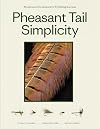
I have been fly fishing for fifty years, and tying my own flies for thirty years. I have watched the popularity of the sport rise and fall over the years. What I have observed is that with each year, writers/fishermen/companies all have tended to insist on "the latest thing" in fly fishing/tying, insisting that if you buy their product, you will have fish jumping into your net. New materials abound. And with it, the cost of the hobby. It's easy to spend thousands and thousands of dollars so show more you are sure that you have the newest/best materials. To which I say, baloney. The fish today are the same fish that were there twenty years ago, a hundred years ago, or a thousand years ago. Granted, they may be a little warier, due to the increased pressure. Butt they are still creatures with a pea sized brain, who operate on the idea that they have to eat to survive. All the new equipment in the world will not help you if you are not fishing in the areas where the fish are, cannot make a decent cast, don't have the ability to read the water, and learn a little patience.
Which is why I absolutely loved the author's new book. Imagine, almost all of the flies that you actually need can be tied using the tail feathers of a pheasant! No UV dyed material, ASB material from packaging, or on and on. Just the tail feathers of a fairly common bird!
And then the authors proceed to show you the flies, how to tie them, and how to fish them. With simple, easy to understand instructions! And they punctuate the lessons with stories of how they themselves have used the flies.
This is a great book. I am really surprised that the local fly shops are promoting it so heavily, Don't they realize that if everyone could tie their own flies, with some very simple materials, that they might really cut into the fly shops profits?
If you are a brand new tier, I would recommend you take a beginning fly tying class, and then use this book heavily. It will save you thousands of dollars. If you are an older, more experienced tier, who is just tired of lugging around boxes and boxes of flies, this one is for you. If you are a somewhat experienced tier, who is tired of spending all your extra money on the newest and greatest materials, this one is for you.
But it, study it, and go out and catch some fish! show less
Which is why I absolutely loved the author's new book. Imagine, almost all of the flies that you actually need can be tied using the tail feathers of a pheasant! No UV dyed material, ASB material from packaging, or on and on. Just the tail feathers of a fairly common bird!
And then the authors proceed to show you the flies, how to tie them, and how to fish them. With simple, easy to understand instructions! And they punctuate the lessons with stories of how they themselves have used the flies.
This is a great book. I am really surprised that the local fly shops are promoting it so heavily, Don't they realize that if everyone could tie their own flies, with some very simple materials, that they might really cut into the fly shops profits?
If you are a brand new tier, I would recommend you take a beginning fly tying class, and then use this book heavily. It will save you thousands of dollars. If you are an older, more experienced tier, who is just tired of lugging around boxes and boxes of flies, this one is for you. If you are a somewhat experienced tier, who is tired of spending all your extra money on the newest and greatest materials, this one is for you.
But it, study it, and go out and catch some fish! show less
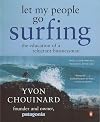
Probably one of the most entertaining business books I've ever read. Yvon's insights are thoughtful, funny, spot-on accurate and a delight. I often suggest that every CEO should have a fundamental role model...their ideal leader.
Mine is Yvon Chouinard.
Take, as an example, this piece of pithy brilliance:
"You have to be true to yourself; you have to know your strengths and limitations and live within your means. The same is true for a business. The sooner a company tries to be what it is not, show more the sooner it tries to 'have it all,' the sooner it will die."
Or this:
"The best-performing firms make a narrow range of products very well. The best firms’ products also use up to 50 percent fewer parts than those made by their less successful rivals. Fewer parts mean a faster, simpler (and usually cheaper) manufacturing process. Fewer parts mean less to go wrong; quality comes built in. And although the best companies need fewer workers to look after quality control, they also have fewer defects and generate less waste. In business heaven we shall all have businesses making simple products like WD-40, or bottled water that we could sell for two to four times as much as gasoline."
Would that every technology company could internalize that wisdom...
And this, from a series of ads Patagonia ran in 2004:
"FINANCIAL PHILOSOPHY
Who are businesses really responsible to? Their customers? Shareholders? Employees? We would argue that it’s none of the above. Fundamentally, businesses are responsible to their resource base. Without a healthy environment there are no shareholders, no employees, no customers and no business."
and finally, quoting the great French Romantic writer and politician, Francois Auguste Rene Chateaubriand:
"A master in the art of living draws no sharp distinction between his work and his play; his labor and his leisure; his mind and his body; his education and his recreation. He hardly knows which is which. He simply pursues his vision of excellence through whatever he is doing, and leaves others to determine whether he is working or playing. To himself, he always appears to be doing both."
I think I'm going to make this required reading for every CEO who wants me to work with them. show less
Mine is Yvon Chouinard.
Take, as an example, this piece of pithy brilliance:
"You have to be true to yourself; you have to know your strengths and limitations and live within your means. The same is true for a business. The sooner a company tries to be what it is not, show more the sooner it tries to 'have it all,' the sooner it will die."
Or this:
"The best-performing firms make a narrow range of products very well. The best firms’ products also use up to 50 percent fewer parts than those made by their less successful rivals. Fewer parts mean a faster, simpler (and usually cheaper) manufacturing process. Fewer parts mean less to go wrong; quality comes built in. And although the best companies need fewer workers to look after quality control, they also have fewer defects and generate less waste. In business heaven we shall all have businesses making simple products like WD-40, or bottled water that we could sell for two to four times as much as gasoline."
Would that every technology company could internalize that wisdom...
And this, from a series of ads Patagonia ran in 2004:
"FINANCIAL PHILOSOPHY
Who are businesses really responsible to? Their customers? Shareholders? Employees? We would argue that it’s none of the above. Fundamentally, businesses are responsible to their resource base. Without a healthy environment there are no shareholders, no employees, no customers and no business."
and finally, quoting the great French Romantic writer and politician, Francois Auguste Rene Chateaubriand:
"A master in the art of living draws no sharp distinction between his work and his play; his labor and his leisure; his mind and his body; his education and his recreation. He hardly knows which is which. He simply pursues his vision of excellence through whatever he is doing, and leaves others to determine whether he is working or playing. To himself, he always appears to be doing both."
I think I'm going to make this required reading for every CEO who wants me to work with them. show less
Part biography, part ecological call-to-arms, part business strategy guidebook, Let My People Go Surfing tells the tale of both Yvon Choinard and the businesses he founded, Patagonia (outdoor clothing) and Choinard equipmet (climbing gear). Choinard's writing is straight-foward and to the point, with none of the self worship or pats on the back common to so many business biographies. Instead, Choinard tells in very simple terms how he started the business, how it progressed, and both how it show more succeeded and how it has failed. There are several instances where Choinard touts the company's horn about being so far ahead of the game in worker's rights and ecological trends-- Patagonia was one of the first companies to offer maternity leave for workers and in-house childcare for famiies; it was also one of the first to go to organic cotton and using recycled plastic in its clothing. Choinard comes to the conclusion that he's in business not to make money-- although the company has certainly done that-- but to set an example for other companies to follow in being as Earth-friendly as possible. It's an inspiring story that begs the question: can other companies follow Patagonia's example? Simple answer: no. But Chouinard explains it's not so much the companies that need a change, it's consumers. Companies will respond to demand, since they are in business to make money. If we as consumers make the changes necessaryto save our planet, businesses will respond. I quite enjoyed this, and am recommending it to business students and those interested in the environment. show less
Stumbled upon this in a pile of books given to me by someone's mother in the hopes that I'd BookCross them. Curious about Patagonia, I gave it a whirl. I went in knowing the company had a good reputation, and that even at my fittest, I wore a size larger than I usually do. The respect for the company has only grown, and the glimpse into this company was an amazing view of shared vision, and of a company that not only has a heart, but has a soul and a conscience. I learned an amazing amount show more about all sorts of outdoor related, and even chuckled at some of the stories (Like how Chouinard abhorred the idea of computers, but recognized them as a necessary evil. One day, he decided he really needed to actually see this marvelous machine that his employees had even given a name. He saw a metal rectangular contraption and stared at it. "Is this [it]", he asked. No, he was told. That's the air conditioner. The computer was on the other side of the room. show less
Awards


You May Also Like


Associated Authors
Statistics
- Works
- 19
- Also by
- 2
- Members
- 1,072
- Popularity
- #23,986
- Rating
- 4.1
- Reviews
- 22
- ISBNs
- 44
- Languages
- 5