
Richard Crossman (1907–1974)
Author of The God That Failed
About the Author
Works by Richard Crossman
The Crossman Diaries: Selections from the Diaries of a Cabinet Minister 1964-1970 (1979) 75 copies, 1 review
Diaries of a Cabinet Minister. Vol 3: Secretary of State for Social Services, 1968-1970 (1977) 33 copies
Government and the Governed: A History of Political Ideas and Political Practice (1969) 29 copies, 1 review
A nation reborn; a personal report on the roles played by Weizmann, Bevin and Ben-Gurion in the story of Israel (1960) 18 copies
Molas, Isidre (trad.). 2 copies
Associated Works
The Assassin's Cloak: An Anthology of the World's Greatest Diarists (2000) — Contributor, some editions — 624 copies, 9 reviews
Tagged
Common Knowledge
- Legal name
- Crossman, Richard Howard Stafford
- Other names
- Crossman, Dick
- Birthdate
- 1907-12-15
- Date of death
- 1974-04-05
- Gender
- male
- Education
- Winchester College
University of Oxford (New College)
Twyford School, Twyford, Hampshire, England, UK - Occupations
- journalist
politician
author - Organizations
- Workers' Educational Association
Oxford City Council
New Statesman
Political Warfare Executive (WWII) - Awards and honors
- Order of the British Empire
- Cause of death
- cancer (liver)
- Nationality
- England
UK - Birthplace
- Cropredy, Oxfordshire, England, UK
- Places of residence
- Banbury, Oxfordshire, England, UK
Buckhurst Hill, Essex, England, UK - Place of death
- Banbury, Oxfordshire, England, UK
- Burial location
- Oxfordshire
- Associated Place (for map)
- Oxfordshire, England, UK
Members
Reviews

Richard Crossman's essay in this book published in 1952 is that the retreat from optimism and belief in progress should not weaken the determination of moderate socialists to make the world a better place. He gets into trouble because he has fallen into the disastrous fashion started by Toynbee of confusing religion and history. He begins by invoking the Buddha as a figure who withdraws from struggle and Prometheus as a figure who continues to fight for his fellow men, suggesting that show more Prometheus is the appropriate role model. The comparison is false and forces Crossman to try to squeeze Buddha and Prometheus as well as other figures into his analytical framework. First of all, while remote from us, Buddha was a real historical figure, while Prometheus is a symbol or myth who never existed. Prometheus was not a humanist (indeed he was a Titan, not a man), who rebelled against Zeus and whose poetic descendent is Milton's Lucifer. Crossman's Prometheus has, as it were, read the Stoics and acquired a conscience, and a notion of duty, which strikes us as modern, not to say existential. The archetypical rebel does not fit very well into the Fabian Pantheon. Fabians are skeptical humanists and moderates. Prometheus chained to his peak, with the eagle devouring his entrails, is a tremendous and terrifying figure, and the portrayal of Prometheus by Aeschylus inspired Marx. But he is not a skeptical humanist and moderate. The whole pretentious effort to convert metaphysical and political imagery into the small change of politics is misconceived. Crossman then states that the “facts” support the Christian doctrine of Original Sin more than Rousseau’s vision of the noble savage or Marx’s classless society. This sounds impressive, until one remembers that the doctrine of original sin says nothing about institutional arrangements. What it does is to affirm a certain view of human nature which remains true (or the reverse) whatever the historical destiny of mankind. The correct Christian deduction is not that the classless society is impossible but that its coming would not alter man's fundamental predicament. [Review from 1952.]
For a review in Commentary addressing other essays in this collection, see https://www.commentarymagazine.com/articles/george-lichtheim/new-fabian-essays-e... show less
For a review in Commentary addressing other essays in this collection, see https://www.commentarymagazine.com/articles/george-lichtheim/new-fabian-essays-e... show less

Rather exhaustive, in more ways than one, set of diary entries by the prominent English Labour Party politican, journalist and author, which covers the 12 or so years from the fall of the Attlee administration to the period just prior to the rise of the Wilson administration. There's a lot of to-and-fro of internal Labour Party politics here, and it can begin to get numbing after a while, particularly the antics of Aneurin Bevan, the Party's bad boy of the 1950s. This volume appeared after show more Crossman's death, which may have been just as well, since it shows that Crossman blatantly perjured himself in a libel trial he initiated against the Spectator; a report by them that he had been drunk at a conference in Italy had, indeed, been true. This sort of presentation is very good for history buffs, especially with the explanatory footnotes (though one for Chaucer had me wondering if the editor was pulling my leg), but isn't really for casual reading. show less
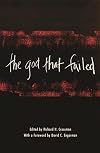
Thoughtful first-hand accounts that capture both the early moral zeal these writers felt toward Communism--their sense that it was the only theory of social organization that made moral sense--and then their path to disillusionment. Koestler's observation that he had time to become a Communist only after he found a job with a living wage was enlightening, as was Wright's bafflement at being labeled an "intellectual" at Party meetings--even though he made his living as a street show more sweeper--because he wore shoes to the meeting that he had shined beforehand. show less
The famous collection "The God that Failed" contains reflections by three famous writers/activists who were members of the Communist Party in their nation (Koestler, Silone and Wright), and three who were, at least in the view of some, fellow travellers (Gide, Fischer, Spender). Each of them explains in short anecdotal style, mixed with philosophical and political musings, how they came to be an orthodox Communist, and how they came to leave this position.
All of these contributions make for show more excellent reading, and together they form an entirely and incontrovertibly damning picture of both the strategies and the mindset of the various Marxist-Leninist Parties and their leading adherents. In that way this book forms an excellent companion to the works of Orwell, Edmund Wilson and similar people who were also sympathetic to socialism of various kinds, but came to see the "official" Marxism of the USSR and its followers as a destructive and evil force. Because that is what goes for all these writers as well as for Orwell - despite the claim of conservatives to books like this, all of the contributors to this collection still supported socialism at the end, only a different kind of socialism, more humane, more sensitive, and for some even more religious. None of them regretted their initial motives in joining the Party, but all of them felt that the Party is rather the kind of thing they wanted to fight against in the first place - the ultimate deception, caused by the political methodology of Marxism-Leninism.
It is well-known by now, but it wasn't so evident then. Marxism-Leninism necessarily rests on two main axiomas: first, that the Party is inherently the most progressive force and representative of the struggle for socialism and the proletariat's role in this; and second, that the ends, as embodied in the Party, always justify the means. Together, these two rules form a deadly recipe for totalitarianism and tyranny over the mind, regardless of how well-intentioned its adherents may or may not have been. One need but look at the many revealing 'incidents' mentioned in this book, or even at Orwell's excellent memoirs of the Spanish Civil War (which Koestler has also written about), to see why this is true.
Conservatives and liberals use this book as ammunition, incorrectly assuming that this is meant for them and to support their views. That is not so. All of the writers in this collection despised professional anti-communism and went on doing so until their death. It is not they who should read this book, but all socialists in this world who should read it, so that we know what happens when we abdicate the search for truth and make it subservient to opportunistic politics, regardless of what goals we have in mind in doing so. People of unfree mind can never build a free world. show less
All of these contributions make for show more excellent reading, and together they form an entirely and incontrovertibly damning picture of both the strategies and the mindset of the various Marxist-Leninist Parties and their leading adherents. In that way this book forms an excellent companion to the works of Orwell, Edmund Wilson and similar people who were also sympathetic to socialism of various kinds, but came to see the "official" Marxism of the USSR and its followers as a destructive and evil force. Because that is what goes for all these writers as well as for Orwell - despite the claim of conservatives to books like this, all of the contributors to this collection still supported socialism at the end, only a different kind of socialism, more humane, more sensitive, and for some even more religious. None of them regretted their initial motives in joining the Party, but all of them felt that the Party is rather the kind of thing they wanted to fight against in the first place - the ultimate deception, caused by the political methodology of Marxism-Leninism.
It is well-known by now, but it wasn't so evident then. Marxism-Leninism necessarily rests on two main axiomas: first, that the Party is inherently the most progressive force and representative of the struggle for socialism and the proletariat's role in this; and second, that the ends, as embodied in the Party, always justify the means. Together, these two rules form a deadly recipe for totalitarianism and tyranny over the mind, regardless of how well-intentioned its adherents may or may not have been. One need but look at the many revealing 'incidents' mentioned in this book, or even at Orwell's excellent memoirs of the Spanish Civil War (which Koestler has also written about), to see why this is true.
Conservatives and liberals use this book as ammunition, incorrectly assuming that this is meant for them and to support their views. That is not so. All of the writers in this collection despised professional anti-communism and went on doing so until their death. It is not they who should read this book, but all socialists in this world who should read it, so that we know what happens when we abdicate the search for truth and make it subservient to opportunistic politics, regardless of what goals we have in mind in doing so. People of unfree mind can never build a free world. show less
Lists
Awards


You May Also Like


Associated Authors
Statistics
- Works
- 23
- Also by
- 3
- Members
- 878
- Popularity
- #29,160
- Rating
- 4.1
- Reviews
- 8
- ISBNs
- 45
- Languages
- 2