
Giancarlo De Cataldo
Author of Romanzo criminale
About the Author
Image credit: Giancarlo De Cataldo, 06/13/2010 Autore: dadevoti
Works by Giancarlo De Cataldo
Medusa 5 copies
Colpo di ritorno: Un caso per Manrico Spinori (I casi di Manrico Spinori Vol. 4) (Italian Edition) 3 copies
Non so che farmene degli angeli 2 copies
Delitto in cornice: Un caso per Manrico Spinori (I casi di Manrico Spinori Vol. 7) (Italian Edition) 2 copies
Descrizione di un luogo 2 copies
Quasi per caso 1 copy
Camici bianchi e impronte digitali — Author — 1 copy
Un cadavere in cucina: Un caso per Manrico Spinori (I casi di Manrico Spinori Vol. 6) (Italian Edition) (2025) 1 copy
La Svedese 1 copy
Una storia sbagliata 1 copy
De Cataldo Giancarlo 1 copy
Macchiaioli Realismo impressionista en Italia cat Musèe de l'Oragnerie , 10 avril- 22 juillet 193; Fundacion Maffre Madrid , 12 september-2013- 5 ennero 2014- — Author — 1 copy
La Suédoise 1 copy
Je suis le châtiment 1 copy
Associated Works
Tagged
Common Knowledge
- Birthdate
- 1956
- Gender
- male
- Occupations
- judge
- Nationality
- Italy
- Birthplace
- Tarent, Apulien, Italien
- Places of residence
- Rome, Italy
- Associated Place (for map)
- Italy
Members
Reviews
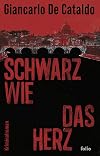
The author is a lawyer and became familiar with the misery of prisons and the entire spectrum of criminals, from terrorists to drug dealers to the notorious Magliana gang. Against this backdrop, he began writing on the side.
This book is about hatred towards black immigrants and illegal organ trafficking.
Lawyer Valentino Bruio is in deep trouble. The bar association is threatening to expel him, he is broke and has just turned away a black immigrant who told him about his child in need. He is show more simply fed up with losers as clients. But when he learns that the man has been killed, Bruio finds himself in a moral crisis. He begins an investigation with friends from Rome's black community. A black child disappears in Rome. Investigator Valentino Bruio takes on the case and discovers a criminal network involving organ trafficking, racist ideology and greed. It leads him to the villa of the powerful Alga-Croce family. The confrontation with the enigmatic patriarch Noè opens his eyes to the upper class's lust for power and boundless amorality. But his affection for the daughter of the house presents Bruio with a dilemma. show less
This book is about hatred towards black immigrants and illegal organ trafficking.
Lawyer Valentino Bruio is in deep trouble. The bar association is threatening to expel him, he is broke and has just turned away a black immigrant who told him about his child in need. He is show more simply fed up with losers as clients. But when he learns that the man has been killed, Bruio finds himself in a moral crisis. He begins an investigation with friends from Rome's black community. A black child disappears in Rome. Investigator Valentino Bruio takes on the case and discovers a criminal network involving organ trafficking, racist ideology and greed. It leads him to the villa of the powerful Alga-Croce family. The confrontation with the enigmatic patriarch Noè opens his eyes to the upper class's lust for power and boundless amorality. But his affection for the daughter of the house presents Bruio with a dilemma. show less
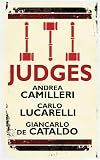
I picked up Judges in the library, principally because it contains a story by Giancarlo de Cotaldo, the writer of one of my favourite European TV series – Romanzo Criminale. I have yet to encounter a novel of his in English, so this was the next best thing.
Judges is an anthology of three novellas by leading Italian crime writers; each story centres on an Italian Judge prosecuting a case. (The reader needs to bear in mind the investigative role of a Judge in Italy).
Andrea Camilleri, show more renowned author of the Montalbano series, kicks off with Judge Surra. This is a story set shortly after Italian unification, about a Judge from out of town who is parachuted into a Sicilian village, blissfully unaware of the criminal undercurrents that swirl around him. Surra seemingly blunders along, narrowly avoiding continuing disasters and amazing the locals with his sang froid and coolness in the face of the local mafiosi. Or is he a lot smarter than we might think? This is an excellent and humorous short story, but it is marred by a clumsy and unnecessary afterword.
The Bambina by Carlo Lucarelli was probably my favourite story of the three. It’s centred on a female Bolognan Judge who looks so young she is nicknamed “The Baby” by the cops. While she has police protection as a matter of routine, it seems totally unnecessary, as she is only investigating a minor white collar fraud. Events then take a turn that gives her case a lot more significance. Lucarelli is able to surprise the reader and pack plot twists into a very short space. (The ending will make more sense to people with a bit of knowledge about real-life crime in Italy, BTW). I’ll certainly be looking for more of Lucarelli’s work.
De Cotaldo’s story is called The Triple Dream of the Prosecutor. This is a tale about a Judge who is prosecuting a corrupt local mayor, a man who bullied him as a child, giving rise to the suspicion that the Judge is biased. In the story, he dreams about things going wrong on the day of the trial, in a looping fashion somewhat like Groundhog Day. The construction is complex and a little confusing, and I found this story rather unsatisfying. I guess I expected something more hard-boiled from the author of Romanzo Criminale. (Could somebody PLEASE publish Romanzo Criminale in English, BTW)?
Overall I thought these three novellas were worth reading and something a bit different from the usual police procedurals. Good stuff. show less
Judges is an anthology of three novellas by leading Italian crime writers; each story centres on an Italian Judge prosecuting a case. (The reader needs to bear in mind the investigative role of a Judge in Italy).
Andrea Camilleri, show more renowned author of the Montalbano series, kicks off with Judge Surra. This is a story set shortly after Italian unification, about a Judge from out of town who is parachuted into a Sicilian village, blissfully unaware of the criminal undercurrents that swirl around him. Surra seemingly blunders along, narrowly avoiding continuing disasters and amazing the locals with his sang froid and coolness in the face of the local mafiosi. Or is he a lot smarter than we might think? This is an excellent and humorous short story, but it is marred by a clumsy and unnecessary afterword.
The Bambina by Carlo Lucarelli was probably my favourite story of the three. It’s centred on a female Bolognan Judge who looks so young she is nicknamed “The Baby” by the cops. While she has police protection as a matter of routine, it seems totally unnecessary, as she is only investigating a minor white collar fraud. Events then take a turn that gives her case a lot more significance. Lucarelli is able to surprise the reader and pack plot twists into a very short space. (The ending will make more sense to people with a bit of knowledge about real-life crime in Italy, BTW). I’ll certainly be looking for more of Lucarelli’s work.
De Cotaldo’s story is called The Triple Dream of the Prosecutor. This is a tale about a Judge who is prosecuting a corrupt local mayor, a man who bullied him as a child, giving rise to the suspicion that the Judge is biased. In the story, he dreams about things going wrong on the day of the trial, in a looping fashion somewhat like Groundhog Day. The construction is complex and a little confusing, and I found this story rather unsatisfying. I guess I expected something more hard-boiled from the author of Romanzo Criminale. (Could somebody PLEASE publish Romanzo Criminale in English, BTW)?
Overall I thought these three novellas were worth reading and something a bit different from the usual police procedurals. Good stuff. show less
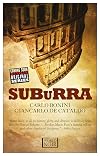
Suburra - Carlo Bonini and Giancarlo de Cataldo
Suburra will stay with me for some time, this is more than just a crime novel it is an important exposé of Italy's criminal underbelly. The corruption of every facet of society is portrayed by the novel and the scale is staggering and horrifying. Suburra tells the epic story of modern Rome and the people who manipulate it's destiny. There is a long set up but the tension rises and grips as the plot unfolds. Anyone who has read Romanzo Criminale show more will recognise the style instantly but Suburra is much better written and all round much more entertaining, perhaps that in part is Bonini's contribution? For anyone interested in modern Italy and the symbiosis of state and mafia this is an intriguing and richly detailed novel. It has the power to convey, as all great fiction does, truth - shedding some light on a very dirty reality.
The mafia in Italy have a turn over of €140billion a year (7% of the nation's GDP). The four largest are reckoned to have cash reserves of €65billion. The mafia has a piece of the State, Church, business and security services. This is the background to Bonini and de Cataldo's novel. A fiction that explores what Tobias Jones referred to as the 'dark heart of Italy'.
So Suburra is based on astonishing but true events in the eternal city. When the Italian edition of Suburra was published in 2013 La Republicca said that it superimposes real events. Suburra, an ancient brothel district of the city, is in thrall to the gangster culture that blights the life of ordinary people and lines the pockets of those in power over them. The novel has a bold and ambitious style, unemotional and free from unnecessary descriptive detail underlining the credibility and power of the material. A semi-documentary tone allows the tragedy of the story to emerge unburdened. It is a style more often seen in contemporary fiction. There are no tropes or cliché this is literary crime fiction of real depth. Bonini is a journalist, de Cataldo a judge, their considerable personal experience and knowledge throws light on the inherently corrupt nature of the Italian state and the city of Rome. Suburra is a searing indictment of a city awash with bad governance and criminal control. The novel is an exposé of the pernicious influence of the mafia on politics, business, and culture.
Suburra opens by referencing the era of Romanzo Criminale, some of the characters in Suburra learned their trade during the worst years of the Banda Della Magliana, the mafia that has blighted Rome in the decades since its inception in 1975, (involved in the kidnapping of Aldo Moro, the bombing of Bologna train station, the Banco Ambrosiano scandal and Roberto Calvi's death). The characters in Suburra are the descendents of that dead generation: Libano, Fredo, Dandi and inspector Scialoja. The earlier story does not feature in Suburra but overhangs this novel, continuity is established but this is not a direct sequel. Suburra is modern Rome, the new millennium, Burlesconi is Prime-minister, the people have changed but this is the same old world.
This is not the kind of crime novel that will appeal to the action thriller reader, there are no pyrotechnics here. It is a subtle telling of a complex tale, more to be savoured than devoured. The Characters are complex and relationships involved. For example, Carabinieri Lieutenant Colonel Marco Malatesta is conflicted by the desire to do the right thing, his feelings for left wing activist, Alice, and the fundamental belief in his colleagues and the Law. His dilemma is true to life and nuanced. Murder is presented as pitiful, stupid and tawdry; murderers are cowardly, ugly and motivated by venality and ego. Much of the plot and character development is dialogue driven and even the most unlikeable rogues are rounded individuals. A small criticism among glowing reviews in Italy refer to the filmic nature of some of the scenes and at times Suburra does read like a screen play. However, this is not really a draw back and at times it seems the most natural way to tell the story.
At the heart of the novel are Samurai, Adami and Anacleti, the gangsters, Malatesta, the policeman, Malgradi, the politician and Tempesta, the Bishop. The sweeping plot involves an audacious land grab and a huge development project. The growth of the city is subjugated to mafia money laundering as they seek to legitimise their interests with the help of corrupt officials and politicians. Rome is a city of internecine factional squabbling between regional mafia clans and orchestrated fascist violence against left wing groups. The New City Group plan to develop the Ostia coast into a casino complex to rival Las Vegas, 'the great project'. Ambitions extend beyond their sordid origins into the heart of the economy. Yet the gangsters find it hard to leave their old mores behind and the pull of the criminal life is in constant conflict with attempts to legitimise their interests and clean their money. This weakness is the hope for truth and for the good guys, for justice to sometimes win out in a world of conspiracy and depravity.
Some reviews have referred to a similarity with The Godfather, an early exposé of mafia life. However, Puzo wrote a blockbuster and tended to glorify the life and wallow a little in the glamour. There is no glamour here, only the terrible tragedy of blighted lives, wasted existences, suffering, endurance and small victories for the righteous. Fans of Poisonville by Massimo Carlotto and Marco Videtta, (Europa Editions, 2009) will enjoy this novel.
I first came across de Cataldo when the film Romanzo Criminale came out in 2005, (later an excellent RAI television series). I have high hopes for the up coming Netflix series of Suburra - there is a wealth of material here to work from. Curiously the translation of Romanzo Criminale did not follow in English until 2015 (Corvus) - it nailed 70's/80's Rome, Suburra does the same for Silvio Berlusconi's Italy. De Cataldo's previous novel 'The Father and the Foreigner' was also published by Europa Editions in 2009. A compassionate and beautifully written short novel, very personal and a scathing look at the Italian justice system - very different in style from this novel.
If you like your crime fiction to be true to life, intelligent and serious in intent this is great read. One not forgotten easily. show less
Suburra will stay with me for some time, this is more than just a crime novel it is an important exposé of Italy's criminal underbelly. The corruption of every facet of society is portrayed by the novel and the scale is staggering and horrifying. Suburra tells the epic story of modern Rome and the people who manipulate it's destiny. There is a long set up but the tension rises and grips as the plot unfolds. Anyone who has read Romanzo Criminale show more will recognise the style instantly but Suburra is much better written and all round much more entertaining, perhaps that in part is Bonini's contribution? For anyone interested in modern Italy and the symbiosis of state and mafia this is an intriguing and richly detailed novel. It has the power to convey, as all great fiction does, truth - shedding some light on a very dirty reality.
The mafia in Italy have a turn over of €140billion a year (7% of the nation's GDP). The four largest are reckoned to have cash reserves of €65billion. The mafia has a piece of the State, Church, business and security services. This is the background to Bonini and de Cataldo's novel. A fiction that explores what Tobias Jones referred to as the 'dark heart of Italy'.
So Suburra is based on astonishing but true events in the eternal city. When the Italian edition of Suburra was published in 2013 La Republicca said that it superimposes real events. Suburra, an ancient brothel district of the city, is in thrall to the gangster culture that blights the life of ordinary people and lines the pockets of those in power over them. The novel has a bold and ambitious style, unemotional and free from unnecessary descriptive detail underlining the credibility and power of the material. A semi-documentary tone allows the tragedy of the story to emerge unburdened. It is a style more often seen in contemporary fiction. There are no tropes or cliché this is literary crime fiction of real depth. Bonini is a journalist, de Cataldo a judge, their considerable personal experience and knowledge throws light on the inherently corrupt nature of the Italian state and the city of Rome. Suburra is a searing indictment of a city awash with bad governance and criminal control. The novel is an exposé of the pernicious influence of the mafia on politics, business, and culture.
Suburra opens by referencing the era of Romanzo Criminale, some of the characters in Suburra learned their trade during the worst years of the Banda Della Magliana, the mafia that has blighted Rome in the decades since its inception in 1975, (involved in the kidnapping of Aldo Moro, the bombing of Bologna train station, the Banco Ambrosiano scandal and Roberto Calvi's death). The characters in Suburra are the descendents of that dead generation: Libano, Fredo, Dandi and inspector Scialoja. The earlier story does not feature in Suburra but overhangs this novel, continuity is established but this is not a direct sequel. Suburra is modern Rome, the new millennium, Burlesconi is Prime-minister, the people have changed but this is the same old world.
This is not the kind of crime novel that will appeal to the action thriller reader, there are no pyrotechnics here. It is a subtle telling of a complex tale, more to be savoured than devoured. The Characters are complex and relationships involved. For example, Carabinieri Lieutenant Colonel Marco Malatesta is conflicted by the desire to do the right thing, his feelings for left wing activist, Alice, and the fundamental belief in his colleagues and the Law. His dilemma is true to life and nuanced. Murder is presented as pitiful, stupid and tawdry; murderers are cowardly, ugly and motivated by venality and ego. Much of the plot and character development is dialogue driven and even the most unlikeable rogues are rounded individuals. A small criticism among glowing reviews in Italy refer to the filmic nature of some of the scenes and at times Suburra does read like a screen play. However, this is not really a draw back and at times it seems the most natural way to tell the story.
At the heart of the novel are Samurai, Adami and Anacleti, the gangsters, Malatesta, the policeman, Malgradi, the politician and Tempesta, the Bishop. The sweeping plot involves an audacious land grab and a huge development project. The growth of the city is subjugated to mafia money laundering as they seek to legitimise their interests with the help of corrupt officials and politicians. Rome is a city of internecine factional squabbling between regional mafia clans and orchestrated fascist violence against left wing groups. The New City Group plan to develop the Ostia coast into a casino complex to rival Las Vegas, 'the great project'. Ambitions extend beyond their sordid origins into the heart of the economy. Yet the gangsters find it hard to leave their old mores behind and the pull of the criminal life is in constant conflict with attempts to legitimise their interests and clean their money. This weakness is the hope for truth and for the good guys, for justice to sometimes win out in a world of conspiracy and depravity.
Some reviews have referred to a similarity with The Godfather, an early exposé of mafia life. However, Puzo wrote a blockbuster and tended to glorify the life and wallow a little in the glamour. There is no glamour here, only the terrible tragedy of blighted lives, wasted existences, suffering, endurance and small victories for the righteous. Fans of Poisonville by Massimo Carlotto and Marco Videtta, (Europa Editions, 2009) will enjoy this novel.
I first came across de Cataldo when the film Romanzo Criminale came out in 2005, (later an excellent RAI television series). I have high hopes for the up coming Netflix series of Suburra - there is a wealth of material here to work from. Curiously the translation of Romanzo Criminale did not follow in English until 2015 (Corvus) - it nailed 70's/80's Rome, Suburra does the same for Silvio Berlusconi's Italy. De Cataldo's previous novel 'The Father and the Foreigner' was also published by Europa Editions in 2009. A compassionate and beautifully written short novel, very personal and a scathing look at the Italian justice system - very different in style from this novel.
If you like your crime fiction to be true to life, intelligent and serious in intent this is great read. One not forgotten easily. show less
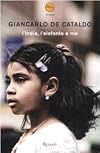
Un semplice diario di un viaggio particolare, un'india scoperta un po' attraverso le persone, un po' attraverso la Lonely Planet. Un'India con cui si deve venire a patti, perché tanta, troppa, e che costringe a rifugiarsi nelle isole di occidentalità perché per l'occidentale, ormai geneticamente vecchio dentro, la sua continua, estrema vitalità, fatto di gente pullulante, di odori, di immagini, colori, iniziative, contraddizioni, è spesso insopportabile.
Un rapporto da alcuni, diversi, show more volti dell'India, senza oleografie e senza buonismi. show less
Un rapporto da alcuni, diversi, show more volti dell'India, senza oleografie e senza buonismi. show less
Lists
Awards


You May Also Like


Associated Authors
Statistics
- Works
- 76
- Also by
- 4
- Members
- 1,674
- Popularity
- #15,357
- Rating
- 3.4
- Reviews
- 45
- ISBNs
- 175
- Languages
- 6