
Amy Gutmann
Author of The Lives of Animals
About the Author
Amy Gutmann is President of the University of Pennsylvania and Professor of Political Science at the same institution Thompson is Alfred North Whitehead Professor of Political Philosophy at Harvard University
Image credit: By Slowking4 - https://www.flickr.com/photos/73455099@N07/48658287878/, CC BY-SA 2.0, https://commons.wikimedia.org/w/index.php?curid=83848318
Works by Amy Gutmann
Everybody Wants to Go to Heaven but Nobody Wants to Die: Bioethics and the Transformation of Health Care in America (2019) 52 copies, 1 review
Democratic Education 1 copy
Associated Works
Rediscovering the Democratic Purposes of Education (Studies in Government & Public Policy) (2000) — Contributor — 10 copies
Tagged
Common Knowledge
- Birthdate
- 1949-11-19
- Gender
- female
- Education
- Radcliffe College (BA|1971)
London School of Economics (M.Sc. ∙ Political Science ∙ 1972)
Harvard University (PhD ∙ Political Science ∙ 1976) - Occupations
- university president
professor (political science) - Organizations
- University of Pennsylvania (President; Professor of Political Science)
National Constitution Center - Relationships
- Doyle, Michael W. (husband)
- Nationality
- USA
- Birthplace
- Brooklyn, New York, USA
- Places of residence
- Monroe, New York, USA
Massachusetts, USA
Princeton, New Jersey, USA
Philadelphia, Pennsylvania, USA - Associated Place (for map)
- USA
Members
Reviews
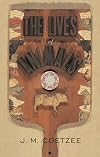
This is an odd, good book.
J. M. Coetzee was invited to give the Tanner Lectures at Princeton in 1997-98. Instead of giving actual lectures, he invented a fiction, a character named Elizabeth Costello who was invited to give lectures at fictional Appleton College. So his lectures are the story of her lectures.
And Elizabeth Costello throws her own curveball. Invited as a distinguished novelist, she doesn’t give a talk about writing or about literature, but one on animals and our show more relationships, how we understand or fail to understand them, how we treat them, how we ought to treat them, who or what they are to us and us to them.
The devices give Coetzee a chance to break himself into separate pieces, characters in a dialogue centered on Costello, each, in my reading anyway, voicing different perspectives that Coetzee finds himself moving among, never resolving the questions that come up in and after Costello’s lectures.
Two quandaries compel Costello’s lectures. And they do compel her lectures — she seems at a loss to know how to go forward in her thinking and in her life. She’s aging, and her mind is vulnerable. And she’s taking it for all it is.
One quandary is the direct one — how do we and should we treat animals? We are full of conflicts if not contradictions. We institutionally torture them, slaughter them for food, make rituals of preparing their corpses to be eaten, we employ them as willing or unwilling servants, we place them in exhibits for spectators, we study them (with more institutionalized torture), . . . And we make pets of them, we adore young born calves, we venerate them in books and movies, we can’t stand the sight (or smell) of that institutionalized torture, we idolize them at times even in ritual sacrifice , . . . We don’t know what to do with (or think about) them.
The question is a quandary because we can’t know, and apparently we can’t decide, the moral status of animals. They feel pain. Do they have conscious lives anything like our own? Which animals are we even talking about? Horses? Dogs? Cattle? Chickens? Do we have any way of knowing what the lives of animals are like?
And how do we get away with lumping them all together under the single category of “animals”? Everything from lions, chimpanzees, and pigeons, to mosquitoes and tardigrades. The act of separating us from all of them at once echoes our belief that we alone are created in the “image of God”.
Those questions about who exactly animals (and we) are lead to the second quandary, which is actually the combined title topics of Costello’s lectures — philosophers, animals, and poets. Philosophers are thinkers, reasoners above all. Poets create experiences, provoking feeling as much as knowing..
At Appleton College, like Princeton, the philosophers have center stage (okay, not philosophers per se, but intellectuals of the ultra-rational kind). Costello’s son, John, is an astrophysicist at Appleton, and his wife, Norma, a philosopher without an appointment of her own.
In speaking of poets, Elizabeth is calling on something lived and produced by living and experiencing, not by thought itself, something that may be covered over with the dead leaves of thought. The conversations and frustrations among Elizabeth, John, and Norma touch both sides, the intellectual side and the relationships they live out.
Is knowledge exclusively the product of reasoning and thought, like what John and Norma produce professionally? Or is it also, or if not exclusively maybe predominantly and at its foundations, a matter of direct experience? Not just sense experience of the empiricist kind, but also something like “lived experience” — the knowledge embedded in muscles, felt emotions, and seemingly automatic actions and responses. Philosophers or poets?
Costello’s lecture is not an answer to the question, but it is a plea to find the poets in ourselves, to not shut them down, especially with regard to the question of animals and who they are in our lives.
Her way of speaking, her manner, and the course of her lectures all embody the quandaries she raises. She rambles, she seems to find herself at a loss for words, or reasons, at points.
At a very particular point, (page 33 in my text) Elizabeth stops speaking philosophically and starts speaking poetically, a point at which she rejects Descartes’ separation of body and soul, with more than intellectual objections — she expresses a kind of alienation, not quite the disgust she experiences at even the thought of eating an animal, but getting there. In her own words, she enthusiastically proposes “fullness, embodiedness, the sensation of being” as opposed to a consciousness that stands back from it all and observes it.
“Sympathy” is the attitude, or maybe the comportment, she is recommending with respect to animals and other humans — placing ourselves in their place via our imaginations, feeling what they feel. Rather than thinking about what they must feel, feeling it ourselves.
Her lectures are followed by discussions among the eminent thinkers of Appleton, predominantly thinkers of the “philosopher” type, like John and Norma, but taking different angles — religious, biological, . . . All, to my reading again, are Coetzee, poking at the question from his own perspectives, settling on none of them but airing out all of them.
Appleton’s president, Garrard, sums up Elizabeth’s lecture and the discussion at dinner — “Much food for thought.” Coetzee’s little joke, I’m sure.
We get no resolution from the lectures and discussion. At least I don’t.
The text of Coetzee’s lecture/story/novel is followed by responses from invited speakers. These are “real” people, not conjured by Coetzee, but invited to comment on Coetzee’s Tanner Lectures. But they mirror the eminent thinkers of Appleton, gathered around the fictional lecturer. Some of them, especially Peter Singer the philosopher specializing in ethics and animal rights, are at a loss as to how to go about responding to lectures that aren’t lectures but fictions of other lectures (this whole thing is getting good).
One commentator, Marjorie Garber (a professor of English at Harvard), says that the comparison in Costello’s lecture between philosopher and poet “goes not to the advantage of the poet.” But my own reaction was on the side of the poet — cutting through the abstractions and the arguments to the heart of the matter, that direct, plain, feeling-infused experience of animals — the wonders, loves, horrors, . . . all of it, out of which some speaks to Costello’s disgust with how we treat animals. It also speaks to the fear of falling prey to the over-intellectualized life (which I may be practicing right now).
Different proposals for how to distinguish animal from human lives bubble up. Animals don’t think about or plan their futures. Or do they? How do we know? And in any case, is that sufficient to justify killing them (even painlessly) and eating them??
But unexamined, unassisted feelings and experiences are poor judges of morality — we can’t toss reflection and critical thinking out the window. That would open a lot of doors to ugly bias and prejudice (e.g., racism, homophobia, misogyny, . . . ).
The commentator that may have spoken most strongly to me was Barbara Smuts, a primatologist who has done field work with baboons, living with them, not just studying them. Correspondingly she emphasizes learning about animals by spending time with them and sharing a mutual world with them, as equals, not by just observing them.
Smuts is urging us to cross the line that Jane Goodall crossed when she gave names rather than numbers to the chimps she was studying, incurring the wrath of established research practice. It was more than a matter of giving the chimps names, it was methodological heresy. Goodall was learning about the chimps through intersubjectivity, not the objectivity that science prides itself on. And in doing that, she was bringing the two of us, humans and chimps, closer.
Many of us have some familiarity with what Smuts is talking about. We live with our pets -- I live with my dog. And in doing so, we break down the separation between us. I may be guilty of idealizing (or poetizing) a bit, but I don’t share my world with my dog, and he doesn’t share his with me. We live in a mutual world of our own making — an “intersubjective” world. A different way of “knowing.”
Once we cross that line, “animals” look very different to us. show less
J. M. Coetzee was invited to give the Tanner Lectures at Princeton in 1997-98. Instead of giving actual lectures, he invented a fiction, a character named Elizabeth Costello who was invited to give lectures at fictional Appleton College. So his lectures are the story of her lectures.
And Elizabeth Costello throws her own curveball. Invited as a distinguished novelist, she doesn’t give a talk about writing or about literature, but one on animals and our show more relationships, how we understand or fail to understand them, how we treat them, how we ought to treat them, who or what they are to us and us to them.
The devices give Coetzee a chance to break himself into separate pieces, characters in a dialogue centered on Costello, each, in my reading anyway, voicing different perspectives that Coetzee finds himself moving among, never resolving the questions that come up in and after Costello’s lectures.
Two quandaries compel Costello’s lectures. And they do compel her lectures — she seems at a loss to know how to go forward in her thinking and in her life. She’s aging, and her mind is vulnerable. And she’s taking it for all it is.
One quandary is the direct one — how do we and should we treat animals? We are full of conflicts if not contradictions. We institutionally torture them, slaughter them for food, make rituals of preparing their corpses to be eaten, we employ them as willing or unwilling servants, we place them in exhibits for spectators, we study them (with more institutionalized torture), . . . And we make pets of them, we adore young born calves, we venerate them in books and movies, we can’t stand the sight (or smell) of that institutionalized torture, we idolize them at times even in ritual sacrifice , . . . We don’t know what to do with (or think about) them.
The question is a quandary because we can’t know, and apparently we can’t decide, the moral status of animals. They feel pain. Do they have conscious lives anything like our own? Which animals are we even talking about? Horses? Dogs? Cattle? Chickens? Do we have any way of knowing what the lives of animals are like?
And how do we get away with lumping them all together under the single category of “animals”? Everything from lions, chimpanzees, and pigeons, to mosquitoes and tardigrades. The act of separating us from all of them at once echoes our belief that we alone are created in the “image of God”.
Those questions about who exactly animals (and we) are lead to the second quandary, which is actually the combined title topics of Costello’s lectures — philosophers, animals, and poets. Philosophers are thinkers, reasoners above all. Poets create experiences, provoking feeling as much as knowing..
At Appleton College, like Princeton, the philosophers have center stage (okay, not philosophers per se, but intellectuals of the ultra-rational kind). Costello’s son, John, is an astrophysicist at Appleton, and his wife, Norma, a philosopher without an appointment of her own.
In speaking of poets, Elizabeth is calling on something lived and produced by living and experiencing, not by thought itself, something that may be covered over with the dead leaves of thought. The conversations and frustrations among Elizabeth, John, and Norma touch both sides, the intellectual side and the relationships they live out.
Is knowledge exclusively the product of reasoning and thought, like what John and Norma produce professionally? Or is it also, or if not exclusively maybe predominantly and at its foundations, a matter of direct experience? Not just sense experience of the empiricist kind, but also something like “lived experience” — the knowledge embedded in muscles, felt emotions, and seemingly automatic actions and responses. Philosophers or poets?
Costello’s lecture is not an answer to the question, but it is a plea to find the poets in ourselves, to not shut them down, especially with regard to the question of animals and who they are in our lives.
Her way of speaking, her manner, and the course of her lectures all embody the quandaries she raises. She rambles, she seems to find herself at a loss for words, or reasons, at points.
At a very particular point, (page 33 in my text) Elizabeth stops speaking philosophically and starts speaking poetically, a point at which she rejects Descartes’ separation of body and soul, with more than intellectual objections — she expresses a kind of alienation, not quite the disgust she experiences at even the thought of eating an animal, but getting there. In her own words, she enthusiastically proposes “fullness, embodiedness, the sensation of being” as opposed to a consciousness that stands back from it all and observes it.
“Sympathy” is the attitude, or maybe the comportment, she is recommending with respect to animals and other humans — placing ourselves in their place via our imaginations, feeling what they feel. Rather than thinking about what they must feel, feeling it ourselves.
Her lectures are followed by discussions among the eminent thinkers of Appleton, predominantly thinkers of the “philosopher” type, like John and Norma, but taking different angles — religious, biological, . . . All, to my reading again, are Coetzee, poking at the question from his own perspectives, settling on none of them but airing out all of them.
Appleton’s president, Garrard, sums up Elizabeth’s lecture and the discussion at dinner — “Much food for thought.” Coetzee’s little joke, I’m sure.
We get no resolution from the lectures and discussion. At least I don’t.
The text of Coetzee’s lecture/story/novel is followed by responses from invited speakers. These are “real” people, not conjured by Coetzee, but invited to comment on Coetzee’s Tanner Lectures. But they mirror the eminent thinkers of Appleton, gathered around the fictional lecturer. Some of them, especially Peter Singer the philosopher specializing in ethics and animal rights, are at a loss as to how to go about responding to lectures that aren’t lectures but fictions of other lectures (this whole thing is getting good).
One commentator, Marjorie Garber (a professor of English at Harvard), says that the comparison in Costello’s lecture between philosopher and poet “goes not to the advantage of the poet.” But my own reaction was on the side of the poet — cutting through the abstractions and the arguments to the heart of the matter, that direct, plain, feeling-infused experience of animals — the wonders, loves, horrors, . . . all of it, out of which some speaks to Costello’s disgust with how we treat animals. It also speaks to the fear of falling prey to the over-intellectualized life (which I may be practicing right now).
Different proposals for how to distinguish animal from human lives bubble up. Animals don’t think about or plan their futures. Or do they? How do we know? And in any case, is that sufficient to justify killing them (even painlessly) and eating them??
But unexamined, unassisted feelings and experiences are poor judges of morality — we can’t toss reflection and critical thinking out the window. That would open a lot of doors to ugly bias and prejudice (e.g., racism, homophobia, misogyny, . . . ).
The commentator that may have spoken most strongly to me was Barbara Smuts, a primatologist who has done field work with baboons, living with them, not just studying them. Correspondingly she emphasizes learning about animals by spending time with them and sharing a mutual world with them, as equals, not by just observing them.
Smuts is urging us to cross the line that Jane Goodall crossed when she gave names rather than numbers to the chimps she was studying, incurring the wrath of established research practice. It was more than a matter of giving the chimps names, it was methodological heresy. Goodall was learning about the chimps through intersubjectivity, not the objectivity that science prides itself on. And in doing that, she was bringing the two of us, humans and chimps, closer.
Many of us have some familiarity with what Smuts is talking about. We live with our pets -- I live with my dog. And in doing so, we break down the separation between us. I may be guilty of idealizing (or poetizing) a bit, but I don’t share my world with my dog, and he doesn’t share his with me. We live in a mutual world of our own making — an “intersubjective” world. A different way of “knowing.”
Once we cross that line, “animals” look very different to us. show less
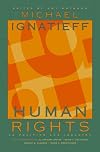
Extremely powerful book; I regret that I waited so long to get around to reading it. Ignatieff argues that the purpose of human rights, drawing from its roots in natural law, is to protect human agency. This leads to the conclusion that they will primarily protect negative freedoms, or freedoms "from", rather than freedoms or rights "to."
He further disagrees with the idea of rights as trumps, instead suggesting that they are starting points for negotiations. We may be forced to accept, as show more Rawls said, that liberal democracies are not the only form of acceptable human society. He illustrates the point that groups should have the right to define for themselves what kind of life they have through the example of FGM. So long as people have right to leave, there can be little cause for outside objection. show less
He further disagrees with the idea of rights as trumps, instead suggesting that they are starting points for negotiations. We may be forced to accept, as show more Rawls said, that liberal democracies are not the only form of acceptable human society. He illustrates the point that groups should have the right to define for themselves what kind of life they have through the example of FGM. So long as people have right to leave, there can be little cause for outside objection. show less
A Matter of Interpretation: Federal Courts and the Law (The University Center for Human Values Series) by Antonin Scalia

A great introduction into the now nearly dominant legal philosophy of textualism and originalism. Scalia's article reads like a manifesto that pithily summarizes the opening volley of a frontal assault on the then existing interpretive schemas. Even if one does not agree with Scalia, (for example, I am not totally sold on many of his ideas), it is worth reading because of the influence of his ideas (for people who despite him, know thy enemy). The main article basically summarizes the main show more tenets of textualism that I learned in my first year course "legislation and regulation" (in fact, even the three semantic canon examples Scalia uses are the ones I learned in the course along with a sustained critique of the famous Dueling Canons article). The article lays out the theoretical and practical issues with trying to read legislative intent (the words enacted, not unexpressed intention are the law and the "legislature's intent" seem often to match the policy preferences of the judge respectively). Scalia also discusses the illegitimacy of legislative history as manipulatable by lobbyists, unhelpful or illegally creating lawmakers. Scalia discusses how textualism is not the same as strict constructionism and uses famous US v. Smith case (whether someone trading a gun for drugs is "using" a gun in meaning of a criminal statute) as an example that distinguishes the two (between reasonable construction and literal reading). Scalia also takes the time to mourn the common law practices that he sees as imported to constitutional interpretation (most famously the living constitution concept) that makes the constitution overly pliable to the machinations of clever judges. Scalia argues that this is fundamentally undemocratic, and a subversion of the purpose of the constitution as protecting rights from the flows and ebs of unsustained popular opinion. To curtail this, Scalia suggests originalism, and looking at the publically understood meaning of the constitution at the time of adoption, any other interpretive method is dismissed as giving judges undue power.
Scalia's article itself is worth the price of admission, but the book contains comments by several renowned scholars (for the first time I recognize every name in a collection of essays, including the name of my property professor). The first comment is by Gordon Wood (my favorite historian), who expands a minor theme in radicalism of the american revolution, by tracing the history of judges in early american history. Wood claims that judges (even justices) were seen as political figures who saw nothing wrong with taking political sides and frequently co-served in political positions such as the cabinet. It was only later that the judiciary transformed into an independant and technical (legalistic) profession. Wood argues that while many lament the power of judges to set aside statutes in favor of the common law, this was a design and not a defect. Wood traces the history of how minor magisterial judges which were seen as extensions of the crown transformed into a coordinate branch of the legislature (which frequently acted like a court before). Wood also discusses the transformation of the constitution as a political document to be interpreted by all political branches into a legalistic document that gave the courts a monopoly over interpretation. At the very least Wood challenges many of the traditions that Scalia claims to be returning to.
Tribe's article discusses a theme he later develops in the Invisible Constitution, that of a lack of meta-rule for interpretation in the constitution (which itself would require a meta-rule ad infinitum, a variation of a Godel's incompleteness theorem) which requires looking beyond the four corners of the text to interpret the document. In fact, Tribe argues that the only amendment that guides interpretation is the ninth amendment discussing unenumerated rights. Tribe argues that Scalia's portrayal of the living constitution is a strawman and argues that the line that Dworkin and Scalia drew between general principle and specific rules is hard to pin down the certainty.
Professor Glendon's article looks at the issue through comparative law lenses. She notes the progress of civil law jurisdictions in adopting common law tools and the lack of comparable progress in the common law world to develop traditions of statutory interpretation (both Scalia and Glendon discuss how law school education tends to focus on reading appellate cases rather than any training in statutory interpretation, luckily this situation has been rectified since the time this book was written, at least at Harvard, Legislation and Regulation is a required first year class).
Finally, Dworkin discusses (seemingly preempting Balkin's thesis in Living Originalism) how certain general principles are understood even at the time of the founding to be abstract principles. Dworkin argues that Scalia's originalism seems to be based on the expected applications of these principles by those who wrote them, rather than the meaning the enactors intended.
Scalia responds to each comment in turn, (suffice to say that lawyers are good at arguing), and I'm not doing justice to the nuances and counterarguments that each author brings to the table. A highly recommended collection. show less
Scalia's article itself is worth the price of admission, but the book contains comments by several renowned scholars (for the first time I recognize every name in a collection of essays, including the name of my property professor). The first comment is by Gordon Wood (my favorite historian), who expands a minor theme in radicalism of the american revolution, by tracing the history of judges in early american history. Wood claims that judges (even justices) were seen as political figures who saw nothing wrong with taking political sides and frequently co-served in political positions such as the cabinet. It was only later that the judiciary transformed into an independant and technical (legalistic) profession. Wood argues that while many lament the power of judges to set aside statutes in favor of the common law, this was a design and not a defect. Wood traces the history of how minor magisterial judges which were seen as extensions of the crown transformed into a coordinate branch of the legislature (which frequently acted like a court before). Wood also discusses the transformation of the constitution as a political document to be interpreted by all political branches into a legalistic document that gave the courts a monopoly over interpretation. At the very least Wood challenges many of the traditions that Scalia claims to be returning to.
Tribe's article discusses a theme he later develops in the Invisible Constitution, that of a lack of meta-rule for interpretation in the constitution (which itself would require a meta-rule ad infinitum, a variation of a Godel's incompleteness theorem) which requires looking beyond the four corners of the text to interpret the document. In fact, Tribe argues that the only amendment that guides interpretation is the ninth amendment discussing unenumerated rights. Tribe argues that Scalia's portrayal of the living constitution is a strawman and argues that the line that Dworkin and Scalia drew between general principle and specific rules is hard to pin down the certainty.
Professor Glendon's article looks at the issue through comparative law lenses. She notes the progress of civil law jurisdictions in adopting common law tools and the lack of comparable progress in the common law world to develop traditions of statutory interpretation (both Scalia and Glendon discuss how law school education tends to focus on reading appellate cases rather than any training in statutory interpretation, luckily this situation has been rectified since the time this book was written, at least at Harvard, Legislation and Regulation is a required first year class).
Finally, Dworkin discusses (seemingly preempting Balkin's thesis in Living Originalism) how certain general principles are understood even at the time of the founding to be abstract principles. Dworkin argues that Scalia's originalism seems to be based on the expected applications of these principles by those who wrote them, rather than the meaning the enactors intended.
Scalia responds to each comment in turn, (suffice to say that lawyers are good at arguing), and I'm not doing justice to the nuances and counterarguments that each author brings to the table. A highly recommended collection. show less
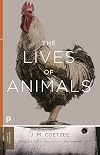
I love Coetzee's writing and especially his character Elizabeth Costello, so re-reading her two lectures 'The Philosophers and Animals' and 'The Poets and Animals' was of course a pleasure. If I am not mistaken, this version has annotations which the original Elizabeth Costello book didn't have so it was good to go chase some links and discover even more on this topic.
I like the idea of a literary debate and all the commentaries are interesting. I particularly enjoyed the literary theorist show more Marjorie Garber's writing and of course Barbara Smuts' 'from the heart' experience of befriending animals. show less
I like the idea of a literary debate and all the commentaries are interesting. I particularly enjoyed the literary theorist show more Marjorie Garber's writing and of course Barbara Smuts' 'from the heart' experience of befriending animals. show less
Awards


You May Also Like


Associated Authors
Statistics
- Works
- 21
- Also by
- 3
- Members
- 2,364
- Popularity
- #10,856
- Rating
- 3.6
- Reviews
- 20
- ISBNs
- 106
- Languages
- 11
