
Len Deighton (1929–2026)
Author of Berlin Game
About the Author
Len Deighton was born in London, England on February 18, 1929. He served in the Royal Air Force Special Investigations Branch and graduated from the Royal College of Art in 1955. Before becoming the master of the modern spy thriller, he worked as an airline steward and as an illustrator. His first show more novel, The Ipcress File, was published in 1962. His other novels include Funeral in Berlin, Berlin Game, Mexico Set, London Match, Spy Hook, Spy Line, and Spy Sinker. He also writes television plays and cookbooks. (Bowker Author Biography) show less
Series
Works by Len Deighton
Len Deighton's French Cooking for Men: 50 Classic Cookstrips for Today's Action Men (2010) 19 copies
The Spy Quartet: An Expensive Place to Die, Spy Story, Yesterday’s Spy, Twinkle Twinkle Little Spy (2015) 7 copies
Het miljarden brein 1 copy
A Little Piece of Hungary 1 copy
De luchtslag om Engeland 1 copy
Enkel als ik lacht 1 copy
XPD-geruisloos elemineren 1 copy
O Que Escondem As Águas 1 copy
Streng geheim 1 copy
SS-GB - MOVIE 1 copy
1988 1 copy
Paper Casualty 1 copy
Berlin Blues 1 copy
Associated Works
Great Stories of Crime and Detection, Volumes I-IV: Beginnings to the Present (2002) — Contributor — 72 copies
Hatchards Crime Collection: Top 100 Crime Novels of All Time Selected by the Crime Writers' Association (1990) — Foreword — 18 copies
Great Lion of God, Love Story, Bomber, and, Lone Woman (Reader's Digest Condensed Books) (1971) — Author — 1 copy
Tagged
Common Knowledge
- Legal name
- Deighton, Leonard Cyril
- Birthdate
- 1929-02-18
- Date of death
- 2026-03-15
- Gender
- male
- Education
- Royal College of Art
St Martin's School of Art - Occupations
- cookery writer
novelist
railway platemaker
airline steward
military historian
journalist - Nationality
- UK
- Birthplace
- Marylebone, London, Middlesex, England, UK
- Places of residence
- London, Middlesex, England, UK
Portugal
Guernsey, Bailiwick of Guernsey - Place of death
- Guernsey, Bailiwick of Guernsey
- Map Location
- England, UK
Members
Reviews

"A good agent should have a fast brain and a slow mouth." (189)
Deighton's protagonist in his fourth spy story isn't very good at taking his own sage advice on this score, and he often manages to kill the mood for his interlocutors with the momentum of his wit. Still nameless--although now sometimes alias "Liam Dempsey"--our man hasn't lost his appetite for reading military history or gained any emotional coordination with his beautiful secretary. But the book's events have him preoccupied show more with a global anti-communist network run by a technophile American mogul, who seems to be H. Ross Perot prematurely aged in the 1960s. Penetrating this "amateur" espionage outfit leads to various adventures.
The author's twenty-first-century retrospective introduction treats his methods of research and writing. He shares that he later came to disdain the extensive travel that he had used to incubate this novel, but I think it really paid off. I don't know Helsinki, Leningrad or Riga, but his Manhattan and south Texas episodes were quite persuasive. He also mentions the increasing complexity of character continuity in this book, as it returns to interactions with key figures from the previous volume beyond the immediate colleagues of the narrator. Billion-Dollar Brain however avoids the sort of supplementary viewpoint chapters that Deighton had tried out in Funeral in Berlin, sticking more rigorously with the speaker's perspective as he had done in his first books.
The revelation ofthe story's manic pixie dream girl as a femme fatale is artfully predictable, and is thankfully not at all the point of the book. There is a significant plotline regarding clandestine trade in viral pathogens, and the fact that a central character complained of fevers and feelings of illness remains an un-dropped shoe after the final pages. I did appreciate a long chapter of denouement to unwind, with a mop-up operation motivated by inter-agency rivalry. show less
Deighton's protagonist in his fourth spy story isn't very good at taking his own sage advice on this score, and he often manages to kill the mood for his interlocutors with the momentum of his wit. Still nameless--although now sometimes alias "Liam Dempsey"--our man hasn't lost his appetite for reading military history or gained any emotional coordination with his beautiful secretary. But the book's events have him preoccupied show more with a global anti-communist network run by a technophile American mogul, who seems to be H. Ross Perot prematurely aged in the 1960s. Penetrating this "amateur" espionage outfit leads to various adventures.
The author's twenty-first-century retrospective introduction treats his methods of research and writing. He shares that he later came to disdain the extensive travel that he had used to incubate this novel, but I think it really paid off. I don't know Helsinki, Leningrad or Riga, but his Manhattan and south Texas episodes were quite persuasive. He also mentions the increasing complexity of character continuity in this book, as it returns to interactions with key figures from the previous volume beyond the immediate colleagues of the narrator. Billion-Dollar Brain however avoids the sort of supplementary viewpoint chapters that Deighton had tried out in Funeral in Berlin, sticking more rigorously with the speaker's perspective as he had done in his first books.
The revelation of
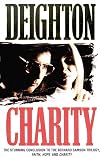
There's something very sly about this concluding volume in the Samson saga. The process of tidying up the loose ends of the private and professional life of Bernard Sampson after the upheaval initiated in Berlin Game, still sending its shockwaves through everyone's lives, the trauma multiplied and embodied by the violence at the end of Spy Line, the 'hatred and despair' of that night. There's no unravelling that trauma, even as Bernard doggedly unravels the truth about the murder of Tessa, a show more truth we the readers are already more or less privy to, such that the irony of this book is its final deception and betrayal, one tiny failure of Bernard's deductive skills and operational instincts, snugly ensconced in Bernard's blind spot, probably forever. But perhaps the happy ending is that it's a betrayal, or rather a secret, that remains undiscovered, the potential upheaval and trauma left safely latent and unexploded in lives already shattered and wounded and struggling to recover, the negative of the first volume. Deighton's structural skills are masterful. While guiding his attention away from one blind spot, it's Bret Renselaer who directs Bernard to another, perhaps more important one pertaining to Fiona, and the family that he loves yet cannot find a way to reunite. We're left at the last page with a hopeful memory of happy times in the ruin of post-war Berlin, and historically we know they're looking, unheedingly, towards another reunification: can the divided family and the divided city both be brought together? Oh Len, you are sly. show less

I decided to re-read 'The IPCRESS File' because it's sixty years old this year. It's been forty-seven years since I last read and enjoyed this book. At the time, my eighteen-year-old self was struck by how sordid and grubby Deighton's world of espionage was but I took the rest of the Cold War context - the nuclear arms race, the permanence of the Iron Curtain, the inevitability of the British upper-class running everything and making a mess of it - for granted. I'd grown up in the Cold War show more and, in 1975, there were no signs that it would end anytime soon. More than a decade after 'The IPCRESS File', in my first year at university, I would still occasionally be asked by mostly well-meaning tutors who were trying to slot me into the right context 'What does your father do?' (what my mother did never evoked the same level of curiosity) and I knew that the answer would give them a moment's pause as they processed that, despite the impression talking to me had made, I was a working-class lad from the North of England.
Re-reading the book in 2022, I wasn't surprised that I'd missed the taken-for-granted, casual but all-pervasive sexism the first time around. It was a blindness common at the time. I was surprised that the first thing that caught my attention wasn't the content of the book but the way in which it was written.
The narrative style was distinctive but hard for me to label. It was a kind of impersonal first-person. account. This narrative style isn't just about carrying the plot forward, it's a way of building the character of our nameless narrator as an emotionally distant, insightful but unempathetic, socially dislocated, secretive, untrusting, loner. The narrative also tells the story in an oddly abbreviated way, leaving things out or passing over them or not explaining them, making the narrative more of a gestalt built by the reader's expectations rather than something assembled brick by brick by the writer. This narrator is not so much unreliable as mischievously unhelpful as he challenges the reader to piece the plot together from what seems like a series of cryptic crossword puzzle clues.
Even now, this narrative style feels modern to the point of being experimental. Back in 1962, it must have had all that 'The Shock Of The New' energy of Modern Art.
Yet the narrative seems conventional compared to dialogue. There is one wonderfully chaotic scene where our spy is talking to someone on the phone while surrounded by multiple and overlapping sets of people talking to each other and him. It wasn't easy to read but it lit up my imagination. It's the dialogue equivalent of Warhol's split screen in 'Chelsea Girls'
I realised on this re-read, that the sordid grubbiness that shocked me on my first read was just the surface representation of the seediness at the heart of the plot. I thought the plot was one of the main strengths of the novel. It tells a story of betrayal, blurred lines of loyalty and ruthless selfishness against a backdrop of the threat of global nuclear war, mostly carried out by men who still carry the scars of the last World War. I enjoyed the up close and personal way the reveals were done, especially the exposure of what the IPCRESS file referred to and who was behind it.
I also enjoyed the way Deighton juxtaposed the excessive extravagance of the American Nuclear Test Site with the unthinkably large scale of destruction they were all focused on achieving. It felt like an indictment and a warning, even though there was no overt criticism.
The IPCRESS concept itself has aged about as badly as a comment made by one of the bad guys as he explains the Realpolitiks of the Cold War and says something like. 'Do you expect communism simply to implode one day while capitalism continues on in its evil ways?'
This time around, I was much more aware of how clearly our nameless spy could see all the small ways that he didn't fit in with the Establishment types who ran the Service. He knew he could never be one of them. He also knew that he had no desire to be a working-class warrior. He was just going to win with the cards he was dealt, even though he and everyone else was cheating.
The Nameless-Spy-Explains-It-All ending felt a little weak to me. The last few chapters felt like the CliffsNotes summary of the plot for any reader who either hadn't been paying attention or was too dumb to keep up. I wondered whether Deighton added these chapters at the behest of an editor who felt a need to tidy everything up. show less
Re-reading the book in 2022, I wasn't surprised that I'd missed the taken-for-granted, casual but all-pervasive sexism the first time around. It was a blindness common at the time. I was surprised that the first thing that caught my attention wasn't the content of the book but the way in which it was written.
The narrative style was distinctive but hard for me to label. It was a kind of impersonal first-person. account. This narrative style isn't just about carrying the plot forward, it's a way of building the character of our nameless narrator as an emotionally distant, insightful but unempathetic, socially dislocated, secretive, untrusting, loner. The narrative also tells the story in an oddly abbreviated way, leaving things out or passing over them or not explaining them, making the narrative more of a gestalt built by the reader's expectations rather than something assembled brick by brick by the writer. This narrator is not so much unreliable as mischievously unhelpful as he challenges the reader to piece the plot together from what seems like a series of cryptic crossword puzzle clues.
Even now, this narrative style feels modern to the point of being experimental. Back in 1962, it must have had all that 'The Shock Of The New' energy of Modern Art.
Yet the narrative seems conventional compared to dialogue. There is one wonderfully chaotic scene where our spy is talking to someone on the phone while surrounded by multiple and overlapping sets of people talking to each other and him. It wasn't easy to read but it lit up my imagination. It's the dialogue equivalent of Warhol's split screen in 'Chelsea Girls'
I realised on this re-read, that the sordid grubbiness that shocked me on my first read was just the surface representation of the seediness at the heart of the plot. I thought the plot was one of the main strengths of the novel. It tells a story of betrayal, blurred lines of loyalty and ruthless selfishness against a backdrop of the threat of global nuclear war, mostly carried out by men who still carry the scars of the last World War. I enjoyed the up close and personal way the reveals were done, especially the exposure of what the IPCRESS file referred to and who was behind it.
I also enjoyed the way Deighton juxtaposed the excessive extravagance of the American Nuclear Test Site with the unthinkably large scale of destruction they were all focused on achieving. It felt like an indictment and a warning, even though there was no overt criticism.
The IPCRESS concept itself has aged about as badly as a comment made by one of the bad guys as he explains the Realpolitiks of the Cold War and says something like. 'Do you expect communism simply to implode one day while capitalism continues on in its evil ways?'
This time around, I was much more aware of how clearly our nameless spy could see all the small ways that he didn't fit in with the Establishment types who ran the Service. He knew he could never be one of them. He also knew that he had no desire to be a working-class warrior. He was just going to win with the cards he was dealt, even though he and everyone else was cheating.
The Nameless-Spy-Explains-It-All ending felt a little weak to me. The last few chapters felt like the CliffsNotes summary of the plot for any reader who either hadn't been paying attention or was too dumb to keep up. I wondered whether Deighton added these chapters at the behest of an editor who felt a need to tidy everything up. show less
Bomber; events relating to the last flight of an R.A.F. [bomber] over Germany on the night of June 31st, 1943 by Len Deighton

First up Bomber is not an enjoyable book or an easy read, but it is a well researched and constructed novel that highlights the futility and dreadful human costs of war.
Set during a fictional bomber raid over the Ruhr, the initial first half of the book is scattered and wide ranging. But this apparent lack of focus is deliberate as the author seeks to build the world and set up the gravitas and reinforce the impact of loss and human suffering. In this Deighton is tremendously effective, but show more for me the outcome was one where I was glad to have finished the book, and a strong sense that I have no desire to revisit in the future.
Ironically I recall attempting to read this as a young boy, but the complexity of the narrative made it unreadable to a youngster.
Ultimately this is a novel I respect, but not one I wish to own. Accordingly I will donate this book to charity. show less
Set during a fictional bomber raid over the Ruhr, the initial first half of the book is scattered and wide ranging. But this apparent lack of focus is deliberate as the author seeks to build the world and set up the gravitas and reinforce the impact of loss and human suffering. In this Deighton is tremendously effective, but show more for me the outcome was one where I was glad to have finished the book, and a strong sense that I have no desire to revisit in the future.
Ironically I recall attempting to read this as a young boy, but the complexity of the narrative made it unreadable to a youngster.
Ultimately this is a novel I respect, but not one I wish to own. Accordingly I will donate this book to charity. show less
Lists
Reading LIst (31)
Booker Prize (1)
Best Dystopias (1)
Book Club read (1)
Best Spy Fiction (3)
THE WAR ROOM (3)
Awards


You May Also Like


Associated Authors
Statistics
- Works
- 79
- Also by
- 28
- Members
- 24,218
- Popularity
- #866
- Rating
- 3.7
- Reviews
- 343
- ISBNs
- 1,223
- Languages
- 17
- Favorited
- 40
