
Debra N. Mancoff
Author of Van Gogh and Gauguin: The Studio of the South
About the Author
Debra N. Mancoff is the author of "David Roberts: Travels in Egypt & the Holy Land" (Pomegranate, 1999); "Burne-Jones" (Pomegranate, 1998); "The Return of King Arthur: The Legend Through Victorian Eyes" (Harry N. Abrams, 1995) & many other publications. She attended the University of Illinois & show more Northwestern University (where she received her Ph.D.). She currently is a scholar-in-residence at the Newberry Library in Chicago. (Bowker Author Biography) show less
Works by Debra N. Mancoff
The Secrets of Art: Uncovering the mysteries and messages of great works of art (2021) 22 copies, 2 reviews
Associated Works
Tagged
Common Knowledge
- Gender
- female
- Education
- Northwestern University
Members
Reviews
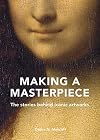
Making A Masterpiece by Debra N Mancoff does what it promises and then some. We not only get the stories behind iconic artworks, but we also get that work's influence on other works as well as some insight into its reception.
Frankly, I would have been happy with just getting more background on the works I knew something about and a fresh glimpse at the ones I didn't. Looking at works and ideas that flowed from these pieces, as well as considering what makes something a masterpiece, or at show more least considered as such by enough "experts," makes this a book I plan to revisit.
I read this straight through and enjoyed it as a single work with distinct chapters. What I want to do when I come back to it, and what I probably would have done if I wasn't reading it to review, is take each chapter, each work, and spend more time with it. Look up more images, learn a little more about the work that came after or about the artist, or whatever each chapter sparks. This is an excellent book for slowly working through and using other sources (an area where the internet comes in handy) to take it in whatever direction appeals to you.
Highly recommended for both those well-versed in art history and those of us with some knowledge but mostly just a love of art.
Reviewed from a copy made available by the publisher via NetGalley. show less
Frankly, I would have been happy with just getting more background on the works I knew something about and a fresh glimpse at the ones I didn't. Looking at works and ideas that flowed from these pieces, as well as considering what makes something a masterpiece, or at show more least considered as such by enough "experts," makes this a book I plan to revisit.
I read this straight through and enjoyed it as a single work with distinct chapters. What I want to do when I come back to it, and what I probably would have done if I wasn't reading it to review, is take each chapter, each work, and spend more time with it. Look up more images, learn a little more about the work that came after or about the artist, or whatever each chapter sparks. This is an excellent book for slowly working through and using other sources (an area where the internet comes in handy) to take it in whatever direction appeals to you.
Highly recommended for both those well-versed in art history and those of us with some knowledge but mostly just a love of art.
Reviewed from a copy made available by the publisher via NetGalley. show less
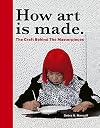
How Art is Made by Debra N Mancoff is an excellent reference that doesn't read like one. In other words, the examples and explanations are interesting and presented in a manner that makes the book an enjoyable read.
I think this is the fourth or fifth book from Mancoff that I have read and every one has been both fun to read and very informative. This one, focusing on the materials and methods of making art, would couple very well with The Secrets of Art which looks at ways of making meaning. show more One is mostly about the creation of the work and the other about the reception, though the two aren't as separate as one might think.
The section on materials offers a lot of insight into what is used, how things are made, from the works themselves to the paints and molds that help form them. The section on methods is more about the artistic manner in which the materials from the first part are used to create various effects. While Mancoff gives the readers a scholarly (albeit lower level) introduction she writes in a very accessible manner that allows any reader with an interest to follow along.
Highly recommended for the casual art lover who wants a better understanding as well as a scholar or art journalist that wants a handy reference. Either way, it is a readable book that also serves as a ready reference.
Reviewed from a copy made available by the publisher via NetGalley. show less
I think this is the fourth or fifth book from Mancoff that I have read and every one has been both fun to read and very informative. This one, focusing on the materials and methods of making art, would couple very well with The Secrets of Art which looks at ways of making meaning. show more One is mostly about the creation of the work and the other about the reception, though the two aren't as separate as one might think.
The section on materials offers a lot of insight into what is used, how things are made, from the works themselves to the paints and molds that help form them. The section on methods is more about the artistic manner in which the materials from the first part are used to create various effects. While Mancoff gives the readers a scholarly (albeit lower level) introduction she writes in a very accessible manner that allows any reader with an interest to follow along.
Highly recommended for the casual art lover who wants a better understanding as well as a scholar or art journalist that wants a handy reference. Either way, it is a readable book that also serves as a ready reference.
Reviewed from a copy made available by the publisher via NetGalley. show less
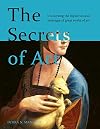
The Secrets of Art by Debra N Mancoff is an informative and entertaining look at the various ways we have to better understand the story of a work of art, and thus increase our pleasure in looking at it.
The introduction presents both the foundational reasons for this enquiry as well as the myriad ways in which archival research coupled with modern science and technology can unlock many of the mysteries we may not have even known existed. Mancoff does this through presenting these ideas in show more broad terms and then using The Night Watch as an example of how these questions are both raised and answered. Using this work as an example in the introduction works very well to introduce the book, well, maybe not so much for those who only want a bullet point outline of why the book is important or is even in existence. You know, like gossipy books about President's wives.
The works included range across time and style, with just enough information about each to give a reader unfamiliar with the work and/or its history a starting point for the revelations to come. Like any book that uses a number of works of art, what is included is certainly open for debate. Some might have wanted more commonly known examples included and those who want to gatekeep art might be offended that works they don't like were included, even when they cloak their opposition in pseudo-theoretical manure. But the works included all serve as excellent examples of the many ways the stories and backgrounds of art works can be lost or hidden, and how we can recover those histories.
I would recommend this to anyone with an interest in art and art history, as well as restoration. I also think those with just a passing interest in art will enjoy the mysteries surrounding these works even if the works don't particularly speak to them.
Reviewed from a copy made available by the publisher via NetGalley. show less
The introduction presents both the foundational reasons for this enquiry as well as the myriad ways in which archival research coupled with modern science and technology can unlock many of the mysteries we may not have even known existed. Mancoff does this through presenting these ideas in show more broad terms and then using The Night Watch as an example of how these questions are both raised and answered. Using this work as an example in the introduction works very well to introduce the book, well, maybe not so much for those who only want a bullet point outline of why the book is important or is even in existence. You know, like gossipy books about President's wives.
The works included range across time and style, with just enough information about each to give a reader unfamiliar with the work and/or its history a starting point for the revelations to come. Like any book that uses a number of works of art, what is included is certainly open for debate. Some might have wanted more commonly known examples included and those who want to gatekeep art might be offended that works they don't like were included, even when they cloak their opposition in pseudo-theoretical manure. But the works included all serve as excellent examples of the many ways the stories and backgrounds of art works can be lost or hidden, and how we can recover those histories.
I would recommend this to anyone with an interest in art and art history, as well as restoration. I also think those with just a passing interest in art will enjoy the mysteries surrounding these works even if the works don't particularly speak to them.
Reviewed from a copy made available by the publisher via NetGalley. show less
This is a thoroughly enjoyable beautiful book which will appeal to many an art enthousiast. The book takes you on a tour through the ages, from the middle ages to present day, discussing the secrets of artworks based on 8 individual themes. The author discusses for example what is hidden below the surface of a painting, what role censorship has played in the (de)construction of a work or the presence of secret symbols. The author doesn't restrict herself to just paintings but also discusses show more photography, sculpture and even performance art, from familiar artists like Van Eyck, Caravaggio, Dali and Banksy to lesser known (at least for yours truly) like Kehinde Wiley and Robert Rauschenberg.
Each page brought a smile to my face as I read the accompanying text and then studied the close-ups on details, although after a while this did become slightly formulaic: I felt that some of the works should have deserved a longer consideration to fully appreciate the background. I was quite surprised to find that even some of the pictures I consider myself fairly familiar with, having seen them multiple times, still had secrets to be revealed. However, as the author started the introduction with a discussion of the history of Rembrandt's Night Watch, the one secret I was sure to be revealed wasn't even mentioned (spoiler alert: Rembrandt has included himself in the picture somewhere). Maybe this could be the starting point for The Secret of Art Part 2?
Thanks to NetGalley and White Lion Publishing for providing an advance copy in exchange for an honest review.
#TheSecretsofArt #NetGalley show less
Each page brought a smile to my face as I read the accompanying text and then studied the close-ups on details, although after a while this did become slightly formulaic: I felt that some of the works should have deserved a longer consideration to fully appreciate the background. I was quite surprised to find that even some of the pictures I consider myself fairly familiar with, having seen them multiple times, still had secrets to be revealed. However, as the author started the introduction with a discussion of the history of Rembrandt's Night Watch, the one secret I was sure to be revealed wasn't even mentioned (spoiler alert: Rembrandt has included himself in the picture somewhere). Maybe this could be the starting point for The Secret of Art Part 2?
Thanks to NetGalley and White Lion Publishing for providing an advance copy in exchange for an honest review.
#TheSecretsofArt #NetGalley show less
Awards

You May Also Like


Statistics
- Works
- 42
- Also by
- 1
- Members
- 937
- Popularity
- #27,411
- Rating
- 4.1
- Reviews
- 11
- ISBNs
- 76
- Languages
- 6