

Christopher de Bellaigue
Author of The Islamic Enlightenment: The Struggle Between Faith and Reason, 1798 to Modern Times
About the Author
Christopher de Bellaigue has worked as a journalist in South Asia and the Middle East, writing for the Economist, the Guardian, and the New York Review of Books. He is the award-winning author of four books, has made several BBC television and radio documentaries, and has been a visiting fellow at show more the universities of Harvard and Oxford. He lives in London. show less
Image credit: photo by Farhad Ahrarnia
Works by Christopher de Bellaigue
The Islamic Enlightenment: The Struggle Between Faith and Reason, 1798 to Modern Times (2017) 280 copies, 3 reviews
Associated Works
Tagged
Common Knowledge
- Canonical name
- de Bellaigue, Christopher
- Birthdate
- 1971
- Gender
- male
- Education
- University of Cambridge
Eton College - Occupations
- journalist
- Organizations
- The Economist
- Nationality
- UK
- Birthplace
- London, England, UK
- Places of residence
- Tehran, Iran
- Associated Place (for map)
- UK
Members
Reviews
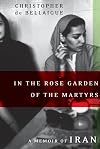
This is a fascinating book, although I'd say it's much more history and reporting than it is memoir. But that's not really a complaint. I guess there's enough of a memoir component to justify the subtitle. At any rate, de Belaigue is an English journalist who, at the time of the publication of this book in 2004, had been married to an Iranian woman and living in Tehran for several years (according to Wikipedia the couple now lives in London).
At any rate, de Bellaigue provides many first-hand show more accounts of what daily life was like in Tehran 10 years ago. (I don't imagine it's changed much, but what do I know?) But, as I mentioned, that's only one element of the book. Most importantly de Bellaigue provides an in-depth social and political history of Iran, and the Iranian Revolution that toppled the Shah and eventually brought the Ayatollah to supreme power, bringing us from those events right up to the time of the book's writing. Also, the causes and execution of the years-long, horrific war with Iraq are explained clearly and in-depth, as well. But rather than just providing straight history, de Bellaigue uses his journalistic skills to offer up portraits of and interviews with several Iranians, often people who took part in the Islamic Iranian Revolution, served the government in ways often unsavory, and are, for the most part, now in calmer retirement. Also, de Bellaigue provides plenty of historical context, going back as far as the early days of Islam in Iran, and explaining the Shia-Sunni split. There's a lot to take in, but the way de Bellaigue personalizes events, both through his own eyes and those of his interview subjects, works very, very well.
Basically, de Bellaigue describes the Revolution as a thugocracy, even from its earliest days. And then it got worse. de Bellaigue describes how, at least in his own view, the Revolution has subsequently imploded and betrayed even its own fundamentalist beliefs under the weight of hubris, greed and decadence. There has always been a give and take between reformers and hard-line Muslim fundamentalists, but the latter have always, in the end, employed ruthless means to retain ultimate control.
de Bellaigue's status as a Westerner who had lived in Iran for many years and who speaks Persian allowed him to present life in Tehran from the inside out, to show us the culture and the attitudes in fascinating ways and perspectives that neither a visiting Westerner nor even an Iranian could have managed. Given de Bellaigue rather dour and caustic attitude about the direction the Revolution had taken, it's not a surprise to me that he no longer lives in Iran. I have no idea whether the publishing of this book had anything to do with his leaving the country, but I wouldn't be a bit surprised. show less
At any rate, de Bellaigue provides many first-hand show more accounts of what daily life was like in Tehran 10 years ago. (I don't imagine it's changed much, but what do I know?) But, as I mentioned, that's only one element of the book. Most importantly de Bellaigue provides an in-depth social and political history of Iran, and the Iranian Revolution that toppled the Shah and eventually brought the Ayatollah to supreme power, bringing us from those events right up to the time of the book's writing. Also, the causes and execution of the years-long, horrific war with Iraq are explained clearly and in-depth, as well. But rather than just providing straight history, de Bellaigue uses his journalistic skills to offer up portraits of and interviews with several Iranians, often people who took part in the Islamic Iranian Revolution, served the government in ways often unsavory, and are, for the most part, now in calmer retirement. Also, de Bellaigue provides plenty of historical context, going back as far as the early days of Islam in Iran, and explaining the Shia-Sunni split. There's a lot to take in, but the way de Bellaigue personalizes events, both through his own eyes and those of his interview subjects, works very, very well.
Basically, de Bellaigue describes the Revolution as a thugocracy, even from its earliest days. And then it got worse. de Bellaigue describes how, at least in his own view, the Revolution has subsequently imploded and betrayed even its own fundamentalist beliefs under the weight of hubris, greed and decadence. There has always been a give and take between reformers and hard-line Muslim fundamentalists, but the latter have always, in the end, employed ruthless means to retain ultimate control.
de Bellaigue's status as a Westerner who had lived in Iran for many years and who speaks Persian allowed him to present life in Tehran from the inside out, to show us the culture and the attitudes in fascinating ways and perspectives that neither a visiting Westerner nor even an Iranian could have managed. Given de Bellaigue rather dour and caustic attitude about the direction the Revolution had taken, it's not a surprise to me that he no longer lives in Iran. I have no idea whether the publishing of this book had anything to do with his leaving the country, but I wouldn't be a bit surprised. show less

You know those hacky history documentaries where there are lots of reenactments featuring actors in cheap costumes? Imagine if HBO decided to make one of those—so lots more gore and T&A—and then someone wrote the novelization of what results. That's what The Lion House read like. I'm not sure what Christopher de Bellaigue was aiming for with this "narrative nonfiction" take on the world of the Ottoman sultan Suleyman the Magnifcent: what was the point of this approach? It's too show more confusing, too lacking in a central thrust, too cavalier with the sources, to succeed as a work of history; too flat in its characterisation and too meandering in its POVs to work as something more novelistic. The prose is often clunky, trying and failing for pithy aphorisms (One section begins "Piracy isn't about sinking ships or winning battles. Piracy is burglary when the owner is out." Huh?) or edginess ("A fuck-off statement has come up over the Byzantine vaults on the northern side of the Hippodrome." That is just a weird way to describe a palace.) show less
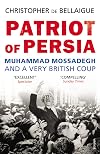
Patriot of Persia: Muhammed Mossadegh and a very British coup by Christopher de Bellaigue
I was going to start this review by commenting that there were two misleading things about the title: the first is that this is in fact a biography of Mossadegh's life rather than an account of the coup, the second that the description of the coup itself focuses on the CIA role without any mention of UK involvement (although there is coverage of the British persuading the US that a coup was necessary). show more But as I looked for the touchstone I discovered that the US subtitle of the book is "MM and a tragic Anglo-American coup", different in both tone and content from the UK one.
Anyway, to the review. In some ways this has quite an old-fashioned approach to biography writing, literally starting with Mossadegh's birth and ending with his death, and packing the author's analysis quite closely around the facts of Mossadegh's life. This is exacerbated by de Bellaigue's style of writing, which is fabulously elliptical and impressionistic - especially in the early chapters I felt that other biographers would squeeze a paragraph out of the information he was putting into a sentence.
Six-foot-three of glowering, muscle-bound ambition, Reza Khan crushed the shell of Qajar power. He wrote no foreign language, and barely his own; his culture was cards and wenching, though later he acquired the genteel vices of opium and extortion. ... Iran seethed as he started his ascent. Banditry and insurgency threatened the whole flimsy structure. It was one of those times when the Persian longing for a strongman capable of dragging the country back from the precipice seems like the summit of logic and good sense.
de Bellaigue loves a good anecdote, quote or nickname (Brainless Shaban, Icy Ramazan, Sugar-lip Zeynab) - anything that creates an image in the reader's mind. All this makes the book an enjoyable read, although there are a couple of downsides - because it's so elliptical there were times when I would have liked a statement to be more backed up with argument (eg, in above, 'the Persian longing for a strongman'?), and I occasionally worried that I was coming away with an impression of what had happened rather than detailed knowledge.
But in any case, the story is interesting and important. Overall it's a portrayal of Mossadegh himself, with plenty of complexity and contradictions. de Bellaigue shows us his strong adherence to his values and integrity, his love for political theatre, his vision but also his fussiness over details, and demonstrates how these made Mossadegh so popular among the Iranian people but also so frustrating to his political colleagues and opponents, and how it led him to miss opportunities to make compromises. de Bellaigue thinks, for example, that it would have been possible to reach an acceptable compromise with the British over Anglo-Iranian Oil (now BP) which would have met Iranian requirements and averted the coup. That doesn't mean that the book is not critical of the UK and US approaches, far from it. But reaching a compromise would actually have achieved Mossadegh's ends better than nobly standing above the fray. Certainly, without the coup, the modern Middle East could look very different.
Wealth distribution; a military under civilian control; modestly enhanced rights for women in the face of clerical unease; these were the most visible parts of a modernisation programme which would have brought Iran substantially closer to a secular, constitutional regime. The final year of Mossadegh's premiership is a salutary episode in modern Middle Eastern history - an opportunity spurned because of the British obsession with lost prestige and the American obsession with Communism. show less
I was going to start this review by commenting that there were two misleading things about the title: the first is that this is in fact a biography of Mossadegh's life rather than an account of the coup, the second that the description of the coup itself focuses on the CIA role without any mention of UK involvement (although there is coverage of the British persuading the US that a coup was necessary). show more But as I looked for the touchstone I discovered that the US subtitle of the book is "MM and a tragic Anglo-American coup", different in both tone and content from the UK one.
Anyway, to the review. In some ways this has quite an old-fashioned approach to biography writing, literally starting with Mossadegh's birth and ending with his death, and packing the author's analysis quite closely around the facts of Mossadegh's life. This is exacerbated by de Bellaigue's style of writing, which is fabulously elliptical and impressionistic - especially in the early chapters I felt that other biographers would squeeze a paragraph out of the information he was putting into a sentence.
Six-foot-three of glowering, muscle-bound ambition, Reza Khan crushed the shell of Qajar power. He wrote no foreign language, and barely his own; his culture was cards and wenching, though later he acquired the genteel vices of opium and extortion. ... Iran seethed as he started his ascent. Banditry and insurgency threatened the whole flimsy structure. It was one of those times when the Persian longing for a strongman capable of dragging the country back from the precipice seems like the summit of logic and good sense.
de Bellaigue loves a good anecdote, quote or nickname (Brainless Shaban, Icy Ramazan, Sugar-lip Zeynab) - anything that creates an image in the reader's mind. All this makes the book an enjoyable read, although there are a couple of downsides - because it's so elliptical there were times when I would have liked a statement to be more backed up with argument (eg, in above, 'the Persian longing for a strongman'?), and I occasionally worried that I was coming away with an impression of what had happened rather than detailed knowledge.
But in any case, the story is interesting and important. Overall it's a portrayal of Mossadegh himself, with plenty of complexity and contradictions. de Bellaigue shows us his strong adherence to his values and integrity, his love for political theatre, his vision but also his fussiness over details, and demonstrates how these made Mossadegh so popular among the Iranian people but also so frustrating to his political colleagues and opponents, and how it led him to miss opportunities to make compromises. de Bellaigue thinks, for example, that it would have been possible to reach an acceptable compromise with the British over Anglo-Iranian Oil (now BP) which would have met Iranian requirements and averted the coup. That doesn't mean that the book is not critical of the UK and US approaches, far from it. But reaching a compromise would actually have achieved Mossadegh's ends better than nobly standing above the fray. Certainly, without the coup, the modern Middle East could look very different.
Wealth distribution; a military under civilian control; modestly enhanced rights for women in the face of clerical unease; these were the most visible parts of a modernisation programme which would have brought Iran substantially closer to a secular, constitutional regime. The final year of Mossadegh's premiership is a salutary episode in modern Middle Eastern history - an opportunity spurned because of the British obsession with lost prestige and the American obsession with Communism. show less
My friend Mark suggested this book for our group back in 2006. Mark had travelled through the country during the days of the Shah, smoking hash and driving a VW Bus on his way to Afghanistan. He related how in certain hamlets, firewood was a dollar a night and the hash was free. It was around 2006 that the rumbles about preemptive strikes agsinst Iran first rumbled from Seymour Hersh and others. The book is masterful in detailing the contradictions of a progessive theocracy, the schizoid show more tensions of the educated classes and the waves of reforms and retractions between the mullahs and the minsiters. This is a fascinating glimpse. show less
Lists
Awards


You May Also Like


Associated Authors
Statistics
- Works
- 12
- Also by
- 2
- Members
- 921
- Popularity
- #27,851
- Rating
- 3.5
- Reviews
- 15
- ISBNs
- 55
- Languages
- 4
- Favorited
- 1