
Shirin Ebadi
Author of Iran Awakening: A Memoir of Revolution and Hope
About the Author
Works by Shirin Ebadi
Associated Works
Tagged
Common Knowledge
- Other names
- Ebadi, Shirin
- Birthdate
- 1947-06-21
- Gender
- female
- Education
- University of Tehran
- Occupations
- lawyer
judge - Awards and honors
- Nobel Prize ( [2003])
Rafto Human Rights Foundation prize (2001)
National Order of the Legion of Honour (2006) - Nationality
- Iran
- Birthplace
- Hamadan, Iran
- Places of residence
- Tehran, Iran
- Associated Place (for map)
- Iran
Members
Reviews
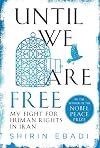
What at first feels like a collection of disconnected events becomes a more linked memoir of Shirin Ebadi’s ongoing efforts for human rights, and her life after receiving her well-deserved Nobel Peace Prize. Unable to keep her judgeship in Iran, she was still able to practice law, and it is clear from her interactions with anyone working against her that she excelled at this. She knows very well how the system operates, having learned the hard way, but this makes her stronger and better show more prepared to bring about justice. She is a human like any of us, and includes the details she remembers from her home country, the food, the sounds, the interiors of buildings where she worked, the way people presented themselves. Even though she is exile, and the intelligence ministry has done unthinkable things to try to stop her, she continues to work for what is right.
This ministry, by the way, is almost unbelievable, how far they would go to track her every move. They had people monitoring her home, her emails, her phone calls, everything, and despite finding nothing, they continue to pursue her. I can only imagine it is for their fear of losing power. One agent in particular stands out: Mahmudi, whose real name was never provided, and his obsession – in the truest sense of the word – for Ebadi and how to get her to “shut up.” When they couldn’t break her, they went after her husband, her sister, her colleagues, anyone that had any connection to her, at best causing an inconvenience, at worst destroying their lives. Ebadi’s faith is a part of her, and though I wish I still didn’t have to say this, religion is not the cause of the problems here. The abuse of power and authority, and occasionally corrupting the intent of religion, is the stem of human rights violations.
Ebadi also possesses a deep understanding of how these oppressors work, as well as how Iran influences other countries in the Middle East and the rest of the world. Late in the book, she briefly writes of how Iran still has oppressed women’s rights, but that overall it is much less severe than in other countries – though still far from equitable, set back further by former President Ahmadinejad. One moment, if understated in her writing, was mention of a place she visited that was notable for its complete lack of female employees. Also memorable was how, among Ahmedinejad’s other backwards policies, he had martyrs buried in the cities’ parks, altering the limited green space available, in a place already suffering from air pollution.
The chapter titles are ominous-sounding, but it is with a remarkably calm pen that Ebadi tells her stories. Many lines I wanted to underline, or highlight, saying so much in so little space. For example, she believed that President Obama’s comments after the 2009 election in Iran were just the right response – nothing that could be used against the United States. It is so important for world leaders to have this kind of understanding. Here I made sure to flag one passage: “What should a society do when a leader that is elected through a democratic process then seeks to subvert the very legal foundation on which the state, constitution, and electorate that voted him into power is based on? Can you allow a democratically elected leader to essentially destroy and subvert the principles that put him in power in the first place?” Here, this is in reference to Morsi’s removal in Egypt, but can also be seen as a warning for democracies elsewhere. Like Ta-Nehisi Coates’ “Between the World and Me” this may be “required reading,” for its insight on what it takes to achieve equity in human rights.
Note: I won a copy of this book through Goodreads First Reads. For more reviews, follow my blog at http://matt-stats.blogspot.com/ show less
This ministry, by the way, is almost unbelievable, how far they would go to track her every move. They had people monitoring her home, her emails, her phone calls, everything, and despite finding nothing, they continue to pursue her. I can only imagine it is for their fear of losing power. One agent in particular stands out: Mahmudi, whose real name was never provided, and his obsession – in the truest sense of the word – for Ebadi and how to get her to “shut up.” When they couldn’t break her, they went after her husband, her sister, her colleagues, anyone that had any connection to her, at best causing an inconvenience, at worst destroying their lives. Ebadi’s faith is a part of her, and though I wish I still didn’t have to say this, religion is not the cause of the problems here. The abuse of power and authority, and occasionally corrupting the intent of religion, is the stem of human rights violations.
Ebadi also possesses a deep understanding of how these oppressors work, as well as how Iran influences other countries in the Middle East and the rest of the world. Late in the book, she briefly writes of how Iran still has oppressed women’s rights, but that overall it is much less severe than in other countries – though still far from equitable, set back further by former President Ahmadinejad. One moment, if understated in her writing, was mention of a place she visited that was notable for its complete lack of female employees. Also memorable was how, among Ahmedinejad’s other backwards policies, he had martyrs buried in the cities’ parks, altering the limited green space available, in a place already suffering from air pollution.
The chapter titles are ominous-sounding, but it is with a remarkably calm pen that Ebadi tells her stories. Many lines I wanted to underline, or highlight, saying so much in so little space. For example, she believed that President Obama’s comments after the 2009 election in Iran were just the right response – nothing that could be used against the United States. It is so important for world leaders to have this kind of understanding. Here I made sure to flag one passage: “What should a society do when a leader that is elected through a democratic process then seeks to subvert the very legal foundation on which the state, constitution, and electorate that voted him into power is based on? Can you allow a democratically elected leader to essentially destroy and subvert the principles that put him in power in the first place?” Here, this is in reference to Morsi’s removal in Egypt, but can also be seen as a warning for democracies elsewhere. Like Ta-Nehisi Coates’ “Between the World and Me” this may be “required reading,” for its insight on what it takes to achieve equity in human rights.
Note: I won a copy of this book through Goodreads First Reads. For more reviews, follow my blog at http://matt-stats.blogspot.com/ show less
I decided to read Until We Are Free: My Fight for Human Rights in Iran by Shirin Ebadi for three reasons. One, I'm always looking to better understand cultures from around the world. Two, I think human rights are worth fighting for. Three, I admire people who are willing to put their whole lives on the line to fight for the rights of not only themselves but others. I started to read Ebadi's story unsure what to expect. The story was filled with moments of hope and moments of utter despair show more that took me on an emotional roller coaster. I laughed at times and fought back tears at others. I felt outrage and fear and joy. Ebadi tells her life story through the lens of her fight for human rights without denying what her fight for the rights of not only herself but others cost her, personally and professionally. At times, she downplayed her losses in comparison to other people's, but even then her story made me think. Sometimes, we use words so carelessly, but for people living under a truly dictatorial regime, careless words are death sentences, sometimes even careful words are death sentences. Yet, it is important that words that shine light on atrocities are spoken and written and shared with the world. Ebadi tells the story of how she worked her whole life to speak for those who aren't in a position to speak for themselves. Ebadi's story of dealing with the Iranian government are enough to give anyone chills but remind us that there are real people living under oppressive rule everyday and there are real people living under those regimes fighting for the rights of themselves and others. Until We Are Free is a well written and engaging book that is at once thought provoking, heartbreaking and inspiring. show less
Iran Awakening: From Prison to Peace Prize: One Woman's Struggle at the Crossroads of History by Shirin Ebadi
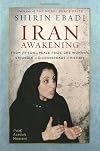
Every once in a while I read a book that not only personalizes a human rights issue, but does so in a way that inspires without candy-coating the situation. The first book I think of in this category is [I Shall Not Hate] by Izzeldin Abuelaish, who wrote about the Gaza Strip and some of the atrocities there, but also about the hope he sees for the future. Iran Awakening is another such book. Shirin Ebadi is a long-time human rights lawyer who won the Nobel Peace Prize in 2003. Her life has show more been a constant struggle as an Iranian woman to be educated, to become a female jurist, and to practice her profession with dignity despite the many obstacles in her way. When women are forbidden from being judges, she doesn't let that stop her, and becomes a renowned human right lawyer defending women and children from the vagaries and abuse of the government's system, often working pro bono. Learning there is a fatwa out for her assassination doesn't stop her. Imprisonment doesn't stop her. Disappointment doesn't stop her. She is single-minded in her demand for a better Iran, one which is ruled by law, not whims.
Although the story of her public life alone is enough to open eyes and inspire, I found the juxtaposition of her public and private lives to be the most complex and culturally interesting part of the book. For at home, Ms. Ebadi is a traditional wife and mother. Her faith is very strong and often helps her in her work, as she is able to quote religious passage back to imams who seek to create law based on very narrow interpretations of Islam. In addition, she sees herself as a woman devoted to her family, and in her context, that means cooking and freezing meals for her family so that they will eat well while she is in prison. She is devoted to her children and takes their upbringing seriously, while at the same time knowingly exposes them to danger through her work. She doesn't see a contradiction in these things. In her words:
In the last twenty-three years, from the day I was stripped of my judgeship to the years doing battle in the revolutionary courts of Tehran, I had repeated one refrain: an interpretation of Islam that is in harmony with equality and democracy is an authentic expression of faith. It is not religion that binds women, but the selective dictates of those who wish them cloistered. That belief, along with the conviction that change in Iran must come peacefully and from within, has underpinned my work.
I would highly recommend this book. It's a bit dated now, having been published in 2006, and I wish a new edition would be published, with updates. The message is important for those of us in the West to hear, and her life is an inspiring example of how to effect change in a complex political climate. The book is written with the assistance of Azadeh Moaveni, who went on to write her own very engrossing memoirs of her life as a young person in Iran: [Lipstick Jihad] and [Honeymoon in Tehran], two books which I would also recommend. My one fault with Iran Awakening is that the transitions between voices can occasionally be jarring. Some parts I assume Moaveni wrote (about politics and Iranian history, which are her forte) and other parts are clearly in Ms. Ebadi's voice (personal statements of belief and how she has chosen to live her life). Sometimes the transitions are seamless, sometimes not. But that is a minor quibble, and I would still encourage everyone to read this book. show less
Although the story of her public life alone is enough to open eyes and inspire, I found the juxtaposition of her public and private lives to be the most complex and culturally interesting part of the book. For at home, Ms. Ebadi is a traditional wife and mother. Her faith is very strong and often helps her in her work, as she is able to quote religious passage back to imams who seek to create law based on very narrow interpretations of Islam. In addition, she sees herself as a woman devoted to her family, and in her context, that means cooking and freezing meals for her family so that they will eat well while she is in prison. She is devoted to her children and takes their upbringing seriously, while at the same time knowingly exposes them to danger through her work. She doesn't see a contradiction in these things. In her words:
In the last twenty-three years, from the day I was stripped of my judgeship to the years doing battle in the revolutionary courts of Tehran, I had repeated one refrain: an interpretation of Islam that is in harmony with equality and democracy is an authentic expression of faith. It is not religion that binds women, but the selective dictates of those who wish them cloistered. That belief, along with the conviction that change in Iran must come peacefully and from within, has underpinned my work.
I would highly recommend this book. It's a bit dated now, having been published in 2006, and I wish a new edition would be published, with updates. The message is important for those of us in the West to hear, and her life is an inspiring example of how to effect change in a complex political climate. The book is written with the assistance of Azadeh Moaveni, who went on to write her own very engrossing memoirs of her life as a young person in Iran: [Lipstick Jihad] and [Honeymoon in Tehran], two books which I would also recommend. My one fault with Iran Awakening is that the transitions between voices can occasionally be jarring. Some parts I assume Moaveni wrote (about politics and Iranian history, which are her forte) and other parts are clearly in Ms. Ebadi's voice (personal statements of belief and how she has chosen to live her life). Sometimes the transitions are seamless, sometimes not. But that is a minor quibble, and I would still encourage everyone to read this book. show less
The stories of Pari's three brothers - one a general devoted to the Shah, one a communist, and the youngest a fervent admirer of Khomeini - become a great way for Nobel Peace Prize Laureate Shirin Ebadi to present Iran's recent history in a fairly unbiased way. And it works beautifully. Of course, it is clear throughout the book that the author has very strong personal opinions on the events described, but Shirin Ebadi does a very good job of balancing all the various points of view, and is show more not afraid of calling the different ideologies on their shortcomings, particularly as the leaders of each group betrayed the trust of their people.
This book is very history-heavy, as a basic understanding of this is key in understanding the story and the characters. I admittedly knew very little of Iran's history, but found the story nonetheless very easy to follow, thanks also to the author's thorough explanations and very easy and engaging writing style. I loved the image of the "golden cage" of ideology where each of the brothers ultimately traps himself: a beautiful and rich cage, but a cage nonetheless. And this is cage is what eventually destroys each of their lives, and their family as a whole.
A powerful reminder of the destructive potential of following an ideology blindly, this heartbreaking story is perfect for anyone wanting to learn more about Iran's history and society through the eyes of a normal family.
Find this and other reviews on my blog. show less
This book is very history-heavy, as a basic understanding of this is key in understanding the story and the characters. I admittedly knew very little of Iran's history, but found the story nonetheless very easy to follow, thanks also to the author's thorough explanations and very easy and engaging writing style. I loved the image of the "golden cage" of ideology where each of the brothers ultimately traps himself: a beautiful and rich cage, but a cage nonetheless. And this is cage is what eventually destroys each of their lives, and their family as a whole.
A powerful reminder of the destructive potential of following an ideology blindly, this heartbreaking story is perfect for anyone wanting to learn more about Iran's history and society through the eyes of a normal family.
Find this and other reviews on my blog. show less
Lists
Awards


You May Also Like


Associated Authors
Statistics
- Works
- 7
- Also by
- 1
- Members
- 810
- Popularity
- #31,509
- Rating
- 4.1
- Reviews
- 32
- ISBNs
- 54
- Languages
- 10
