
Raymond Durgnat (1932–2002)
Author of Luis Buñuel
About the Author
Raymond Durgnat is one of Britain's foremost writers on film. Among his books are Eros in the Cinema (1966), Films and Feelings (1967), Sexual Alienation in the Cinema (1972), The Strange Case of Alfred Hitchcock (1974) and Durgnat on Film (1976). He is currently Visiting Professor at the show more University of East London. show less
Image credit: JonathanRosenbaum.com
Works by Raymond Durgnat
A Mirror for England: British Movies from Austerity to Affluence (BFI Silver) (1970) 17 copies, 1 review
Associated Works
Tagged
Common Knowledge
- Birthdate
- 1932-09-01
- Date of death
- 2002-05-19
- Gender
- male
- Places of residence
- London, England, UK
California, USA
Members
Reviews
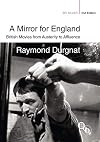
Raymond Durgnat's classic study of British films from the 1940s to the 1960s, first published in 1970, remains one of the most important books ever written on British cinema. In his introduction, Kevin Gough-Yates writes: 'Even now, it astounds by its courage and its audacity; if you think you have an 'original' approach to a filmor a director's work and check it against A Mirror for England, you generally discover that Raymond Durgnat had said it already.' Durgnat himself said about the show more book that 'the main point was arranging a kind of rendezvous between thinking about movies and thinking, not so much about sociology, as about the experiences that people are having all the time.'
Durgnat used Mirror to assert the validity of British cinema against its dismissal by the critics of Cahiers du cinéma and Sight and Sound. His analysis takes in classics such as In Which We Serve (1942), A Matter of Life and Death (1946) and The Blue Lamp (1949), alongside 'B' films and popular genres such as Hammer horror. Durgnat makes a cogent and compelling case for the success of British films in reflecting British predicaments, moods and myths, at the same time as providing some disturbing new insights into a national character by whose enigmas and contradictions we continue to be perplexed and fascinated show less
Durgnat used Mirror to assert the validity of British cinema against its dismissal by the critics of Cahiers du cinéma and Sight and Sound. His analysis takes in classics such as In Which We Serve (1942), A Matter of Life and Death (1946) and The Blue Lamp (1949), alongside 'B' films and popular genres such as Hammer horror. Durgnat makes a cogent and compelling case for the success of British films in reflecting British predicaments, moods and myths, at the same time as providing some disturbing new insights into a national character by whose enigmas and contradictions we continue to be perplexed and fascinated show less
This book by the English film critic Raymond Durgnat remains, after some 40 years, the best book available in English on Renoir's films, life and writings. That includes the French books about Renoir that have been translated into English, including the book by Truffaut/Bazin.
It would probably most appeal to someone who has seen a number of Renoir's films, perhaps even several times, and was starting to formulate thoughts about how they relate to each other.
It's also a nice antidote to the show more received opinions about Renoir that have been unquestioned and repeated for years by lazy film critics, both American and French. Much like the "canned" ideas and cliches Renoir himself was always warning about. show less
It would probably most appeal to someone who has seen a number of Renoir's films, perhaps even several times, and was starting to formulate thoughts about how they relate to each other.
It's also a nice antidote to the show more received opinions about Renoir that have been unquestioned and repeated for years by lazy film critics, both American and French. Much like the "canned" ideas and cliches Renoir himself was always warning about. show less
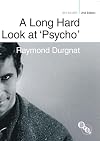
Upon its release in 1960, Alfred Hitchcock's Psycho divided critical opinion, with several leading film critics condemning Hitchcock's apparent encouragement of the audience's identification with the gruesome murder that lies at the heart of the film. Such antipathy did little to harm Psycho's box-office returns, and it would go on to be acknowledged as one of the greatest film thrillers, with scenes and characters that are among the most iconic in all cinema. In his illuminating study of show more Psycho, Raymond Durgnat provides a minute analysis of its unfolding narrative, enabling us to consider what happens to the viewer as he or she watches the film, and to think afresh about questions of spectatorship, Hollywood narrative codes, psycho-analysis, editing and shot composition.
In his introduction to the new edition, Henry K. Miller presents A Long Hard Look at 'Psycho' as the culmination of Durgnat's decades-long campaign to correct what he called film studies' 'Grand Error'. In the course of expounding Durgnat's root-and-branch challenge to our inherited shibboleths about Hollywood cinema in general and Hitchcock in particular, Miller also describes the eclectic intellectual tradition to which Durgnat claimed allegiance. This band of amis inconnus, among them William Empson, Edgar Morin and Manny Farber, had at its head Durgnat's mentor Thorold Dickinson. The book's story begins in the early 1960s, when Dickinson made the long hard look the basis of his pioneering film course at the Slade School of Fine Art, and Psycho became one of its first objects. show less
In his introduction to the new edition, Henry K. Miller presents A Long Hard Look at 'Psycho' as the culmination of Durgnat's decades-long campaign to correct what he called film studies' 'Grand Error'. In the course of expounding Durgnat's root-and-branch challenge to our inherited shibboleths about Hollywood cinema in general and Hitchcock in particular, Miller also describes the eclectic intellectual tradition to which Durgnat claimed allegiance. This band of amis inconnus, among them William Empson, Edgar Morin and Manny Farber, had at its head Durgnat's mentor Thorold Dickinson. The book's story begins in the early 1960s, when Dickinson made the long hard look the basis of his pioneering film course at the Slade School of Fine Art, and Psycho became one of its first objects. show less

For people who know Bunuel's work, & hopefully there are many in this category, there's no reason to recommend this bk. Everything Bunuel ever did interests me - even the films that I'm not that enthusiastic about - like "Wuthering Heights". & there are still so many that I haven't seen! If I needed any excuse to stay alive longer, one of them might be so that I can eventually check out everything by Bunuel - like "Robinson Crusoe" & "La Fièvre monte à El Pao". The latter film being a show more political one set in a Fascist regime in South America. I wonder if it's ever been subtitled in English & distributed in the US? Maybe it's TOO POLITICAL FOR THIS COUNTRY, eh?!
To answer my own question, I looked it up online. Apparently, a shortened version was distributed in the US - although I didn't find an English title. The review I read of it wasn't very enthusiastic.
ANYWAY, bks like this one about Bunuel help people like me know what I'm missing. There're 13 listed & discussed here that I'd never heard of or encountered in theaters or on VHS &/or DVD. The cover image that I just added if from the hardback 1st American edition. show less
To answer my own question, I looked it up online. Apparently, a shortened version was distributed in the US - although I didn't find an English title. The review I read of it wasn't very enthusiastic.
ANYWAY, bks like this one about Bunuel help people like me know what I'm missing. There're 13 listed & discussed here that I'd never heard of or encountered in theaters or on VHS &/or DVD. The cover image that I just added if from the hardback 1st American edition. show less
Lists
Awards

You May Also Like


Associated Authors
Statistics
- Works
- 17
- Also by
- 1
- Members
- 410
- Popularity
- #59,367
- Rating
- 3.7
- Reviews
- 4
- ISBNs
- 41
- Languages
- 1