
Frederic William Farrar (1831–1903)
Author of The Life of Christ
About the Author
Disambiguation Notice:
Often called Dean Farrar
Image credit: Courtesy of the NYPL Digital Gallery (image use requires permission from the New York Public Library)
Works by Frederic William Farrar
The Messages of the Books: Being Discourses and Notes on the Books of the New Testament (1999) 18 copies
What Heaven Is 3 copies
An essay on the origin of language, based on modern researches, and especially on the works of M. Renan (2015) 2 copies
SIN AND ITS CONSEQUENCES 2 copies
The Book of Judges 2 copies
LIFE OF CHRIST VOL.2 2 copies
Lectures and Addresses 2 copies
Pervye dni Hristianstva 1 copy
Lives of the Fathers: Vol II 1 copy
Lives of the Fathers: Vol I 1 copy
Þrír Vinir 1 copy
Farrar's life of Christ : beautiful stories about Jesus. The complete standard life of Christ 1 copy
The Cambridge Bible for Schools and Colleges. The Epistle of Paul the Apostle to the Hebrews (2015) 1 copy
Companions for the Devout Life: Lectures Delivered in St. James's Church, London, In 1875-6 (1877) 1 copy
Inspiration a Clerical Symposium on in What Sense, and Within What Limits, Is the Bible the Word of God? (Classic Reprint) (2018) 1 copy
Great Books 1 copy
Allegories (Amelia Bauerle) 1 copy
Chapters on language 1 copy
Talks on Temperance 1 copy
Associated Works
Tagged
Common Knowledge
- Legal name
- Farrar, Frederic William
- Other names
- Farrar, Dean
Farrar, Dean Frederic
Farrar, Frederic W.
Farrar, Frederic W., Dean - Birthdate
- 1831-08-07
- Date of death
- 1903-03-22
- Gender
- male
- Education
- King William's College, Isle of Man
King's College, London
University of Cambridge - Occupations
- canon (Westminster)
rector (St. Margaret's)
archdeacon (Westminster)
dean (Canterbury) - Awards and honors
- Fellow of the Royal Society
- Relationships
- Montgomery, Field-Marshal (grandson)
- Nationality
- UK
- Birthplace
- Bombay, India
- Places of residence
- Bombay, India (birth)
Canterbury, Kent, England (death) - Place of death
- Canterbury, Kent, England, UK
- Map Location
- England, UK
- Disambiguation notice
- Often called Dean Farrar
Members
Reviews
Eric, or, Little by Little (Dodo Press): Stories of school life by the theological writer, considered an eloquent preacher and a voluminous author. by Frederic W. Farrar
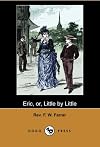
Ah, this book... What to say about this book?
Have you ever met the kind of person who, with the best intention, would try to scare little kids into behaving by telling them that if they are bad then their parents will die? Well, Frederic W. Farrar is that person.
I like public school fiction, with their depiction of schoolboy's daily challenges and triumphs, their friendships and fights, their sense of honor and personal growth. I have enjoyed Tom Brown's School Days, Talbot Baines Reed's show more works and others. To a greater or lesser extent, there is an old-fashioned morality associated with those old Victorian books, and I enjoy that too, associated as it is with a sense of the joy and fun of boyhood. However, in this book, there's no joy. It's a morality tale, like some other of these books, but this one is so incredibly heavy-handed and religiously earnest without moderating it with a sense humor that I don't even know where to begin.
Let's begin then by saying that my problem is not the writing. Farrar wrote quite well. The problem is the moral priggishness, the excessive sentimentality embittered by ruthlessly denying any possibility of redemption.
We start with Eric as a young boy, and as Farrar writes well, he makes him quite likable. Noble, loving, imaginative, spirited. He gets us to like him, so as to make what will follow more devastating. He imagines that he can convey his message better that way, but when you go about it in such a heavy-handed way it can be counter-productive. You can make sensitive kids cry, but they'll soon harden against such manipulative moral lessons.
Eric's parents are in India and he is staying with his kind aunt and will soon go to boarding school. We also meet his little brother Vernon, whom he worships, and the feeling is mutual.
Once in school, all of Eric's good purposes start to falter. The process is very gradual. Little by Little, as the alternative title says. There is some bullying. The junior master misjudges him and punishes him unfairly. He takes some bad examples from his school friends and older boys. Little by little and along the years, he starts falling into moral turpitude.
The saintly friend who was a good example to him dies, with an extremely tearful and sentimental deathbed scene. His last thoughts are for Eric. Eric reforms, but soon falls again when faced with the same temptations. He first tolerates bad language without speaking up (gasp!), then uses bad language himself. He drinks and smokes. He is contemptuous of the rules. He neglects his schoolwork. All this causes him intense moral suffering, and from time to time he attempts to reform only to fall again. He is too proud to accept the advice of his more saintly friends.
Really, Eric, when boys misbehave it's usually because they enjoy it. But if it makes you feel so miserable and sad, why do you keep doing it?
More people dear to Eric die. Not directly because of something he did, but there's a feeling that it's all connected, that he has caused this gloom upon himself. Then, when he finally seems willing to go back to the straight path for good, after almost being expelled, circumstances conspire to torment and destroy him. Finally only Eric's own deathbed brings him redemption, only to die quickly and with relief.
The whole thing is appalling, and at the same time it's quite readable, because when Farrar is not laying it on he can write an enjoyable book about school life, with likable characters. Enough to make you care, so that it will be more effective.
It's very very difficult to take this seriously from a modern point of view. Even when it was published in 1858, shortly after Tom Brown's Schooldays, it was too much for many reviewers, and it was criticized for its lachrymose and heavy-handed ways. While Tom Brown was almost universally liked and praised, the opinions on Eric were more mixed. However, it was almost as successful as Tom Brown. Many people claimed that it had a profound positive effect on them. Those two books were hugely successful, received serious critical attention and were very influential in the genre. They, along with Talbot Baines Reed's The Fifth Form at St. Dominic's, which was published 23 years later, are the most successful of Victorian schoolboy novels. Of those three, the less preachy and easiest to enjoy is The Fifth Form at St. Dominic's, but I got a lot of enjoyment from Tom Brown, too. Sure, Tom Brown's School Days is preachy, but in a healthy, optimistic, earnest way, full of life and vitality. There's no priggishness in it. Eric is well written, but it's full of priggishness.
To be fair, children's death is a heavier theme for us nowadays than it was in Victorian times. Just like sexuality was a subject to be avoided for respectable novels then, death is extremely distasteful for us now. But even so, this was heavy even back then... Poor Eric, if only his parents had not been absent, if only the school had been more watchful, if only he had been a bit more strong-willed.
A Goodreads reviewer puts it quite succinctly:
Another problem is that Farrar's lack of humor and excess of sentimentality makes him write unrealistic schoolboys. They are too sentimental, often crying and hugging each other in remorse.
On the other hand, even at his worst, Eric (the character, not the novel) remains likable, which makes the gloom-fest even sadder and more exaggerated. We also get an interesting glimpse at how public schools worked. It's shocking how little supervision the boys had (this is a pre-Thomas Arnold version of public school, so you don't even get prefects maintaining discipline and the school spirit), along with harsh physical punishment when caught breaking rules.
The novel, well-written though it is, is not easy to like, even for someone like me who likes Victorian school novels. This kind of story is handled better in other books published shortly afterwards. For example, in "Schoolboy Honour", by H. C. Adams, we also see a gradual moral decadence in a boy we have come to like, but it's handled with a sense of proportion, in a natural and less heavy-handed way. The boys' behavior is more believable and we don't get the "moral torture porn". Also the ending is happy, which is something you can't expect of the oppressive Eric, where it seems that a deviation from the right path is irreversible. I have read that in "St. Winifred's", Farrar also does this in a less heavy-handed way, but I haven't read that one yet. show less
Have you ever met the kind of person who, with the best intention, would try to scare little kids into behaving by telling them that if they are bad then their parents will die? Well, Frederic W. Farrar is that person.
I like public school fiction, with their depiction of schoolboy's daily challenges and triumphs, their friendships and fights, their sense of honor and personal growth. I have enjoyed Tom Brown's School Days, Talbot Baines Reed's show more works and others. To a greater or lesser extent, there is an old-fashioned morality associated with those old Victorian books, and I enjoy that too, associated as it is with a sense of the joy and fun of boyhood. However, in this book, there's no joy. It's a morality tale, like some other of these books, but this one is so incredibly heavy-handed and religiously earnest without moderating it with a sense humor that I don't even know where to begin.
Let's begin then by saying that my problem is not the writing. Farrar wrote quite well. The problem is the moral priggishness, the excessive sentimentality embittered by ruthlessly denying any possibility of redemption.
We start with Eric as a young boy, and as Farrar writes well, he makes him quite likable. Noble, loving, imaginative, spirited. He gets us to like him, so as to make what will follow more devastating. He imagines that he can convey his message better that way, but when you go about it in such a heavy-handed way it can be counter-productive. You can make sensitive kids cry, but they'll soon harden against such manipulative moral lessons.
Eric's parents are in India and he is staying with his kind aunt and will soon go to boarding school. We also meet his little brother Vernon, whom he worships, and the feeling is mutual.
Once in school, all of Eric's good purposes start to falter. The process is very gradual. Little by Little, as the alternative title says. There is some bullying. The junior master misjudges him and punishes him unfairly. He takes some bad examples from his school friends and older boys. Little by little and along the years, he starts falling into moral turpitude.
The saintly friend who was a good example to him dies, with an extremely tearful and sentimental deathbed scene. His last thoughts are for Eric. Eric reforms, but soon falls again when faced with the same temptations. He first tolerates bad language without speaking up (gasp!), then uses bad language himself. He drinks and smokes. He is contemptuous of the rules. He neglects his schoolwork. All this causes him intense moral suffering, and from time to time he attempts to reform only to fall again. He is too proud to accept the advice of his more saintly friends.
Really, Eric, when boys misbehave it's usually because they enjoy it. But if it makes you feel so miserable and sad, why do you keep doing it?
More people dear to Eric die. Not directly because of something he did, but there's a feeling that it's all connected, that he has caused this gloom upon himself. Then, when he finally seems willing to go back to the straight path for good, after almost being expelled, circumstances conspire to torment and destroy him. Finally only Eric's own deathbed brings him redemption, only to die quickly and with relief.
The whole thing is appalling, and at the same time it's quite readable, because when Farrar is not laying it on he can write an enjoyable book about school life, with likable characters. Enough to make you care, so that it will be more effective.
It's very very difficult to take this seriously from a modern point of view. Even when it was published in 1858, shortly after Tom Brown's Schooldays, it was too much for many reviewers, and it was criticized for its lachrymose and heavy-handed ways. While Tom Brown was almost universally liked and praised, the opinions on Eric were more mixed. However, it was almost as successful as Tom Brown. Many people claimed that it had a profound positive effect on them. Those two books were hugely successful, received serious critical attention and were very influential in the genre. They, along with Talbot Baines Reed's The Fifth Form at St. Dominic's, which was published 23 years later, are the most successful of Victorian schoolboy novels. Of those three, the less preachy and easiest to enjoy is The Fifth Form at St. Dominic's, but I got a lot of enjoyment from Tom Brown, too. Sure, Tom Brown's School Days is preachy, but in a healthy, optimistic, earnest way, full of life and vitality. There's no priggishness in it. Eric is well written, but it's full of priggishness.
To be fair, children's death is a heavier theme for us nowadays than it was in Victorian times. Just like sexuality was a subject to be avoided for respectable novels then, death is extremely distasteful for us now. But even so, this was heavy even back then... Poor Eric, if only his parents had not been absent, if only the school had been more watchful, if only he had been a bit more strong-willed.
A Goodreads reviewer puts it quite succinctly:
It certainly was amazing, but also appalling. That'll teach you, Eric, now you've killed your best friend, your brother, your mother...
Another problem is that Farrar's lack of humor and excess of sentimentality makes him write unrealistic schoolboys. They are too sentimental, often crying and hugging each other in remorse.
On the other hand, even at his worst, Eric (the character, not the novel) remains likable, which makes the gloom-fest even sadder and more exaggerated. We also get an interesting glimpse at how public schools worked. It's shocking how little supervision the boys had (this is a pre-Thomas Arnold version of public school, so you don't even get prefects maintaining discipline and the school spirit), along with harsh physical punishment when caught breaking rules.
The novel, well-written though it is, is not easy to like, even for someone like me who likes Victorian school novels. This kind of story is handled better in other books published shortly afterwards. For example, in "Schoolboy Honour", by H. C. Adams, we also see a gradual moral decadence in a boy we have come to like, but it's handled with a sense of proportion, in a natural and less heavy-handed way. The boys' behavior is more believable and we don't get the "moral torture porn". Also the ending is happy, which is something you can't expect of the oppressive Eric, where it seems that a deviation from the right path is irreversible. I have read that in "St. Winifred's", Farrar also does this in a less heavy-handed way, but I haven't read that one yet. show less

This was an extremely popular Victorian boys' book. Farrar's style is lively and engaging and he is clearly writing about what he knows. The plot, however---a sort of Pilgrim's Regress---strains our credulity. A lifetime's worth of poor decisions and moral deterioration is crammed into a few years of Eric's youth, with consequences that seem out of proportion. Laissez-faire school leadership which allows all this presented without apparent judgement on Farrar's part, as is the absence of show more Eric's parents, stationed in India. Personal responsibility and Muscular Christianity should be enough, appparently. But time and again firm purpose of amendment is undermined by false pride and a desire for popularity which a modern psychologist might attribute to emotional neglect. Schoolboy crushes are presented in deeply romantic terms with no hint of moral objection. A puzzling environment, but the backdrop to a great deal of Victorian literature. show less
Here's another of those books read by the protagonist of Of Human Bondage, Philip. Gah!
This was pretty awful. I thought it might be one of those archetypal British school boys books. I rather liked Stalky and Company when I read it, both as a youth and again as a more "mature" person. A year of so ago, I tried Tom Brown's School Days and found it unreadable, so I gave up on it. Anyway, perhaps this book is also meant to be a British school boy book, but it was also flagrantly written to show more provide moral teaching to young boys. What it actually shows, however, is a complete moral bankruptcy on the part of the author.
So, we have adolescent boys doing the kinds of things adolescent boys do. They have some rules handed down from above, but aren't given reasons for those rules other than being told, I suppose, that breaking them will inevitably lead to moral decay. But, the masters in the school pretty much ignore the boys and they, being adolescent boys, run amok when they can. Once in a while, they are caught stepping over the ill-defined lines (one of their masters awakes from his un-noticing moralistic trance, or something), and then their good, moral masters beat the living crap out of them with sticks. So, that's how we make Christians out of people: set incongruous rules; publicly humiliate people who break the rules, even inadvertently; and beat the living crap out of them if they piss the masters off too much with their adolescent behavior.
Then you have teenage boys constantly crying about one thing or another, holding hands, hooking their arms around each other's necks, and so forth. In what planet does that happen? show less
This was pretty awful. I thought it might be one of those archetypal British school boys books. I rather liked Stalky and Company when I read it, both as a youth and again as a more "mature" person. A year of so ago, I tried Tom Brown's School Days and found it unreadable, so I gave up on it. Anyway, perhaps this book is also meant to be a British school boy book, but it was also flagrantly written to show more provide moral teaching to young boys. What it actually shows, however, is a complete moral bankruptcy on the part of the author.
So, we have adolescent boys doing the kinds of things adolescent boys do. They have some rules handed down from above, but aren't given reasons for those rules other than being told, I suppose, that breaking them will inevitably lead to moral decay. But, the masters in the school pretty much ignore the boys and they, being adolescent boys, run amok when they can. Once in a while, they are caught stepping over the ill-defined lines (one of their masters awakes from his un-noticing moralistic trance, or something), and then their good, moral masters beat the living crap out of them with sticks. So, that's how we make Christians out of people: set incongruous rules; publicly humiliate people who break the rules, even inadvertently; and beat the living crap out of them if they piss the masters off too much with their adolescent behavior.
Then you have teenage boys constantly crying about one thing or another, holding hands, hooking their arms around each other's necks, and so forth. In what planet does that happen? show less

The Expositor's Bible: The First Book of Kings
"God shows all things in the slow history of their ripening."—George Eliot.
God has given us many Bibles. The book which we call the Bible consists of a series of books, and its name represents the Greek plural τὰ Βίβλια. It is not so much a book, as the extant fragments of a literature, which grew up during many centuries. Supreme as is the importance of this "Book of God," it was never meant to be the sole teacher of mankind. We show more mistake its purpose, we misapply its revelation, when we use it to exclude the other sources of religious knowledge. It is supremely profitable for our instruction, but, so far from being designed to absorb our exclusive attention, its work is to stimulate the eagerness with which, by its aid, we are able to learn from all other sources the will of God towards men. show less
"God shows all things in the slow history of their ripening."—George Eliot.
God has given us many Bibles. The book which we call the Bible consists of a series of books, and its name represents the Greek plural τὰ Βίβλια. It is not so much a book, as the extant fragments of a literature, which grew up during many centuries. Supreme as is the importance of this "Book of God," it was never meant to be the sole teacher of mankind. We show more mistake its purpose, we misapply its revelation, when we use it to exclude the other sources of religious knowledge. It is supremely profitable for our instruction, but, so far from being designed to absorb our exclusive attention, its work is to stimulate the eagerness with which, by its aid, we are able to learn from all other sources the will of God towards men. show less
Lists
Awards

You May Also Like


Associated Authors
Statistics
- Works
- 115
- Also by
- 1
- Members
- 1,524
- Popularity
- #16,877
- Rating
- 4.1
- Reviews
- 13
- ISBNs
- 202
