

Aimee Liu
Author of Cloud Mountain
About the Author
Aimee Liu is a novelist and the author of Gaining, an acclaimed investigation into the causes and consequences of anorexia and bulimia nervosa. She teaches creative writing at Goddard College and lives in Los Angeles. For more information, visit www.aimeeliu.net. The author's proceeds from the sale show more of this book will be donated to the Academy for Eating Disorders, Clinical Research and Scholarship Fund. For more information visitwww.aedweb.org. This and many other publications by Trumpeter are now available as eBooks. show less
Works by Aimee Liu
Codependency Conspiracy: How to Break the Recovery Habit and Take Charge ofYour Life (1991) 26 copies
Solitaire: The compelling story of a young woman growing up in America and her triumph over anorexia. (1979) 22 copies
Restoring Our Bodies, Reclaiming Our Lives: Guidance and Reflections on Recovery from Eating Disorders (2011) 11 copies
Glorious Boy: A Novel 1 copy
Associated Works
For Keeps: Women Tell the Truth About Their Bodies, Growing Older, and Acceptance (2007) — Contributor — 30 copies, 2 reviews
A Stranger Among Us: Stories of Cross Cultural Collision and Connection (2008) — Foreword — 18 copies
Tagged
Common Knowledge
- Canonical name
- Liu, Aimee
- Birthdate
- 1953-04-19
- Gender
- female
- Education
- Yale University (BA)
- Occupations
- writer
flight attendant
teacher
associate producer
editor - Nationality
- USA
- Birthplace
- Greenwich, Connecticut, USA
- Places of residence
- Connecticut, USA
Los Angeles, California, USA - Associated Place (for map)
- Connecticut, USA
Members
Reviews
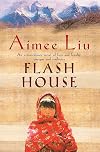
The novel begins in 1949 in India not long after India's Partition. On the surface it's a spy story cum romance and orphan rescue. It's the underlying history that is both fascinating and riveting and if you are not fully aware of what happened there in northern Asia, it will send you scurrying to wikipedia and history books. It's one of those books that I love that combine history with adventure without being cloying or fake. It's also one of those books that lead you to other books and show more writers. In this case, (for me at least,) Kipling's view of the Great Game, Sven Hedin (explorer), Robert Shaw (explorer) & others.
Aside from my love of history, I appreciated Aimee Liu's writing, a beautiful mix of description, narrative, prose, character development, with an outstanding grip on cultural oppression and the repercussions of war.
The ending while disappointing was indicative of war, espionage, love triangles and of abandoned children. A happy ending would have made the whole journey trite. show less
Aside from my love of history, I appreciated Aimee Liu's writing, a beautiful mix of description, narrative, prose, character development, with an outstanding grip on cultural oppression and the repercussions of war.
The ending while disappointing was indicative of war, espionage, love triangles and of abandoned children. A happy ending would have made the whole journey trite. show less

A fascinating exploration of what restricting offered to women – the rewards they experienced and felt that went far deeper than just a super-skinny body: essentially, the void it tried to fill. Gaining includes the author’s personal experiences, those of other women, and existing research on anorexia, including the characteristics, personality traits, and early-life experiences shared by many female anorexics.
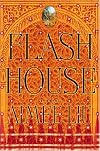
Wow! What a fantastic story this is. Intrigue, romance, family...it's all here.
The story is set in post-WW2 India and China. Aiden Shaw, an American journalist, disappears while investigating a story in Kashmir. Is he a spy? A double agent?
His wife, Joanna, runs a safe house for girls trafficked into prostitution in Delhi. She is a strong character, loyal to her husband in spite of his apparent desertion of her, and in spite of her love for another man.
Joanna has rescued a young girl from a show more brothel. Kamla is another very strong heroine who struggles to survive and to help Joanna survive as well.
The plot is riveting, with enough twists and uncertainties to keep me guessing and turning the pages. The powerful writing, though, does more than tell a good story. There are major themes here about loyalty, survival, guilt and betrayal. Amazing book. show less
The story is set in post-WW2 India and China. Aiden Shaw, an American journalist, disappears while investigating a story in Kashmir. Is he a spy? A double agent?
His wife, Joanna, runs a safe house for girls trafficked into prostitution in Delhi. She is a strong character, loyal to her husband in spite of his apparent desertion of her, and in spite of her love for another man.
Joanna has rescued a young girl from a show more brothel. Kamla is another very strong heroine who struggles to survive and to help Joanna survive as well.
The plot is riveting, with enough twists and uncertainties to keep me guessing and turning the pages. The powerful writing, though, does more than tell a good story. There are major themes here about loyalty, survival, guilt and betrayal. Amazing book. show less
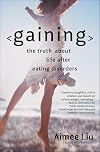
Dozens and dozens of books over the past thirty some years have tried to explain what anorexia and bulimia really are, but nothing quite gets it the way Gaining: The Truth About Life After Eating Disorders does.
Writer Aimee Liu sums it up best on page 125:
"Recovery is like a big old house…the anorexic or the bulimic is always going to live there. People sometimes think, I can evict her, I can get rid of that. But you don’t develop an eating disorder for no good reason. It’s a profound show more experience. So how can you wipe out that whole piece of your history? I prefer to think of it this way. She used to rule the house in a kind of tyranny. She was in charge of the kitchen, in charge of everything. Now she still gets to live there and she may still have some of those old fears and vulnerabilities, but she’s got only one room in the house and has to make way for more and more occupants as time passes."
It’s no wonder Aimee Liu captures the image of recovery so well, she writes from experience. In her teens and twenties, Liu battled anorexia and thought she had won the war, but found herself battling it all over again in her forties.
Her examination of this scary world covers so much: the people she’s met along the way (both men and women) who have been in her shoes, the causes of eating disorders (always up for debate depending upon whom you to talk to), the sadness, the triumphs.
Publishers Weekly says this book is "poignant even for those who have have not suffered from an eating disorder." The author’s sincerity is as touching as her website, where she shares letters from readers who have reached out to her in gratitude and their need to share what they’ve survived.
Books such as Gaining are crucial because they help put perspective on a misunderstood disease where the victim is often blamed. Free of any kind of sensationalism or need to romanticize eating disorders, Gaining lays everything on the line for patients (both past and present) and their loved ones. And while she’s not afraid to write about the grim truths of eating disorders, she leaves her readers with hope, not fear. show less
Writer Aimee Liu sums it up best on page 125:
"Recovery is like a big old house…the anorexic or the bulimic is always going to live there. People sometimes think, I can evict her, I can get rid of that. But you don’t develop an eating disorder for no good reason. It’s a profound show more experience. So how can you wipe out that whole piece of your history? I prefer to think of it this way. She used to rule the house in a kind of tyranny. She was in charge of the kitchen, in charge of everything. Now she still gets to live there and she may still have some of those old fears and vulnerabilities, but she’s got only one room in the house and has to make way for more and more occupants as time passes."
It’s no wonder Aimee Liu captures the image of recovery so well, she writes from experience. In her teens and twenties, Liu battled anorexia and thought she had won the war, but found herself battling it all over again in her forties.
Her examination of this scary world covers so much: the people she’s met along the way (both men and women) who have been in her shoes, the causes of eating disorders (always up for debate depending upon whom you to talk to), the sadness, the triumphs.
Publishers Weekly says this book is "poignant even for those who have have not suffered from an eating disorder." The author’s sincerity is as touching as her website, where she shares letters from readers who have reached out to her in gratitude and their need to share what they’ve survived.
Books such as Gaining are crucial because they help put perspective on a misunderstood disease where the victim is often blamed. Free of any kind of sensationalism or need to romanticize eating disorders, Gaining lays everything on the line for patients (both past and present) and their loved ones. And while she’s not afraid to write about the grim truths of eating disorders, she leaves her readers with hope, not fear. show less
Lists
Awards

You May Also Like


Associated Authors
Statistics
- Works
- 12
- Also by
- 4
- Members
- 697
- Popularity
- #36,316
- Rating
- 3.7
- Reviews
- 11
- ISBNs
- 63
- Languages
- 8
