
Barbara H. Rosenwein
Author of A Short History of the Middle Ages
About the Author
Barbara H. Rosenwein is Professor Emerita, Department of History, Loyola University Chicago. She is the author of many books, including Generations of Feeling: A History of Emotions (600-1700), What Is the History of Emotions? (With Riccardo Cristiani), The Middle Ages in 50 Objects (with Elina show more Gertsman), and Reading the Middle Ages: Sources from Europe, Byzantium, and the Islamic World. show less
Image credit: via Amazon.com
Works by Barbara H. Rosenwein
Negotiating Space: Power, Restraint, and Privileges of Immunity in Early Medieval Europe (1999) 33 copies, 1 review
Reading the Middle Ages, Volume I: Sources from Europe, Byzantium, and the Islamic World, c.300 to c.1150, Second Edition (2007) 17 copies
Reading the Middle Ages, Volume II: Sources from Europe, Byzantium, and the Islamic World, c.900 to c.1500, Second Edition (2007) 17 copies, 1 review
To Be the Neighbor of Saint Peter: The Social Meaning of Cluny's Property, 909–1049 (1989) 16 copies, 1 review
Reading the Middle Ages: Sources from Europe, Byzantium, and the Islamic World, Third Edition (2018) 14 copies
Rosenwein 4e Early Medieval History Package: Includes Shma 4e, Vol I (9781442606142) and Rma 2e, Vol I (9781442606050) (2013) 3 copies
Associated Works
Tagged
Common Knowledge
- Birthdate
- 1945
- Gender
- female
- Organizations
- Loyola University, Chicago, USA
- Nationality
- USA
- Associated Place (for map)
- USA
Members
Reviews
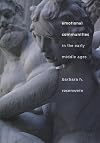
This is a really interesting look at how people in the early medieval West (concentrating on regions largely lying within modern France) understood and expressed emotions. Rosenwein argues against the usual dismissal of emotive words in early hagiographical or theological texts are mere topoi—stock language which was used by rote whether or not it was "genuine"—and claims instead that use of emotive language varies greatly according to a whole host of factors: political, religious, show more literary, etc. Since she's dealing with 6th-8th century Francia, the range of sources she has to draw on is not large, and Rosenwein is explicit about the caveats which much attach to her work. Indeed, some of her examples—for instance, looking at funerary epitaphs from three cities in central and eastern Francia—do not entirely convince. However, overall this is an extremely interesting book which opens up the potential for new ways of thinking about hagiographies in particular, and which also introduced me to some fascinating theorists I'd not heard of before who work with the history of emotions. show less
To Be the Neighbor of Saint Peter: The Social Meaning of Cluny's Property, 909-1049 by Barbara H. Rosenwein
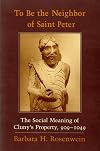
Barbara Rosenwein here examines more than 3000 charters issued during roughly the first century and a half of the existence of the great monastery of Cluny. She uses these charters as a means of reassessing the social meaning of land transfers and donations and how those changed over time, emphasising how these exchanges or gifts were a means of creating social relationships. To Be the Neighbor of Saint Peter is a very useful read for its methodology, even if at times it's a rather dry read show more and I did find some of the spatial relationships difficult to picture at times—sketches of the land holdings under discussion would have helped a lot. show less
Negotiating Space: Power, Restraint, and Privileges of Immunity in Early Medieval Europe by Barbara H. Rosenwein
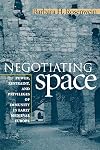
Barbara Rosenwein uses this book to discuss the use of Immunities and Exemptions in Medieval Western Europe, primarily to the 11th century, and how these changed and evolved over time.
This was an informative, very readable book. Unlike some of my other reviews, I won’t give a detailed description of its contents because, quite simply, my first paragraph pretty much sums it up. She discusses how landowners – primarily but not exclusively religious landowners – were granted various show more immunities and exceptions. Initially these immunities were largely granted by the lay rulers – Kings giving a monastery an exemption from paying a tax or excluding their land from entry by a royal official. With time more of these immunities came to be granted by religious authorities, though the ruling class was never entirely excluded.
Although this book is fairly short it is full of information. Rosenwein footnotes liberally and she provides numerous quotations from various charters, writs and formularies. What is different about this book from some others is that quite often an author seems to be trying to beat you into submission with the sheer weight and number of sources – when a point is made, he or she cites dozens of examples. Rosenwein makes her point, uses one or two examples, then allows her footnotes and bibliography to provide the reader with a path to find additional information. I am not opposed to longer volumes with massive amounts of information thrown at the reader, however her approach works well.
This book is very readable. In the acknowledgement she mentions that one of her goals is to write a book a student could read. She does this. Her writing is well paced and engaging and she rarely lapses into academic jargon.
One of her most interesting arguments is that the granting of numerous immunities is not a sign of weakness in a ruler – a symptom that he has to “pay off” subjects with excessive privileges. Rather she states that immunities and exceptions are signs of a strong ruler, one who is binding subjects to him by these types of social linkages. While the examples she provides are sound proof, I’m unconvinced that this is quite as frequent as she states. There have been plenty of rulers who felt comfortable enough in their own authority to give some of it up willingly however there have been some who granted rights to subjects from positions of weakness – nobody would argue that King John of England granted The Charter of Liberties (Magna Carta) from a position of strength. Nevertheless, at the very least she makes a persuasive case that granting of privileges is not always a sign of a weak ruler and that these must be weighed against many other factors.
My one substantial issue with this book is her inclusion of the final chapter, “A Man’s House is his Castle.” In one chapter she attempts to trace the evolution of immunities and exemptions from the 11th century to the present and show how these have influenced the American 4th Amendment to the Constitution’s guaranteeing a person’s home against unreasonable search and seizure. First of all, this is far too much ground to cover in 20 pages. Second, for the first time her discussion becomes vague – it’s hard to get a handle on exactly what she’s proposing except that some of this right was influenced by a social construct that began in the medieval period and some was not. This chapter would best be left for someone who could devote the necessary space to this discussion.
This is a very good book. It isn’t the first book on medieval social institutions I’d recommend someone pick up however if you’re interesting in medieval landholding, particularly religious landholding, its evolution and how some of the rights and privileges evolved, this book will certainly add to your knowledge. show less
This was an informative, very readable book. Unlike some of my other reviews, I won’t give a detailed description of its contents because, quite simply, my first paragraph pretty much sums it up. She discusses how landowners – primarily but not exclusively religious landowners – were granted various show more immunities and exceptions. Initially these immunities were largely granted by the lay rulers – Kings giving a monastery an exemption from paying a tax or excluding their land from entry by a royal official. With time more of these immunities came to be granted by religious authorities, though the ruling class was never entirely excluded.
Although this book is fairly short it is full of information. Rosenwein footnotes liberally and she provides numerous quotations from various charters, writs and formularies. What is different about this book from some others is that quite often an author seems to be trying to beat you into submission with the sheer weight and number of sources – when a point is made, he or she cites dozens of examples. Rosenwein makes her point, uses one or two examples, then allows her footnotes and bibliography to provide the reader with a path to find additional information. I am not opposed to longer volumes with massive amounts of information thrown at the reader, however her approach works well.
This book is very readable. In the acknowledgement she mentions that one of her goals is to write a book a student could read. She does this. Her writing is well paced and engaging and she rarely lapses into academic jargon.
One of her most interesting arguments is that the granting of numerous immunities is not a sign of weakness in a ruler – a symptom that he has to “pay off” subjects with excessive privileges. Rather she states that immunities and exceptions are signs of a strong ruler, one who is binding subjects to him by these types of social linkages. While the examples she provides are sound proof, I’m unconvinced that this is quite as frequent as she states. There have been plenty of rulers who felt comfortable enough in their own authority to give some of it up willingly however there have been some who granted rights to subjects from positions of weakness – nobody would argue that King John of England granted The Charter of Liberties (Magna Carta) from a position of strength. Nevertheless, at the very least she makes a persuasive case that granting of privileges is not always a sign of a weak ruler and that these must be weighed against many other factors.
My one substantial issue with this book is her inclusion of the final chapter, “A Man’s House is his Castle.” In one chapter she attempts to trace the evolution of immunities and exemptions from the 11th century to the present and show how these have influenced the American 4th Amendment to the Constitution’s guaranteeing a person’s home against unreasonable search and seizure. First of all, this is far too much ground to cover in 20 pages. Second, for the first time her discussion becomes vague – it’s hard to get a handle on exactly what she’s proposing except that some of this right was influenced by a social construct that began in the medieval period and some was not. This chapter would best be left for someone who could devote the necessary space to this discussion.
This is a very good book. It isn’t the first book on medieval social institutions I’d recommend someone pick up however if you’re interesting in medieval landholding, particularly religious landholding, its evolution and how some of the rights and privileges evolved, this book will certainly add to your knowledge. show less
For a single book covering so much material, I feel it is very poorly put and unfair to rate this book a 3 which most people did, and did not explain. Chicken S--t, they are.
Awards


You May Also Like


Associated Authors
Statistics
- Works
- 27
- Also by
- 1
- Members
- 960
- Popularity
- #26,837
- Rating
- 3.6
- Reviews
- 7
- ISBNs
- 111
- Languages
- 4