Melissa Caruso
Author of The Tethered Mage
About the Author
Series
Works by Melissa Caruso
Cellar bones 1 copy
Associated Works
Tagged
Common Knowledge
- Birthdate
- 20th century
- Gender
- female
- Education
- Brown University (Bx | Creative writing)
University of Massachusetts, Amherst (MFA | Fiction) - Agent
- Naomi Davis (BookEnds Literary)
- Nationality
- USA
- Associated Place (for map)
- USA
Members
Reviews
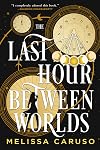
I received this novel from Orbit Books, through NetGalley, in exchange for an honest review: my thanks to both of them for this opportunity.
With her Swords and Fire trilogy, Melissa Caruso quickly became one of my read-sight-unseen authors, and the start of her new Rooks and Ruins saga, The Obsidian Tower, happily propelled me into a new adventure set in the same world. In that first book I enjoyed discovering her new central character, Ryx, whose “broken” magic kept her from any kind of show more human contact because her touch drains any kind of living energy: at the end of The Obsidian Tower, Ryx had been accepted in the found family of the Rookery, a group of secret agents of sorts, dedicated to fighting unruly magic use, but had also unwittingly allowed the escape of some demons so far locked up in the prison guarded by Ryx’s ancestral home of Gloaminguard.
As The Quicksilver Court starts, the already tense situation caused by the demonic escape heightened the political turmoil between the long-time opponents of Raverra and Vaskandar, and the Rookery is tasked with the mission of finding a terribly powerful artifact that could be hidden in a realm where politics are a quite slippery affair and every move could lead to disaster. As Ryx and her friends try to deal with the delicate situation, they are made aware that the escaped demons are further complicating the already knotty circumstances and that the Summer Palace in the realm of Loreice might prove a deadly trap. I don’t want to share more of the story because The Quicksilver Court offers such an almost unending stream of surprises, revelations and twists that to anticipate even the smallest of them would be very unfair to potential readers.
Plot-wise, the backbone of this story feels like one of those escape games where the players must find their way out in a constantly changing maze where unexpected dangers lurk, and no one can anticipate what awaits around the next (usually dark) corner: the overall effect is quite sinister, conferring to the novel a suffocating sense of impending doom that’s made even more ominous by the contrast with the chiseled beauty of the setting and the elegance of the denizens of Loreice’s Summer Palace, a place where fashion is used as a political statement. Faced with a set of equally impossible choices, the Rookery needs to deal with terribly high stakes that end up transcending the “merely” political and move over the treacherous and apparently invincible terrain of demonic power.
Indeed, Ryx and the Rookery are put to the test in the most harrowing ways imaginable, which brings the revelation of many long-held secrets that might fracture their bond, and as far as Ryx herself is concerned those revelations bring forth a discovery that affects both her past and her future: to say that I was completely floored by this epiphany would be a huge understatement and at the same time I’m eager to see how this will affect her involvement in the Rookery for the next book.
The trials our protagonists are put through offer however a powerful way of expanding their characters and showing us more of their personalities and their past: there are some heartbreaking moments in which I felt for them deeply, because so far Melissa Caruso had presented them in a light-hearted fashion, even when they were facing difficult circumstances and almost-impossible tasks - the affectionate banter between them was one of the delights of the story, and seeing them so exposed and deeply wounded was difficult and painful to bear. And yet, nothing brings characters into sharper relief than pushing them to the limits of their endurance, and seeing what they are truly made of: all of the Rookery members came through with flying colors, their inner dynamics certainly changed but in an interesting way that promises intriguing developments for the future.
As for Ryx, if I felt great empathy for her in the previous book, here she had my total admiration because she showed once and for all that despite the cruel drawbacks life heaped on her she has grown into a strong, determined individual who is unwilling to sacrifice her personal integrity, no matter the cost. For someone who was forced to live a sheltered life, she keeps showing a degree of flexibility and strength in the face of adversity that promise to turn her into a formidable person whose unbreakable core of humanity can temper any negative influence she might suffer.
Once again Melissa Caruso confutes the notion that the middle book of a trilogy is usually the flimsy one: with The Quicksilver Court she considerably raised the stakes in a narrative background that was already delightfully complicated, all the while adding intriguing facets to her characters and their internal relationships. My expectations for the final installment in the Rooks and Ruins trilogy (and for her future production) are quite high and I know they will not be disappointed.
All I have to do is just wait… show less
With her Swords and Fire trilogy, Melissa Caruso quickly became one of my read-sight-unseen authors, and the start of her new Rooks and Ruins saga, The Obsidian Tower, happily propelled me into a new adventure set in the same world. In that first book I enjoyed discovering her new central character, Ryx, whose “broken” magic kept her from any kind of show more human contact because her touch drains any kind of living energy: at the end of The Obsidian Tower, Ryx had been accepted in the found family of the Rookery, a group of secret agents of sorts, dedicated to fighting unruly magic use, but had also unwittingly allowed the escape of some demons so far locked up in the prison guarded by Ryx’s ancestral home of Gloaminguard.
As The Quicksilver Court starts, the already tense situation caused by the demonic escape heightened the political turmoil between the long-time opponents of Raverra and Vaskandar, and the Rookery is tasked with the mission of finding a terribly powerful artifact that could be hidden in a realm where politics are a quite slippery affair and every move could lead to disaster. As Ryx and her friends try to deal with the delicate situation, they are made aware that the escaped demons are further complicating the already knotty circumstances and that the Summer Palace in the realm of Loreice might prove a deadly trap. I don’t want to share more of the story because The Quicksilver Court offers such an almost unending stream of surprises, revelations and twists that to anticipate even the smallest of them would be very unfair to potential readers.
Plot-wise, the backbone of this story feels like one of those escape games where the players must find their way out in a constantly changing maze where unexpected dangers lurk, and no one can anticipate what awaits around the next (usually dark) corner: the overall effect is quite sinister, conferring to the novel a suffocating sense of impending doom that’s made even more ominous by the contrast with the chiseled beauty of the setting and the elegance of the denizens of Loreice’s Summer Palace, a place where fashion is used as a political statement. Faced with a set of equally impossible choices, the Rookery needs to deal with terribly high stakes that end up transcending the “merely” political and move over the treacherous and apparently invincible terrain of demonic power.
Indeed, Ryx and the Rookery are put to the test in the most harrowing ways imaginable, which brings the revelation of many long-held secrets that might fracture their bond, and as far as Ryx herself is concerned those revelations bring forth a discovery that affects both her past and her future: to say that I was completely floored by this epiphany would be a huge understatement and at the same time I’m eager to see how this will affect her involvement in the Rookery for the next book.
The trials our protagonists are put through offer however a powerful way of expanding their characters and showing us more of their personalities and their past: there are some heartbreaking moments in which I felt for them deeply, because so far Melissa Caruso had presented them in a light-hearted fashion, even when they were facing difficult circumstances and almost-impossible tasks - the affectionate banter between them was one of the delights of the story, and seeing them so exposed and deeply wounded was difficult and painful to bear. And yet, nothing brings characters into sharper relief than pushing them to the limits of their endurance, and seeing what they are truly made of: all of the Rookery members came through with flying colors, their inner dynamics certainly changed but in an interesting way that promises intriguing developments for the future.
As for Ryx, if I felt great empathy for her in the previous book, here she had my total admiration because she showed once and for all that despite the cruel drawbacks life heaped on her she has grown into a strong, determined individual who is unwilling to sacrifice her personal integrity, no matter the cost. For someone who was forced to live a sheltered life, she keeps showing a degree of flexibility and strength in the face of adversity that promise to turn her into a formidable person whose unbreakable core of humanity can temper any negative influence she might suffer.
Once again Melissa Caruso confutes the notion that the middle book of a trilogy is usually the flimsy one: with The Quicksilver Court she considerably raised the stakes in a narrative background that was already delightfully complicated, all the while adding intriguing facets to her characters and their internal relationships. My expectations for the final installment in the Rooks and Ruins trilogy (and for her future production) are quite high and I know they will not be disappointed.
All I have to do is just wait… show less
I received this novel from the publisher, through NetGalley, in exchange for an honest review: my thanks to both of them for this opportunity.
Having greatly enjoyed Melissa Caruso’s Swords and Fire trilogy, I was quite eager to sample her new work, and also curious to see her world from the point of view of the Raverran Serene Empire’s adversaries from previous books. Where the magic present in Raverra is controlled by placing jesses - i.e. restraining bracelets - on people endowed with show more magical powers, in Vaskandar mages are free to exert their powers, and the strongest among them rule over the realms to which they are intimately connected, engaging in endless strife for supremacy with their neighbors. In Swords and Fire, looking at Vaskandar through Raverran eyes, this country seemed to pose a constant threat: military aggression against diplomacy; undisciplined magic against tight control of powers; authoritarian rule against the compromise of politics. The Obsidian Tower looks on Vaskandar from the inside, and shows us that it’s indeed all a matter of perspective…
For four thousand years, the castle of Gloaminguard stood as protection over a magically sealed black tower: the family’s lore stresses emphatically that its door must remain closed at all costs. Ryx is the latest descendant of the family holding Gloaminguard, appointed warden of the castle by her grandmother, a powerful Witch Lord called the Lady of Owls. Ryx is however burdened by the impossibility of wielding her magic: in a family of vivomancers, mages with the ability to interact with the flora and fauna of their territories, the young woman is cursed by a killing touch - every living thing that comes into close contact with her is doomed to wither and die. As Gloaminguard is getting ready to host a meeting between Raverran and Vaskandran emissaries for the peaceful solution of a controversy, one of the envoys tries to circumvent the tower’s safeguards and is accidentally killed by Ryx as she tries to stop the ill-advised attempt of her guest.
Faced with the intricate task of juggling the consequences of the accident, the volatile political situation and the survival of her grandmother’s realm, Ryx finds herself enmeshed in a progressively dangerous game in which every new discovery leads to unexpected pitfalls and impossible choices, as the old menace from the newly-awakened Tower looms closer and threatens to plunge the whole world in a maelstrom of destruction.
The Obsidian Tower is a thoroughly captivating read, where the constantly raising stakes keep increasing the pressure, which at times becomes unbearable, because we see the situation unfold from Ryx’s point of view, so that the concatenation of events and the discoveries she makes along the way put her in an untenable position better described as “damned if I do, damned if I don’t”, and make the possible outcome quite unpredictable. Ryx is a brilliantly designed character, one that makes it easy to root for her: a mysterious childhood illness caused her blossoming vivomancy powers to deteriorate, turning into a life-sucking force that prevents her from any contact with living creatures - only a powerful mage, preparing for the onslaught of her magic, can survive her touch and so Ryx grew up in physical isolation, feared by everyone and needing to be on constant alert against any kind of proximity.
The sympathy Ryx engenders in the readers does not come from compassion for her plight, but from admiration for her inner strength and for her will to still be an effective member of her family despite the lethal handicap she suffers. As the situation in Gloaminguard becomes more and more complicated, she draws from the well of strength and wisdom she built over the years and shows her worth as a balancing element despite the opposing political plays of the two nations and the unhelpful interference from some of her family members. The only moments when she succumbs to wistfulness are those in which she observes the interactions between the members of the Rookery - a sort of super partes agency dealing with magical phenomena - and sees the easy camaraderie, the subliminal understanding born of shared experiences, and realizes how empty and bleak her existence has been, but still she refuses to let such feelings dominate her.
As for the Rookery, they represent the lighter side of the story: a combination of magical investigators and spies wielding gadgets that would be the envy of 007, they are a team composed by disparate individuals whose peculiarities contribute to the success of the group. We have a leader who is both bookish and action-oriented; a science enthusiast saddled with a terrible past; an infiltration agent gifted by a delightfully roguish personality; and a warrior who at times needs to be told that her sword is not necessarily the only answer. The Rookery’s easy acceptance of Ryx, despite the danger she poses, is a breath of fresh air not only for the young woman herself, but for the reader as well, because it’s painful to see how she’s feared and shunned even by people who saw her grow up and seem unable to avoid the automatic warding sign they make at her passage. Since the series’ title mentions Rooks, it is my strong hope that I will see much more of the Rookery’s antics in the next books.
Story-wise this novel is the intriguing introduction to a further exploration of the world created by Melissa Caruso: much as I enjoyed visiting Raverra and its Venice Republic-like world of politics and compromise, this glimpse of Vaskandar is even more appealing thanks to the unruly quality of its magic, the constant warfare (declared or not) between realms and the fascinating concept of connection between mages and their territory, so that nature itself, when necessary, can intervene over humans, either helping or hindering them. Or worse - there is a scene in The Obsidian Tower, involving a mad Witch Lord and thorny bushes, that had me wincing in sympathetic pain…
On this background are set interesting issues as friendship and trust, responsibility and duty, all rolled up with enigmatic prophecies from the past which can still have impact on the present - and probably the future, since this story is only at its beginning. And with such a strong beginning, we can only predict that the best is still to come. show less
Having greatly enjoyed Melissa Caruso’s Swords and Fire trilogy, I was quite eager to sample her new work, and also curious to see her world from the point of view of the Raverran Serene Empire’s adversaries from previous books. Where the magic present in Raverra is controlled by placing jesses - i.e. restraining bracelets - on people endowed with show more magical powers, in Vaskandar mages are free to exert their powers, and the strongest among them rule over the realms to which they are intimately connected, engaging in endless strife for supremacy with their neighbors. In Swords and Fire, looking at Vaskandar through Raverran eyes, this country seemed to pose a constant threat: military aggression against diplomacy; undisciplined magic against tight control of powers; authoritarian rule against the compromise of politics. The Obsidian Tower looks on Vaskandar from the inside, and shows us that it’s indeed all a matter of perspective…
For four thousand years, the castle of Gloaminguard stood as protection over a magically sealed black tower: the family’s lore stresses emphatically that its door must remain closed at all costs. Ryx is the latest descendant of the family holding Gloaminguard, appointed warden of the castle by her grandmother, a powerful Witch Lord called the Lady of Owls. Ryx is however burdened by the impossibility of wielding her magic: in a family of vivomancers, mages with the ability to interact with the flora and fauna of their territories, the young woman is cursed by a killing touch - every living thing that comes into close contact with her is doomed to wither and die. As Gloaminguard is getting ready to host a meeting between Raverran and Vaskandran emissaries for the peaceful solution of a controversy, one of the envoys tries to circumvent the tower’s safeguards and is accidentally killed by Ryx as she tries to stop the ill-advised attempt of her guest.
Faced with the intricate task of juggling the consequences of the accident, the volatile political situation and the survival of her grandmother’s realm, Ryx finds herself enmeshed in a progressively dangerous game in which every new discovery leads to unexpected pitfalls and impossible choices, as the old menace from the newly-awakened Tower looms closer and threatens to plunge the whole world in a maelstrom of destruction.
The Obsidian Tower is a thoroughly captivating read, where the constantly raising stakes keep increasing the pressure, which at times becomes unbearable, because we see the situation unfold from Ryx’s point of view, so that the concatenation of events and the discoveries she makes along the way put her in an untenable position better described as “damned if I do, damned if I don’t”, and make the possible outcome quite unpredictable. Ryx is a brilliantly designed character, one that makes it easy to root for her: a mysterious childhood illness caused her blossoming vivomancy powers to deteriorate, turning into a life-sucking force that prevents her from any contact with living creatures - only a powerful mage, preparing for the onslaught of her magic, can survive her touch and so Ryx grew up in physical isolation, feared by everyone and needing to be on constant alert against any kind of proximity.
The sympathy Ryx engenders in the readers does not come from compassion for her plight, but from admiration for her inner strength and for her will to still be an effective member of her family despite the lethal handicap she suffers. As the situation in Gloaminguard becomes more and more complicated, she draws from the well of strength and wisdom she built over the years and shows her worth as a balancing element despite the opposing political plays of the two nations and the unhelpful interference from some of her family members. The only moments when she succumbs to wistfulness are those in which she observes the interactions between the members of the Rookery - a sort of super partes agency dealing with magical phenomena - and sees the easy camaraderie, the subliminal understanding born of shared experiences, and realizes how empty and bleak her existence has been, but still she refuses to let such feelings dominate her.
As for the Rookery, they represent the lighter side of the story: a combination of magical investigators and spies wielding gadgets that would be the envy of 007, they are a team composed by disparate individuals whose peculiarities contribute to the success of the group. We have a leader who is both bookish and action-oriented; a science enthusiast saddled with a terrible past; an infiltration agent gifted by a delightfully roguish personality; and a warrior who at times needs to be told that her sword is not necessarily the only answer. The Rookery’s easy acceptance of Ryx, despite the danger she poses, is a breath of fresh air not only for the young woman herself, but for the reader as well, because it’s painful to see how she’s feared and shunned even by people who saw her grow up and seem unable to avoid the automatic warding sign they make at her passage. Since the series’ title mentions Rooks, it is my strong hope that I will see much more of the Rookery’s antics in the next books.
Story-wise this novel is the intriguing introduction to a further exploration of the world created by Melissa Caruso: much as I enjoyed visiting Raverra and its Venice Republic-like world of politics and compromise, this glimpse of Vaskandar is even more appealing thanks to the unruly quality of its magic, the constant warfare (declared or not) between realms and the fascinating concept of connection between mages and their territory, so that nature itself, when necessary, can intervene over humans, either helping or hindering them. Or worse - there is a scene in The Obsidian Tower, involving a mad Witch Lord and thorny bushes, that had me wincing in sympathetic pain…
On this background are set interesting issues as friendship and trust, responsibility and duty, all rolled up with enigmatic prophecies from the past which can still have impact on the present - and probably the future, since this story is only at its beginning. And with such a strong beginning, we can only predict that the best is still to come. show less
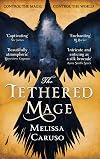
The Last Hour Between Worlds by Melissa Caruso took me three days to read, 100 pages each for the first two and then almost 200 this evening. It has a complex world and an intriguing set of plot puzzles that pushed me to slow down and examine them more closely, especially in the beginning.
It's also really good stuff.
It's been a long while since I've encountered a fantasy novel with this level of uniqueness and cleverness to the worldbuilding. The novel takes place at a party but it's no show more ordinary party and the longer you read, the darker and weirder things get. I was absolutely all in, following the compelling turns of the mystery. Sure, there are a few infodumps that make some of the twists more obvious than they need to be, but they still satisfy and the shape of the narrative draws in your whole brain.
The romantic elements are a little less elegant but by the end I was all in on that too, with a genuinely heartfelt resolution that satisfied without needing spice or any of the usual romantasy trappings. This is, in fact, a fantastic example of a fantasy+romance that has a real and robust plot.
But I feel I should tell you that this is not for everyone. The spirit of the book is hopeful but it's execution (pun kind of intended) is pretty much the opposite of cozy, with a level of violence and death that pushes it closer to dark fantasy/horror than you might expect from the cover. It's downright bloody and occasionally stressful, which is part of what makes it such a compelling book... but if that ain't your thing, I get it.
If you have a tolerance for such things, though, you might just find that this refreshes your brain and scratches the itch for something that balances fantasy, romance, and horror with real skill and deftness. This is the first book I've read by Caruso but it certainly won't be my last! show less
It's also really good stuff.
It's been a long while since I've encountered a fantasy novel with this level of uniqueness and cleverness to the worldbuilding. The novel takes place at a party but it's no show more ordinary party and the longer you read, the darker and weirder things get. I was absolutely all in, following the compelling turns of the mystery. Sure, there are a few infodumps that make some of the twists more obvious than they need to be, but they still satisfy and the shape of the narrative draws in your whole brain.
The romantic elements are a little less elegant but by the end I was all in on that too, with a genuinely heartfelt resolution that satisfied without needing spice or any of the usual romantasy trappings. This is, in fact, a fantastic example of a fantasy+romance that has a real and robust plot.
But I feel I should tell you that this is not for everyone. The spirit of the book is hopeful but it's execution (pun kind of intended) is pretty much the opposite of cozy, with a level of violence and death that pushes it closer to dark fantasy/horror than you might expect from the cover. It's downright bloody and occasionally stressful, which is part of what makes it such a compelling book... but if that ain't your thing, I get it.
If you have a tolerance for such things, though, you might just find that this refreshes your brain and scratches the itch for something that balances fantasy, romance, and horror with real skill and deftness. This is the first book I've read by Caruso but it certainly won't be my last! show less
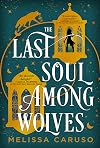
I tore through this book in a matter of days, and if anything, I think it’s even stronger than the first instalment in the Echo Archives. This time, Kembral and her girlfriend Rika are drawn into another deadly mystery when they accompany Kembral’s best friends to a bequeathing - and soon find themselves racing against time to prevent the deaths of Kembral’s childhood friends, cursed long ago by their own mischief.
Caruso’s conceit for this mystery is brilliantly executed: a show more closed-circle scenario where victims are trapped with their unknown murderer, complete with competing red herrings and layered motivations. The balance between immersive description and propulsive storytelling is spot on, and every character feels rounded, with female characters in particular given real strength, nuance, and complexity. Vy stood out to me as especially memorable for challenging assumptions, and Archyrion- an unexpected characterisation for a baby sitter - was a delight. I also loved the return of smaller touches from the first book, like the tea shop, which made the world feel continuous and alive.
Perhaps most impressively, this sequel doesn’t read as a placeholder. It delivers a complete, satisfying narrative in its own right, while deepening and interweaving with the arcs that began in book one. Even the one moment where I felt a resolution risked feeling too convenient turned out to be cleverly intentional.
I won’t say more for fear of spoilers but, suffice to say, I adored this book. Caruso has created an addictive, intelligent, and heartfelt series, and I can’t wait to join Kembral and Rika on their next adventure. show less
Caruso’s conceit for this mystery is brilliantly executed: a show more closed-circle scenario where victims are trapped with their unknown murderer, complete with competing red herrings and layered motivations. The balance between immersive description and propulsive storytelling is spot on, and every character feels rounded, with female characters in particular given real strength, nuance, and complexity. Vy stood out to me as especially memorable for challenging assumptions, and Archyrion- an unexpected characterisation for a baby sitter - was a delight. I also loved the return of smaller touches from the first book, like the tea shop, which made the world feel continuous and alive.
Perhaps most impressively, this sequel doesn’t read as a placeholder. It delivers a complete, satisfying narrative in its own right, while deepening and interweaving with the arcs that began in book one. Even the one moment where I felt a resolution risked feeling too convenient turned out to be cleverly intentional.
I won’t say more for fear of spoilers but, suffice to say, I adored this book. Caruso has created an addictive, intelligent, and heartfelt series, and I can’t wait to join Kembral and Rika on their next adventure. show less
Lists
Awards
You May Also Like
Associated Authors
Statistics
- Works
- 11
- Also by
- 1
- Members
- 1,935
- Popularity
- #13,309
- Rating
- 3.8
- Reviews
- 64
- ISBNs
- 68
- Languages
- 1


