
Tasha Suri
Author of The Jasmine Throne
About the Author
Series
Works by Tasha Suri
o trono de jasmin (tbk #01) 1 copy
Associated Works
The Secret Romantic's Book of Magic: Twelve Spellbinding Romantasy Stories (2025) — Contributor — 36 copies, 1 review
Tagged
Common Knowledge
- Legal name
- Suri, Natasha
- Birthdate
- 1989-12-07
- Gender
- female
- Education
- Warwick University
- Occupations
- librarian
- Awards and honors
- Astounding Award Nominee for Best New Writer (2020)
- Short biography
- Tasha Suri was born in London to Punjabi parents. She studied English and Creative Writing at Warwick University, and is now a cat-owning librarian in London. A love of period Bollywood films, history, and mythology led her to write South Asian-influenced fantasy.
- Nationality
- UK
- Birthplace
- London, England, UK
- Map Location
- UK
Members
Reviews

In the empire, a noblewoman’s right to choose her own husband is considered sacred, but when Mehr is introduced to an unexpected suitor, she knows there will be consequences for her family if she refuses.
I was immediately hooked. This is a story about power and magic and empire, yet its focus is personal, rather than epic -- Mehr, her identity and her relationships.
The first conversation Mehr has with her mystic suitor sets the tone for their marriage:
“Compassion,” she said. She show more shouldn’t have said it, but she couldn’t take back the word now. “I don’t know what a good husband should be, but I know I would like a husband who is compassionate.”
Amun raised his head. Mehr found herself staring into eyes the colour of a moonless night, deep and dark.
“Then I will do all in my power to be a good husband to you,” he said.
The two of them are caught in an awful situation in which they have very few choices -- Amun in particular is bound by his vows of service. Yet they both choose, over and over, to be kind and to support each other. I loved that.
I also liked how this story explores the choices people make to protect loved ones. Mehr agrees to a marriage in part to protect her little sister. Choices made by Mehr’s parents out of love or a desire to protect Mehr haven’t always left Mehr feeling loved or protected, and now she’s confronted with the consequences, especially concerning things she’s been kept ignorant of. And as she and Amun grow closer, she has someone else she wants to protect -- and who wants to protect her. These different relationships and experiences push Mehr to examine this topic from different perspectives. show less
I was immediately hooked. This is a story about power and magic and empire, yet its focus is personal, rather than epic -- Mehr, her identity and her relationships.
The first conversation Mehr has with her mystic suitor sets the tone for their marriage:
“Compassion,” she said. She show more shouldn’t have said it, but she couldn’t take back the word now. “I don’t know what a good husband should be, but I know I would like a husband who is compassionate.”
Amun raised his head. Mehr found herself staring into eyes the colour of a moonless night, deep and dark.
“Then I will do all in my power to be a good husband to you,” he said.
The two of them are caught in an awful situation in which they have very few choices -- Amun in particular is bound by his vows of service. Yet they both choose, over and over, to be kind and to support each other. I loved that.
I also liked how this story explores the choices people make to protect loved ones. Mehr agrees to a marriage in part to protect her little sister. Choices made by Mehr’s parents out of love or a desire to protect Mehr haven’t always left Mehr feeling loved or protected, and now she’s confronted with the consequences, especially concerning things she’s been kept ignorant of. And as she and Amun grow closer, she has someone else she wants to protect -- and who wants to protect her. These different relationships and experiences push Mehr to examine this topic from different perspectives. show less

There is so much to love about this book. The story follows Simran, the Witch, and Vina, the Knight, as they are drawn together as incarnates of a tale they are expected to fulfil. But neither of them fits the shape the story anticipates. They are not the golden-haired, green-eyed figures of legend, but women with dark hair and brown skin, shaped by migration and difference. While Vina tries to honour the role she has been given, Simran resists her fate entirely, unwilling to accept a story show more that demands her early death. In doing so, they uncover a much larger narrative about the Isle itself and what it takes to keep it alive.
I’m not entirely sure where to begin with all the things I loved here. Both protagonists are strong, thoughtful, and determined, and while there are gentle nods to sexuality and gender existing outside the norm, difference is explored far more through race and belonging. That makes the quiet, unremarked queer acceptance in this world feel especially lovely. Simran’s life within a queer community, and the easy presence of characters like Hari and Oliver, are treated as simple facts of the world rather than points of conflict.
The exploration of ethnicity and otherness is handled with real care. Vina’s relationship with her white father is particularly telling in not adhering to a trope about a rich white father with an illegitimate mixed race daughter: he loves her deeply, and it's discovery of her identity as an incarnate that drives a wedge between them. Meera, the archivist working against the protagonists, is another outsider “from elsewhere”, and her story offers a sharp illustration of how systems that resist difference can push minorities into complicity as a means of survival.
What I adored most, though, was the overarching idea that stories must change to keep a society alive. The notion that diversity of stories sustains a nation, while rigid laws enforcing harmful continuity lead to stagnation, felt both timely and profound. It reads as a love letter to literature itself: to the way stories evolve, interact, and adapt across cultures, generations, and audiences.
The worldbuilding is rich without being heavy. Familiar motifs and fairy-tale echoes are woven in just enough to orient the reader, while the pacing remains propulsive. I repeatedly told myself I’d stop at the next chapter, only to realise I was already halfway through the one after. Despite a large cast - even before accounting for the many prior incarnations of the leads - the side characters feel fully realised, each with their own histories and motivations shaping the story.
Genuinely, there is so much to appreciate here. This is exactly the kind of tale I want more of. show less
I’m not entirely sure where to begin with all the things I loved here. Both protagonists are strong, thoughtful, and determined, and while there are gentle nods to sexuality and gender existing outside the norm, difference is explored far more through race and belonging. That makes the quiet, unremarked queer acceptance in this world feel especially lovely. Simran’s life within a queer community, and the easy presence of characters like Hari and Oliver, are treated as simple facts of the world rather than points of conflict.
The exploration of ethnicity and otherness is handled with real care. Vina’s relationship with her white father is particularly telling in not adhering to a trope about a rich white father with an illegitimate mixed race daughter: he loves her deeply, and it's discovery of her identity as an incarnate that drives a wedge between them. Meera, the archivist working against the protagonists, is another outsider “from elsewhere”, and her story offers a sharp illustration of how systems that resist difference can push minorities into complicity as a means of survival.
What I adored most, though, was the overarching idea that stories must change to keep a society alive. The notion that diversity of stories sustains a nation, while rigid laws enforcing harmful continuity lead to stagnation, felt both timely and profound. It reads as a love letter to literature itself: to the way stories evolve, interact, and adapt across cultures, generations, and audiences.
The worldbuilding is rich without being heavy. Familiar motifs and fairy-tale echoes are woven in just enough to orient the reader, while the pacing remains propulsive. I repeatedly told myself I’d stop at the next chapter, only to realise I was already halfway through the one after. Despite a large cast - even before accounting for the many prior incarnations of the leads - the side characters feel fully realised, each with their own histories and motivations shaping the story.
Genuinely, there is so much to appreciate here. This is exactly the kind of tale I want more of. show less
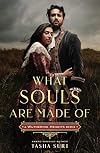
If an author - or a director - chooses to reinterpret rather than retell a classic, then emphasising the message of the original text to deliver a history lesson to new readers is the way to go. Not merely repackaging fan fiction in froth and fashion, while whitewashing complex characters.
Tasha Suri has rewritten Wuthering Heights for a teenage audience, giving Heathcliff and Catherine the voices and agency they lack in the original, while also doubling down on the question of Heathcliff's show more race - here, he is the son of a lascar (Indian sailor), while Cathy and Hindley also become the biracial and illegitimate children of East India Company 'nabob'. I thought at first this was overkill slightly, but making both Heathcliff and Catherine 'other' does actually work, and strengthens their soul bond.
Does the YA approach dilute the original story? Yes, of course. There is no ambiguity and neither Heathcliff or Catherine are permitted any nuance - he is still abused and cast out by Hindley and Cathy's impetuous words, but his three years away from Yorkshire - back in Liverpool - are the making of him, in more than just money and polish. He learns where he came from and becomes part of a found family typical of YA novels - 'I think of Annie's charm. Hetty, hard as iron, keeping folk together. Hal, light on his feet, hellish brave. Jamie, too softhearted, gathering people up.' Heathcliff vows to help others with his new-found wealth, and when he returns to the Heights, Cathy is there to meet him, having cast off Edgar and her Linton-esque finery: 'We're going to do good things, aren't we? We're going to help people?' As I say, a little bit pat - and flat - but probably more inspiring than the doom laden original, which few readers can cope with.
I loved the author's language, especially when describing 'otherness' and feeling like strangers at home (Tasha Suri is British Asian author from London) and the distinct voices for Heathcliff and Catherine (not always a given in YA fiction!) Mostly, I admire that she did something creative and impactful with her retelling, rather than just cashing in on Emily Bronte's legacy. show less
Tasha Suri has rewritten Wuthering Heights for a teenage audience, giving Heathcliff and Catherine the voices and agency they lack in the original, while also doubling down on the question of Heathcliff's show more race - here, he is the son of a lascar (Indian sailor), while Cathy and Hindley also become the biracial and illegitimate children of East India Company 'nabob'. I thought at first this was overkill slightly, but making both Heathcliff and Catherine 'other' does actually work, and strengthens their soul bond.
Does the YA approach dilute the original story? Yes, of course. There is no ambiguity and neither Heathcliff or Catherine are permitted any nuance - he is still abused and cast out by Hindley and Cathy's impetuous words, but his three years away from Yorkshire - back in Liverpool - are the making of him, in more than just money and polish. He learns where he came from and becomes part of a found family typical of YA novels - 'I think of Annie's charm. Hetty, hard as iron, keeping folk together. Hal, light on his feet, hellish brave. Jamie, too softhearted, gathering people up.' Heathcliff vows to help others with his new-found wealth, and when he returns to the Heights, Cathy is there to meet him, having cast off Edgar and her Linton-esque finery: 'We're going to do good things, aren't we? We're going to help people?' As I say, a little bit pat - and flat - but probably more inspiring than the doom laden original, which few readers can cope with.
I loved the author's language, especially when describing 'otherness' and feeling like strangers at home (Tasha Suri is British Asian author from London) and the distinct voices for Heathcliff and Catherine (not always a given in YA fiction!) Mostly, I admire that she did something creative and impactful with her retelling, rather than just cashing in on Emily Bronte's legacy. show less
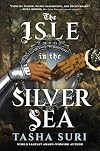
A magical version of England - the Isle in the Silver Sea - is founded on unchanging tales, which incarnates must carry out as written, again and again and again. But a "pale assassin" is killing incarnates, and parts of the Isle are disappearing. The Queen attempts to keep all incarnates under her control, and her royal archivists keep a tight hold on which tales are allowed in the archive and which are rejected; the librarians, by contrast, work to preserve all stories. The knight (Vina) show more and the witch (Simran) resist the Queen's power and attempt to change their tale, searching out the Eternal Prince and breaking his ink chains so he can return and unseat the Queen.
Simran and Vina, and compelling secondary characters Hari, Edmund, Galath, and Vaughan, stand for Elsewhere and inclusion and change, against a static, preserved, rigid history repeating over and over.
See also: The Everlasting by Alix Harrow; The Bright Sword by Lev Grossman
Quotes
To embody the tale is to keep it alive. (26)
They weren't going to make it. They had to try. (86)
"But we archivists value the tales above all else, and their survival....With us the Isle will be safe." (Meera to Simran, 116)
"I have no interest in ensorcelling you."
"And I have no interest in killing you....But that is the point, isn't it? What we want doesn't matter." (Simran and Vina, 139)
"The whole isle relies on stories....Saving stories means saving people." (148)
"All the stories and tales the archivists reject, all the ones that threaten the 'correct order' - we collect and save those. In some ways we're more an archive than the royal archives are." (Vaughan, 220)
If one part of their tale had changed, lifetime upon lifetime, what else could they alter? Could they survive? (240)
And the witch came to learn, over those many lives, that all incarnate tales were bound like her own. To free the Eternal Prince was to free them all, for he was an ancient tale... (280)
The tales moved. That was their nature. And in moving, they changed. (306)
The librarians weren't willing to risk harming tales. They collected tales. Protected them. They were so like the archivists in strange ways: the bright side of the coin to their tarnished one. (343)
"Change is not a force of goodness, knight. It is the death of history--" (the Queen, 440) show less
Simran and Vina, and compelling secondary characters Hari, Edmund, Galath, and Vaughan, stand for Elsewhere and inclusion and change, against a static, preserved, rigid history repeating over and over.
See also: The Everlasting by Alix Harrow; The Bright Sword by Lev Grossman
Quotes
To embody the tale is to keep it alive. (26)
They weren't going to make it. They had to try. (86)
"But we archivists value the tales above all else, and their survival....With us the Isle will be safe." (Meera to Simran, 116)
"I have no interest in ensorcelling you."
"And I have no interest in killing you....But that is the point, isn't it? What we want doesn't matter." (Simran and Vina, 139)
"The whole isle relies on stories....Saving stories means saving people." (148)
"All the stories and tales the archivists reject, all the ones that threaten the 'correct order' - we collect and save those. In some ways we're more an archive than the royal archives are." (Vaughan, 220)
If one part of their tale had changed, lifetime upon lifetime, what else could they alter? Could they survive? (240)
And the witch came to learn, over those many lives, that all incarnate tales were bound like her own. To free the Eternal Prince was to free them all, for he was an ancient tale... (280)
The tales moved. That was their nature. And in moving, they changed. (306)
The librarians weren't willing to risk harming tales. They collected tales. Protected them. They were so like the archivists in strange ways: the bright side of the coin to their tarnished one. (343)
"Change is not a force of goodness, knight. It is the death of history--" (the Queen, 440) show less
Lists
Sapph-Lit (2)
Awards


You May Also Like


Associated Authors
Statistics
- Works
- 11
- Also by
- 1
- Members
- 3,929
- Popularity
- #6,435
- Rating
- 4.0
- Reviews
- 99
- ISBNs
- 78
- Languages
- 6
- Favorited
- 5