
Faisal Devji
Author of Landscapes of the Jihad: Militancy, Morality, Modernity
About the Author
Faisal Devji is Assistant Professor of History at the New School University, New York.
Works by Faisal Devji
Tagged
Common Knowledge
- Birthdate
- 1964
- Gender
- male
- Education
- University of Chicago (Ph.D.)
University of British Columbia - Short biography
- Faisal Devji is a historian who specializes in studies of Islam, globalization, violence and ethics. He has been teaching teaching at the New School for Social Research in New York City, and has just been appointed to a post at Oxford University in the United Kingdom.
Now a Canadian citizen, Devji is Zanzibari, having been born in Dar es Salaam in 1964. His undergraduate education was at the University of British Columbia, where he received double honours in history and anthropology.
He received his PhD from the University of Chicago with a dissertation entitled “Muslim Nationalism: Founding Identity in Colonial India”, and was chosen to be a Junior Fellow at the Harvard Society of Fellows. He has taught at Yale University and also served as Head of Graduate Studies at the Institute of Ismaili Studies in London.
In 2005, Cornell University Press published his Landscapes of Jihad: Militancy, Morality, Modernity, a book which explored the ethical premises of jihad as opposed to its more widely-studied purported political ones. The book draws a distinction between the majority of Islamic fundamentalist organizations concerned with the establishing of states, and al-Qaida with its decentralized structure and emphasis on moral rather than political action. Devji's second book, The Terrorist in Search of Humanity: Militant Islam and Global Politics, was published by Columbia University Press in 2008. Devji is also a regular contributor to the scholarly journal Public Culture, and serves on its editorial committee.
http://www.amec.org.za/events/seminar...Faisal Devji is University Reader in Modern South Asian History. He has held faculty positions at the New School in New York, Yale University and the University of Chicago, from where he also received his PhD in Intellectual History. Devji was Junior Fellow at the Society of Fellows, Harvard University, and Head of Graduate Studies at the Institute of Ismaili Studies in London, from where he directed post-graduate courses in the Near East and Central Asia. He sits on the editorial board of the journal Public Culture.
Devji previous work includes Landscapes of the Jihad: Militancy, Morality, Modernity (2005), and The Terrorist in Search of Humanity: Militant Islam and Global Politics (2009), and is currently writing a book on the emergence of Muslim politics and the founding of Pakistan. Devji’s broader concerns are with ethics and violence in a globalized world has influenced his latest work, The Impossible Indian, about Mahatma Gandhi and his approach to civil disobedience.
http://southasianlitfest.com/speakers... - Nationality
- Tanzania (birth)
Canada - Birthplace
- Dar es Salaam, Tanzania
- Associated Place (for map)
- Dar es Salaam, Tanzania
Members
Reviews
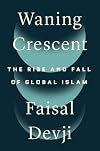
What does adding the term ‘global’ demand of a historian when writing about Islam? Does it require a survey of versions of Islam from different world regions, or the extraction of a distinct Islam forged by globalisation? Does it involve dealing with the historical experiences of actual Muslims, or can the historian instead examine Islam in the abstract?
Faisal Devji takes the last approach, focusing on what he sees as a global transformation in the way the term Islam was used in the show more colonial and postcolonial eras. More specifically, he focuses on what he sees as a semantic, philosophical, and ultimately political shift whereby the abstract noun Islam became ‘the proper name of an actor in its own right’. Devji clarifies that he does not mean that Islam came to be understood ‘as a person in some metaphorical sense, but rather as a structure or system that acts on the world in the way that civilizations in the 19th century and ideologies in the 20th were imagined to act’. In other words, Islam ‘came to be imagined as an actor on the world’s stage’. Here, as throughout the book, the key term is ‘imagined’, since Devji’s thesis revolves around what he claims was a new way in which modern Muslim and non-Muslim writers began to conceive the working of history by replacing human and divine forces with the imagined ‘agency’ of Islam as a historical actor. Pursuing this argument, he proposes that this new way of understanding history led even Muslim thinkers to displace God with ‘Islam’ as the grand force that shaped the destinies of individuals and empires alike.
Read the rest of the review at https://www.historytoday.com/archive/review/waning-crescent-faisal-devji-review
Nile Green holds the Ibn Khaldun Endowed Chair in World History at the University of California, Los Angeles. show less
Faisal Devji takes the last approach, focusing on what he sees as a global transformation in the way the term Islam was used in the show more colonial and postcolonial eras. More specifically, he focuses on what he sees as a semantic, philosophical, and ultimately political shift whereby the abstract noun Islam became ‘the proper name of an actor in its own right’. Devji clarifies that he does not mean that Islam came to be understood ‘as a person in some metaphorical sense, but rather as a structure or system that acts on the world in the way that civilizations in the 19th century and ideologies in the 20th were imagined to act’. In other words, Islam ‘came to be imagined as an actor on the world’s stage’. Here, as throughout the book, the key term is ‘imagined’, since Devji’s thesis revolves around what he claims was a new way in which modern Muslim and non-Muslim writers began to conceive the working of history by replacing human and divine forces with the imagined ‘agency’ of Islam as a historical actor. Pursuing this argument, he proposes that this new way of understanding history led even Muslim thinkers to displace God with ‘Islam’ as the grand force that shaped the destinies of individuals and empires alike.
Read the rest of the review at https://www.historytoday.com/archive/review/waning-crescent-faisal-devji-review
Nile Green holds the Ibn Khaldun Endowed Chair in World History at the University of California, Los Angeles. show less
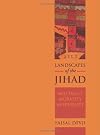
The militant Islam represented by Al Qaeda is often described as a global movement. Apart from the geographical range of its operations and support, little else is held to define it as 'global'. Its militants' international mobility and their technological sophistication are portrayed as the only signs of the jihadis' globalisation. Landscapes of the Jihad explores the features that Al Qaeda and other strands of militant Islam share in common with global movements such as environmentalists show more and anti-globalisation protesters. These include a decentralised organisation and an emphasis on ethical rather than properly political action. Devji brings these and other characteristics of Al Qaeda together in an analysis of the jihad that locates it squarely within the transformation of political thought after the Cold War. The jihad emerges from the breakdown of traditional as well as modern forms of authority in the Muslim world. It is neither dogmatic in an old-fashioned way nor ideological in the modern sense, and concerned neither with correct doctrinal practice in the present nor with some revolutionary utopia of the future. Instead it is fragmented, dispersed and highly individualistic. show less
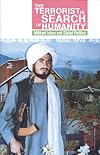
A global society has come into being, but possesses as yet no political institutions of its own. In his new book, Faisal Devji argues that new forms of militancy, like that of Al Qaeda, achieve meaning in this institutional vacuum, while representing in their various ways the search for a global politics. From environmentalism to pacifism and beyond, such a politics can only be one that takes humanity itself as its object, hence militant practices are informed by the same search that show more animates humanitarianism, which from human rights to humanitarian intervention has become the global aim and signature of all contemporary politics.This is the search for humanity as an agent and not simply the victim of history. To the militant, victimized Muslims represent not their religion so much as humanity itself, and terrorism the effort to turn this humanity into an historical actor - since it is after all the globe's only possible actor. For environmentalists and pacifists as much as for our holy warriors, a global humanity has in this way replaced the international proletariat as the "Sleeping Beauty" of history. show less
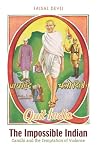
This book is about the Mahatma as a political thinker, one who recognised how the quotidian reality of modern life could be radicalised to produce the most extraordinary effects. In this sense he belongs with Lenin, Hitler and Mao as one of the great revolutionary figures of our times, though his politics was directed along paths other than state-building.
Focusing on his unsentimental engagement with the hard facts of imperial domination, fascism and civil war, The Impossible Indian places show more Gandhi at the centre of modern history, exploring the new political reality he claimed to have discovered. This was a politics the Mahatma mobilised in practices that required as much sacrifice, and even death, as those propagated by his revolutionary peers, if for very different reasons.
Faisal Devji’s book reveals Gandhi as the hard-hitting political thinker he was, someone willing to countenance violence to achieve his objectives, and challenges the idealistic portrayals of the Mahatma that prevail even today. show less
Focusing on his unsentimental engagement with the hard facts of imperial domination, fascism and civil war, The Impossible Indian places show more Gandhi at the centre of modern history, exploring the new political reality he claimed to have discovered. This was a politics the Mahatma mobilised in practices that required as much sacrifice, and even death, as those propagated by his revolutionary peers, if for very different reasons.
Faisal Devji’s book reveals Gandhi as the hard-hitting political thinker he was, someone willing to countenance violence to achieve his objectives, and challenges the idealistic portrayals of the Mahatma that prevail even today. show less
Lists
Awards
You May Also Like


Associated Authors
Statistics
- Works
- 8
- Members
- 186
- Popularity
- #116,757
- Rating
- 4.1
- Reviews
- 6
- ISBNs
- 29


