
Franklin Rosemont (1943–2009)
Author of Joe Hill: The IWW & the Making of a Revolutionary Working Class Counterculture
About the Author
Image credit: chicago.indymedia.org
Works by Franklin Rosemont
Joe Hill: The IWW & the Making of a Revolutionary Working Class Counterculture (2002) 87 copies, 1 review
Dancin' in the Streets!: Anarchists, IWWs, Surrealists, Situationists & Provos in the 1960s (2006) 58 copies
Black, Brown, & Beige: Surrealist Writings from Africa and the Diaspora (The Surrealist Revolution) (2009) 44 copies
The Forecast Is Hot! Tracts & Other Collective Declarations of The Surrealist Movement in U.S. 1966-1976 (1997) — Editor — 26 copies
Jacques Vaché and the Roots of Surrealism : including Vaché's War Letters & Other Writings (2008) 24 copies, 1 review
Marvelous Freedom: Vigilance of Desire (Catalog of the 1976 World Surrealist Exhibition) (1976) 5 copies
Penelope 2 copies
In Memory of Georg Lukacs 1 copy
Associated Works
Paschal Beverly Randolph: A Nineteenth-Century Black American Spiritualist, Rosicrucian, and Sex Magician (1996) — Introduction — 80 copies
From Bughouse Square to the Beat Generation : selected ravings (1997) — Editor — 29 copies, 2 reviews
Tagged
Common Knowledge
- Canonical name
- Rosemont, Franklin
- Birthdate
- 1943-10-02
- Date of death
- 2009-04-12
- Gender
- male
- Education
- Roosevelt University [Chicago, Illinois, USA]
- Occupations
- poet
publisher
historian - Organizations
- Industrial Workers of the World
Chicago Surrealist Group
Charles H. Kerr Publishing Co. - Relationships
- Rosemont, Penelope (wife)
- Nationality
- USA
- Birthplace
- Chicago, Illinois, USA
- Associated Place (for map)
- Illinois, USA
Members
Reviews
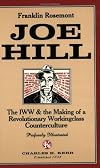
Be sure you have a strong stomach before you start this book.
Oh, I don't mean that it's full of graphic violence or something. It's just that it is completely incapable of acknowledging any view other than its own. And, for me at least, that's a feeling that makes me very queasy.
Let's be clear: I have a lot of respect for Joe Hill's intelligence and wit. I have a lot of sympathy for his political hopes, too. But I also know that, for instance, there was actual evidence against him in the show more court case that led to his execution. Enough to justify his fate? No. Enough that there should have been more investigation, preferably by someone more competent than the authorities in Utah? Clearly.
Similarly, I am well aware that the businesses that Hill wrote against were run by greedy, unscrupulous, self-righteous, self-centered people. But they were people. They too deserve their side.
Finally, I like organization, and I like documentation, and I like documentation that is not self-referential. This book contains a series of major sections, divided into minor sections -- the latter mostly very short, but highly repetitive -- and it has a bad tendency to cite "sources" from decades after Hill's execution. If you let me cite those sorts of "sources," I could prove that there were no labor troubles in Utah -- or that Hill was guilty as charged. In any case, only one of the major sections is about Hill's life and history.
For someone who agrees entirely with Joe Hill's viewpoint, the result may be interesting. For someone who is trying to learn what actually happened in Hill's life, it was simply too much to swallow. I read the historical part at the beginning. I tried to make it through the parts about his visual artworks. Eventually I just started skipping around, looking for something that was about Joe Hill, as opposed to Franklin Rosemont's exaggerated opinions on Joe Hill.
As with the large majority of works about Hill, this raises the (to me) very real question of why people are so opposed to trying to learn what is actually true, as opposed to what they find most comfortable. Personally, I'd rather know the truth even if it's uncomfortable. Yes, it's meant that I've had to change my political views, and quite a bit -- but it also means that my political views don't depend on ignoring facts.
OK, having listened to me be cranky, may you now all go out and read some more pleasant reviews. :-) Or, better yet, some more pleasant books! show less
Oh, I don't mean that it's full of graphic violence or something. It's just that it is completely incapable of acknowledging any view other than its own. And, for me at least, that's a feeling that makes me very queasy.
Let's be clear: I have a lot of respect for Joe Hill's intelligence and wit. I have a lot of sympathy for his political hopes, too. But I also know that, for instance, there was actual evidence against him in the show more court case that led to his execution. Enough to justify his fate? No. Enough that there should have been more investigation, preferably by someone more competent than the authorities in Utah? Clearly.
Similarly, I am well aware that the businesses that Hill wrote against were run by greedy, unscrupulous, self-righteous, self-centered people. But they were people. They too deserve their side.
Finally, I like organization, and I like documentation, and I like documentation that is not self-referential. This book contains a series of major sections, divided into minor sections -- the latter mostly very short, but highly repetitive -- and it has a bad tendency to cite "sources" from decades after Hill's execution. If you let me cite those sorts of "sources," I could prove that there were no labor troubles in Utah -- or that Hill was guilty as charged. In any case, only one of the major sections is about Hill's life and history.
For someone who agrees entirely with Joe Hill's viewpoint, the result may be interesting. For someone who is trying to learn what actually happened in Hill's life, it was simply too much to swallow. I read the historical part at the beginning. I tried to make it through the parts about his visual artworks. Eventually I just started skipping around, looking for something that was about Joe Hill, as opposed to Franklin Rosemont's exaggerated opinions on Joe Hill.
As with the large majority of works about Hill, this raises the (to me) very real question of why people are so opposed to trying to learn what is actually true, as opposed to what they find most comfortable. Personally, I'd rather know the truth even if it's uncomfortable. Yes, it's meant that I've had to change my political views, and quite a bit -- but it also means that my political views don't depend on ignoring facts.
OK, having listened to me be cranky, may you now all go out and read some more pleasant reviews. :-) Or, better yet, some more pleasant books! show less

Chicago surrealist Rosemont is not particularly coy about the fact that his book Wrong Numbers is an alchemical operation. The work transpires on several planes. On the most obvious, it is an effort to transform the base matter of accidental telephony into the gold of poetry. The book also contains a level of anecdotal autobiography comparable in some respects to Br. DuQuette’s My Life with the Spirits.
Yes, the book is actually about the “wrong numbers” of telephone misdialing. In show more addition to accounts of his personal experiences, the author sidles up to his topic from various angles: historical, cultural, psychological, and even magical. He champions the derided experience of the Wrong Number, not to rehabilitate it as an object, but rather to assail and transform the “miserablist” perspective of its detractors.
The text is complemented by a set of splendid drawings by Portuguese artist Artur do Cruzeiro Seixas, a surrealist comrade of Rosemont’s. The drawings too demonstrate an alchemical sensibility, in which beings and substances appear transformed, sublimated, and precipitated.
The heterogeneous details of the book, which manage to include multiple references to such disparate topics as Paschal Beverly Randolph, Bugs Bunny, and the IWW, should not obscure the fact that it does indeed express a single, magically puissant will to achieve “Freedom and the Marvelous, Now and Forever!”
Insightful, sincere, funny, and artful, this book would inherently resist being called “important,” yet it addresses the most fundamental dilemmas of our society. Read and enjoy. show less
Yes, the book is actually about the “wrong numbers” of telephone misdialing. In show more addition to accounts of his personal experiences, the author sidles up to his topic from various angles: historical, cultural, psychological, and even magical. He champions the derided experience of the Wrong Number, not to rehabilitate it as an object, but rather to assail and transform the “miserablist” perspective of its detractors.
The text is complemented by a set of splendid drawings by Portuguese artist Artur do Cruzeiro Seixas, a surrealist comrade of Rosemont’s. The drawings too demonstrate an alchemical sensibility, in which beings and substances appear transformed, sublimated, and precipitated.
The heterogeneous details of the book, which manage to include multiple references to such disparate topics as Paschal Beverly Randolph, Bugs Bunny, and the IWW, should not obscure the fact that it does indeed express a single, magically puissant will to achieve “Freedom and the Marvelous, Now and Forever!”
Insightful, sincere, funny, and artful, this book would inherently resist being called “important,” yet it addresses the most fundamental dilemmas of our society. Read and enjoy. show less
Jacques Vaché and the Roots of Surrealism: Including Vache's War Letters and other Writings by Franklin Rosemont
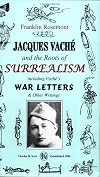
Surprisingly little is available on this incredibly influential figure of the early avant garde. As ambiguous in life as in his writings, this book is more of a theoritcal discourse on Umour than it is an actual biography (for the simple reason that not much biographical information exists for the short 23 years of his life). Very well written and researched, it is valuable no only for its direct content on the life and theory of Vache, but for the cultural perspective that unfolds show more throughout the telling of his tale. A minor caveat would be that there does exist a bit of a sectarian bias to some of the opinions put forth by the writer, being a member of the Chicago surrealist group himself. Nonetheless I greatly enjoyed it and have already ordered another of his books "Juice is stranger than fiction," on T Bone Slim, who I learned of in this book which as such also works as a great reference work for finding obscure figures and writers in the history of arts and letters. show less

A really enjoyable read, acerbic, well-read and readable, that sheds a lot of light on Late Marx and shows the direction of flow of Marx's philosophy. A must for anyone interested in the subject.
Lists
Awards

You May Also Like


Associated Authors
Statistics
- Works
- 32
- Also by
- 4
- Members
- 508
- Popularity
- #48,805
- Rating
- 4.3
- Reviews
- 6
- ISBNs
- 39
- Languages
- 2
- Favorited
- 1