
Penelope Rosemont
Author of Surrealist Women : An International Anthology
About the Author
Image credit: Penelope Rosemont
Works by Penelope Rosemont
The Forecast Is Hot! Tracts & Other Collective Declarations of The Surrealist Movement in U.S. 1966-1976 (1997) — Editor — 26 copies
Dreams and Everyday Life: André Breton, Surrealism, Rebel Worker, SDS and the Seven Cities of Cibola (2008) 13 copies
Lost Worlds, Forgotten Futures, Undreamed Ecstasies (Surrealist Research & Development Monograph) (2012) 4 copies
Surrealist Collage 2 copies
surrealist manifestos by women 2 copies
The Psychopathology of Work 1 copy
Associated Works
Tagged
Common Knowledge
- Canonical name
- Rosemont, Penelope
- Birthdate
- 1942
- Gender
- female
- Education
- Lake Forest College
- Occupations
- poet
editor
publisher
visual artist
activist - Organizations
- Charles H. Kerr & Company
Movement for a Democratic Society - Awards and honors
- Jackie Eubanks Memorial Award (2001)
- Relationships
- Rosemont, Franklin (spouse)
- Nationality
- USA
- Places of residence
- Chicago, Illinois, USA
- Associated Place (for map)
- Illinois, USA
Members
Reviews
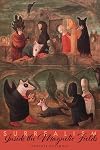
I read a book on "the making of an art historian", then read Peter McGough's memoirs of an artist in the 1980s, (he covered more years than that) and this popped up as a recommendation. I have an affinity to surrealism in the visual art form (more on non-visual below...), being partial to Magritte and Dali especially, so I requested a review copy of this, which was granted by the publisher through Edelweiss.
I guess I need to read more about surrealism because I had a hard time buying some of show more her narrative. Living with an artist, knowing many artists, even engaging with many artists over the past decade, politics is always present, but I've never thought it drove an entire genre. I may be wrong, but my inner primitive brain tells me no. I think Ms. Rosemont trafficked in anarchical circles and just happened to art at surrealism as well.
This was not what I expected, but given that I don't know what I expected, I guess I got what I asked for. As to my expectations, well, I did expect to see more about surrealism and, silly me for not reading the description, more about the earlier artists. A little more than the first half of essays is memoir of her and Franklin's adventures in their youth. She does address some of the modern surrealists in later chapters. I did take a lot of notes. Too many to share here. But I'll survey them for share value...
When Ms. Rosemont was young, in her twenties, and in 1960s Paris, she saw her first homeless. In a strikingly poignant turn of phrase, having wondered if the elderly couple laying on a subway grate - she learned later for warmth - was dead, she realized they were "[s]leeping an exhausted sleep on the winter streets, being murdered slowly." She observed
Recalling meeting with Guy Debord in Paris, she recalled telling Debord she and Franklin were attracted to Surrealism, to which Debord said "he too had been attracted to Surrealism, but found it difficult to be active in a group dominated by artists." So that was a WTH? moment for me. Debord was a founding member of Situationalist International, a group created, for among other reasons, to critique art, so he had that going for him.
I thought it odd that an editor hadn't corrected a mis-memory ... Ms. Rosemont said in one essay that Andre Breton died in August 1966 when he actually died in September (the end of September, in case there are folks quibbling more than me.)
When Ms. Rosemont eventually did talk about surrealist artists (that were her contemporaries), one she discussed was Toyen (nee Maria Cerminova) and Rosemont observes
Now, even more for that toolbox, surrealist poetry. Rosemont discusses her "Encounters" with Ted Joans and Jayne Cortez. Eye-opening, I observed "I think I would have a very hard time with this. Writing to me is an ordered experience and so called free verse poetry is, also to me, so much insanity. Surreal writings cannot likely be absorbed (by me), and that means a medium I won't understand. (I may not understand surreal paintings, but I can appreciate them nonetheless.)" Example of something from Joans:
Intended so or not, her essay titled "The Life and Times of the Golden Goose" (the fabled goose) waxed rather surreal with her multiple takes on interpretations and representation on popular culture. She says
On a book edited by Nancy Cunard, Negro: An Anthology, Rosemont says, "[a]lthough critics seem to have ignored the surrealist dimension of the book, ..." and attests that the book is "an anthology in which surrealist inspirations are evident from cover to cover." I wonder if Rosemont wasn't projecting here. A bit of research found little to support that perspective, but it was only a bit of research.
A "huh?" moment (of more than a few): "Chicago surrealists considered it necessary that a major focus of surrealist work should be poetry and with it, the restoration to language of the real power of our own thought."
So, bottom line at the traditional end instead of up front, I learned a few things, have two books to find (I like jumping off points...usually; I have too much to read and too little time to do it!) For those wanting an exploration of Surrealism, this isn't it. For those wanting an exploration of a subset of a part of the surrealist movement, this is it. show less
I guess I need to read more about surrealism because I had a hard time buying some of show more her narrative. Living with an artist, knowing many artists, even engaging with many artists over the past decade, politics is always present, but I've never thought it drove an entire genre. I may be wrong, but my inner primitive brain tells me no. I think Ms. Rosemont trafficked in anarchical circles and just happened to art at surrealism as well.
This was not what I expected, but given that I don't know what I expected, I guess I got what I asked for. As to my expectations, well, I did expect to see more about surrealism and, silly me for not reading the description, more about the earlier artists. A little more than the first half of essays is memoir of her and Franklin's adventures in their youth. She does address some of the modern surrealists in later chapters. I did take a lot of notes. Too many to share here. But I'll survey them for share value...
When Ms. Rosemont was young, in her twenties, and in 1960s Paris, she saw her first homeless. In a strikingly poignant turn of phrase, having wondered if the elderly couple laying on a subway grate - she learned later for warmth - was dead, she realized they were "[s]leeping an exhausted sleep on the winter streets, being murdered slowly." She observed
Never did I even consider that in a few years this tremendous shame would be found here in the U.S. too, with its vast riches. A society that forces people into homelessness violates the very premise upon which society is founded, mutual aid.I thought "Riches held by few. And the concept of 'mutual aid', ...by fewer."
Recalling meeting with Guy Debord in Paris, she recalled telling Debord she and Franklin were attracted to Surrealism, to which Debord said "he too had been attracted to Surrealism, but found it difficult to be active in a group dominated by artists." So that was a WTH? moment for me. Debord was a founding member of Situationalist International, a group created, for among other reasons, to critique art, so he had that going for him.
I thought it odd that an editor hadn't corrected a mis-memory ... Ms. Rosemont said in one essay that Andre Breton died in August 1966 when he actually died in September (the end of September, in case there are folks quibbling more than me.)
When Ms. Rosemont eventually did talk about surrealist artists (that were her contemporaries), one she discussed was Toyen (nee Maria Cerminova) and Rosemont observes
All of Toyen's works have a way of making us participate in them. The Sleeping Girl (1937) pictures a golden-haired Alice-in-Wonderland little girl in a white dress, carrying a butterfly net; her body and face are turned away from us as she looks on a blank horizon, the future. [...] The whole mood of the picture, however, is one of waiting: latent promise and expectation. Like us, the sleeping girl is still dreaming, and in dream as in life, anything can happen.(Emphasis mine) I value interpretations like that because I don't see the art that way. (By the way, apparently Toyen's favorite cartoon character is Bugs Bunny, so, instant bump in cred!) In another essay, Rosemont talks of Joseph Cornell and a 1936 piece titled "The Soap Bubble Set" (I had to look him and that up, and he has hundreds of similar object-boxes). Here is a somewhat lengthy example of that interpretation (understand that not much of the book has these):
In this particular box Cornell's work is remarkably analogous with the imagery of alchemy. Alchemy itself, to preserve its secrecy, used a cloak of analogy involving traditional symbols. Thus the Magnum Opus is often represented as the head of a child or, to follow its reflection on the other side of Cornell's box, the "egg of the philosophers," meaning either crucible or retort but also symbolizing the perfection of their work, the roundness of the universe, eternity. The egg has also been called the "stone which causes the moon to turn." In the Garden of Earthly Delights" by Hieronymus Bosch the egg is carried aloft in the parade about the Fountain of Life (its position is the exact center of the central panel). In Brueghel a broken or cracked egg represented corruptness, and the cracked and broken head the corruptness of the state. (All the king's horses and all the king's men couldn't put Humpty Dumpty together again.) The child's face is itself an egg: one finds there the beginning of an adult and hope for the transformation of the world.I did not see any of this. Even with this interpretation, I don't. My disconnect causes me to miss out. More for my mental toolbox.
The four containers suspended above the shelf can be seen to represent the four elements of the alchemists (fire, water, earth, air); the three mirrors on the floor of the box, the three alchemical realms (animal, vegetable, mineral) or perhaps the three planes of being (corporeal, subtle, spiritual). Alchemically, Lead is represented by Saturn, a winged horse (the volatile principle), and the ancient city perhaps becomes the ancient art.
The glass goblet is a recurring element in Cornell's boxes: one thinks of china cabinets and the mothers who cherished, polished and protected them. (But why should cups have stems? Are they imitating flowers?) ...
Now, even more for that toolbox, surrealist poetry. Rosemont discusses her "Encounters" with Ted Joans and Jayne Cortez. Eye-opening, I observed "I think I would have a very hard time with this. Writing to me is an ordered experience and so called free verse poetry is, also to me, so much insanity. Surreal writings cannot likely be absorbed (by me), and that means a medium I won't understand. (I may not understand surreal paintings, but I can appreciate them nonetheless.)" Example of something from Joans:
I benefit the magics. . .To which Rosemont concluded "I mistake no incomprehensibles." To which I concluded ""Invisible robot fish."
I poem my life to poetry. . .
I visit rubber orchestras. . .
Intended so or not, her essay titled "The Life and Times of the Golden Goose" (the fabled goose) waxed rather surreal with her multiple takes on interpretations and representation on popular culture. She says
What can this ancient and incredibly adaptable story, with its bewildering multiplicity of possible interpretations - psychoanalytic dream-tale, hermetic allegory, revolutionary parable - mean for us today?This I do not follow. But it doesn't matter if I do (unless not doing so is...interpreted ... as an indictment. Which would be a mistake.)
On a book edited by Nancy Cunard, Negro: An Anthology, Rosemont says, "[a]lthough critics seem to have ignored the surrealist dimension of the book, ..." and attests that the book is "an anthology in which surrealist inspirations are evident from cover to cover." I wonder if Rosemont wasn't projecting here. A bit of research found little to support that perspective, but it was only a bit of research.
A "huh?" moment (of more than a few): "Chicago surrealists considered it necessary that a major focus of surrealist work should be poetry and with it, the restoration to language of the real power of our own thought."
So, bottom line at the traditional end instead of up front, I learned a few things, have two books to find (I like jumping off points...usually; I have too much to read and too little time to do it!) For those wanting an exploration of Surrealism, this isn't it. For those wanting an exploration of a subset of a part of the surrealist movement, this is it. show less
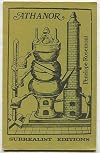
Even more strangely weird and disconnected than usual - CANDLE is a Favorite
while the drawings are Great!
Owl, Possum and Unicorn/Stag are evocative.
while the drawings are Great!
Owl, Possum and Unicorn/Stag are evocative.
Lists
You May Also Like


Associated Authors
Statistics
- Works
- 15
- Also by
- 3
- Members
- 266
- Popularity
- #86,735
- Rating
- 3.6
- Reviews
- 2
- ISBNs
- 22
- Favorited
- 1