
André Dhôtel (1900–1991)
Author of Faraway
About the Author
Works by André Dhôtel
Le plateau de Mazagran — Author — 3 copies
Rimbaud et la révolte moderne 2 copies
Le mont Damion 1 copy
Dolinom prolazi željeznica 1 copy
Viviane. In lumea larga 1 copy
David — Author — 1 copy
A Mais Linda Mão do Mundo 1 copy
LA MERVEILLEUSE BILLE DE VERRE — Author — 1 copy
Les lumières de la forêt. lecture suivie pour le cours moyen première année. commentaire pédagogique de georges vionnet. (1974) — Author — 1 copy
L'HOMME DE LA SCIERIE 1 copy
Tagged
Common Knowledge
- Canonical name
- Dhôtel, André
- Legal name
- Dhôtel, Emile André
- Birthdate
- 1900-09-01
- Date of death
- 1991-07-22
- Gender
- male
- Education
- Université de la Sorbonne (Licence, Philosophie)
- Organizations
- Lycée de Coulommiers (Professeur, 19 43 | 19 61)
Lycée de Valognes (Professeur, 19 38 | 19 43)
Lycée de Charolles ( Professeur, 19 35 | 19 38)
Lycée de Provins (Professeur, 19 30 | 19 35)
Collège de Béthune (Professeur, 19 28)
Institut supérieur d’études françaises d’Athènes, Grèce (Professeur, 19 24 | 19 28) (show all 7)
Société botanique de France (Membre, 19 62) - Awards and honors
- Prix Femina (1955)
Grand Prix de Littérature de l'Académie française (1974) - Relationships
- Paulhan, Jean (Ami)
- Nationality
- France
- Birthplace
- Attigny, Ardennes, Grand-Est, France
- Place of death
- 15e arrondissement, Paris, Île-de-France, France
- Burial location
- Cimetière communal de la Ville basse, Provins, Seine-et-Marne, Île-de-France, France
- Map Location
- France
- Associated Place (for map)
- France
Members
Reviews
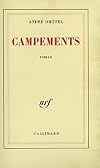
Campements. Gallimard, 1987. Should one fly the nest, go afar and fulfil dreams or will one remain just as fulfilled in the familiar surroundings of one's upbringing? What impediments might prevent attempts to flee? This beautiful story charts the life of Jacques and Jeanne and their children against a rural background that emphasises the remorseless flow of the seasons through a lifetime.
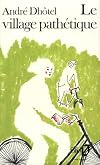
André Dhôtel, Le village pathetique, Gallmiard, 1974. This is the story of Odile and Julien, recently married, who cycle off towards divorce. Their presence in the village where they stay for a few days is dramatic, disrupting life and relationships there. Then there is the exquisitely described countryside - you feel you are there - a dream-like environment in which strange and unexpected things occur. Finally, there is the strength of love holding its own and reconciliation. Wonderful book.
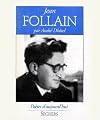
A great combination, the words by Andre Dhotel, the poetry by Jean Follain. This copy still has a library issue label in it - Bibliotheque Municipale, Melun, one return date 10. Sept 1994. Who was that reader?
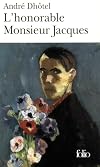
Andre Hotel, L'Honorable Monsieur Jacques,Gallimard (1972). More fantasy linked with reality. The mystery of Saumaie, its forests, its paths isolates Vivaine who heals by her mysterious touch. Scientist Jacques turns to drink but their love shines through in the end. Love among two people attracted to each other is permanent. In more detail: My copy of L’honorable Monsieur Jacques (Gallimard, 1972) by Andre Dhotel was once the property of the London Borough of Sutton Public Libraries, show more accession number 524486, accession date July 12th 1972. The issue stamps pasted one on top of each other were still inside the book. It had been borrowed at least 29 times between 1978 and 2006 according to the ‘to be returned' dates. How can its popularity be explained over such a long period? How many renewals were included in these date stamps? What did the readers think about the book?
I reread the book over a few days between May 17th and May 22nd 2018. The story concerns the love between Jacques Soudret, a pharmacist’s son who has ambitions for a career in medical research, and Viviane Aumousse who is from the mysterious Saumaie area where nothing is straightforward, where no straight answers are given, where individuals such as Rosalie, Viviane’s sister, have magical powers and where superstitions connected with the natural environment abound.
There are many strands to the story which takes place within a closely knit rural environment where villages are separated from each other but have their own identities and where everyone knows everyone else.
There are many themes:
- class and social standing, illustrated through Jacques, the budding pharmacist, and Viviane, who cannot shake off her origins;
- a mix of magic, primitive religious beliefs and powers of a mysterious natural environment;
- undying love between two people;
- individuals with special powers for evil and good, Rosalie inclined to evil, Viviane to good and endowed with powers of healing;
- conflict between right and wrong:
- a whodunnit theme as mysterious acts of violence are carried out by persons unknown but suspected.
At some times I felt I was reading a fairy story; at others I was eager to find out what was going to happen next, and overall I was aware of bigger themes and meanings emerging from the everyday yet unusual goings on within the confined rural community.
How can love between two people transcend everything? Can you ever fully understand your nearest and dearest - what secrets do they hold? Are there powers beyond us that determine all that we do? Do we have free will or not?
Sometimes I felt I was reading Die Judenbuche by Annette Droste-Hulshoff, especially when it came to a community such as Saumaie with its own rules, laws and ways of doing things. Or was it Thomas Hardy and his Wessex intervening: the mysterious pathways, forests and clearings of The Return of the Native, the strange figure of the reddleman, and Viviane’s special powers, through her hands, symbols of true love, just holding hands? show less
I reread the book over a few days between May 17th and May 22nd 2018. The story concerns the love between Jacques Soudret, a pharmacist’s son who has ambitions for a career in medical research, and Viviane Aumousse who is from the mysterious Saumaie area where nothing is straightforward, where no straight answers are given, where individuals such as Rosalie, Viviane’s sister, have magical powers and where superstitions connected with the natural environment abound.
There are many strands to the story which takes place within a closely knit rural environment where villages are separated from each other but have their own identities and where everyone knows everyone else.
There are many themes:
- class and social standing, illustrated through Jacques, the budding pharmacist, and Viviane, who cannot shake off her origins;
- a mix of magic, primitive religious beliefs and powers of a mysterious natural environment;
- undying love between two people;
- individuals with special powers for evil and good, Rosalie inclined to evil, Viviane to good and endowed with powers of healing;
- conflict between right and wrong:
- a whodunnit theme as mysterious acts of violence are carried out by persons unknown but suspected.
At some times I felt I was reading a fairy story; at others I was eager to find out what was going to happen next, and overall I was aware of bigger themes and meanings emerging from the everyday yet unusual goings on within the confined rural community.
How can love between two people transcend everything? Can you ever fully understand your nearest and dearest - what secrets do they hold? Are there powers beyond us that determine all that we do? Do we have free will or not?
Sometimes I felt I was reading Die Judenbuche by Annette Droste-Hulshoff, especially when it came to a community such as Saumaie with its own rules, laws and ways of doing things. Or was it Thomas Hardy and his Wessex intervening: the mysterious pathways, forests and clearings of The Return of the Native, the strange figure of the reddleman, and Viviane’s special powers, through her hands, symbols of true love, just holding hands? show less
Lists
Awards

You May Also Like


Associated Authors
Statistics
- Works
- 81
- Members
- 362
- Popularity
- #66,318
- Rating
- 3.6
- Reviews
- 13
- ISBNs
- 93
- Languages
- 4
- Favorited
- 2

