

Robin Hahnel
Author of The ABCs of Political Economy: A Modern Approach
About the Author
Robin Hahnel is Professor Emeritus of Economics at American University in Washington DC. He is author of books including Green Economics (2011) and Of the People, By the People (2012).
Works by Robin Hahnel
Associated Works
Tagged
Common Knowledge
Members
Reviews
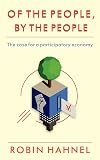
The left can suffer from utopian abstractions.
This book provides a practical framework for an alternative to both capitalism and central planned economies. It's refreshing to have a text focused on how instead of why - a text that provides a path to a possible future.
It covers how to fairly divide labor and resources. It argues for intimate direct democracy with a federation system that avoids a permanent political class. It deals with producers and consumers and has a specific carve out show more for the environment. There is a lot here to build on.
Still, it suffers from hand waving abstraction. There's an assumption that all the mid level logistics and community planning can be easily handled by untrained workers/consumers. There's an assumption that workers WANT responsibilities outside of their core expertise.
It shines internalizing effects that current economic systems ignore. However, it also feels like it has gaping holes with regard to health care, homelessness, national defense, insurance, art, entertainment etc. which are all entangled with current economic systems.
All together, this is a great starting point for thinking about alternatives to current economic systems. We need to try many such solutions as we move beyond the flaws of current systems. show less
This book provides a practical framework for an alternative to both capitalism and central planned economies. It's refreshing to have a text focused on how instead of why - a text that provides a path to a possible future.
It covers how to fairly divide labor and resources. It argues for intimate direct democracy with a federation system that avoids a permanent political class. It deals with producers and consumers and has a specific carve out show more for the environment. There is a lot here to build on.
Still, it suffers from hand waving abstraction. There's an assumption that all the mid level logistics and community planning can be easily handled by untrained workers/consumers. There's an assumption that workers WANT responsibilities outside of their core expertise.
It shines internalizing effects that current economic systems ignore. However, it also feels like it has gaping holes with regard to health care, homelessness, national defense, insurance, art, entertainment etc. which are all entangled with current economic systems.
All together, this is a great starting point for thinking about alternatives to current economic systems. We need to try many such solutions as we move beyond the flaws of current systems. show less
Economics are purposefully overcomplicated, which is one of the reasons why a few people make decisions for everyone. Even though the goal of this book is to present a way in which everyone has a say in how their lives are run, it's super complicated. I consider myself smarter than average and I didn't follow most of it and had to fight to stay awake for a lot of it. The complicated formulas that determine how much a workplace can produce or how much a family can consume will only be show more understand by a small amount of people. So, maybe the type of people make the decisions will change but I don't think the amount really will.
I have other issues with the plan, but in the end it doesn't matter. Call me a nihilist, but there are too many idiotic, hateful goons out there for this to even become a reality on a large scale show less
I have other issues with the plan, but in the end it doesn't matter. Call me a nihilist, but there are too many idiotic, hateful goons out there for this to even become a reality on a large scale show less
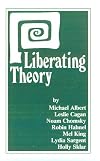
So you want to be a radical … but you're not sure what to believe in. Marxism seems discredited, you don't quite trust anarchists and the "smash the state" rhetoric and although patriarchy and white-supremacy are certainly real parts of the problem, they are not the only problem.
Well, the folks over at Z (Z Magazine) have a solution. It's not really anything new, but rather a reworking and meshing of many older theories. The authors argue that the serious flaw of many of the old radical show more left visions was their "monism." Marxism claimed the economy as the central social field and all else as "superstructure." The practical effect was that Marxists ignored the problems of women and people of color beyond the economy. Anarchists and radical feminists had analogous problems.
Liberating theory suggests that their are four, equally important, sphere's of society: economic, political, kinship and cultural. The authors argue that the institutions of these four spheres are interconnected and (most often) mutually reinforcing. Therefore struggle for revolution can not occur in one, ignoring the rest.
The debates in this book seem to me a bit old. Opposition to patriarchy and racism have permeated most of the left and there has been a recent resurgence of class and political issues with the stirrings of organized labor, Seattle, D.C. and the new third parties. So it seems to me many people now see the value of working on multiple fronts and inclusiveness.
However, these movements are also largely bereft of long term vision. This book, despite its dated quality, could provide a good foundation for such a vision. show less
Well, the folks over at Z (Z Magazine) have a solution. It's not really anything new, but rather a reworking and meshing of many older theories. The authors argue that the serious flaw of many of the old radical show more left visions was their "monism." Marxism claimed the economy as the central social field and all else as "superstructure." The practical effect was that Marxists ignored the problems of women and people of color beyond the economy. Anarchists and radical feminists had analogous problems.
Liberating theory suggests that their are four, equally important, sphere's of society: economic, political, kinship and cultural. The authors argue that the institutions of these four spheres are interconnected and (most often) mutually reinforcing. Therefore struggle for revolution can not occur in one, ignoring the rest.
The debates in this book seem to me a bit old. Opposition to patriarchy and racism have permeated most of the left and there has been a recent resurgence of class and political issues with the stirrings of organized labor, Seattle, D.C. and the new third parties. So it seems to me many people now see the value of working on multiple fronts and inclusiveness.
However, these movements are also largely bereft of long term vision. This book, despite its dated quality, could provide a good foundation for such a vision. show less
In this RSA Animate, renowned academic David Harvey asks if it is time to look beyond capitalism towards a new social order that would allow us to live within a system that really could be responsible, just, and humane?
http://www.youtube.com/watch?v=qOP2V_np2c0
A Watson Institute video on the global trend toward Austerity budgets featuring Mark Blyth:
http://www.youtube.com/watch?v=FmsjGys-VqA
Inequality, Leverage and Crises:
http://www.imf.org/external/pubs/ft/wp/2010/wp10268.pdf
The Egyptian show more Tinderbox: How Banks and Investors Are Starving the Third World:
http://www.truth-out.org/the-egyptian-tinderbox-how-banks-and-investors-are-star...
This animate was adapted from a talk given at the RSA by Sir Ken Robinson, world-renowned education and creativity expert and recipient of the RSA's Benjamin Franklin award.
http://www.youtube.com/watch?v=zDZFcDGpL4U show less
http://www.youtube.com/watch?v=qOP2V_np2c0
A Watson Institute video on the global trend toward Austerity budgets featuring Mark Blyth:
http://www.youtube.com/watch?v=FmsjGys-VqA
Inequality, Leverage and Crises:
http://www.imf.org/external/pubs/ft/wp/2010/wp10268.pdf
The Egyptian show more Tinderbox: How Banks and Investors Are Starving the Third World:
http://www.truth-out.org/the-egyptian-tinderbox-how-banks-and-investors-are-star...
This animate was adapted from a talk given at the RSA by Sir Ken Robinson, world-renowned education and creativity expert and recipient of the RSA's Benjamin Franklin award.
http://www.youtube.com/watch?v=zDZFcDGpL4U show less
Feb 10, 2011German
Lists
You May Also Like


Associated Authors
Statistics
- Works
- 18
- Also by
- 4
- Members
- 525
- Popularity
- #47,376
- Rating
- 3.8
- Reviews
- 4
- ISBNs
- 63
- Languages
- 3
- Favorited
- 1