

Norman F. Dixon (1922–2013)
Author of On the Psychology of Military Incompetence
About the Author
Disambiguation Notice:
Norman F Dixon is not the same person as the Norman Dixon who compiled the Puffin quiz books, and they should not be combined. The Norman F. Dixon included here should remain.
Works by Norman F. Dixon
Tagged
Common Knowledge
- Canonical name
- Dixon, Norman F.
- Legal name
- Dixon, Norman Frank
- Birthdate
- 1922
- Date of death
- 2013
- Gender
- male
- Occupations
- psychologist
professor - Organizations
- University College London
British Army (Corps of Royal Engineers|lieutenant) - Awards and honors
- MBE (Member of the Most Excellent Order of the British Empire)
- Nationality
- UK
- Disambiguation notice
- Norman F Dixon is not the same person as the Norman Dixon who compiled the Puffin quiz books, and they should not be combined. The Norman F. Dixon included here should remain.
- Associated Place (for map)
- UK
Members
Reviews
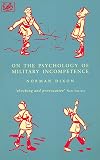
Dixon is an engaging and entertaining curmudgeon, who takes a psychological stab at explaining military incompetence. With several years as a bomb defusal specialist in the Royal Engineers before becoming a psychiatrist, Dixon is well suited to write such a study of generalship. Taking the British-centrism and psychoanalytic perspective as features rather than bugs, this is an interesting attempt to explain and improve the serious failures of military incompetence; starting from lost battles show more and heavy casualties up to the possibility of a nuclear war in error.
The first part of the book is a chronicle of British military incompetence from Crimea to Operation Market Garden, amply demonstrating several key operational qualities of military incompetence: wastage of life, clinging to tradition, rejection of contrary information, underestimation of the enemy, indecisiveness combined with obstinate persistence in a failing task, failure to exploit opportunities, failure to use reconnaissance and intelligence, predilection for frontal assaults, belief in brute force over deception, scapegoating, suppression of news from the front, and a belief in mystical forces.
The second part goes into the theory of why incompetence generals exhibit these traits. Dixon offers three nested psychological explanations. The first is cognitive dissonance; believing themselves to be great captains of a great army, incompetent officers deny any facts to the contrary, leading their forces into disaster. Second, high levels of cognitive dissonance are associated with the authoritarian personality (see Adorno 1950), along with a love of pomp and pointless order that Dixon classifies as 'military bull'. Third, these are of course the daily life traits of the anal-dystonic ego, and their inability to cope with a messy and chaotic world or the emotional damage of toilet training. I believe that psychoanalyzing from history is a methodological mistake (moreso than standard psychoanalysis), and Dixon uses this argument to gore his personal enemies rather than advance a case. However the cognitive dissonance and authoritarian personality parts seem spot on.
The implicit solutions, stop promoting authoritarian assholes, reduce tradition and increase flexibility in military culture, are the weakest parts of the book. The best way to fight and survive is a poorly understood subject, and Dixon's psychological weakness might have some survival value on a daily basis, even as they lead to systemic disaster. A fun book, but one with some strange oddities. show less
The first part of the book is a chronicle of British military incompetence from Crimea to Operation Market Garden, amply demonstrating several key operational qualities of military incompetence: wastage of life, clinging to tradition, rejection of contrary information, underestimation of the enemy, indecisiveness combined with obstinate persistence in a failing task, failure to exploit opportunities, failure to use reconnaissance and intelligence, predilection for frontal assaults, belief in brute force over deception, scapegoating, suppression of news from the front, and a belief in mystical forces.
The second part goes into the theory of why incompetence generals exhibit these traits. Dixon offers three nested psychological explanations. The first is cognitive dissonance; believing themselves to be great captains of a great army, incompetent officers deny any facts to the contrary, leading their forces into disaster. Second, high levels of cognitive dissonance are associated with the authoritarian personality (see Adorno 1950), along with a love of pomp and pointless order that Dixon classifies as 'military bull'. Third, these are of course the daily life traits of the anal-dystonic ego, and their inability to cope with a messy and chaotic world or the emotional damage of toilet training. I believe that psychoanalyzing from history is a methodological mistake (moreso than standard psychoanalysis), and Dixon uses this argument to gore his personal enemies rather than advance a case. However the cognitive dissonance and authoritarian personality parts seem spot on.
The implicit solutions, stop promoting authoritarian assholes, reduce tradition and increase flexibility in military culture, are the weakest parts of the book. The best way to fight and survive is a poorly understood subject, and Dixon's psychological weakness might have some survival value on a daily basis, even as they lead to systemic disaster. A fun book, but one with some strange oddities. show less
A very articulate commentary on military incompetence, something I've seen first hand. This book is spot on.
Fascinating brief analyses of the personalities who were responsible for the worst military disasters in history. Just a little bit dated, in the Freudian part (1976 edition in paperback).
This text surveys 100 years of military inefficiency from the Crimean War, through the Boer conflict, to the disastrous campaigns of the First World War and the calamities of the Second. It examines the social psychology of military organizations, provides case studies of individual commanders and indentifies an alarming pattern in the causes of military disaster.
You May Also Like


Associated Authors
Statistics
- Works
- 4
- Members
- 445
- Popularity
- #55,081
- Rating
- 3.9
- Reviews
- 4
- ISBNs
- 15
- Languages
- 4