
William Slim (1891–1970)
Author of Defeat into Victory: Battling Japan in Burma and India, 1942–1945
About the Author
Field-Marshal Viscount William Joseph Slim (1891-1970) was a soldier for more than thirty years, starting in World War I. He was knighted in 1944, promoted to full general in 1945, and made a field-marshal in 1948.
Works by William Slim
Associated Works
Tagged
Common Knowledge
- Legal name
- Slim, William Joseph
- Other names
- Uncle Bill
- Birthdate
- 1891-07-06
- Date of death
- 1970-12-14
- Gender
- male
- Education
- St Philip's School, Birmingham, England, UK
King Edward's School, Birmingham, England, UK
Birmingham University Officers' Training Corps
Indian Staff College, Quetta, India - Occupations
- army officer
Governor-general, Australia (1953-1960)
Constable and Governor of Windsor Castle
Chief of the Imperial General Staff (1949-1952) - Organizations
- British Army
Indian Army
Australian Government - Awards and honors
- Order of the Garter (Knight Companion, 1959)
Order of the Bath (Knight Grand Cross, 1950)
Order of St Michael and St George (Knight Grand Cross, 1952)
Royal Victorian Order (Knight Grand Cross, 1954)
Order of the British Empire (Knight Grand Cross, 1946)
Distinguished Service Order (1943) (show all 9)
Military Cross (1918)
Order of St John of Jerusalem (Knight of Justice, 1953)
Peerage - Short biography
- http://en.wikipedia.org/wiki/William_...
- Nationality
- UK (birth)
- Birthplace
- Bishopston, England, UK
- Places of residence
- Birmingham, England, UK
- Place of death
- London, England, UK
- Associated Place (for map)
- England, UK
Members
Reviews
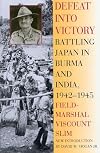
I've read a fair number of general's memoirs, and Slim's is one of the most humanistic and readable. Transferred to Burma in 1942, Slim arrived to an army in administrative disarray and an overwhelming Japanese assault that turned into a near-rout. Through perseverance and energy, Slim managed to hold the line in India, rebuild his army, learn how to fight the Japanese, and then counter-attack. Few other Allied generals of the war experienced such immense swings in fortune.
The best parts of show more the book are how incredibly British Slim is, and a glimpse into the polyglot, colonial army of the British Empire, with Brits, Indians of hundreds of tribes and castes, and Africans all fighting alongside Americans, Chinese, and miscellaneous members of the commonwealth. Next are the observations on command, organizational spirit and morale, and the management of an army at the end of the most shoe-string logistics system an army has ever had to operate with.
Slim has few kind words for the Japanese (at one point he describes them as "the finest military insect on the planet"), but he admires the tenacity of their ordinary soldier, while critiquing the blind aggressiveness of their commanders, and the brutality inflicted on prisoners and the Burmese population. This is only fair; the Imperial Japanese Army were some of the worst war criminals this planet has ever seen, and Slim's thoughts about their command structure and penchant for atrocities are only too true. If casually genteel racism of the mid-20th century sort is a deal-breaker, this is not the book for you.
As with most books of this type, the worst part are the battles, and endless lists of divisions and corps attacking various towns. To be honest, I could never keep track of the battle, although some of the maps later in the book proved quite helpful. Part of me wished for a little bit more context on Slim's life, and his role in the Indian Army in the interwar years, but he wasn't the type to talk about himself like that.
In closing, a fascinating look at a forgotten theater of war, and a humble memoir from an able soldier. show less
The best parts of show more the book are how incredibly British Slim is, and a glimpse into the polyglot, colonial army of the British Empire, with Brits, Indians of hundreds of tribes and castes, and Africans all fighting alongside Americans, Chinese, and miscellaneous members of the commonwealth. Next are the observations on command, organizational spirit and morale, and the management of an army at the end of the most shoe-string logistics system an army has ever had to operate with.
Slim has few kind words for the Japanese (at one point he describes them as "the finest military insect on the planet"), but he admires the tenacity of their ordinary soldier, while critiquing the blind aggressiveness of their commanders, and the brutality inflicted on prisoners and the Burmese population. This is only fair; the Imperial Japanese Army were some of the worst war criminals this planet has ever seen, and Slim's thoughts about their command structure and penchant for atrocities are only too true. If casually genteel racism of the mid-20th century sort is a deal-breaker, this is not the book for you.
As with most books of this type, the worst part are the battles, and endless lists of divisions and corps attacking various towns. To be honest, I could never keep track of the battle, although some of the maps later in the book proved quite helpful. Part of me wished for a little bit more context on Slim's life, and his role in the Indian Army in the interwar years, but he wasn't the type to talk about himself like that.
In closing, a fascinating look at a forgotten theater of war, and a humble memoir from an able soldier. show less
A friend sent me a copy of Field Marshal Bill Slim’s Defeat Into Victory. It has always been on my list of books I’d like to read, but somehow I’d never quite got round to acquiring a copy. The version I have is a reading copy of the original edition, with fold out maps all through it.
The reading style is very engaging and easy to read, especially if you have the space to fold out the map at the end of the chapter so that you can follow all the places when they appear in the narrative. show more It was the first time I’d read about the ebb and flow of the war in Burma (even though my grandfather drove a DUKW out there). So I found it very
interesting, the nature of warfare was hugely different that both Europe and North Africa (and I suspect even the Pacific Islands). In some respects the war fought in Burma was more like recent modern wars with low troop densities, long logistics tails and a massive reliance on air power.
The other engaging bit about the book was that Slim shows you the development of the army from a road bound Western linear fighting force into an all arms, all round defence, jungle fighting machine. In the beginning the British Army is out of its depth and way beyond the ken of its commanders or troops. The Japanese have infiltration tactics that the British just can’t cope with, and are so stubborn in defence that they cannot be shifted when they gain a hold. The British just dissolve and retreat rapidly out of the way (mostly).
It isn’t just a story of the British Army, as well as colonial forces (Indians and Africans mostly) there is also the alliance warfare aspect of the war. He liaises with Vinegar Joe Stillwell and the Chinese Army too.
Later, the British manage to shorten their lines of communication, build defences and work out how to deal with the Japanese. Once they do, then the tables turn, although it takes much stubborn fighting to shift the enemy. There is a good narrative that explains the constraints the 14th Army was operating under, the logistics challenges and how these were overcome and also the details of the operations. Occasionally there are little personal vignettes of visits to the front, or reports of battles.
One of the things I noted was the commentary on how few prisoners were taken, mostly it was a grim fight to the death by both sides. A typical note on a Japanese attack was that there was one prisoner taken and 600 Japanese bodies recovered from the 14th Army positions.
However, great as all this is, the last section of the book is the best. In the last chapter Slim gives his opinions on why things turned out the way that they did and also on what he draws as lessons for the future. Given that this was written in 1957 he has a lot to say that I think was quite prescient about current operations (and it might also have been right for the post-nuclear exchange as well, but thankfully we’ve avoided that).
The thing I do wonder, is why are all our operational games about the European war? The furthest East we manage is the Russian front, when there is whole load of interesting stuff going on out in the Far East. I suspect I may well return to this when I have some time to sort out another game design. show less
The reading style is very engaging and easy to read, especially if you have the space to fold out the map at the end of the chapter so that you can follow all the places when they appear in the narrative. show more It was the first time I’d read about the ebb and flow of the war in Burma (even though my grandfather drove a DUKW out there). So I found it very
interesting, the nature of warfare was hugely different that both Europe and North Africa (and I suspect even the Pacific Islands). In some respects the war fought in Burma was more like recent modern wars with low troop densities, long logistics tails and a massive reliance on air power.
The other engaging bit about the book was that Slim shows you the development of the army from a road bound Western linear fighting force into an all arms, all round defence, jungle fighting machine. In the beginning the British Army is out of its depth and way beyond the ken of its commanders or troops. The Japanese have infiltration tactics that the British just can’t cope with, and are so stubborn in defence that they cannot be shifted when they gain a hold. The British just dissolve and retreat rapidly out of the way (mostly).
It isn’t just a story of the British Army, as well as colonial forces (Indians and Africans mostly) there is also the alliance warfare aspect of the war. He liaises with Vinegar Joe Stillwell and the Chinese Army too.
Later, the British manage to shorten their lines of communication, build defences and work out how to deal with the Japanese. Once they do, then the tables turn, although it takes much stubborn fighting to shift the enemy. There is a good narrative that explains the constraints the 14th Army was operating under, the logistics challenges and how these were overcome and also the details of the operations. Occasionally there are little personal vignettes of visits to the front, or reports of battles.
One of the things I noted was the commentary on how few prisoners were taken, mostly it was a grim fight to the death by both sides. A typical note on a Japanese attack was that there was one prisoner taken and 600 Japanese bodies recovered from the 14th Army positions.
However, great as all this is, the last section of the book is the best. In the last chapter Slim gives his opinions on why things turned out the way that they did and also on what he draws as lessons for the future. Given that this was written in 1957 he has a lot to say that I think was quite prescient about current operations (and it might also have been right for the post-nuclear exchange as well, but thankfully we’ve avoided that).
The thing I do wonder, is why are all our operational games about the European war? The furthest East we manage is the Russian front, when there is whole load of interesting stuff going on out in the Far East. I suspect I may well return to this when I have some time to sort out another game design. show less
Not only the best memoir from a British commander of WWII, but also one of the best leadership books. Slim's self awareness is apprent on every page; he makes no attempt to hide his errors and refuses to take more than his share of credit. This is not false modesty, his actions and the effect they had on the 14th Army speak for themselves: he always put his men first and it is they that he credits with forging victory.
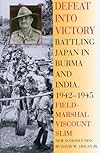
The account of Field Marshal Bill Slim's 14th army's retreat from and then defeat of the Japanese in Burma in WWII. It is an interesting story overall, but this is a General's point of view, and most of the book discusses logistics, political problems, and strategic goals. It is quite dry and relatively anecdote poor. The author has the racist views of the Japanese that were common at the time among the allied forces. He also discusses the behavioral traits of the various ethnic groups under show more his command including, Indians, Gorkhas, Chinese, Sikhs, British, and Burmans, especially in a vignette describing an incident where he came under fire while among enlisted men and imagined how they would each react to his being wounded. There is a sad comment that I had never heard, about how General MacArthur, in an action typical of his narcissism, refused to let the Brits move to save their prisoners of war until after he had ceremoniously accepted the Japanese surrender in Japan. The several day postponement almost certainly led to the death of some prisoners. I would recommend this to you if you have a special interest in this particular story or theatre of war, but not otherwise. show less
Lists
You May Also Like


Associated Authors
Statistics
- Works
- 8
- Also by
- 1
- Members
- 533
- Popularity
- #46,707
- Rating
- 4.3
- Reviews
- 17
- ISBNs
- 18
- Languages
- 1