
Jamil Ahmad (1932–2014)
Author of The Wandering Falcon
About the Author
Jamil Ahmad was born in Pakistan in 1932. He joined the civil service in 1954 and later became commissioner of Swat and commissioner of Waziristan. He only book, The Wandering Falcon, which was published while he was in his 80s, was a collection of short stories about life in the border region of show more Pakistan, Afghanistan, and Iran. It was shortlisted for the Man Asian Literary Prize in 2011 and was also a finalist for the DSC Prize for South Asian Literature. He died after a long illness in July 2014 at the age of 83. (Bowker Author Biography) show less
Image credit: via Penguin Random House
Works by Jamil Ahmad
Seratus Muslim Terkemuka 1 copy
Göçebe 1 copy
Associated Works
Tagged
Common Knowledge
- Birthdate
- 1932-09-01
- Date of death
- 2014-07-12
- Gender
- male
- Occupations
- civil servant
- Nationality
- Pakistan
- Birthplace
- Punjab, India
- Places of residence
- Islamabad, Pakistan
- Associated Place (for map)
- Pakistan
Members
Reviews
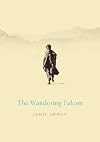
The Wandering Falcon is the debut novel from eighty-year old Jamil Ahmad. The book is actually more like nine loosely connected short stories than a novel. The title character, Tor Baz, appears in most every story – briefly in some and as the main focus in others. Tor Baz was born to an adulterous couple who are caught and killed when he is five years old. From that point on, he wanders from tribe to tribe, never identifying with one specific tribe. Because tribal culture is so important show more in this region, Tor Baz is both a suspicious and mysterious man to everyone he meets.
Each story explores some aspect of the tribal culture in the Afghan/Pakistani region in the period shortly after World War II, of which I had little knowledge before reading this book. I really appreciated learning more about the culture even if I could not always fully understand it. Ahmad writes without judgment which made the stories even more fascinating to me. Ahmad’s prose is stark but even so I found his characters, especially the women, haunting. The ending gave me chills (in a good way).
The story behind how this book came to be published is just as interesting as the book itself. Ahmad worked for many decades as a civil servant in Pakistan. He wrote the first draft of The Wandering Falcon in the 1970s and put it away. In 2008, his brother convinced him to enter it in a writing competition. Eventually it made its way into the hands of an editor at Penguin and the rest is history. Now The Wandering Falcon is long-listed for the 2011 Man Asian Literary Prize. I hope that Jamil Ahmad keeps writing – I would love to read more from him. show less
Each story explores some aspect of the tribal culture in the Afghan/Pakistani region in the period shortly after World War II, of which I had little knowledge before reading this book. I really appreciated learning more about the culture even if I could not always fully understand it. Ahmad writes without judgment which made the stories even more fascinating to me. Ahmad’s prose is stark but even so I found his characters, especially the women, haunting. The ending gave me chills (in a good way).
The story behind how this book came to be published is just as interesting as the book itself. Ahmad worked for many decades as a civil servant in Pakistan. He wrote the first draft of The Wandering Falcon in the 1970s and put it away. In 2008, his brother convinced him to enter it in a writing competition. Eventually it made its way into the hands of an editor at Penguin and the rest is history. Now The Wandering Falcon is long-listed for the 2011 Man Asian Literary Prize. I hope that Jamil Ahmad keeps writing – I would love to read more from him. show less
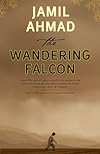
A gem. It reminded me of Paul Bowles short story writing. The narrative is coming from a position rarely experienced, that of the true conviction of storytelling, its mystery, poetry and at the same time down to earth matter-of-factness. A landscape, culture and history brought to life very evocatively.
This is a really fascinating collection of short stories, written by a man—Jamil Ahmad—who has spent several decades working in the remote tribal regions of northern Pakistan and the Afghan border. Each story stands alone, though all are united by the character of Tor Baz (the 'Wandering Falcon' of the title), who spends his life wandering from place to place, belonging to no tribe because of his parents' doomed love affair. Ahmad uses the travels and experiences of Tor Baz to explore show more the ways of life of the various peoples who inhabited this region in roughly the 1950s/60s. Some of the stories fall flat, and the prose is more serviceable and plain-spoken than evocative, but I still found these tales a wonderful and humanising insight into daily life in this area. show less
 This review was written for LibraryThing Early Reviewers.
The remote corner of the world where Iran, Pakistan, and Afghanistan meet has played a role in world affairs since the time of the British Empire, and yet it remains a mysterious place, a land of tribal loyalties and customs that are seemingly contradictory, aggressive, and disloyal. Current news reports struggle to give motivations to the tribal leaders whose actions sometimes help and sometimes hinder the Taliban and terrorists. In The Wandering Falcon, Jamil Ahmad gives us a window into show more this inaccessible land and its complicated history, tribal relationships, and belief systems.
Ahmad knows this region well, having worked and lived in the area for decades. He attempts to distill his impressions in a series of vignettes, each depicting a particular tribe and/or social issue. Connecting the stories is a character known as Tor Baz, who is orphaned in the first chapter and moves amongst the tribes throughout the book. He is not, as I first thought, the protagonist of the novel. Rather he, as the perpetual outsider, is the means through which we are allowed access to the tribes.
The role of the chief, or Sardar, is explored in several stories: how they are chosen, the relationship they have with their tribesmen, and the various ways in which the Pakistani government has tried, over the years, to work with or abolish them. At times there is a disconnect between the government and the tribes, at other times there is an almost ritualized arrangement of actions and counteractions that are expected and performed as a means of maintaining the status quo. For some tribes, simply the existence of a nation state is enough to end their nomadic way of life forever. But most heart-wrenching of all is the treatment of women. From the first story to the last, the majority of women suffer. Simple survival is hard, requiring enormous effort in order to sustain a family, often while their husbands are away for years at a time. And harder still is the subjugation of women to the word of their fathers and husbands. Daughters can be sold for a pound of opium, unattached women are prey for slavers, and adultery, under any circumstances, is unforgivable. Yet there is also love and sacrifice, making even the treatment of women in the tribes a contradictory story.
A first-time novelist at the age of eighty, Jamil Ahmad has been trying to get this book published for years. Finally, its time has come, and how fortunate for us. His writing is clean and direct, and his characters seem to me to be the archetypes of people he may have actually known. He has the experience to write authentic fiction, and the distance needed to avoid prejudice. Without preaching or falling back on tired Western assumptions, Ahmad lets us see the complexity of the geopolitical area and its tribal relationships. I sincerely hope that Mr. Ahmad continues to write and be published, and that his present book achieves the readership it deserves. show less
Ahmad knows this region well, having worked and lived in the area for decades. He attempts to distill his impressions in a series of vignettes, each depicting a particular tribe and/or social issue. Connecting the stories is a character known as Tor Baz, who is orphaned in the first chapter and moves amongst the tribes throughout the book. He is not, as I first thought, the protagonist of the novel. Rather he, as the perpetual outsider, is the means through which we are allowed access to the tribes.
The role of the chief, or Sardar, is explored in several stories: how they are chosen, the relationship they have with their tribesmen, and the various ways in which the Pakistani government has tried, over the years, to work with or abolish them. At times there is a disconnect between the government and the tribes, at other times there is an almost ritualized arrangement of actions and counteractions that are expected and performed as a means of maintaining the status quo. For some tribes, simply the existence of a nation state is enough to end their nomadic way of life forever. But most heart-wrenching of all is the treatment of women. From the first story to the last, the majority of women suffer. Simple survival is hard, requiring enormous effort in order to sustain a family, often while their husbands are away for years at a time. And harder still is the subjugation of women to the word of their fathers and husbands. Daughters can be sold for a pound of opium, unattached women are prey for slavers, and adultery, under any circumstances, is unforgivable. Yet there is also love and sacrifice, making even the treatment of women in the tribes a contradictory story.
A first-time novelist at the age of eighty, Jamil Ahmad has been trying to get this book published for years. Finally, its time has come, and how fortunate for us. His writing is clean and direct, and his characters seem to me to be the archetypes of people he may have actually known. He has the experience to write authentic fiction, and the distance needed to avoid prejudice. Without preaching or falling back on tired Western assumptions, Ahmad lets us see the complexity of the geopolitical area and its tribal relationships. I sincerely hope that Mr. Ahmad continues to write and be published, and that his present book achieves the readership it deserves. show less
This review was written for LibraryThing Early Reviewers.Lists
Awards


You May Also Like


Associated Authors
Statistics
- Works
- 5
- Also by
- 1
- Members
- 489
- Popularity
- #50,497
- Rating
- 3.7
- Reviews
- 49
- ISBNs
- 26
- Languages
- 5
