
Atiq Rahimi
Author of The Patience Stone
About the Author
Image credit: By Siren-Com - Own work, CC BY-SA 3.0, https://commons.wikimedia.org/w/index.php?curid=12265899
Works by Atiq Rahimi
Three by Atiq Rahimi: Earth and Ashes, A Thousand Rooms of Dream and Fear, The Patience Stone (2013) 20 copies, 1 review
Kabuliwalla, c'est moi 1 copy
حجر الصبر (Arabic Edition) 1 copy
ملعون دوستوفسكي 1 copy
Associated Works
Tagged
Common Knowledge
- Other names
- عتیق رحیمی
- Birthdate
- 1962-02-26
- Gender
- male
- Education
- Sorbonne University
- Occupations
- writer
filmmaker - Nationality
- France
Afghanistan - Birthplace
- Kabul, Afghanistan
- Places of residence
- Kabul, Afghanistan (birth)
Paris, France - Map Location
- Afghanistan
Members
Reviews

Dostoevsky fan living in wartime Kabul kills nasty old woman, becomes convinced that he's Raskolnikov and spends the book trying to work through his guilt and get arrested - but who'll arrest someone for doing something as inconsequential as murder, and of an unwed woman at that? Are you sure we shouldn't give him a medal instead, or at least declare him a martyr? How does the old Karamazov nonsense of "if God doesn't exist, everything is permitted" hold up in a society where everything is show more permitted and God is everywhere condoning it? Crosses Dostoevsky with Kafka's Vor dem Gesetz and Hedayat's fever visions - perhaps a bit too willfully intertextual at times, but quite effecive. show less
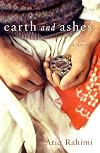
This Afghani novella of only 81 pages is one of the most poignant, moving pieces I've ever read! Upon finishing it, I closed the book and took a long pause to get my breath back; this simple story of a grandfather, Dastaguir, and his little grandson, Yassin, broke my heart. Written in stark, spare prose with no wasted words, this tragic story encapsulates the whole broken war-torn land of Afghanistan through two peasants.
During the Soviet invasion of Afghanistan, a grandfather and grandson, show more the only survivors from their bombed-out village, make a journey to see the boy's father, who is a coal miner in another location. The little boy has been deafened by the loud noise of bombs. From time to time Dastaguir remembers his family and the day of the bombing. He daydreams about family or himself as a child or naps, having strange dreams as the truck carries him to the mine. We read his interior monologues: what will he say to his son about the attack and his family?
Dastaguir and Yassin are vivid characters, as well as others: a shopkeeper, a guard, a truck driver. The author painted a masterful picture using few uncomplicated words. I could see everything before me on every page. For some reason the author's device of using an omniscient narrator talking to Dastaguir [casting the story in second person] was very effective. References to the Persian epic Shahnama are worked into the plot. [Rostam and Sohrab are as well known in that part of the world as Agamemnon and Orestes are here.] I had never heard of this novella before; now I highly recommend it to everyone! show less
During the Soviet invasion of Afghanistan, a grandfather and grandson, show more the only survivors from their bombed-out village, make a journey to see the boy's father, who is a coal miner in another location. The little boy has been deafened by the loud noise of bombs. From time to time Dastaguir remembers his family and the day of the bombing. He daydreams about family or himself as a child or naps, having strange dreams as the truck carries him to the mine. We read his interior monologues: what will he say to his son about the attack and his family?
Dastaguir and Yassin are vivid characters, as well as others: a shopkeeper, a guard, a truck driver. The author painted a masterful picture using few uncomplicated words. I could see everything before me on every page. For some reason the author's device of using an omniscient narrator talking to Dastaguir [casting the story in second person] was very effective. References to the Persian epic Shahnama are worked into the plot. [Rostam and Sohrab are as well known in that part of the world as Agamemnon and Orestes are here.] I had never heard of this novella before; now I highly recommend it to everyone! show less
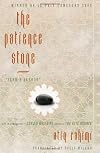
The Patience Stone is a story-poem about an unnamed Afghani woman (everywoman) who reveals her identity as a messenger of God. Like Mohammed, she fights off her fear of possession by demons to get to the more frightening but liberating personal truth within her. She learns by self-exploration, with the help of the Koran, that revelation is the foundation of Mohammed's teachings and the teachings of hundreds of thousands of other prophets across religions and across times who have spoken of show more the human spirit.
Rahimi presents the reader with a dilemma: How can a Muslim woman who is subjugated by patriarchal tribal Muslim law, identifies with her mother's submission to a morality of inferiority, and uses repression to create a degrading self regard learn the power of the revelation of her own truth? It is as simple as the recurring cycle of the lives of prophets. She must reject the tribal laws of the father, deny the false morality of the mother, and give up her own socially distorted self regard. The novel describes how she solves this dilemma.
The woman's husband, a casualty of jihad, gives her the opportunity to experience the wisdom of folklore concerning sang-e saboor, the patience stone. The fable describes a smooth black stone that absorbs the words, thoughts and emotions of a person describing her personal trials, pain, disappointments, guilt, denials of the body, hatred of war, helplessness, abandonment, and victimization. Absolute trust in the privileged acceptance by the stone is required. When the catharsis is complete and the stone has actively absorbed all, it explodes revealing to the person not just the name of God, but the truth of God. The woman's wounded husband is her sang-e saboor.
The novel also puts the reader in the position of the patience stone absorbing the confessions of the woman and allows us to reach a point of disintegration, allowing us to accept God's truth in her. This is not possible for tribal Muslim men who focus only on the soul, denying in themselves and in their women the sexual demands of the body. They can blindly fight a jihad without regard for the life of the body on earth. Women must try to live a soulless life of the body to create sons who can continue the propagation of the faith. They are impure unless they deny their own independent satisfactions and focus only on the performance of the man's ability to play his part in conception. This suppression is harmful because clues about the truth are given through the body.
We learn in the novel that it is through the integration of body and soul that revelation of truth occurs for Muslim women. This is the teaching of the Koran for all people, and it is not an authorization for the abuse of women by fathers and husbands. With this interpretation, comes the understanding that the body will out, repression is a denial of the teachings of Mohammed. It is not immoral to have bodily desires in addition and connected to desires of the soul. In speaking to the patience stone all utterances and thoughts are meaningful and relevant to truth.
I strongly recommend this short novel to all readers devoted to the inner life. It shows us that as with all prophets, the woman in the story teaches us to look within ourselves for the recurring themes of life and to discover the absolute truths of existence, to become instruments of God. Muslim women (and all people) must be free to speak, think, and experience their emotions without repression. We must have unconditional acceptance of an understanding God to reject the misconceptions taught to us in the past and find the path to enlightened identities. show less
Rahimi presents the reader with a dilemma: How can a Muslim woman who is subjugated by patriarchal tribal Muslim law, identifies with her mother's submission to a morality of inferiority, and uses repression to create a degrading self regard learn the power of the revelation of her own truth? It is as simple as the recurring cycle of the lives of prophets. She must reject the tribal laws of the father, deny the false morality of the mother, and give up her own socially distorted self regard. The novel describes how she solves this dilemma.
The woman's husband, a casualty of jihad, gives her the opportunity to experience the wisdom of folklore concerning sang-e saboor, the patience stone. The fable describes a smooth black stone that absorbs the words, thoughts and emotions of a person describing her personal trials, pain, disappointments, guilt, denials of the body, hatred of war, helplessness, abandonment, and victimization. Absolute trust in the privileged acceptance by the stone is required. When the catharsis is complete and the stone has actively absorbed all, it explodes revealing to the person not just the name of God, but the truth of God. The woman's wounded husband is her sang-e saboor.
The novel also puts the reader in the position of the patience stone absorbing the confessions of the woman and allows us to reach a point of disintegration, allowing us to accept God's truth in her. This is not possible for tribal Muslim men who focus only on the soul, denying in themselves and in their women the sexual demands of the body. They can blindly fight a jihad without regard for the life of the body on earth. Women must try to live a soulless life of the body to create sons who can continue the propagation of the faith. They are impure unless they deny their own independent satisfactions and focus only on the performance of the man's ability to play his part in conception. This suppression is harmful because clues about the truth are given through the body.
We learn in the novel that it is through the integration of body and soul that revelation of truth occurs for Muslim women. This is the teaching of the Koran for all people, and it is not an authorization for the abuse of women by fathers and husbands. With this interpretation, comes the understanding that the body will out, repression is a denial of the teachings of Mohammed. It is not immoral to have bodily desires in addition and connected to desires of the soul. In speaking to the patience stone all utterances and thoughts are meaningful and relevant to truth.
I strongly recommend this short novel to all readers devoted to the inner life. It shows us that as with all prophets, the woman in the story teaches us to look within ourselves for the recurring themes of life and to discover the absolute truths of existence, to become instruments of God. Muslim women (and all people) must be free to speak, think, and experience their emotions without repression. We must have unconditional acceptance of an understanding God to reject the misconceptions taught to us in the past and find the path to enlightened identities. show less

An unnamed woman attends to her husband in a room of their house somewhere in Afghanistan. He has been shot in the neck by a fellow fighter and is unconscious. Shells from tanks fall around their house and gunfire erupts even during a purported ceasefire. At first the woman is tender in her ministrations and prays continually for his deliverance. But as the days pass with no change in her husband, she begins to find relief in confessing all her secrets to him, as though he were the fabled show more patience stone, which according to Persian folklore absorbs all the speaker's grievances until it explodes, taking all the speaker's worries with it.
Although the writing is very sparse (some have likened it to a play script), the emotions evoked by the woman's revelations are complex and layered. Like many Afghani woman, her life has been subjugated to the strictures of her father, her husband, society, and religious politics. Her attempts to exert control over her life, even by giving voice to her feelings and thoughts, have met with violence, so she has learned to remain silent. It is only now, with her husband unconscious and hostage to her ministrations, does she feel free to reveal her innermost secrets. show less
Although the writing is very sparse (some have likened it to a play script), the emotions evoked by the woman's revelations are complex and layered. Like many Afghani woman, her life has been subjugated to the strictures of her father, her husband, society, and religious politics. Her attempts to exert control over her life, even by giving voice to her feelings and thoughts, have met with violence, so she has learned to remain silent. It is only now, with her husband unconscious and hostage to her ministrations, does she feel free to reveal her innermost secrets. show less
Lists
Awards


You May Also Like


Associated Authors
Statistics
- Works
- 17
- Also by
- 1
- Members
- 1,310
- Popularity
- #19,605
- Rating
- 3.7
- Reviews
- 86
- ISBNs
- 129
- Languages
- 17
- Favorited
- 2
